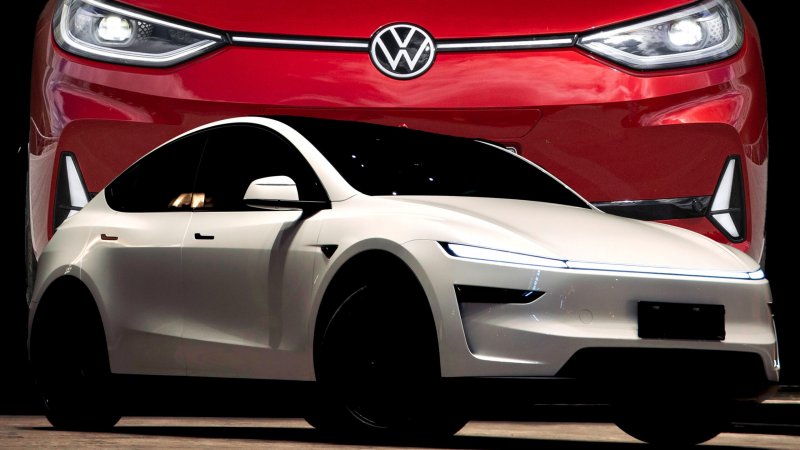
Recently, the electric vehicle market in Europe has seen significant shifts, with one of the most discussed developments being that Volkswagen electric vehicles are outselling Tesla in the region.
This has become a major talking point in the global auto industry because it signals changes in consumer preferences, competitive dynamics, production strategies, and the broader transition to electric mobility, News.Az reports.
This FAQ explainer dives deep into why this is happening, how it matters, and what it means for the future of the auto industry.
What does it mean that Volkswagen beats Tesla in Europe EV sales race
When it is said that Volkswagen has beaten Tesla in Europe electric vehicle sales, it means that Volkswagen sold more electric vehicles in the European market over a recent sales period than Tesla did. The comparison typically refers to pure battery electric vehicles, excluding plug-in hybrids, and considers units registered across the European Union and wider European markets. This shift highlights how Volkswagen, a legacy automaker with a long history in combustion engine vehicles, has successfully translated manufacturing scale and brand recognition into electric era competitiveness.
How are EV sales measured in Europe
Electric vehicle sales in Europe are usually measured by vehicle registrations or completed sales over a defined period, such as a quarter or a calendar year. These figures are compiled from national registration authorities and industry data trackers. Battery electric vehicles are often the primary focus because they align with Europe’s zero-emission targets, while plug-in hybrids are counted separately due to different regulatory treatment.
Why Europe is a critical battleground for EV leadership
Europe is one of the fastest-growing electric vehicle markets globally due to strict emissions regulations, generous government incentives, and long-term bans on new petrol and diesel vehicle sales in several countries. Urban emission zones, expanding charging infrastructure, and growing environmental awareness make Europe a decisive arena for automakers competing for EV dominance.
How Volkswagen increased its EV sales momentum
Volkswagen’s rise in Europe’s EV rankings reflects a deliberate and multi-layered strategy.
Broad electric model lineup
Volkswagen expanded its ID family to cover multiple segments, including compact hatchbacks, SUVs, and lifestyle vehicles. This variety allowed the brand to reach mainstream consumers rather than relying on a narrow, premium-focused range.
Local manufacturing and supply resilience
Producing electric vehicles within Europe helped Volkswagen reduce logistics risks, manage costs, and respond faster to regional demand. Local production also aligned well with government incentive structures.
Pricing strategy aligned with incentives
Volkswagen positioned several models to fall within subsidy thresholds, making them financially attractive to cost-conscious buyers. This approach narrowed the price gap between electric and traditional vehicles.
Dealer network advantage
Volkswagen leveraged its extensive dealership footprint to educate consumers, address range anxiety, and provide hands-on support. This played a major role in converting traditional buyers to electric mobility.
How Tesla’s Europe strategy differs
Tesla relies primarily on direct-to-consumer sales through online platforms and company-owned showrooms. While this model reduces overhead and offers pricing transparency, it limits physical presence in regions where buyers still value dealership support.
Tesla’s pricing strategy has often focused on maintaining brand positioning and technological leadership. Although price adjustments have occurred, Tesla models in many European markets remain premium compared to locally produced alternatives.
Tesla’s Supercharger network is a strong competitive advantage, but Europe’s growing third-party charging ecosystem reduces exclusivity and levels the playing field for other brands.
Why consumer preferences are shifting
As Europe’s EV market matures, buyers increasingly prioritize affordability, service access, and familiarity. Volkswagen benefits from decades of brand trust and a perception of reliability. Tesla continues to attract innovation-driven buyers, but mainstream consumers often favor brands they already know.
How government policy shapes the sales race
European climate targets heavily influence automaker strategies. Incentives, emissions penalties, and future bans on combustion vehicles reward companies that scale electric offerings quickly. Volkswagen’s early alignment with regulatory timelines strengthened its market position.
Why charging infrastructure matters
Charging availability is a key adoption factor. Volkswagen’s partnerships with charging networks and compatibility with regional standards reassured buyers concerned about long-distance travel and daily usability. While Tesla’s network remains advanced, open-access charging has reduced its uniqueness.
How supply chain stability affects market share
Supply chain disruptions have affected all automakers, but regional production helped Volkswagen mitigate shortages more effectively. Tesla’s reliance on fewer production hubs has occasionally constrained availability in Europe, impacting delivery timelines.
What this shift signals for the auto industry
Volkswagen outperforming Tesla in Europe demonstrates that legacy manufacturers can successfully compete in the electric era. It challenges the idea that EV leadership belongs exclusively to newer entrants and highlights the importance of scale, localization, and policy alignment.
How investors interpret the sales race
EV sales leadership in Europe is closely watched by investors as a signal of long-term competitiveness. Strong performance boosts confidence in Volkswagen’s electrification roadmap while encouraging Tesla to refine regional strategies.
Why partnerships and education matter
Volkswagen’s collaborations with battery suppliers, software partners, and charging providers have strengthened its ecosystem. Dealer-based education has further reduced adoption barriers for first-time EV buyers.
What challenges remain for both companies
Volkswagen must balance volume growth with profitability and address software development challenges. Tesla faces pressure to localize further, adapt pricing, and respond to intensifying competition from both European and Chinese automakers.
Why this story matters beyond sales numbers
This competition reflects broader changes in how mobility, sustainability, and industrial strategy intersect. It shows how policy, infrastructure, and consumer behavior can reshape market leadership.
Final takeaway
Volkswagen beating Tesla in Europe’s EV sales race is not about a single quarter or model. It reflects strategic execution, market alignment, and the shifting priorities of European consumers. As competition intensifies, buyers stand to benefit from better products, lower costs, and faster innovation across the electric vehicle landscape.