When new automotive segments hit the market, they follow a fairly predictable curve. First, early adopters flock to the first few examples of a particular concept. Then, if it proves profitable, and enough critical mass accumulates, the industry brings its massive design and engineering dollars into play and scoops up the second wave of buyers whose curiosity has been piqued by the pioneers.
The danger for boutique brands carving out any newfound niche is what happens when that second swell crashes over them. Some, like Tesla, evolve from the purveyor of luxe-like battery-powered cars into the builder of mainstream machines, riding its early image as long and hard as possible even as it confronts the challenges inherent in mass production. Other players in the electric vehicle space, however, are increasingly finding themselves caught out by mass-produced EVs that now match, or in some cases exceed, their early performance stats.
As democratization spreads across the planet, acceleration and torque that once seemed mind-blowing in early electrified cars are now merely expected. This doesn’t just apply to power, either. The encroachment of traditional luxury builders like BMW and Mercedes-Benz on the EV space has forced even loyal customers to ask themselves hard questions about build quality, design and features when looking at a smaller brand’s once-impressive wares.
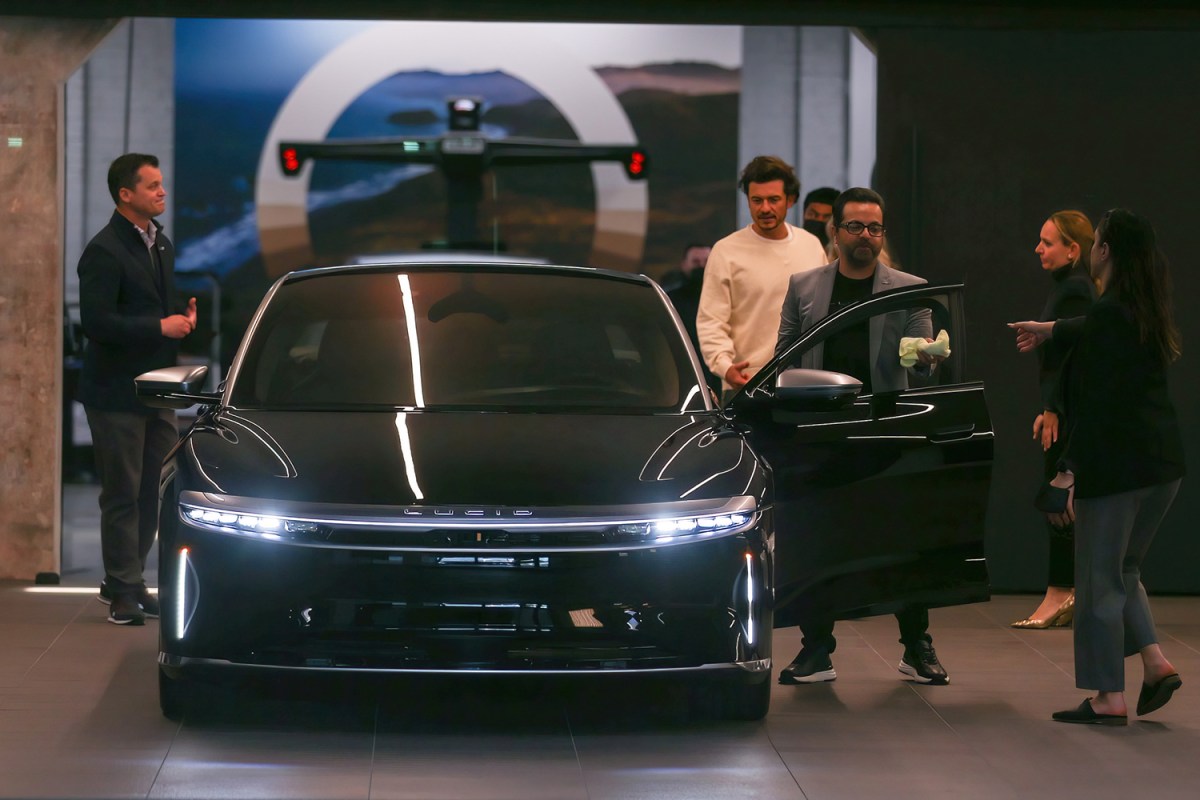
This is the predicament for Lucid Motors, which produced its first vehicle, the Air sedan, in 2021. Praised as groundbreaking, the sleek, full-size four-door proved that independent EVs didn’t have to sacrifice style at the altar of aerodynamics, and that it was possible to pair high-end interior trappings with the kind of smooth and speedy performance that would satisfy even the most lead-footed aristocrat. This recipe has attracted such influential customers as Orlando Bloom, and A-list brand ambassadors like Timothée Chalamet.
Five years later, the Air is still in the picture — but so are a raft of other excellent EVs wearing premium badges. In fact, even the upper-tier efforts from mainstream manufacturers have begun to encroach on the Air’s rarefied position in terms of power and padding.
When I set out to drive the latest version of the Lucid Air Touring, I wasn’t thinking about speed — I was thinking about longevity. Where does a company like Lucid go from here? And for all you second-wave buyers, should the Air still be on your list?
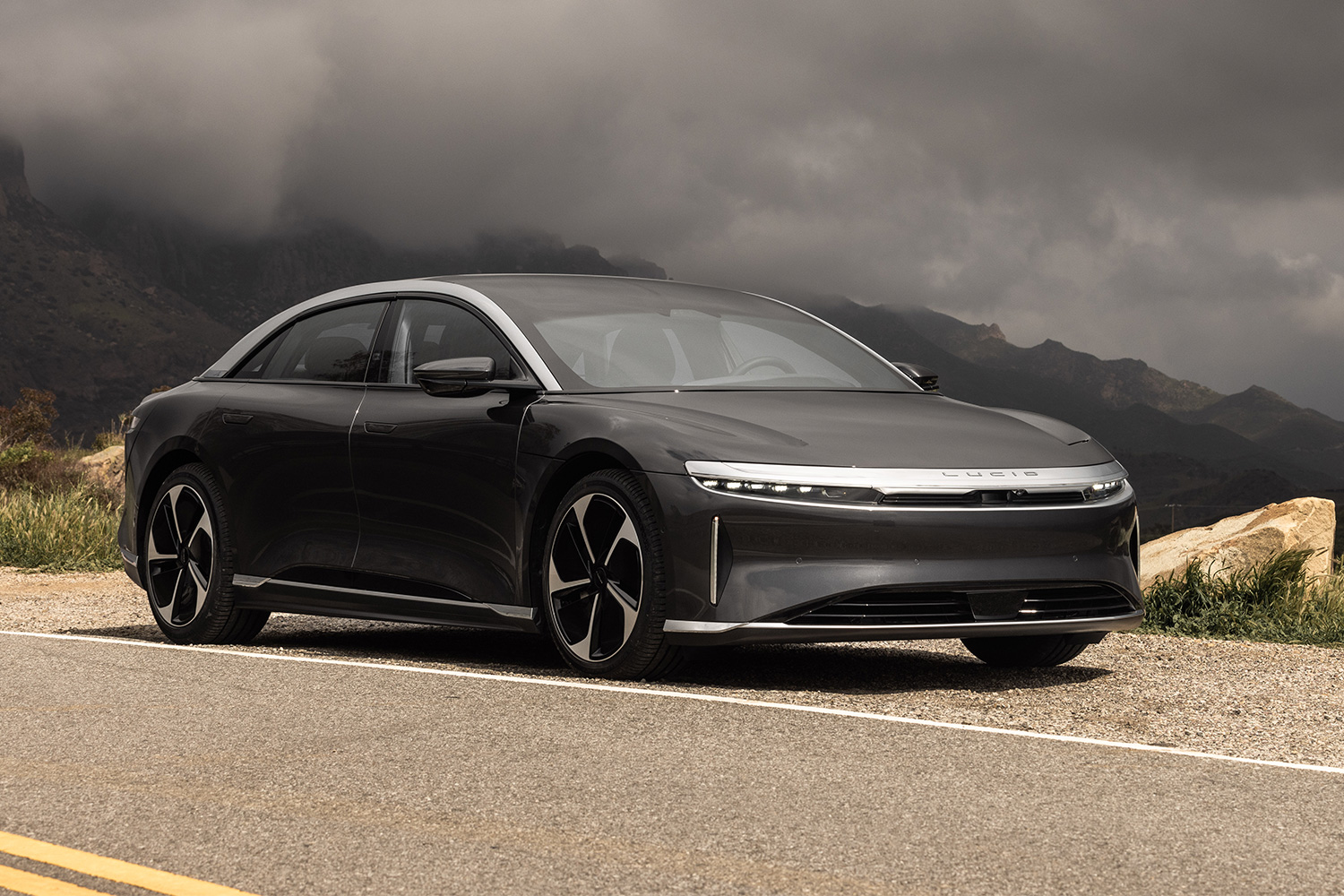
The Lucid Air, pictured here in the Touring trim, currently ranges from $70,900 to $249,000.
Lucid
Once-Rarefied Air
Until last year’s arrival of the Gravity SUV, Lucid was a one-model operation, which meant that the Air sedan had to be all things to all people to lay a firm foundation for the company. This explains the extraordinary chasm between the Air’s $70,900 starting price for the Pure trim, and its $249,000 price tag in fully kitted out Sapphire trim.
The Sapphire is a bit of an aberration to be sure, an all-wheel-drive, four-door supercar that boasts 1,234 horsepower from three electric motors. That’s three times what the Pure provides from its single-motor, rear-wheel-drive setup, double the Touring trim’s 620 dual-motor horsepower, and still leagues ahead of the $114,900 Grand Touring’s 819 horses.
There’s no doubt that the Sapphire exists for the same reason that the similarly priced Porsche 911 Turbo S is on the order sheet: to cast a halo that drags in potential customers and convinces them that a little of that same glow will rub off on their more modest purchase. With a sub-two-second sprint to 60 mph, the Sapphire’s acceleration is the ultimate EV party trick, but you don’t need to spend a quarter million to go fast with the Air; the Touring (3.4 seconds) and Grand Touring (3.0 seconds) also qualify as rapid transit.
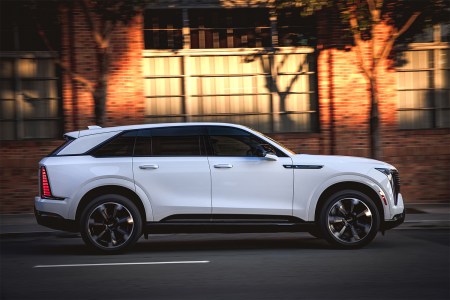
Still, while the Sapphire’s shock and awe might only be matched by the likes of the Tesla Model S Plaid (though the Model S will soon be discontinued), or by several electrified supercars that can’t claim a back seat, there are plenty of other EV options now that will match the sizzle every other Air offers in a straight line, even if they don’t eclipse its output on paper.
The 641-horsepower Ioniq 6 N trim, for example, boosts Hyundai’s distinct sedan into the conversation with a 3.2-second 0-60 time of its own, while the 593-horsepower BMW i5 M60 nips at its heels with just 3.7 seconds needed, bookending the most rapid non-Sapphire Air. It’s worth mentioning that each of these cars accomplish their task at a considerable discount from the Grand Touring model, leaving tens of thousands of dollars of daylight between them.
Most importantly for some buyers, however, is that Lucid bests these EVs in another area: range. No other EV available in the U.S. today can match the estimated 512 miles on the Grand Touring model, and the 420-431 miles of range offered by the other three trims are also at the top of the heap. For all their enthusiast credentials, the aforementioned BMW and Hyundai can’t crack 300.
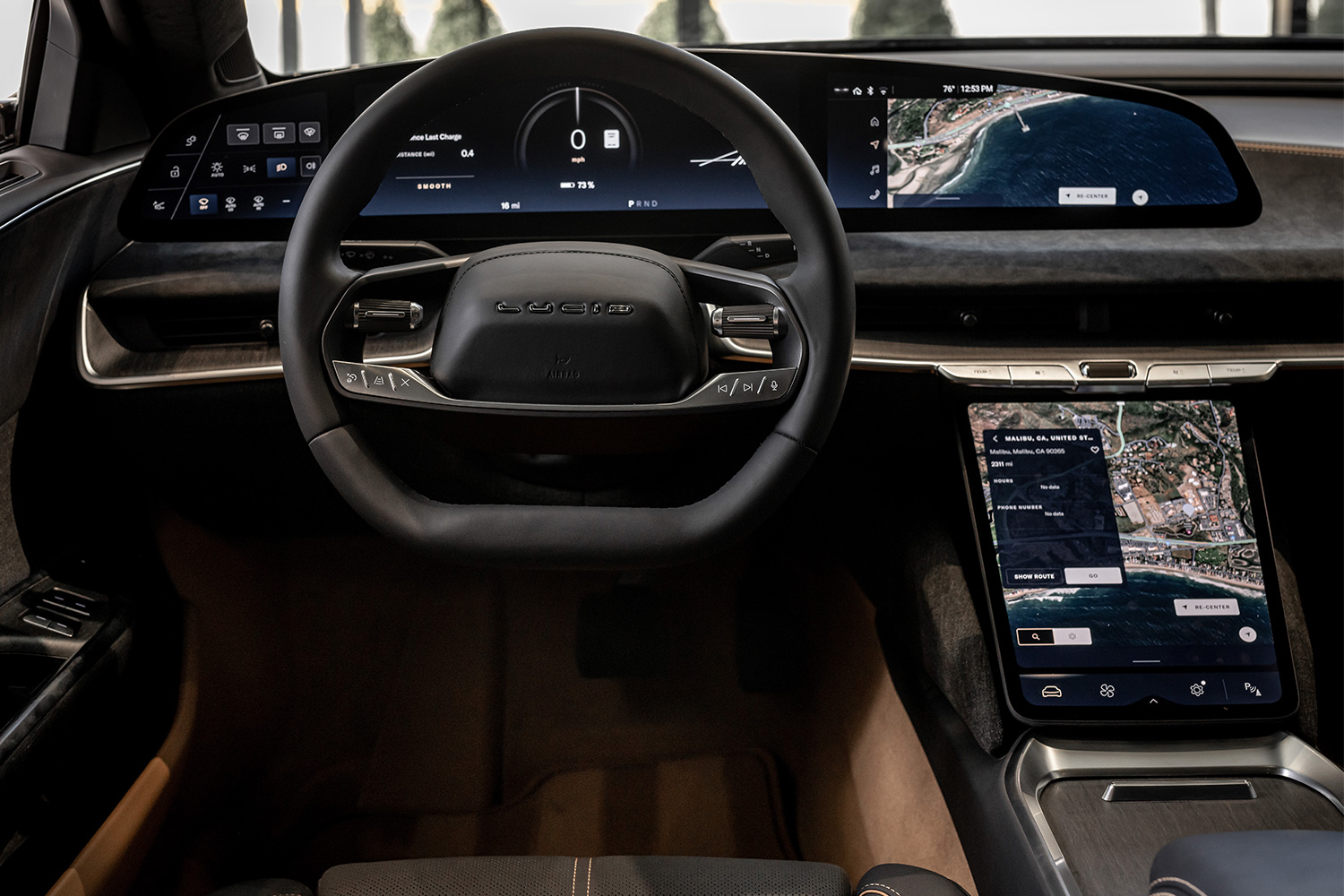
The Air’s dashboard screens feel far too small for such a large vehicle.
Lucid
It’s What’s Inside That Counts
That the march of progress has eventually caught the mainstream up to Lucid Motors’ boutique levels of performance — if not its range — isn’t all that surprising. That kind of advantage doesn’t typically withstand the assault of multi-billion-dollar engineering behemoths once they focus their attention on a given sliver of the market.
What’s a little more difficult to parse is the Air’s restrained approach to its interior design. The car’s exterior styling is attractive from every angle, a pure rebuke of the conceit that high-end EVs must take their aero inspiration from a well-worn bar of Irish Spring. Its mix of curved surfaces, signature lighting and wider-than-thou track make it both imposing and elegant at the same time, a rare achievement.
Inside, however, the Lucid Air’s cabin feels restrained past the point of reason. It starts with the dashboard, where a trio of unexpectedly small screens crouch within their unadorned bezels to provide slivers of information about the vehicle and its various functions. I’m not a fan of big bricks of black plastic plopped onto flat dashes, but the Air’s setup feels far too small for such a large vehicle, a fact that’s underscored by the tiny amount of on-screen real estate devoted to Android Auto should you connect your phone.
Much of the car’s functionality is handled via a tablet-sized display on the center console, but this too feels like a mismatch for what should be a detailed, elegant presentation throughout the passenger compartment. Instead, almost every surface maintains the same smooth and mostly featureless countenance as the Lucid’s screens, anonymizing the experience of riding inside an expensive automobile.
As a builder of small-batch cars, Lucid Motors is in a better position than most to go all-in on the interior and provide a truly plush environment for driver and passenger. And yet, having just gotten out of the recently refreshed Genesis Electrified GV70 prior to driving the Air, I was stunned by the contrast between the two. Despite a more affordable window sticker (starting at $64,380), nearly everywhere I looked or touched inside the Genesis felt like a gaggle of humans had spent considerable amounts of time reflecting on what would bring a smile to my face — or at the very least, help me mentally justify my monthly payment.
That’s just one example in a world where luxury vehicles are rapidly accelerating towards the kind of cabin nirvana that aims to separate one brand from another in a continual game of one-upmanship. That the Air is now lagging models that aren’t directly in its class is something to worry about.
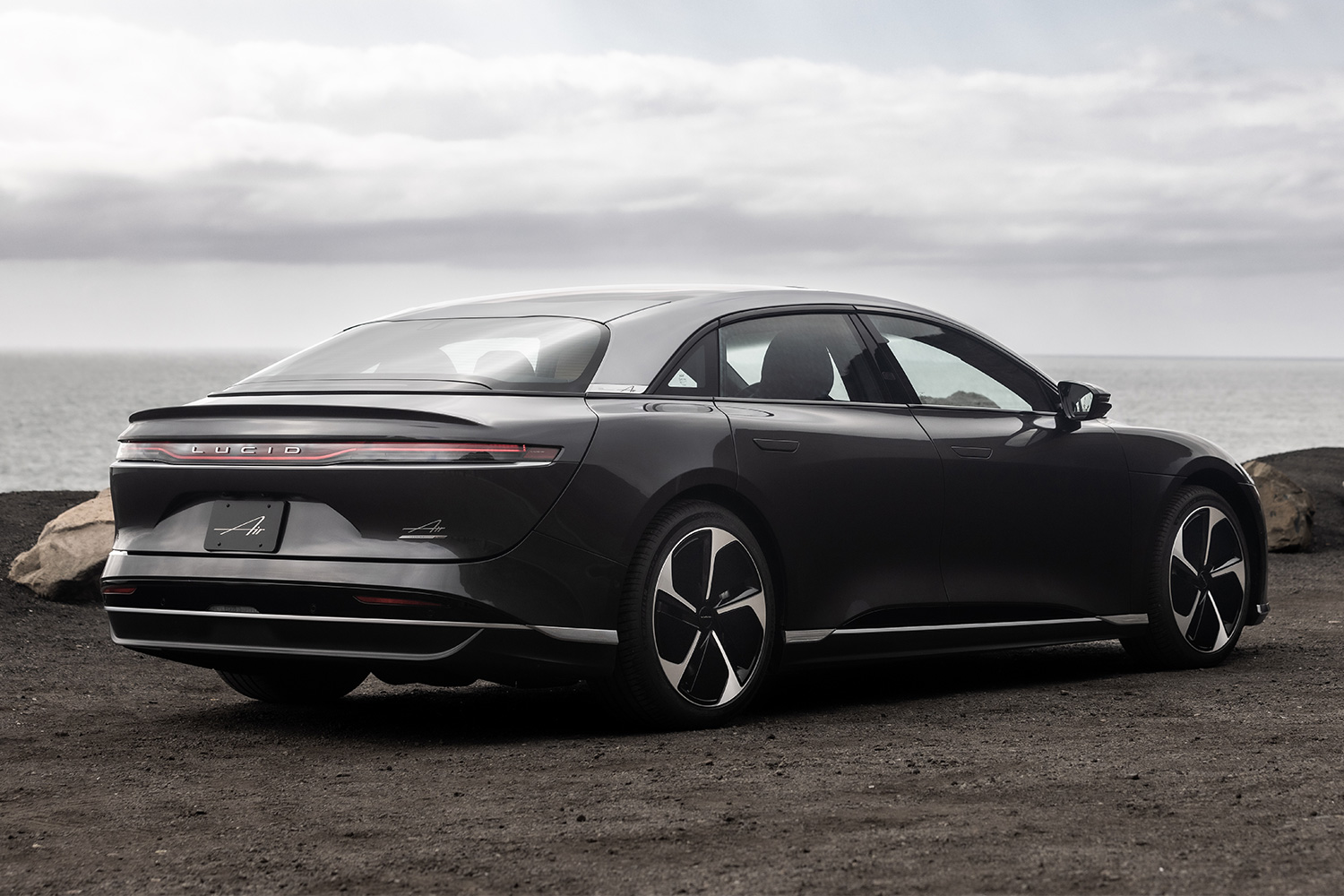
The Air is a rebuke of the conceit that EVs must take their aero inspiration from a well-worn bar of Irish Spring.
Lucid
Where to Go From Here?
Don’t take this to mean that the Lucid Air is an EV to avoid. On the contrary, it provides a refreshing opportunity to step outside of the mainstream and experience a different, almost outsider take on what a luxury electric car can be. That being said, it’s also a clear example of how little space now exists between what once would have been considered the height of opulence, and more affordable fare.
Once upon a time, the Lucid Air’s exceptional acceleration, blistering top speed and sexy silhouette were enough to make buyers overlook its functional, but uninspiring interior accoutrements. Today, the rest of the pack has caught up to nearly every aspect of this EV — at least for the models that Lucid sells in volume — and in many cases surpassed it without necessarily infringing on the same lofty market position.
Changing customer expectations have a way of pushing early leaders to the margins. This is especially the case when it comes to the opulence of modern luxury machinery, with traditional premium showrooms muscling their way past the likes of Tesla and Lucid by tapping into long-standing expertise in developing an overall package that looks like the proverbial million bucks.
Lucid Motors’ next step with the Air will no doubt determine whether the model marches forward as a true competitor to electrified rivals from home and abroad, or whether it remains an attractive footnote in a world where small automakers simply can’t maintain their momentum.
Meet your guide

Benjamin Hunting
Benjamin Hunting writes about cars and car culture. He’s also a freelance writer and a regular contributor at MotorTrend, Car and Driver, Driving Line and Hagerty, as well as one of the hosts of the Unnamed Automotive Podcast.
More Like This
This article appeared in an InsideHook newsletter. Sign up for free to get more on travel, wellness, style, drinking, and culture.