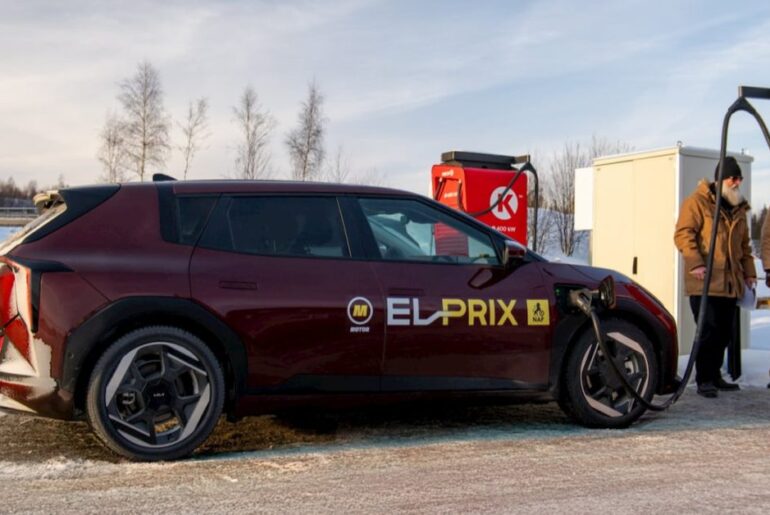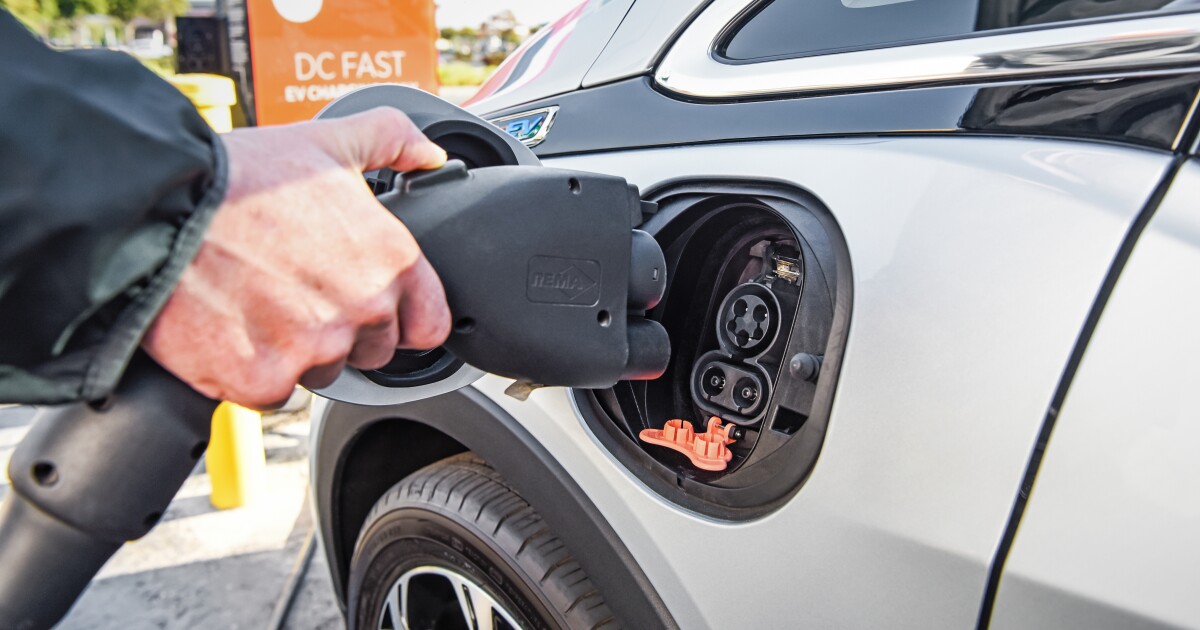
The Trump administration is shifting funds originally allocated to build out a national EV charging network into regular highway programs.
The fate of $5 billion of formula funds for states to build out a national electric charging station remains in flux as the newly passed transportation budget claws some of it back despite a judge’s ruling the money must be used as intended in the original law.
Processing Content
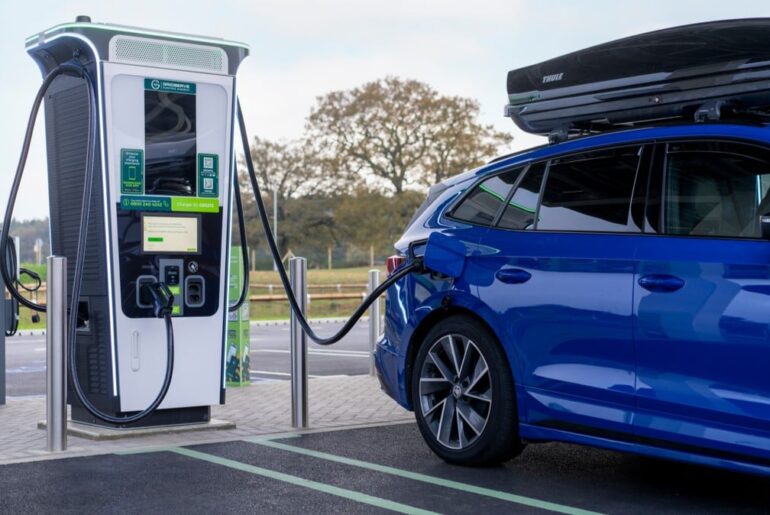
The National Electric Vehicle Infrastructure program marked one of the most costly and high-profile programs in former President Joe Biden’s 2021 Infrastructure Investment and Jobs Act. It allocated $5 billion to states through 2026, basing the size of the funds on the amount of federal highway aid a state receives. The IIJA also included $2.5 billion for a discretionary grant program that could be accessed by local governments for the same purpose.
The goal was to build a national network of 500,000 electric vehicle charging stations by 2030 to encourage adoption of electric vehicles. It was one of Biden’s top priorities, but the program faced struggles getting off the ground and was the target of criticism from both sides of the aisle.
As of last April, 384 charging ports had been built as part of the program, according to a July GAO report. Nearly 84% of NEVI program funds remained unobligated as of January 2025, according to federal court filings. While states had spent only 2% of the money three years into the program, they had obligated another $1.4 billion through 2028.
Despite the court ruling that tried to preserve the NEVI funds, the recently passed fiscal 2026 transportation budget transfers $879 million of NEVI funds into other highway programs. That includes $503 million in formula funds and $300 million from the discretionary grant program, Transportation for America noted in a Jan. 30 blog.
The DOT budget’s recission of formula funds “is made in proportion to how much a state has obligated out of their first fiscal year of IIJA funding,” the transit group said. “That means states that were slower to obligate this funding for building electric vehicle charging infrastructure will lose more than those that moved fast. While that may potentially be a silver lining for state DOTs still eager to build out new electric vehicle chargers, EV adopters are losing out across the country as plans for a comprehensive national charging network are being surrendered to highway program earmarks.”
After President Trump froze the funds when he took office, a group of 20 Democratic states and the District of Columbia sued. In August, the administration lifted the funding freeze and eased the criteria states faced to build the stations, but that was too little, too late for the federal court hearing the states’ lawsuit.
District Judge Tana Lin of the Western District of Washington on Jan. 26 in a final ruling said the U.S. Department of Transportation and the Federal Highway Administration can’t claw back or withhold NEVI funding for any reason not set forth in the Infrastructure Investment and Jobs Act of 2021 or applicable regulations.
Lin added that the administration’s decision to revamp guidance only underscores the uncertainty of the program, Lin wrote, and places “the NEVI Formula Program under never-ending review and, implicitly, under a never-ending threat of rescission or revision.”
A second lawsuit filed in December targets the administration’s pause of the $2.5 billion EV charger grant program.