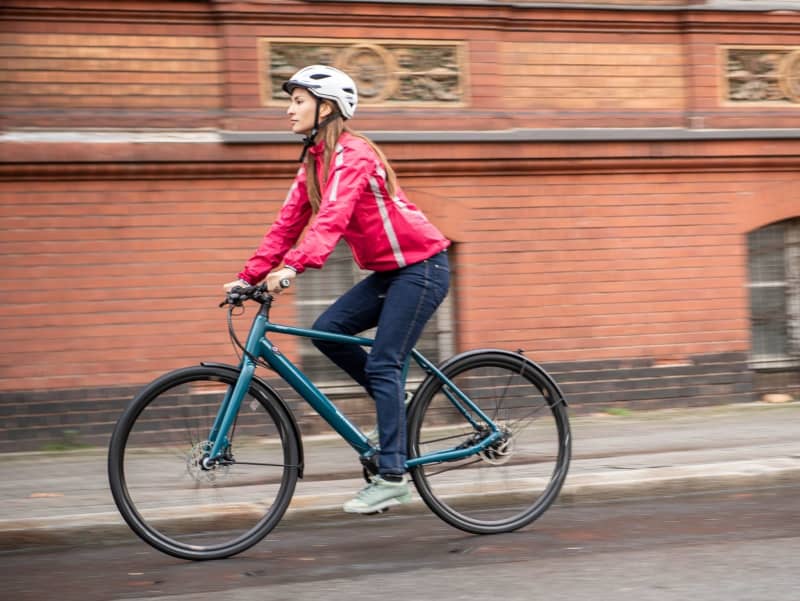
The joys of an e-bike include the power to reach speeds of up to 25 km/h – but there are potential dangers, though you can stay safe by being aware.
Whether you are a beginner or an experienced rider, bear these issues in mind – and the strategies to avoid them:
For beginners
Accelerating too quickly: Many beginners underestimate how powerful the electric motor is and how quickly an e-bike can accelerate, says the German Road Safety Council (DVR). If you put a lot of pressure on the pedals immediately when starting off, the sudden propulsion may take you by surprise and you may lose control.
What to do: Start with a low assistance level, ideally on safe, low-traffic terrain. “Accelerate slowly and only increase your speed and motor power once you feel comfortable with the bike’s handling,” say DVR’s experts.
Too fast: Inexperienced e-bike riders often travel much faster than their riding skills allow – as an e-bike can convey a “feeling of ease and control” as you effortlessly accelerate with little physical exertion. People tend to underestimate their actual speed.
What to do: Always consciously and consistently adjust your speed to the environment, traffic density and your own experience. Slowing down increases your reaction time and “significantly” reduces your risk of an accident.
Unsafe braking: E-bikes tend to be heavier than regular bicycles which can increase braking distances. Often, beginners tend to brake too late or only use one brake, which increases your braking distance, especially if you spot an unexpected obstacle.
What to do: When braking, use your front and rear brakes simultaneously. Brake early on and in a controlled manner. E-bikers should be particularly careful when applying the brakes on wet or slippery roads.
Taking corners too fast: Cornering feels different, in terms of weight, inertia and motor assistance. Beginners often make mistakes by taking corners too fast and not looking at the curve of the road, but straight ahead.
What to do: Slow down before the corner and look at the inside of the curve. Steer calmly and evenly – avoid braking in the corner if possible. Slow down to a suitable speed beforehand.
Speeding downhill: Newcomers often let themselves drift and ride too fast downhill. Some underestimate the effects of mass, inertia and the need for longer braking distances. But it is precisely downhill that you pick up speed, while you need significantly more time to brake.
What to do: Slow down early and brake evenly. Apply both brakes and shift your body weight slightly backwards.
For advanced cyclists
Speed, again: Even experienced cyclists are often too fast: the more experienced cyclists are, the faster they ride – and, according to the DVR, sometimes faster than traffic levels allow. Especially on familiar routes, at intersections or in poor visibility, often, people don’t slow down enough.
What to do: Cycle attentively even when you know your route well and always remember the most important thing: consistently adjust your speed to the traffic, weather and visibility conditions.
Risky overtaking: Sometimes experienced e-bike riders can be tempted to take risks, say by overtaking too closely or underestimating necessary safety distances. This increases the risk of accidents and endangers other road and bike path users.
What to do: Allow enough distance to overtake or wait until it is safe to do so. Ensure you have good visibility. Always plan your manoeuvre in advance, and if in doubt, don’t do it and wait for a safer moment. Patience pays off in terms of greater safety.
Breaking the rules of the road: Whether it be riding against the direction of traffic or using pavements if this is not expressly permitted. This often leads to conflicts – especially with pedestrians or motor vehicles.
What to do: Stick to the proper direction of travel, use bike paths correctly and only use pavements if expressly permitted. Also, make sure that you keep a sufficient distance from pedestrians and parked cars.
Distraction by your phone: Can you make a quick phone call or check WhatsApp with one hand? No. Depending on where you are, using a smartphone while riding is most likely prohibited, just as it is when driving a car. Even experienced riders are not immune to being distracted by mobile phones while riding. Experts warn dividing your attention significantly increases reaction times. Although you may be able to make calls using a hands-free kit, conversations can still be distracting.
What to do: Only use your smartphone when stationary. While driving, concentrate on the traffic and your surroundings.
Overdoing it on longer trips: You might think, sure, I can manage the long trip with my e-bike. No problem! But when embarking on long distances, riding at high average speeds or taking too few breaks can lead to fatigue. That, in turn, reduces your concentration and responsiveness, quickly leading to danger especially when braking or taking a corner.
What to do: Plan regular breaks, drink enough fluids and adjust your speed and distance to your own fitness level. Be aware of signs of fatigue and take a break in good time.