
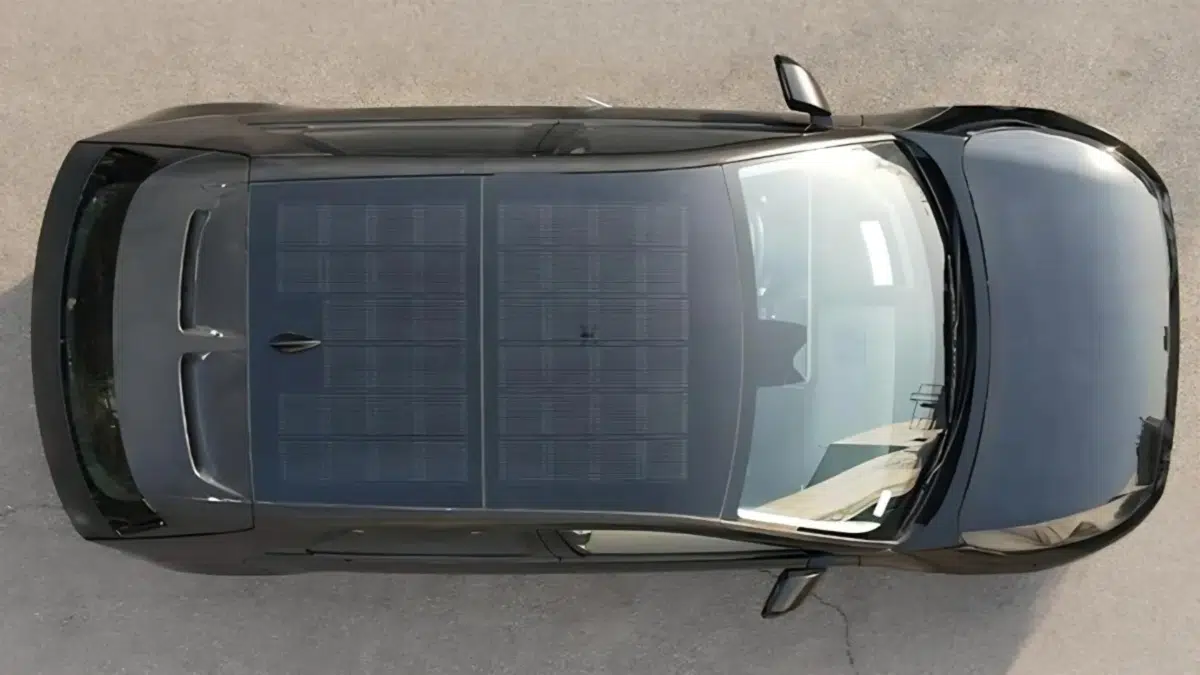
Among the innovations at the CES 2026, a technology caught the attention of the automotive and environmental sector. It is about the solar panels integrated into the bodywork, developed by Solarstic, a startup emerged from Hyundai Motor Group.
Although solar energy applied to vehicles is not new, this proposal takes a step further. Unlike experimental concepts, it is already being tested in real models like the IONIQ 5 and the ST1.
Additionally, the project was recognized with the award Vehicle Tech & Advanced Mobility, which reinforces its industrial projection.
How the integrated solar technology works
Solarstic integrates solar panels into the hood and roof of the vehicle. Together, they can generate up to 500 watts of power, taking advantage of surfaces that previously did not serve energy functions.
According to the company, this energy would allow adding up to 80 kilometers of daily range under ideal conditions. Likewise, on long journeys, it could contribute around 30% of the charge while driving.
Thus, the system does not seek to replace conventional charging but to complement it in an intelligent way.
 Solar panels on electric cars. Photo: Tecnoclips.
Lightweight materials and vehicle safety
One of the keys to the development is the abandonment of traditional glass. Instead, lightweight encapsulated polymers are used, structurally integrated through injection molding.
This solution improves aerodynamics and reduces weight, key factors for efficiency. Additionally, it provides advantages in passive safety by better absorbing energy in case of impact. Thus, the design combines energy efficiency, aesthetic integration, and structural protection.
Technical challenges and durability
The path was not without difficulties. The polymeric encapsulation requires high precision to avoid breaking the solar cells during manufacturing.
Added to this is degradation from solar exposure and wear from washing. To solve this, scratch-resistant and anti-degradation coatings are incorporated.
Finally, a discreet black finish was chosen to protect the cells and maintain long-term efficiency.
Background and sector learnings
Other projects attempted similar paths. Lightyear One promised up to 70 kilometers daily, but its high cost halted its continuity.
Sono Motors canceled its solar vehicle and redirected the technology to buses and trucks. Aptera, on the other hand, plans to start deliveries in 2026 with an ultra-efficient niche model.
There were also partial experiences in established brands like Mercedes Benz, Toyota, and its Prius, with more modest results.
 Solar panels on electric cars. Photo: CES.
A realistic use initiative with multiple environmental benefits
While solar charging is not enough to fully power a vehicle, it does provide concrete benefits. In sunny cities like Cartagena, it can cover short daily trips without external charging.
In places like Pamplona, the contribution is smaller but sufficient to maintain auxiliary systems. This reduces the use of the main battery and improves overall efficiency. Additionally, it allows for solar-powered climate control of the cabin when the car is parked.
A strategic complement for electric mobility
The key to this initiative is not in total self-sufficiency, but in the accumulated energy savings. Less electric consumption means fewer indirect emissions.
With Hyundai’s scalability, the system’s durability will be decisive. If it withstands a decade, it will become a silent ally of sustainable mobility.
Thus, the integrated solar panels could mark a gradual but significant change in the way of using and thinking about the electric car.