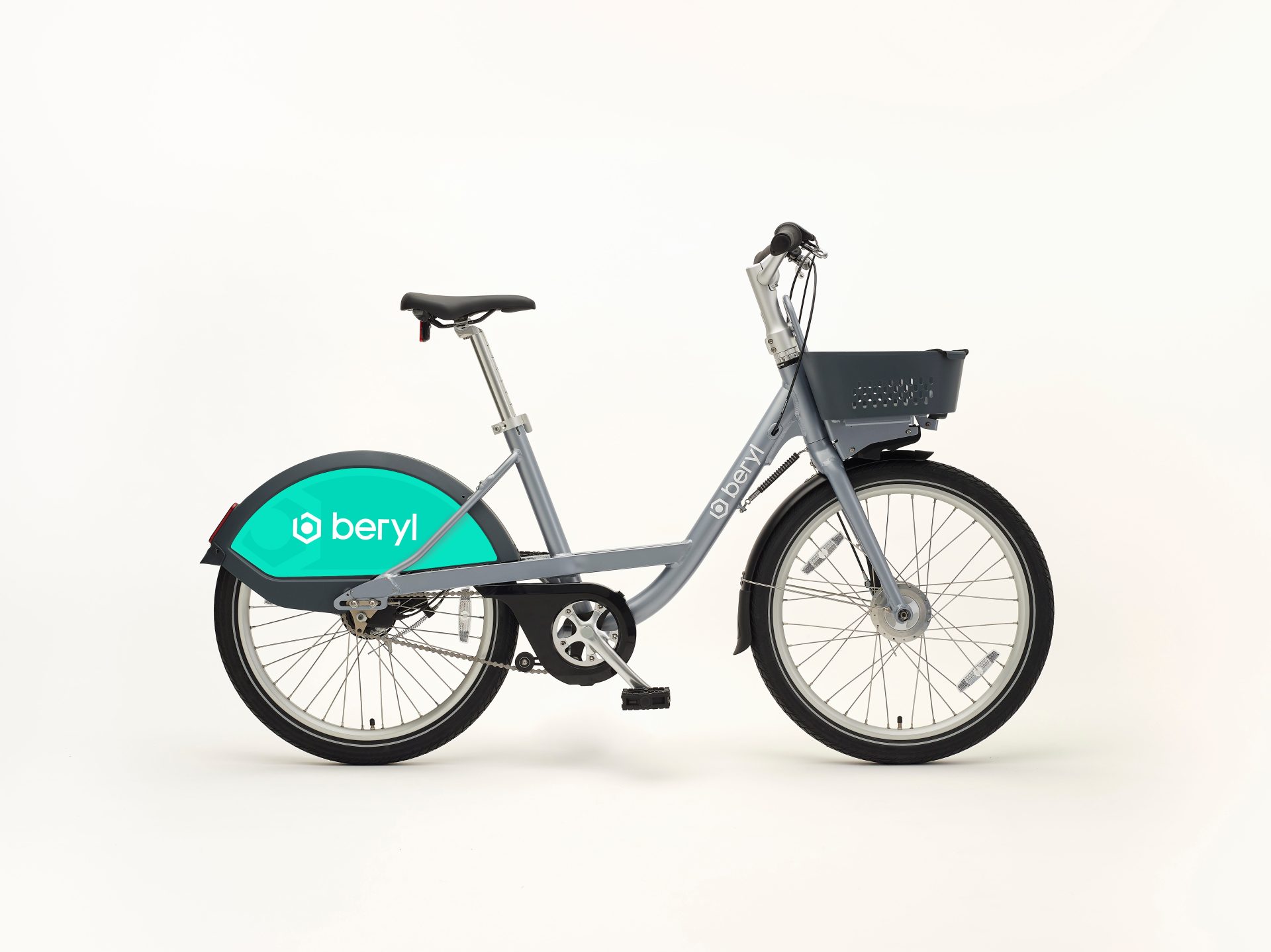
UK shared micromobility operator Beryl has launched a new pedal bike in Belfast, designed to bring connectivity and intelligence to non-electric bikes.
The operator is positioning the new model as a bridge between traditional pedal cycles and the technology typically associated with e-bikes, featuring ‘always-on’ connectivity for real-time operational monitoring, upgraded laser headlights and brake lights, advanced geofencing and remote locking capabilities.
Belfast Bikes, the city’s public bicycle scheme operated by Beryl, is the first system to deploy the new model, with 300 bikes to roll out across the network, complementing Beryl’s electric fleet.
“For too long, the industry has focused its technical innovations solely on electric vehicles, often leaving the pedal bike behind,” Beryl CEO Philip Ellis exclusively told Zag Daily. “Our new model changes that by aligning pedal bikes with the same high-tech standards seen in the e-vehicle sector.”
Operators can monitor the pedal bikes’ locations in real time, supporting fleet management, rebalancing and the retrieval of fallen or misplaced bikes. The system will also generate trip data that can be shared with local authorities to help inform cycling infrastructure improvements.
Whilst real-time connected tracking is not unheard of in pedal bike schemes, it has more commonly been deployed on e-bikes and e-scooters.
Advanced geofencing is designed to support parking compliance and prevent bikes from being left in no-go zones or pedestrian areas. When designated bays are full, approved ‘overflow’ areas will be enabled.
According to Ellis, the “most significant advancement” in the pedal bike is Beryl’s latest hub-lock technology. This system aims to tackle theft, allowing vehicles to be remotely locked and unlocked via the Beryl app and Beryl’s Control Room.
Why shared micromobility hasn’t abandoned pedal bikes
Electrification has been a defining trend in the cycling industry over recent years.
NABSA’s latest Shared Micromobility State of the Industry Report for North Americ found that 79% of shared micromobility systems in 2024 included electric vehicles, with 66% of all trips taken on these devices. Lyft Urban Solutions reported a 47% increase in e-bike trips across its global micromobility network in 2024.
Against this backdrop, the continued launch of pedal bikes by operators may raise questions. Ellis, however, believes there is still a clear role for non-electric bikes.
“We view the inclusion of pedal bikes as a massive step forward for financial accessibility,” he said. “The reality is that the operational cost of servicing a pedal bike journey is significantly lower than that of an e-bike and we pass those savings directly to the rider.”
“In Belfast, our users can access a pedal bike for as little as 4p per minute. Cost remains one of the single biggest barriers to the adoption of micromobility.”
Despite the attractive price points, a key limitation for cities adopting pedal bikes has historically been the lack of technology, intelligence and operational visibility typically associated with e-bikes – a gap Beryl hopes its new high-spec model will help close.