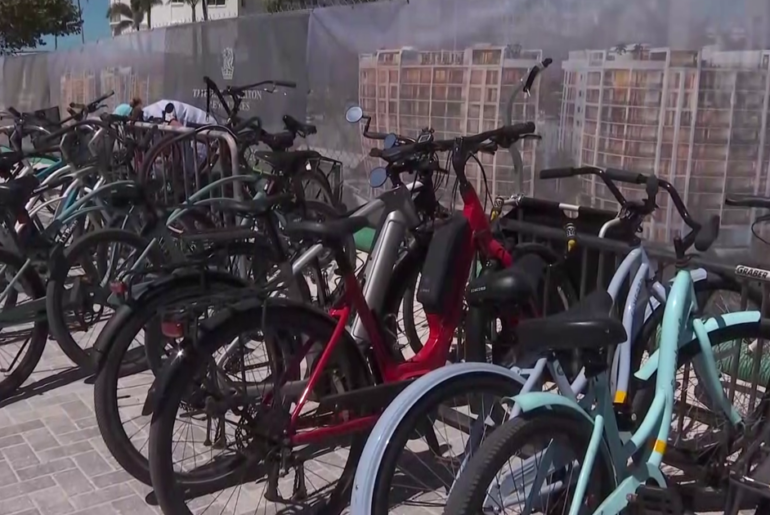
 Silverthorne is pictured on Sept. 29, 2025. Recently, Silverthorne and Breckenridge officials respectively discussed expanding electric bike usage.
Kit Geary/Summit Daily News
Both Breckenridge and Silverthorne officials reviewed and discussed electric bike, or e-bike, regulations at their meetings last week.
Breckenridge considered updating its policy for recreation disability accommodations by including the use of Class 1 and Class 2 e-bikes on certain non-motorized natural surface trails while Silverthorne showed support for Summit County Mountain Bike Alliance’s initiative to change electric bike regulations across the county.
Officials from both towns expressed a want to increase access to recreation as they fielded proposals to change regulation or support efforts that would change regulations.
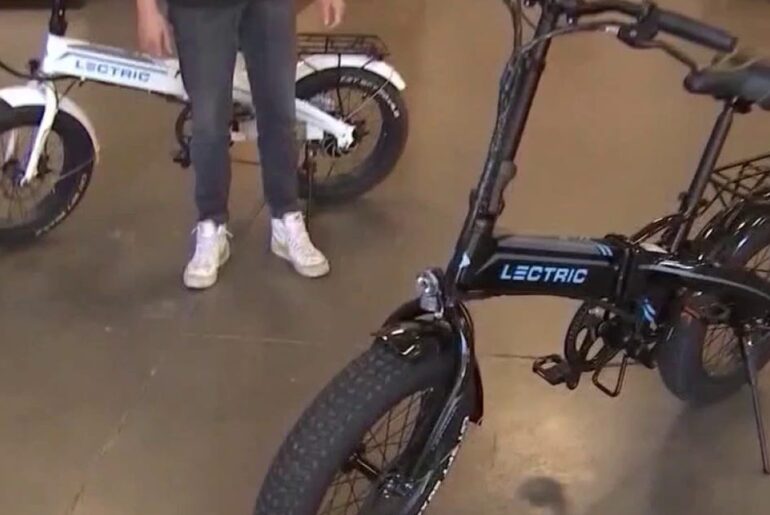
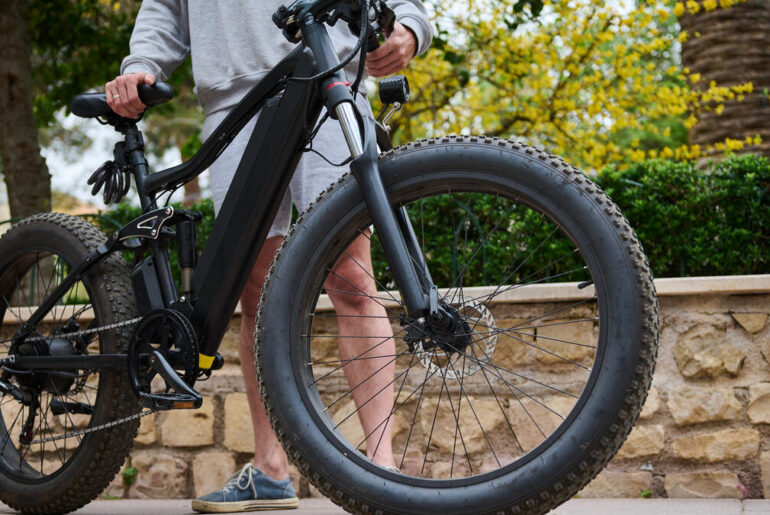
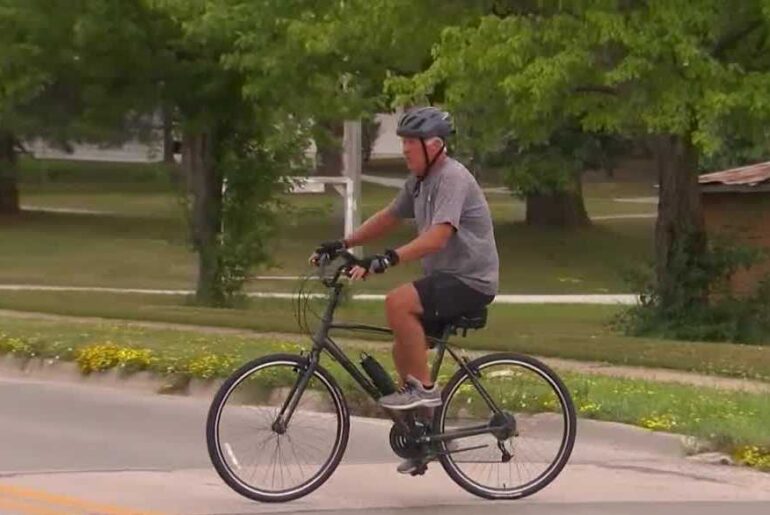
Class 1 e-bikes use a pedal-assist technology, and advocates said they can allow those with limited mobility who may be aging or living with a disability to bike. Class 2 e-bikes have both pedal-assist technology and a throttle. Neither surpass 20 miles per hour.
The conversations follow the Summit County Mountain Bike Alliance releasing a firm statement this summer advocating for the use of Class 1 e-bikes on trails in Summit County. The alliance backed its statement with studies conducted by various districts of the U.S. Forest Service, the Bureau of Land Management, the International Mountain Biking Association and the University of Vermont. Each study examined common complaints about e-bikes, with focuses on the environment, the trails and trail user’s experience and safety.
Silverthorne’s support for the Summit County Mountain Bike Alliance
At a Wednesday, Jan. 28, meeting, Silverthorne Town Council showed favor for a recommendation from a recreation-focused community committee to support Summit County Mountain Bike Alliance’s initiatives to allow for the use of Class 1 e-bikes on more trails across Summit County.
The group wants to encourage the U.S. Forest Service to conduct a feasibility study on allowing Class 1 e-bikes on trails. Council member Erin Young, who attended the Silverthorne Parks, Open Space Recreation & Trails Committee meeting, said the Summit County Mountain Bike Alliance wanted support from all municipalities before approaching the U.S. Forest Service. She said the alliance said the U.S. Forest Service won’t begin a feasibility study without support from the county and its municipalities.
Recreation and Open Space Manager Steven Herrman said the Summit County Mountain Bike Alliance said they are looking to gain support from Keystone, Silverthorne, Dillon and Frisco before approaching Breckenridge and Summit County.
The Silverthorne Parks, Open Space Recreation & Trails Committee voted 6-1 to provide Silverthorne’s support to the alliance’s initiative.
Herrman said the committee found that the mountain bike coalition’s initiative supported the town’s goal of increasing recreation accessibility.
Mayor Ann-Marie Sandquist said she understands the request to allow more use of e-bikes for those who are aging and having a harder time riding uphill. She said she’s heard from others that pedal-assist mountain e-bikes are going to tear up local trails. She also said she’s resistant to go against a recommendation from a community committee unless there’s a glaring reason to do so.
“This isn’t changing any town policy by any means tonight,” Herrman said. “It’s just kind of getting behind (the Summit County Mountain Bike Alliance’s) initiative.”
A staff memo noted there is an anticipated need for education, and even potential ambassador trail programs, if policy change occurs.
More on the Summit County Mountain Bike Alliance’s proposal can be found at TinyURL.com/SCoMBAproposal.
No formal vote was taken on the matter at the Jan. 28 meeting.
Breckenridge’s proposed updated policy
Breckenridge Town Council had a joint meeting with the Breckenridge Open Space Advisory Committee Tuesday, Jan. 27, and revisited criteria for other power-driven mobility devices on certain non-motorized natural surfaces to decrease barriers for people with disabilities.
Other power-driven mobility devices can make biking accessible for those with disabilities. They include devices like adaptive mountain bikes and e-bikes.
A staff memo noted the updating of the policy is meant to ensure continued compliance with the Americans with Disabilities Act.
Town staff members said they felt the town’s 2011 policy needed to be updated because of new innovations in other power-driven mobility devices and changes in state classifications. Additionally, the town’s policy didn’t consider the use of the devices on historic sites.
Under the 2011 policy, certain other power-driven mobility devices for those with disabilities are allowed in specific recreation areas. Town staff members proposed adding the use of Class 1 and 2 electric-assisted bikes on certain non-motorized natural surfaces to the list.
Town attorney Keely Ambrose said the town has an obligation to provide reasonable accommodations for those with mobility disabilities under the Americans with Disabilities Act, and staff members find Class 1 and 2 e-bikes to be reasonable accommodations.
Staff members said the town would use a pre-authorization process for e-bikes, which is a process they currently use for devices permissible under the 2011 policy. A pre-authorization process places the onus on the prospective user of a power-driven mobility device to read the town’s policy and ensure they meet the qualifications for using a permitted device, can operate the device safely and that the device wouldn’t damage the trails.
The commission and council wondered if there would be a definition for a mobility disability in the updated policy.Ambrose recommended not defining mobility disability in the policy because there is no definition of it in the Americans with Disabilities Act or in federal law, and the definition could either be too narrow or too broad.
The group discussed situations where people may try to qualify age as a mobility disability. Ambrose said age is not considered a disability, but there are age-related conditions that may qualify. Commission member Nikki LaRochelle asked if language explaining that could be added to the policy to provide clarity, and Ambrose said she’d look into it.
Commission member Bobbie Zanca said the commission has been approached by different groups who are pushing the commission to open the trails to e-bikes.
“Once this goes into place, they are going to say ‘Well, what’s your objection now to just generally opening it up,’” she said. “We haven’t really explored what the implications of a lot e- bikes are on our trails.”
Mayor Kelly Owens agreed there has not been enough assessment to open trails to e-bikes at-large. She said officials would want to know if the policy is written tight enough to only grant the use of e-bikes to people with disabilities.
Barlow said if groups ask if the policy is opening the door to e-bikes for all, the answer is no. The policy is only for people with disabilities who require assistance. Ambrose said there’s an opportunity to add language to the policy to make that “abundantly clear.”
No formal vote on the matter was made at the Jan. 27 meeting.