Key Points
Tesla’s electric vehicle (EV) sales are declining at an accelerating pace, so the company is shifting its focus away from the industry.
CEO Elon Musk is now directing most of Tesla’s resources to its Cybercab robotaxi and Optimus humanoid robot.
These new products present Tesla with an enormous financial opportunity, but that doesn’t mean investors should rush out and buy its stock.
These 10 stocks could mint the next wave of millionaires ›
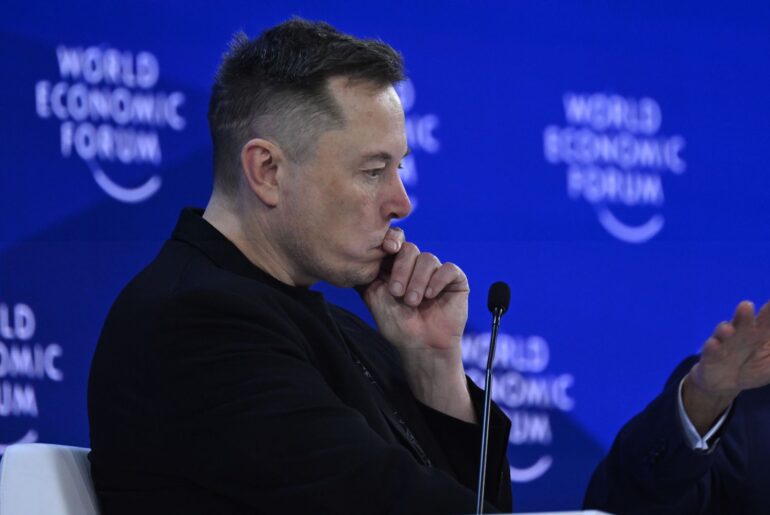
On Jan. 28, Tesla (NASDAQ: TSLA) reported its operating results for the final quarter of 2025. CEO Elon Musk’s conference call with investors was the highlight, because although the company had suffered a decline in electric vehicle (EV) sales, he talked about what the overall business could look like in the future.
Musk provided updates on the production timeline for Tesla’s autonomous robotaxi, the Cybercab, and announced that the company will discontinue two of its most popular passenger EVs to free up manufacturing capacity for its humanoid robot, Optimus.
Where to invest $1,000 right now? Our analyst team just revealed what they believe are the 10 best stocks to buy right now, when you join Stock Advisor. See the stocks »
Converting all of this new information into a clear investment decision isn’t easy, so let’s break down the good news and the bad.
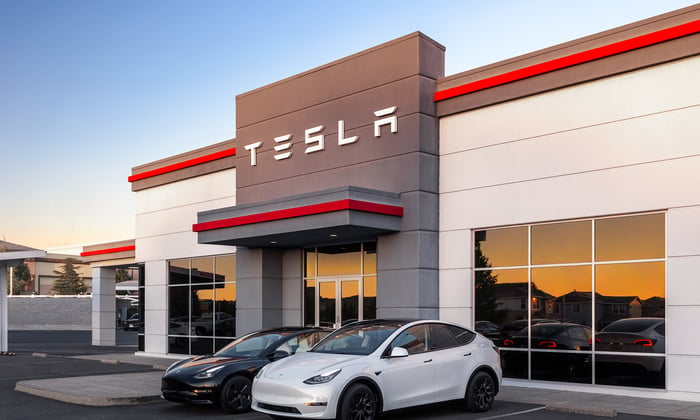
Image source: Tesla.
Let’s start with the bad news
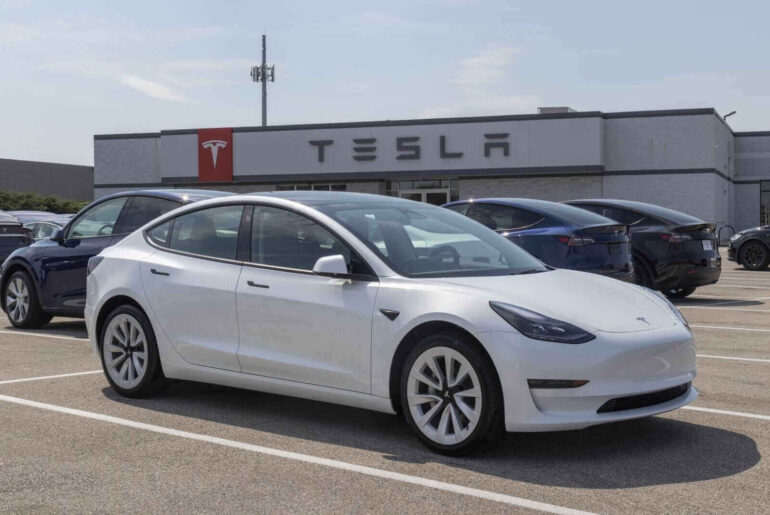
Tesla sold 1.79 million passenger EVs in 2024, which was a 1% drop from the prior year. That decline accelerated to 9% during 2025, with just 1.63 million deliveries, which should be setting off alarm bells for investors, because EV sales still account for 73% of the company’s total revenue.
Competition has been a big driver of Tesla’s recent struggles. The company is contending with attractive EV options from legacy automakers at the premium end of the market, but it’s also losing market share to manufacturers like China-based BYD (OTC: BYDDY), which offers cheaper options for budget-conscious consumers.
BYD sells its entry-level Dolphin Surf EV for just $26,900 across Europe, whereas Tesla’s Model 3 starts at over $40,000. Therefore, it’s no surprise BYD’s sales rocketed by 228% across the region last year, while Tesla’s sales plunged by 37%. In fact, Tesla’s decline was the largest of any other automaker with a presence in Europe.
Elon Musk believes autonomous cars are the future of the mobility industry, so he has resisted calls to invest Tesla’s resources into designing a low-cost passenger EV to compete with brands like BYD. In fact, he’s going in the complete opposite direction by shrinking Tesla’s passenger EV lineup, pulling two vehicles (the Model S and Model X) out of the market.
Here’s the good news
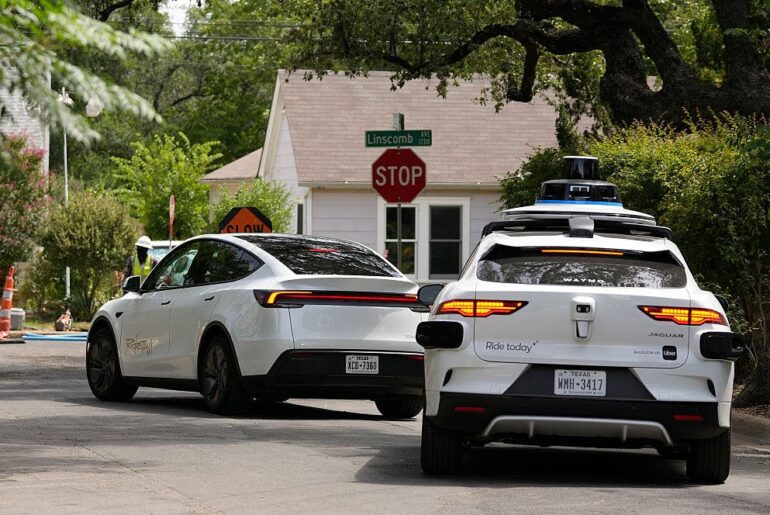
Tesla’s EV sales are likely to decline even further in 2026. However, the company hopes its Cybercab robotaxi will make up for some of the lost revenue. It will run on Tesla’s Full Self-Driving (FSD) software, enabling it to haul passengers and even small commercial loads 24 hours per day, seven days per week. In theory, this will create a series of new, highly profitable revenue streams for the company.
However, the unsupervised version of FSD still hasn’t received regulatory approval anywhere in the U.S., and Tesla needs to clear that hurdle before the Cybercab can actually hit the road. In his Jan. 28 conference call with investors, Musk said Tesla could have autonomous vehicles in up to half of U.S. states by the end of this year.
Another benefit of eliminating the Model S and the Model X is that it frees up production capacity in the company’s Fremont, California, facility for Optimus, a humanoid robot that Musk believes could pull in $10 trillion in revenue over the long term.
Humanoid robots could perform many of the most tedious or even dangerous tasks that most humans don’t want to do. Therefore, they will have a broad range of applications in manufacturing facilities, offices, and even households. That’s why Musk believes they could outnumber humans by 2040.
While autonomous vehicles and humanoid robots could be more valuable opportunities than EVs ever were, it’s important to remember they are still brand-new concepts. The Cybercab won’t enter mass production until April at the earliest, and Optimus faces a very uncertain timeline because Tesla has to build the entire supply chain from scratch.
Is Tesla stock a buy?
Valuation can be a very subjective topic. Tesla’s earnings plunged by 47% to just $1.08 per share during 2025, placing its stock at a price-to-earnings (P/E) ratio of 396. On the one hand, I will tell you that is ludicrously expensive — it’s about 12 times higher than the P/E of the Nasdaq-100 index (32.6), meaning Tesla’s valuation isn’t even in the same stratosphere as most of its big-tech peers.
On the other hand, Tesla stock is almost always expensive. Investors pay a premium for this company because they believe in Elon Musk’s ability to create value over the long term. Betting on Musk was the right move ahead of the EV revolution, so it could very well be the correct position again as autonomous vehicles and humanoid robots go mainstream.
However, investors shouldn’t ignore the substantial risk they are taking by purchasing Tesla stock at the current price. EV sales are shrinking at an accelerating pace, so products like Optimus and the Cybercab need to start generating revenue very soon to make up for the shortfall, which doesn’t seem likely considering they aren’t even in mass production yet.
As a result, even though Tesla probably has a bright future, its sky-high valuation opens the door to a substantial short-term correction, which is why I wouldn’t recommend buying it today.
Don’t miss this second chance at a potentially lucrative opportunity
Ever feel like you missed the boat in buying the most successful stocks? Then you’ll want to hear this.
On rare occasions, our expert team of analysts issues a “Double Down” stock recommendation for companies that they think are about to pop. If you’re worried you’ve already missed your chance to invest, now is the best time to buy before it’s too late. And the numbers speak for themselves:
Nvidia: if you invested $1,000 when we doubled down in 2009, you’d have $495,739!*
Apple: if you invested $1,000 when we doubled down in 2008, you’d have $49,363!*
Netflix: if you invested $1,000 when we doubled down in 2004, you’d have $450,256!*
Right now, we’re issuing “Double Down” alerts for three incredible companies, available when you join Stock Advisor, and there may not be another chance like this anytime soon.
*Stock Advisor returns as of February 3, 2026.
Anthony Di Pizio has no position in any of the stocks mentioned. The Motley Fool has positions in and recommends Tesla. The Motley Fool recommends BYD Company. The Motley Fool has a disclosure policy.
The views and opinions expressed herein are the views and opinions of the author and do not necessarily reflect those of Nasdaq, Inc.