Editorial & Advertiser disclosure
Global Banking and Finance Review is an online platform offering news, analysis, and opinion on the latest trends, developments, and innovations in the banking and finance industry worldwide. The platform covers a diverse range of topics, including banking, insurance, investment, wealth management, fintech, and regulatory issues. The website publishes news, press releases, opinion and advertorials on various financial organizations, products and services which are commissioned from various Companies, Organizations, PR agencies, Bloggers etc. These commissioned articles are commercial in nature. This is not to be considered as financial advice and should be considered only for information purposes. It does not reflect the views or opinion of our website and is not to be considered an endorsement or a recommendation. We cannot guarantee the accuracy or applicability of any information provided with respect to your individual or personal circumstances. Please seek Professional advice from a qualified professional before making any financial decisions. We link to various third-party websites, affiliate sales networks, and to our advertising partners websites. When you view or click on certain links available on our articles, our partners may compensate us for displaying the content to you or make a purchase or fill a form. This will not incur any additional charges to you. To make things simpler for you to identity or distinguish advertised or sponsored articles or links, you may consider all articles or links hosted on our site as a commercial article placement. We will not be responsible for any loss you may suffer as a result of any omission or inaccuracy on the website.
Published by Global Banking and Finance Review
Posted on February 2, 2026
2 min read
Last updated: February 2, 2026
Impact of EU Proposals on Electric Vehicle Sales
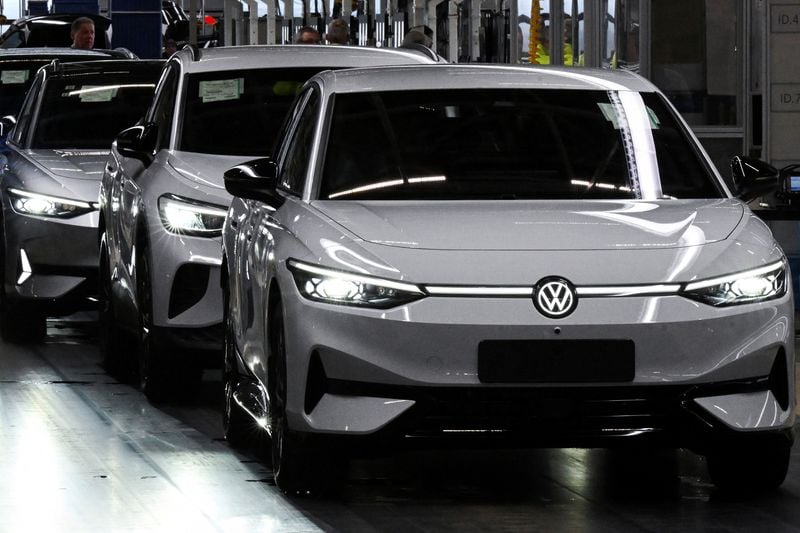
BRUSSELS, Feb 3 (Reuters) – Electric vehicles are likely to make up 85% of new car sales in the EU from 2035, based on its plans to drop an effective ban on new combustion-engine models, although that share could drop as low as 50%, clean transport advocacy group T&E said.
Criticism from T&E
Under pressure from carmakers, the European Commission in December proposed a 90% cut in CO2 emissions in 2035 from 2021 levels, instead of zero for all new cars and vans.
Financial Implications for Carmakers
T&E has criticised the EU’s biggest retreat from its green policies in years, saying the proposals will allow continued sales of high CO2-emitting vehicles, while Chinese producers race further ahead in battery electric vehicles (BEVs).
Future of Combustion Engine Sales
The European Commission said in December that its plans would support sales of EVs in the EU and save vehicle makers 2.1 billion euros ($2.5 billion) over three years, freeing up resources for innovation and new electric models.
In a report published on Tuesday, T&E said carmakers could sell anywhere between 5% and 50% of non-BEVs after 2035, the lowest share based on a carmaker continuing to sell high emissions internal combustion engine cars, the highest share if it sells the most efficient extended-range plug-in hybrids.
T&E said the most likely figure was 15%, with sales of some combustion engine and some plug-in hybrid vehicles.
Together with an extended time period to comply with 2030 targets, the report said car CO2 emissions would be 10% higher between 2025 and 2050 than under current tighter rules.
T&E said there was also a risk of further weakening of rules when the proposals came up for debate in the European Parliament and in the Council, the grouping of EU governments.
Both will need to approve the changes.
($1 = 0.8474 euros)
(Reporting by Philip Blenkinsop; Editing by Alexander Smith)