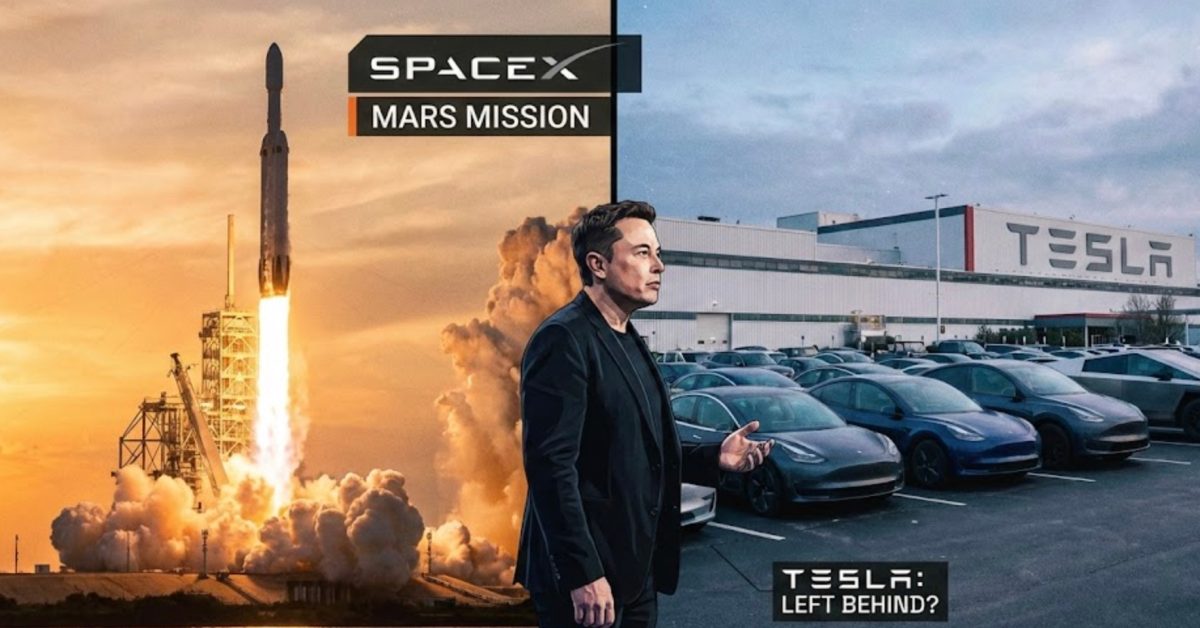
SpaceX announced today that it has acquired xAI, Elon Musk’s AI company, in a deal that creates a combined entity reportedly valued at $1.25 trillion ahead of a planned IPO. The acquisition notably does not include Tesla, which just invested $2 billion in xAI last month.
The deal
Musk announced the acquisition in a blog post describing SpaceX-xAI as “the most ambitious, vertically-integrated innovation engine on (and off) Earth, with AI, rockets, space-based internet, direct-to-mobile device communications and the world’s foremost real-time information and free speech platform.”
The deal combines SpaceX (valued at roughly $800 billion in its last secondary offering) with xAI (valued at $230 billion after its recent $20 billion funding round). The merged company is expected to pursue an IPO later this year that could raise as much as $50 billion, according to the rumors on Wall Street.
Musk’s stated vision is to build “orbital data centers”, a constellation of up to one million AI satellites that would harness solar power in space to run AI compute. SpaceX filed with the FCC last week for authorization to launch these satellites.
Advertisement – scroll for more content
“My estimate is that within 2 to 3 years, the lowest cost way to generate AI compute will be in space,” Musk wrote.
Where does this leave Tesla?
Here’s the critical question for Tesla investors: what does this mean for the $2 billion that Tesla just invested in xAI?
That investment now becomes an indirect stake in the combined SpaceX-xAI entity. Tesla shareholders effectively own a small stake in SpaceX through that investment.
The deal also raises significant questions:
1. Tesla is clearly not part of “Musk Inc”
When merger rumors first surfaced last week, there was speculation that Tesla could be included in a three-way combination. That didn’t happen, and it couldn’t easily happen, given Tesla’s public shareholder base and the fiduciary complications of merging a public company into a private one.
This creates a clearer picture of Musk’s empire: SpaceX-xAI-X on one side (space, AI, social media), and Tesla on the other (vehicles, energy, robotics). The question is whether Musk’s attention and priorities will follow the larger, more ambitious entity.
2. The cash flow goes one direction
Tesla is now funneling billions in shareholder capital into an entity that competes for Musk’s attention and potentially for AI talent and resources. SpaceX reportedly generated only a between $2 and 5 billion in profits in 2025. xAI, meanwhile, is burning cash at an alarming rate trying to compete with OpenAI, Google, and Anthropic.
By combining the two, Musk gives xAI access to SpaceX’s profitable operations to fund its AI ambitions, but the more likely goal is to give xAI investors an exit strategy through SpaceX’s imminent IPO.
3. Conflict of interest concerns remain
The lawsuit over Tesla’s xAI investment alleged breach of fiduciary duty, arguing that Musk was using Tesla’s balance sheet to prop up his private companies. This acquisition doesn’t resolve those concerns, if anything, it makes the web of transactions more complex.
Musk owns roughly 18% of Tesla, 42% of SpaceX (with 79% voting control), and a controlling stake in xAI. Every dollar that moves between these entities benefits him in different ways. Tesla’s board has shown zero willingness to push back on any of it.
Electrek’s Take
Let’s be clear about what happened here: Musk bailed out xAI, a virtual cash furnace that’s lagging behind the competition both as a social media platform and as an AI company.
It’s basically the SolarCity bailout of 2016 all over again.
Tesla shareholders funded $2 billion of this deal last week, but amid the shareholders’ lawsuit, it’s still unclear what will come out of it.
The stated rationale, that space-based AI will somehow benefit humanity, is pure Musk futurism. Maybe it works out. But the immediate reality is that Tesla’s CEO now runs a separate company that is larger, arguably more ambitious, and competing for the same AI talent and mindshare as Tesla.
Now, it’s not going after private money anymore, but public money, just like Tesla.
For a company that just reported its second consecutive year of declining vehicle sales, this is not the vote of confidence investors were hoping for.
FTC: We use income earning auto affiliate links. More.