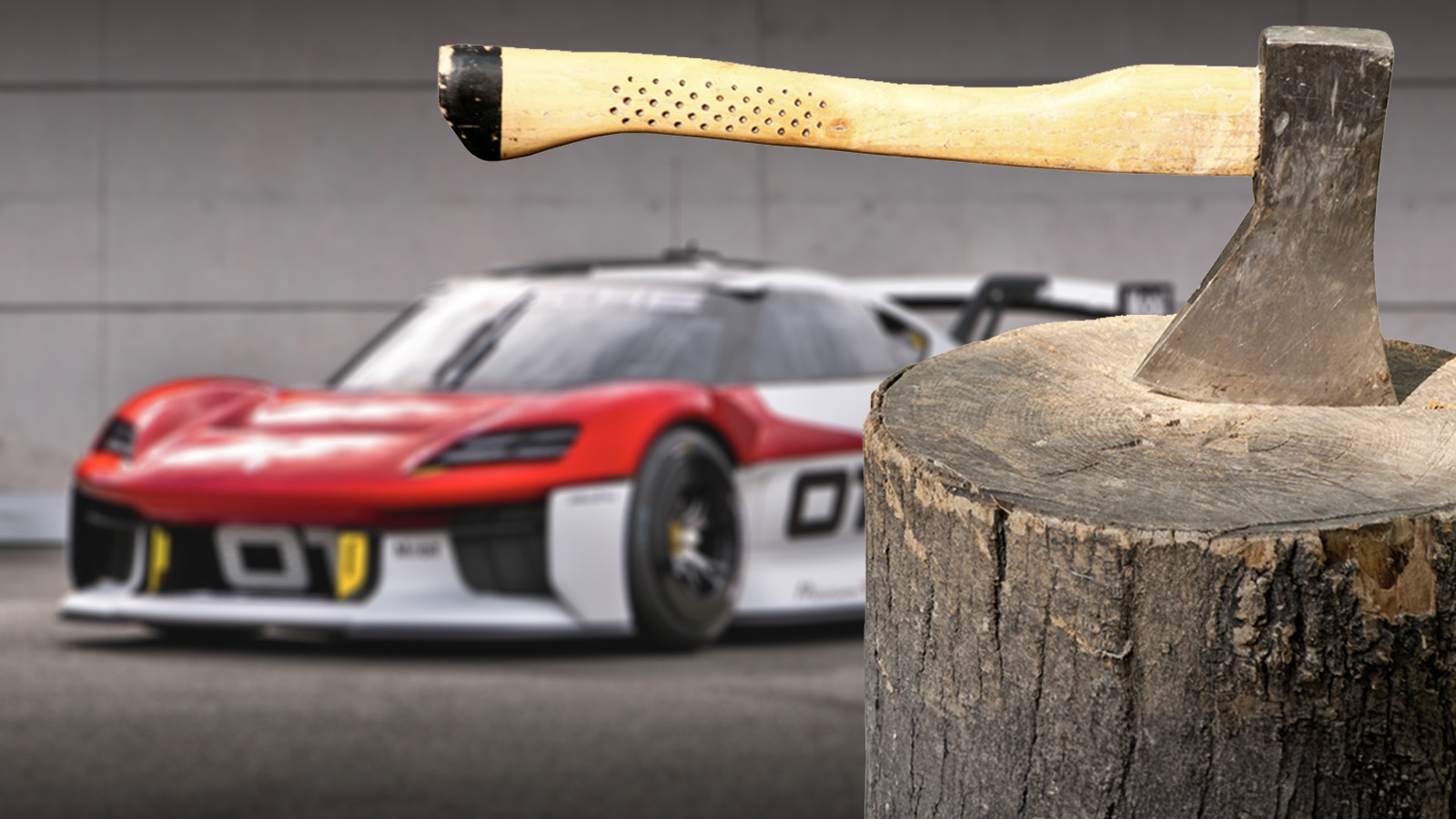
For the past few years, one question has been at the back of sports car fans’ minds: What’s going on with the electric Porsche 718? What began as a bold move has, over time, faced setbacks and delays. Now there’s a chance Porsche might shelve it altogether to trim expenses. As Bloomberg reports:
New Chief Executive Officer Michael Leiters may scrap the planned 718 line of Boxster and Cayman EVs because of development delays and rising expenses, said the people, who declined to be named discussing internal deliberations.
While a final decision certainly hasn’t been made yet, a credible report that cancelling the electric 718 Cayman and Boxster is on the table represents a serious about-face. Let’s rewind the clock four years to the time when Porsche announced that all variants of its next-generation 718 mid-engined model series would be battery electric vehicles.


At the time, electric performance cars were still pretty hot. An electron-powered sedan arms race was brewing between the Tesla Model S Plaid and the then-forthcoming Lucid Air Sapphire, the Rimac Nevera was putting out some astonishing figures, and to some, an all-electric near future looked feasible. The initial plan involved batteries from Northvolt, an evolution of familiar styling, and a new architecture. It didn’t take long for spy shots to start appearing on the internet. In 2023, mildly disguised versions of the electric 718 Boxster were spotted by automotive paparazzi, which lined up with a targeted launch for 2025. Yeah, that launch didn’t end up happening on schedule.
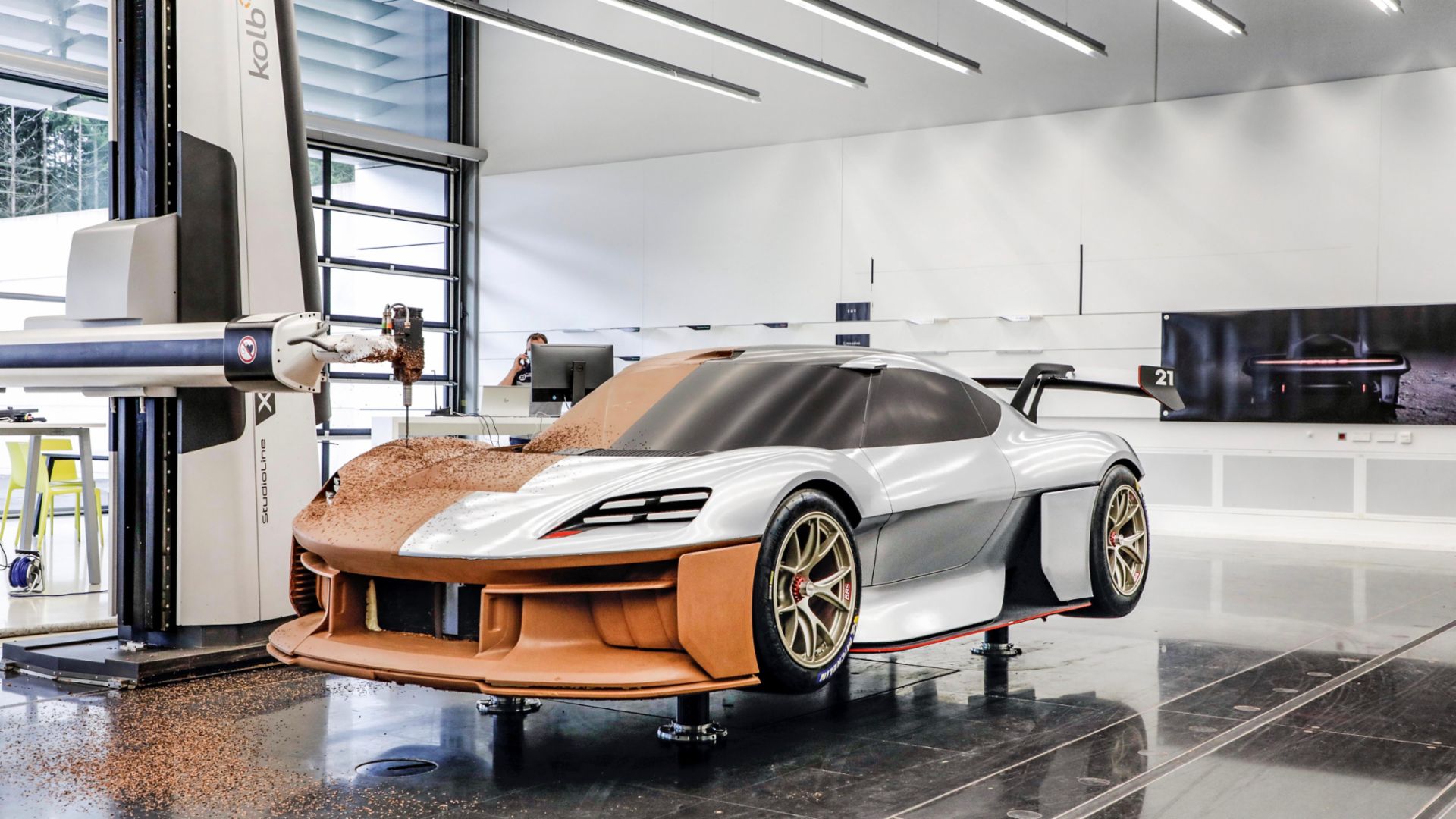 Photo credit: Porsche
Perhaps the first real sign of trouble came in 2024, when an Automotive News report claimed that the switch to electric power in a sports car wasn’t going smoothly for Porsche, and it was going even less smoothly for battery pack supplier Valmet Automotive.
The automaker is finding it difficult to match the driving characteristics in the sport cars with the move to a battery powertrain from a mid-engine combustion one.
The challenges that this presents have led to Porsche to seek frequent changes from battery supplier Valmet Automotive, which has built a factory in the German state of Baden-Württemberg specifically for the order. Valmet is seeking compensation for the extra work that Porsche does not want to pay or only wants to pay partially, according to the report.
While Valmet Automotive was slated to build the battery packs, the cells themselves were expected to come from Swedish supplier Northvolt. In March of 2025, Northvolt filed for bankruptcy in Sweden. The supposed key player behind the 718 EV’s battery cells was having to restructure, and while overall delays can’t concretely be pinned on that alone, it likely didn’t help.
 Screenshot: Porsche
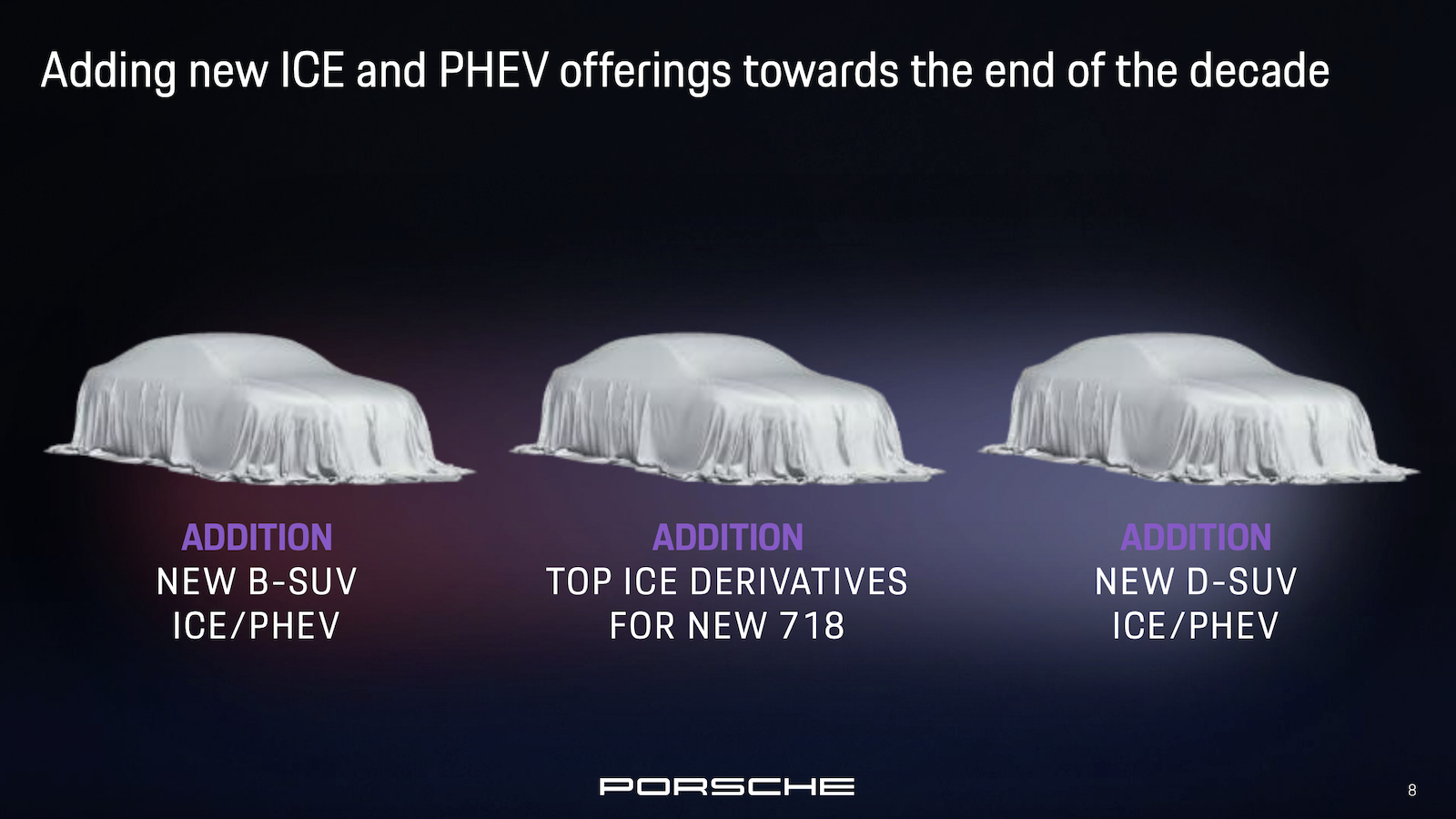
In September, Porsche seemed like it was altering plans. During an investor call, former Porsche CEO Oliver Blume announced that top versions of the next-generation 718 would feature internal combustion. Considering the model was initially designed to be all-electric, this sort of switch-up would require some substantial re-engineering. As Autocar reported in December:
The PPE Sport platform uses a stressed, load-bearing battery pack and a flat floor, so removing the battery would significantly weaken the entire bodyshell.
As a result, the proposal from Porsche engineers centres on developing a new structural floor section that bolts into the platform’s existing hard points, effectively adding the rigidity back in. A redesigned rear bulkhead and subframe will then support the engine and transmission, Autocar has been told.
Major packaging constraints remain, not least because the electric structure provides no central tunnel, nor provision for a fuel tank, fuel lines or exhaust system. Engineers suggest these measures require the development of a completely new rear section because the architecture was never designed for a petrol engine.
If we take a step back and look at basically every prior generation of Boxster and Cayman, the fuel tank has historically resided up against the front bulkhead, fuel lines ran along a fairly flat floor, shifter cables snaked through the rear firewall, and coolant lines often got tucked up alongside the outer sill. That’s already a lot to package, and that’s before we even start to think about a capable heat exchanger stack or the internal combustion powertrain itself. Considering the MMB platform underneath the outgoing 718 is technically shared with the current 911, and that Porsche has previously spun mid-engined and rear-engined cars from similar cloth, reworking the PPE Sport platform for internal combustion doesn’t seem like the easiest path forward.
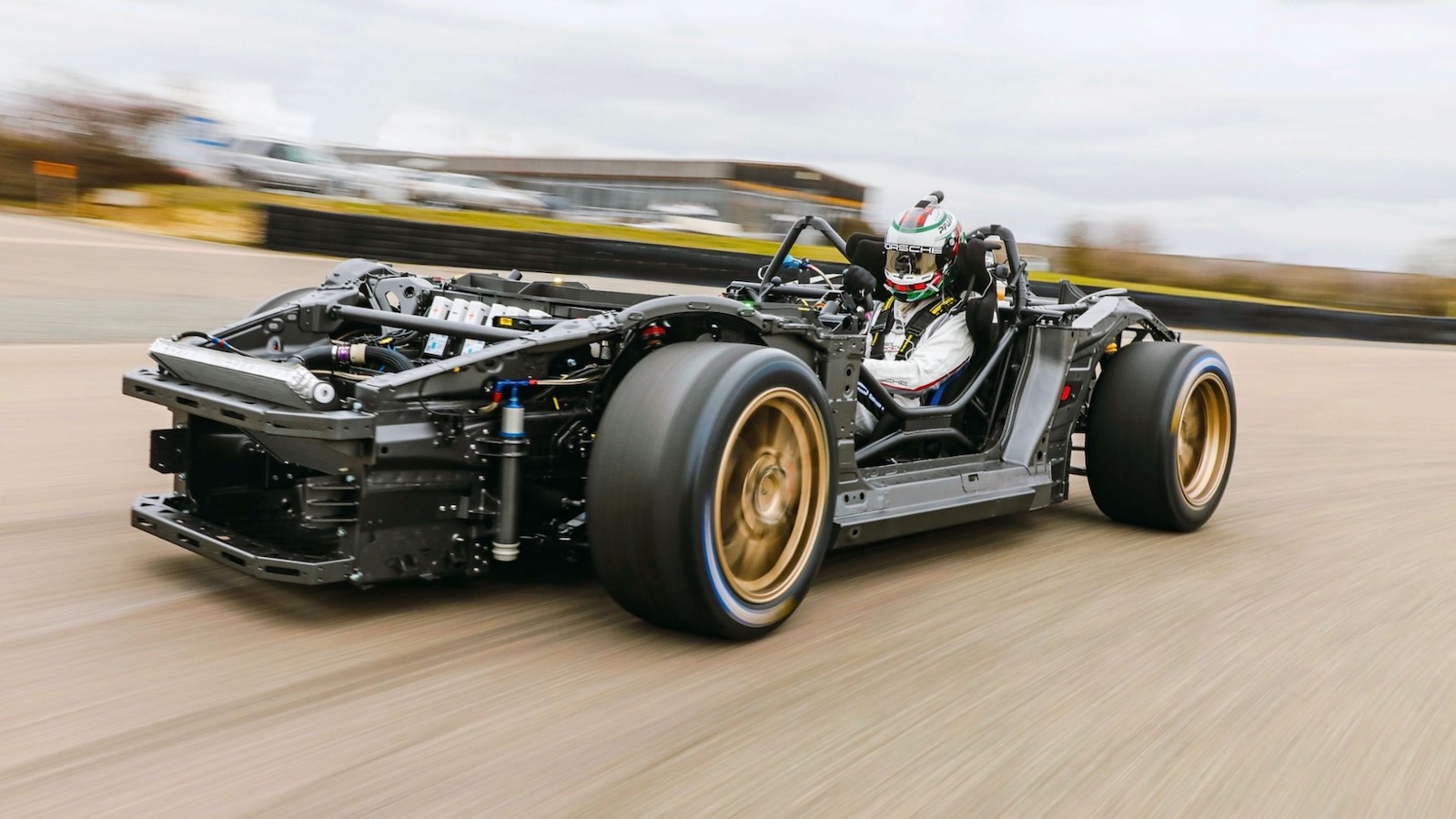 Photo credit: Porsche
Of course, there’s also the possibility electric versions of the next 718 Cayman and Boxster make it to production. Porsche is deep in the running prototype phase, and cancelling a project this late is often an expensive proposition. Even if this rumoured shelving doesn’t happen, the general demand for electric sports cars might not be strong enough for success.
Unless engineered completely from the ground up with a huge focus on weight savings, electric sports cars often don’t have all the same advantages over contemporary sedans that combustion-powered sports cars do. While the energy density of battery cells has improved, even assuming 200 watt-hours-per-kilogram, a decent-sized battery pack is going to be fairly heavy compared to an internal combustion powertrain. Add in the low center of gravity that most modern skateboard platforms feature, and it shouldn’t be surprising that top-flight electric sedans can now go toe-to-toe with serious machinery. The Xiaomi SU7 Ultra beat the Rimac Nevera around the Nürburgring, and the Porsche Taycan Turbo GT is only a bit over two seconds behind the Croatian electric hypercar.
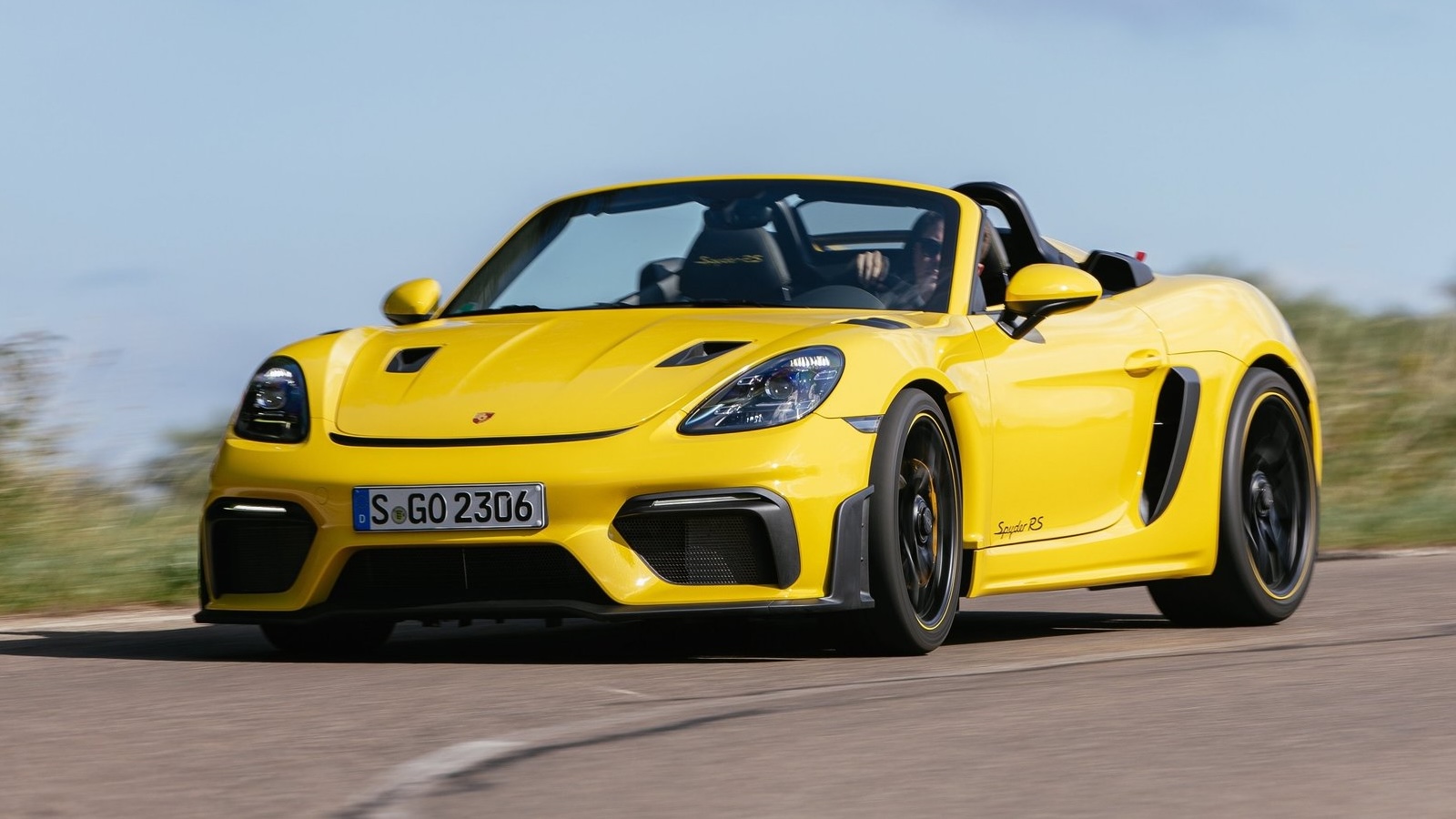 Photo credit: Porsche
At the same time, sports car culture is currently celebrating everything mechanical. From naturally aspirated engines to manual transmissions, the EV democratization of straight-line speed has shifted focus towards engagement. While Taycan electric sedan sales in America were down 12.7 percent last year, sales of the 718 were up 12.3 percent in its final year of production, outselling the Taycan by 54.5 percent. For the next model cycle or so, it seems that a combustion-powered mid-engined sports car is what the people want, rather than something electric. There’s also the possibility that the technology underpinning the electric 718 might be outdated by the time it’s expected to launch. The EV sports car world was thin in 2025, now models like the MG Cyberster and JMEV SC01 are either on sale in Europe or headed there.
If the electric Porsche 718 ends up becoming lost media like the Hyundai Portico, it would be both a shame and one of the greatest automotive stories of all time. Even if an electric sports car might not be the same as a combustion-powered one, it’s still something I’d like to experience. For now, we’ll just have to wait for Porsche to make a decision.
Top graphic images: Porsche; DepositPhotos.com