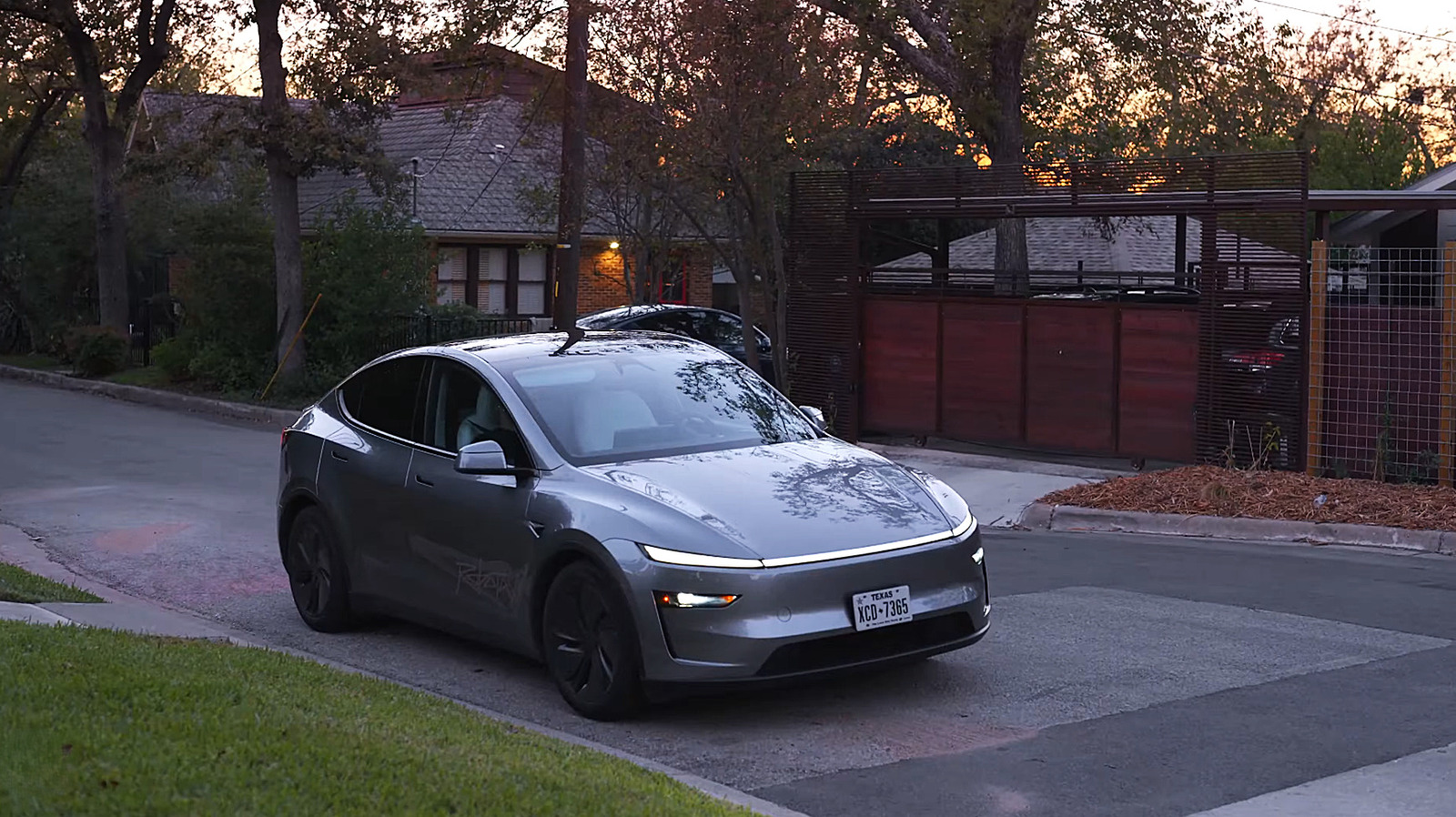
Tesla is testing unsupervised taxi rides for its Robotaxis in Austin, Texas. The move, announced by Tesla on X, will see the company’s driverless taxis ferrying customers around the city sans overwatch, at least, in the taxis themselves. There are claims that the safety monitors have indeed been removed from the vehicles in question, but instead may now be trailing behind in unmarked Tesla Model Y vehicles. The safety monitors are meant to watch for problems during the ride and may potentially take remote control or intervene when necessary.
In another post on X, Elon Musk congratulated the Tesla AI team. That post is also a reply to a video shared by Joe Tegtmeyer, and in it you can hear him saying, “You’ll also notice behind the Model Y is a chase car, I think they’re using that for validation.” No one has officially confirmed what the secondary car is doing. The secondary vehicle may not be there for future rides.
Ultimately, it’s a big step forward for Tesla’s Robotaxis and signals they may be closer than ever to a more widespread rollout. Even if the safety monitor is still nearby, offering seemingly autonomous rides with no one else in the vehicle is the goal. Tesla’s Robotaxi marketing teases a “purpose-built fully autonomous vehicle” that will “offer rides in your area in the future.” Austin is the only city currently where there’s no one else in the vehicle supervising, but if you want to hail a an autonomous taxi, there are several cities around the U.S. to do so, including Los Angeles, Phoenix, and Atlanta, although most are spearheaded by Waymo.
What does an unsupervised Robotaxi ride look like?
From a combination of reporting and the videos shared of the Robotaxi in operation, we have a much better idea of what future rides will look like when engaging with Tesla’s autonomous vehicle service. It’s not altogether different from Waymo’s self-driving taxis, which recently expanded service into several major U.S. cities. The Model Y Robotaxi in the video appears slower and more deliberate in its driving patterns by comparison, especially when passing through intersections.
Not a Tesla App also reports that the user interface and experience inside the taxi is much different from standard Model Ys in the hands of consumers — which makes a lot of sense. The Robotaxis still have all the usual physical controls, like a steering wheel, versus Tesla’s upcoming Cybercab. There is also reportedly a software lockout preventing passengers from hijacking the ride. Even if a passenger tugs on the steering wheel or tries to adjust course, the Robotaxi system will ignore the input.
We can also see, in a demonstration on Tesla’s Robotaxi page, that passengers will interact with a rear display, likely confirming their destination as chosen through the mobile app. That display will also show ride progress and other critical ride information, and even allows riders to choose their music. It’s pretty neat to think that, soon, you’ll be able to kick back in a Tesla Model Y Robotaxi and ride around your city, all hailed through the Robotaxi app. As for why the Tesla Model Y is the model of choice, that’s likely because it’s long proven its reliability — one of the first EVs to be considered one of the world’s best-selling cars.