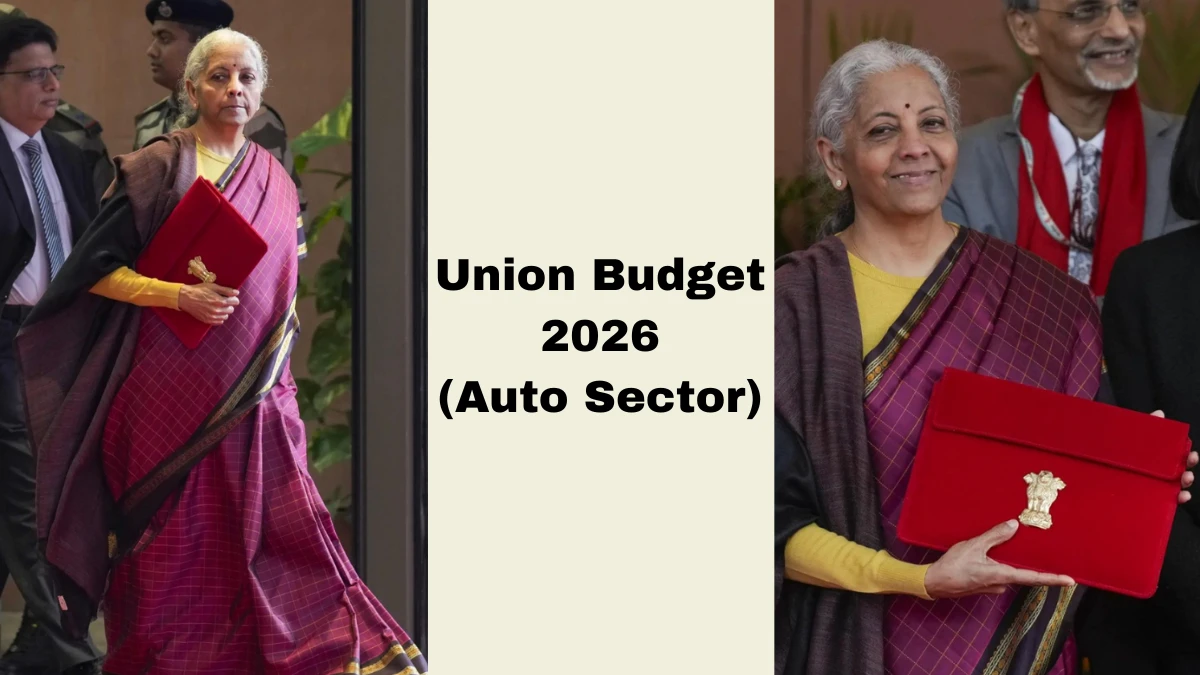
The Union Budget 2026, presented by Finance Minister Nirmala Sitharaman, brings several important updates for the automobile sector in India. The budget focuses on promoting electric vehicle (EV) production, reducing fuel costs, and boosting local manufacturing. Here are the key updates that will impact the auto industry.
Also Read: Car Sales Report January 2026 – Tata Beats Hyundai by Big Margin
1. Focus on Electric Vehicle (EV) Battery Production
One of the major updates in the Union Budget 2026 for the auto sector is the extension of duty exemptions on capital goods used for lithium-ion cell manufacturing. This move will help reduce the cost of producing batteries locally, making electric vehicles (EVs) more affordable. By lowering reliance on imported batteries, this step will also support local battery production, which will be crucial for the growing EV market in India.
2. Customs Duty Relief for Critical Minerals
The government has proposed a customs duty exemption on capital goods used for processing essential minerals like lithium, cobalt, and rare earth elements. These minerals are needed for EV batteries and motors. By encouraging local processing, this move will reduce India’s dependence on imported minerals, ensuring a more stable supply chain and ultimately lowering the cost of electric vehicles in the long run.
3. Full Excise Relief on Biogas-blended CNG
The budget has also introduced a full excise duty exemption on the biogas portion of biogas-blended CNG. This will help reduce the cost of CNG, particularly for vehicles running on this greener fuel alternative. As a result, consumers could see lower retail prices for CNG, making it a more affordable and sustainable fuel option.
4. Strengthening the Semiconductor Industry
With the increasing reliance on semiconductors in automobiles, the Union Budget 2026 also highlights the importance of the semiconductor sector. The India Semiconductor Mission (ISM) 2.0 will now focus on not only chip manufacturing but also the production of semiconductor materials, equipment, and intellectual property. This will help the auto industry secure a steady supply of chips and reduce supply chain disruptions.
5. Improved Logistics for the Auto Industry
The budget proposes the creation of a new dedicated freight corridor between Dankuni in Eastern India and Surat in the West. This corridor will help shift freight from road and rail to more sustainable transport modes, easing congestion and reducing logistics costs for the automotive industry. Additionally, the development of 20 new national waterways will improve the movement of goods and further enhance the efficiency of the logistics network.
6. Rare Earth Corridors for EV Production
The government has also announced plans to create rare earth corridors in states like Odisha, Kerala, Andhra Pradesh, and Tamil Nadu. These corridors will help secure a steady supply of critical minerals needed for EV battery production, reducing reliance on imports and making local EV manufacturing more efficient.
7. Support for Small Auto Parts Manufacturers
Small and medium-sized enterprises (SMEs) that supply parts to car and EV manufacturers will benefit from the budget’s proposal for a Rs. 10,000 crore SME Growth Fund. This fund will provide financial support to auto component manufacturers, helping them improve their production capacity, upgrade machinery, and enhance the quality of their products.
Conclusion
The Union Budget 2026 brings several key updates that will benefit the auto sector, particularly in the areas of electric vehicle production, fuel cost reduction, and local manufacturing. With support for battery production, the semiconductor industry, and small auto parts manufacturers, the budget sets a solid foundation for the continued growth and sustainability of the automobile industry in India.
Also Read: Skoda Slavia Facelift Launch by mid-2026 – Panoramic Sunroof, 8AT