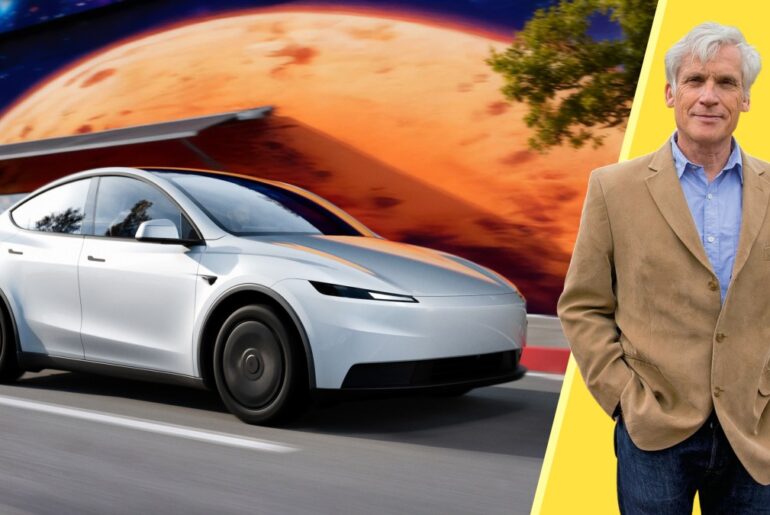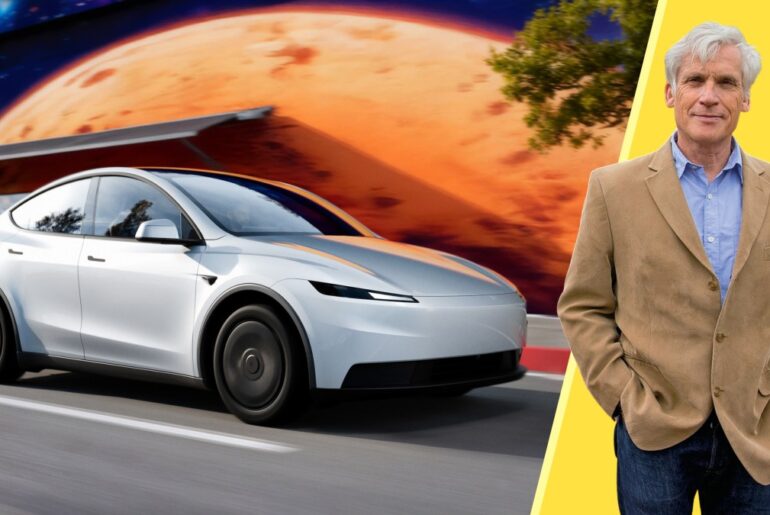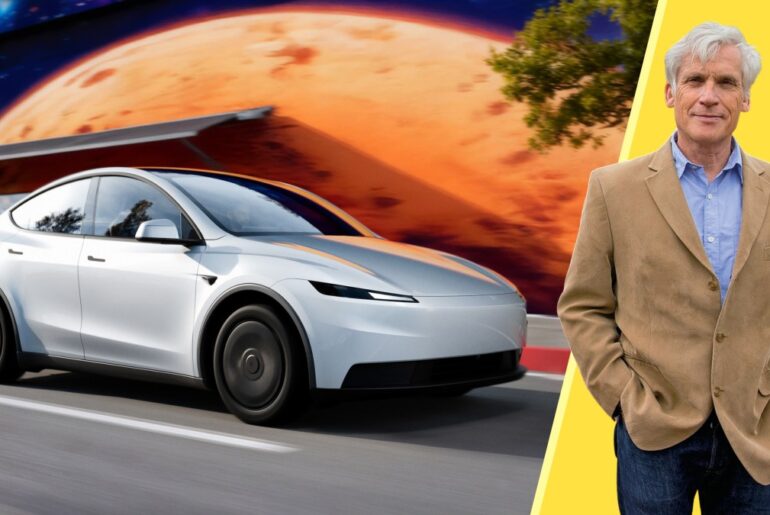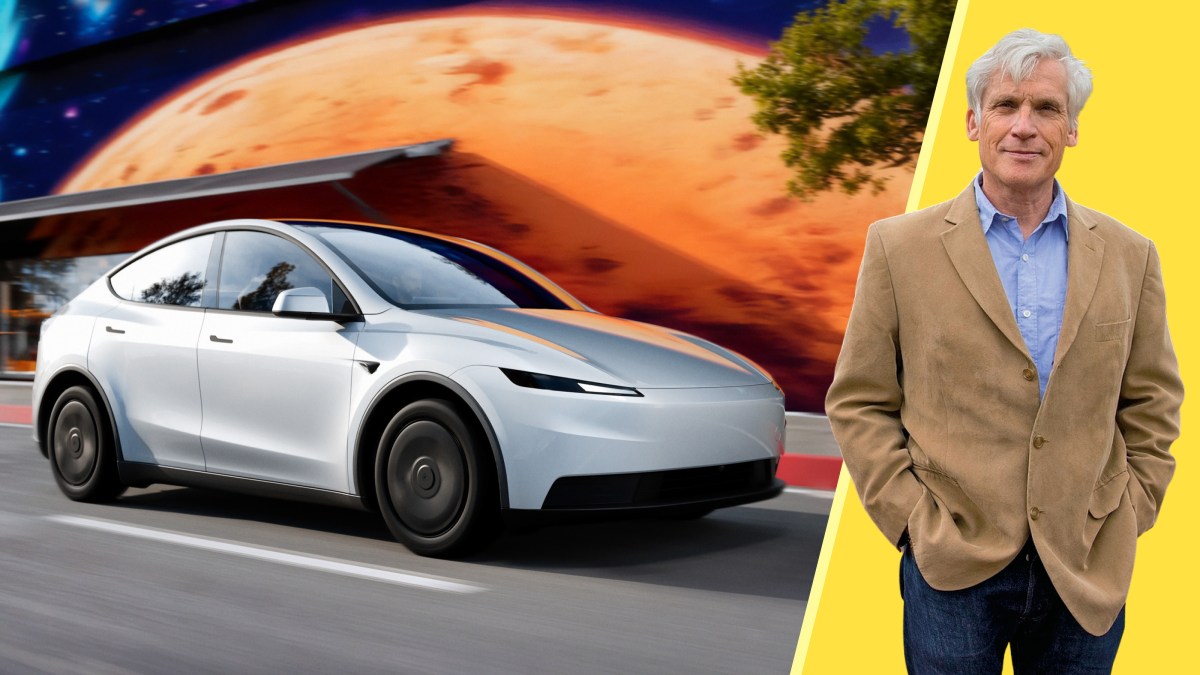
Tesla has produced more than three million Model Ys and its family-sized, all-electric SUV was the world’s bestselling car in 2023 and 2024. The company can now afford to pile ’em high and sell ’em cheap, as Ford used to say of the popular Mustang.
A warm welcome, then, to the Model Y Standard, known unofficially as the “cheapo” Y, costing £41,990 or £299 a month. That’s £19,000 less than the list price of the first batch of new generation Ys that arrived last year, and cheap enough to take on the wave of cut-price electric vehicles (EVs) arriving from the Far East. If you can live with a 314-mile range, cloth fabric instead of vegan leather and manually folding rear seats, the cheapo may be for you.
Owners of existing Model Ys say they like their cars because they’re comfortable and quick, the technology is clever and Tesla’s supercharging network makes them as convenient to run as an electric car can be. They also talk of a lifestyle choice. Apple wooed iPhone customers with dedicated accessories and apps and iCloud storage; Tesla owners get access to home chargers, wireless fixes and updates, and a Tesla app that makes it easy to plot the fastest route between charging stations. Currently there are more than 2,000 Tesla charging bays at 200 prime sites on motorways and in urban areas.
So what’s the cheapo like to drive and what do you sacrifice compared with more expensive models? The first thing to note is that it has none of the usual “poverty spec” features associated with entry-level models, such as missing bits of trim and blanked-off spaces where buttons should be. In fact it incorporates most of the improvements of the refreshed Y range. These include redesigned suspension that smooths out the lumps and thumps that afflict the ride quality of many EVs. I tested the Standard on some potholed roads in southeast London and Kent, where recent wet weather has turned suburban streets into cratered battlefields. The car tackled them with impressive suppleness. Double-layer acoustic glass reduces noise and there’s a suite of useful electronic driver-assist systems that, if you want, will match your speed to that of the traffic, steer round obstacles and stop at traffic lights.
• Can I use a Tesla charger if I don’t drive a Tesla? Your questions answered
There are also Tesla’s usual idiosyncratic features — fun or puerile depending on your inclination. A fart function — called Emissions Testing Mode — will generate a variety of rude sounds from a passenger seat selected by the driver. Ass (Actually Smart Summon) is part of a £3,400 options package that enables you to stand up to six metres from the car in a car park or driveway — it doesn’t work on public roads in the UK — and summon it with your phone from a parking space or park it in a tight spot. More seriously, the Standard Y — in common with all new-gen Ys — has no gear selector. The gearchange is located within the central screen. Swipe up for drive, down for reverse and tap for park. A bit touchtastic but it’s surprising how quickly you get used to it. At least the indicator stalk has been restored after Tesla flirted on earlier models with cumbersome buttons to operate the turn signal.
Nick Rufford demonstrates the ‘summon’ function
To eke out the miles, the acceleration has been dialled down (0-62mph in 6.9 seconds, compared with 5.4 seconds in the £48,990 version of the Y). Also the top speed (110mph versus 125mph). This doesn’t detract much from driving enjoyment and also puts the Standard into a cheaper insurance category. More advanced self-drive systems are available, but most people won’t be shelling out for Full Self Drive (FSD), a £6,800 option. Tesla has been selling FSD for at least seven years but regulators haven’t yet allowed it to be switched on. The company is now offering the first ride-along demonstrations in the UK — it’s called “supervised” FSD to emphasise that the driver must always be ready to take control. An actual fully self-driving car would be what experts call a Level 5 autonomous system. Tesla’s supervised FSD is a good Level 2 system.
• What’s the best electric car charging network? Our expert’s verdict
Such constraints aside, the cheapo Y, built at Tesla’s German gigafactory, offers a lot of electric car for the money, with a decisively upmarket feel and low running costs. If you want an extra 73 miles of range — 387 in total — you can spend £7,000 more for the Long Range rear-wheel-drive model. The extra outlay also pays for a front light bar, an infotainment screen for rear passengers, glass roof and ventilated seats. But the Standard Y has plenty of creature comforts, including an electric tailgate, heated steering wheel and a decent sound system.

As you’ve probably noticed, there’s a price war going on at the entry-level end of the EV market. The EU has imposed 10 per cent tariffs on imported Chinese cars, while the US’s tariffs are so punitive they almost amount to a ban. As a result Chinese vehicles are being sold in Britain at fire-sale prices. Can the Y hold its own against the likes of the BYD Seal 6, from £34,015?
• Read more expert reviews, news and insights on cars and motoring
So come on, Tesla, let’s see you using your market muscle. It’s true that Tesla sales have dipped in Europe following a political backlash against Elon Musk, Tesla’s outspoken CEO. Musk seems unperturbed, suggesting that in 2025 the Model Y slipped from its position as world’s bestselling car — it came third after the Toyota Corolla and RAV4 — because customers were awaiting the refreshed version. He told a conference: “We make the best cars. Whether you hate me, like me or are indifferent, do you want the best car or not the best car?” These are tricky waters for car buyers to navigate, especially as it is hard to separate some Chinese manufacturing giants from their own government’s questionable policies. One thing is certain: if all you want is a cheap EV, there’s a better choice than ever.