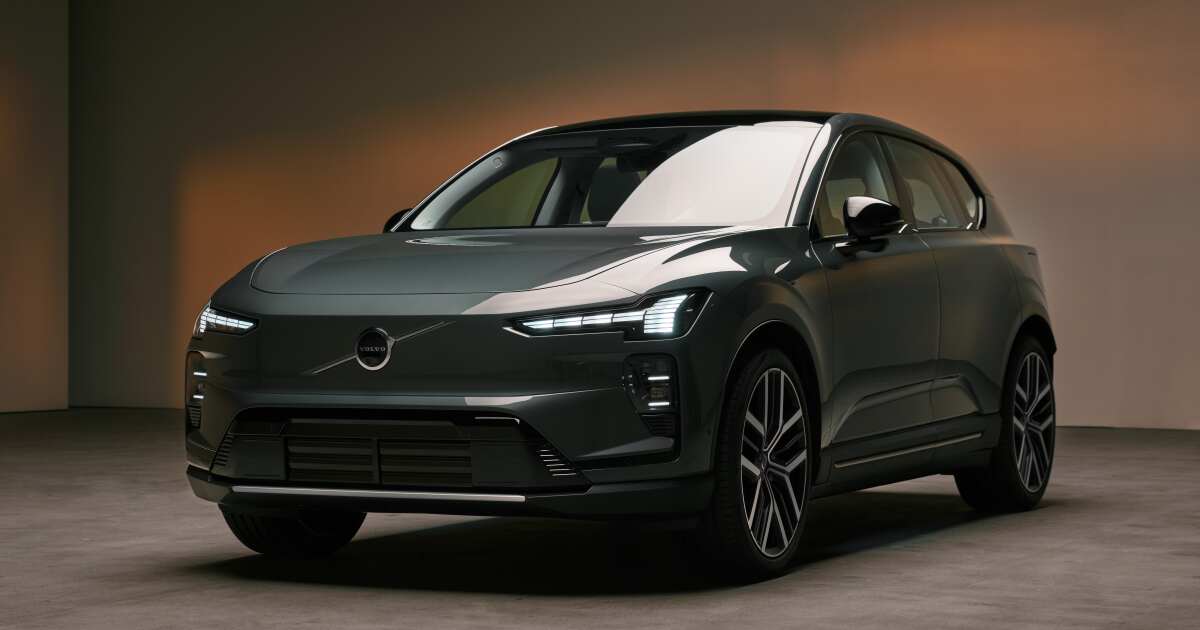
It’s hyperbole season in the automotive world. No sooner had New Atlas reported on Peugeot’s revelation of “the future of motoring” (which turned out to be a fancy concept car with an oblong steering wheel) than Volvo revealed “the true meaning of freedom to move.”
Of course, it’s our job at New Atlas to decipher all this marketing jive and find out what’s really happening. It turns out Volvo’s grandly verbose prose was prompted by the launch of its new mid-size electric SUV. The EX60 is “set to be a game changer,” say the Swedes. “It’s a new premium SUV with lots of usable tech,” say independent reviewers.
Let’s look at the details. Headlines have centered around the EX60’s claimed long range. It’s apparently up there with the new BMW i3 and Chinese newcomers from Nio and Zeekr. The 500-mile-plus capability is not as straightforward as it might be, though. Yes, the range-topper claims an impressive 503-mile (810-km) range on a full battery. Paris to Berlin or Chicago to Nashville without recharging is a good selling point. And the EX60 can add 200+ miles (340 km) of range in just 10 minutes when using a 400-kW fast charger.
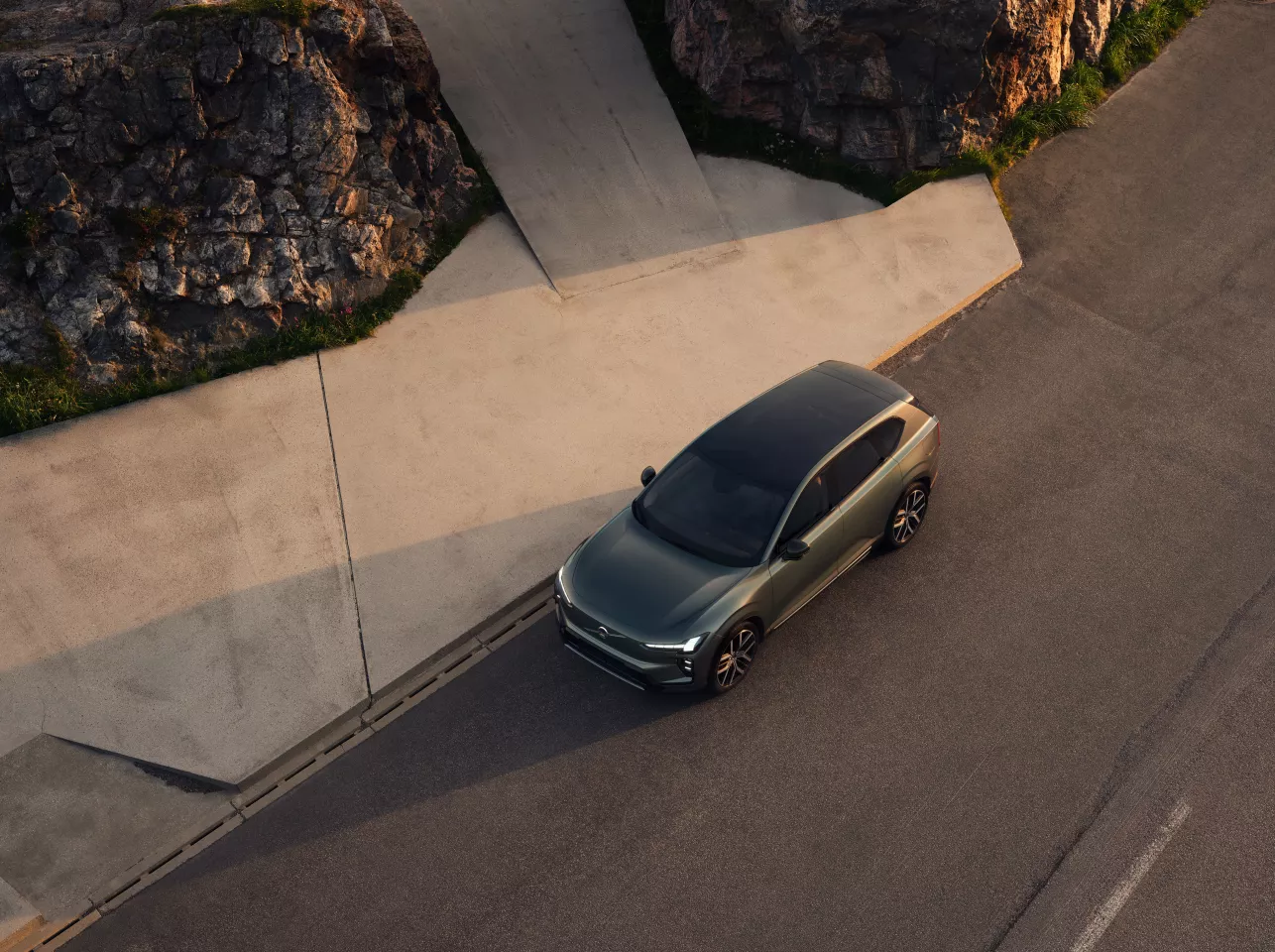
The EX60 is “set to be a game changer,” says Volvo. “It’s a new premium SUV with lots of usable tech,” say independent reviewers
Volvo
Check the small print, however, and there’s a selection of batteries involved, with most mainstream versions offering a 385-mile (619-km) range. The top-end extra range only comes from a 117-kWh battery, with a hefty premium of around 50% added to the price tag.
Nevertheless, Volvo – now owned by China’s Geely – has correctly identified battery range as the key feature in current EV sales. Hence details like the EX60’s battery packs being covered by a 10-year warranty. If you live in Sweden, you’ll get three years of free home charging, too. Volvo is hinting this may expand to other markets, so stay tuned.
Smarter, more efficient batteries are all the rage, of course, but Volvo has also used lighter construction and more capable electric motors to stretch that range. Integrating the battery directly into the car structure and developing e-motors in-house have been important here.
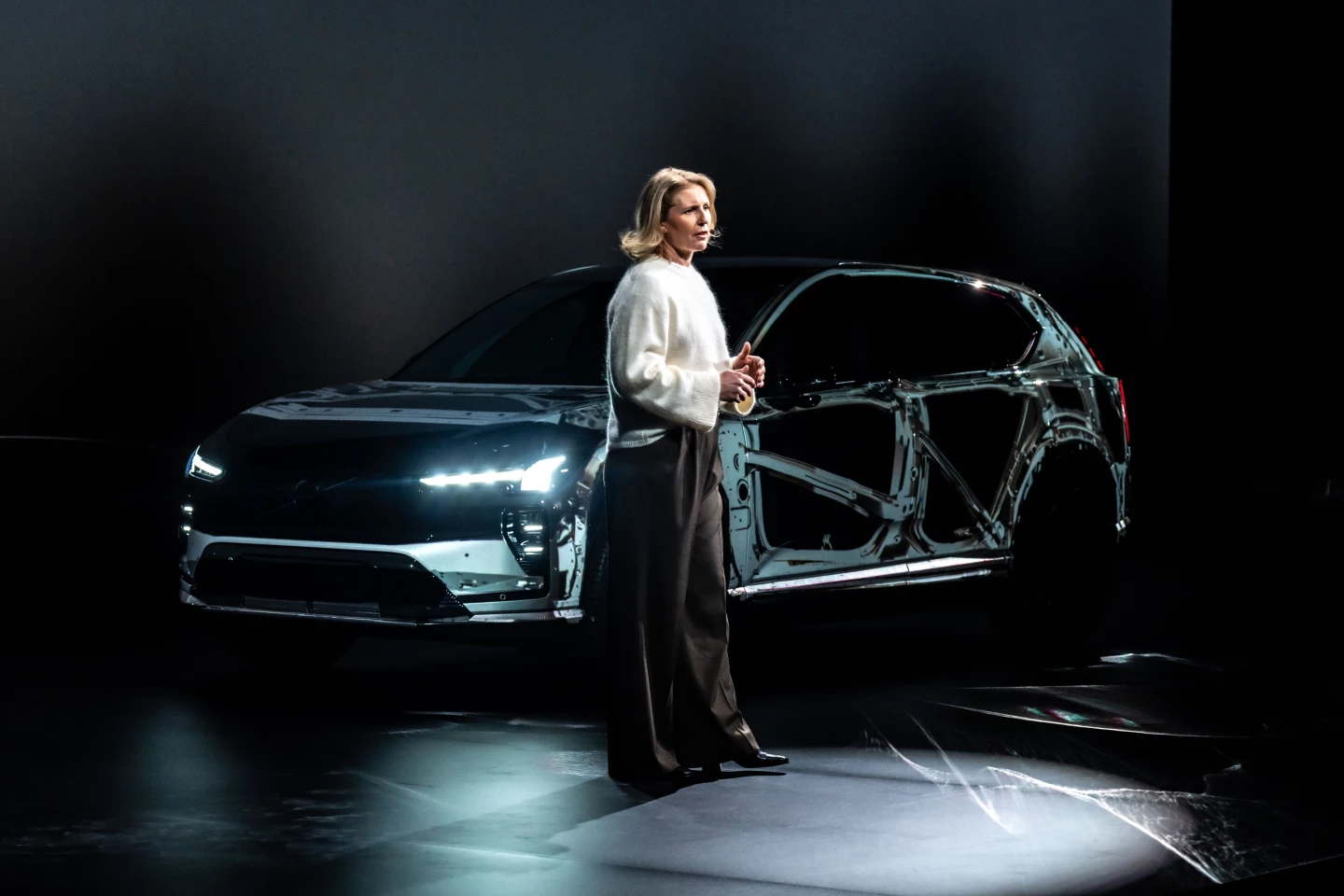
The EX60 mi-sized electric SUV is the first Volvo built with “mega casting” technology
Volvo
The EX60 is the first Volvo built with the “mega casting” technique. This means hundreds of smaller parts are replaced by a single, high-precision casting to simplify the production process. This reduces weight to improve range. Volvo’s new 800-volt electrical system and in-house-developed software also make the charging system work more efficiently.
Smart algorithms developed by Breathe Battery Technologies have been incorporated as well. These constantly adjust how the battery takes in power, keeping it as close as possible to its ideal operating zone at all times and in all weather conditions.
The EX60’s other new features fall into the impressive gadget category. All are new for Volvo, though not necessarily for the rest of the luxury electric vehicle (EV) industry. This includes interior radar coverage to detect extremely small movements, like a baby’s breathing, to prevent children or pets from being accidentally left in the car.
Then there’s integration of the Google Gemini AI assistant to allow more natural chats with the infotainment system, software that enables continuous downloads of improvements and updates, and an array of cameras and sensors reporting to a computer operating system capable of over 250 trillion operations per second. This power allows the system to draw on experiences from other Volvo cars globally, including accidents and near-misses, to keep improving over time.
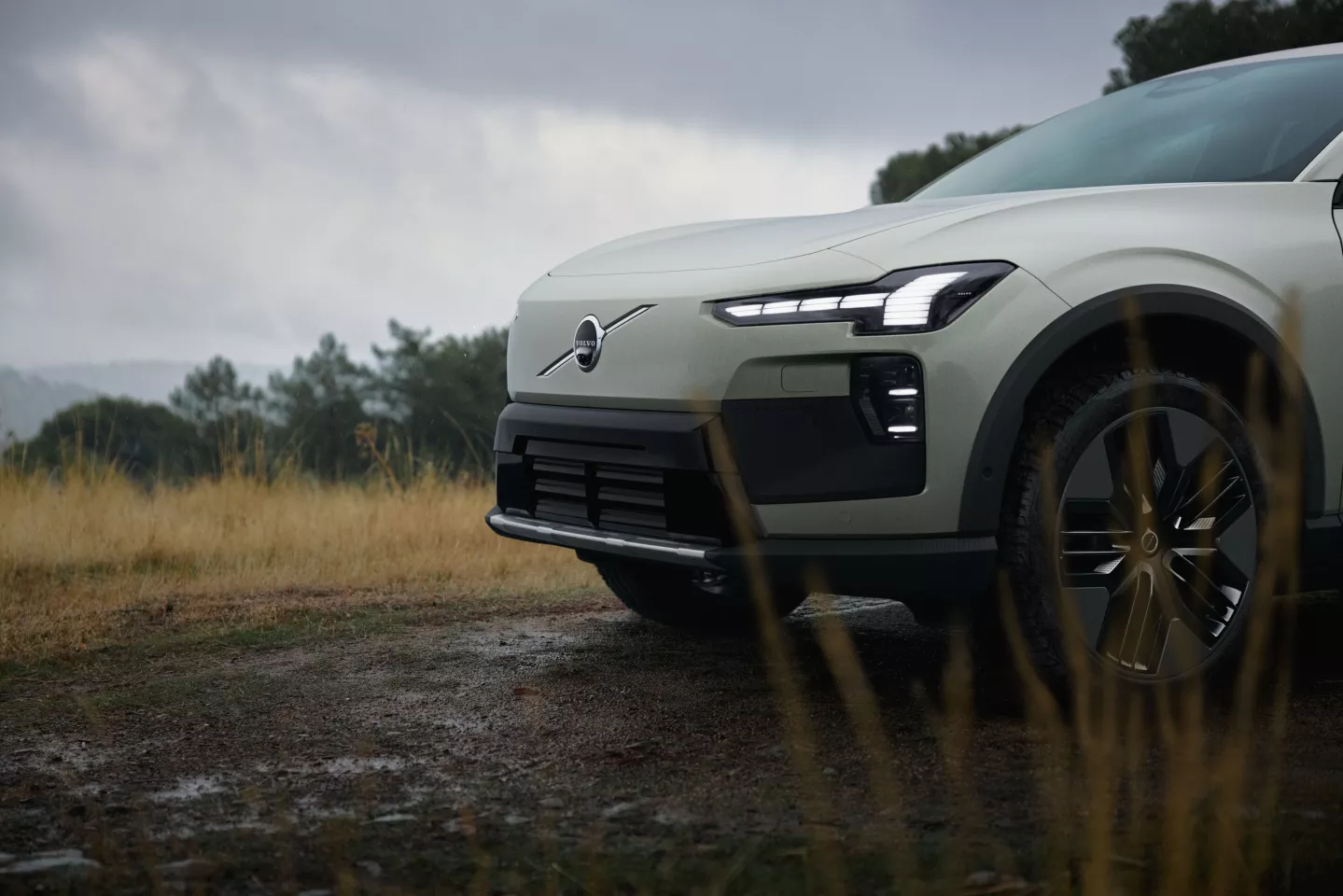
A more rugged, raised Cross Country version is available too, which rides at least 20-mm higher with options to go higher still
Volvo
Volvo has come a long way since it was known for roomy, boxy station wagon vehicles that signified you were – or at least were considering – vegetarianism and owning a Grateful Dead t-shirt. Today, the brand is all about chic Scandinavian styling and minimalist luxury. But there’s one hint of old-school Volvo-ism still present in the EX60.
It features a sophisticated new step in the evolution of the seat belt, which was originally a Volvo invention in 1959. Volvo will always stand in credit with the world for allowing every other manufacturer free access to that patent, for something that genuinely deserved the title “game changer.”
With the 2026 EX60, the seat belt takes another step forward with Volvo’s new “multi-adaptive belt.” This uses sensors to assess the occupant’s physical characteristics and seating position. It then smartly adjusts its application of restraint in the event of a crash. The idea is based on analysis of real-world accidents and the realization that tailoring seat belt protection to the individual and the severity of the impact improves safety.
UK motorists can configure the 2027 EX60 now, with prices starting at just under £57,000 (about US$77,800). We’ve no word on wider availability at this time.
Source: Volvo