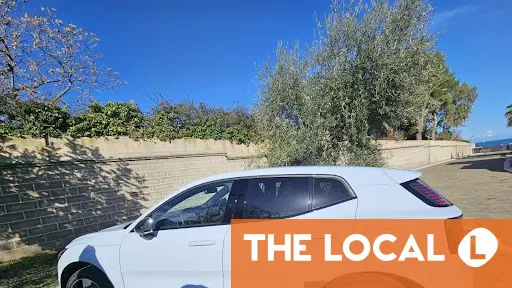
Generous subsidies and abundant solar power made buying an electric car seem irresistible, but with so few charging points available in southern Italy, editor Clare Speak fears she may come to regret it.
I didn’t really want an electric car. But yesterday we picked up our brand new electric Volvo and I like it a lot more than I expected to.
Italy’s most recent €600 million electric vehicle bonus was released in October 2025, not long after our trusty 12-year-old Ford fell victim to a pile-up on Bari’s ring road. Fortunately my husband escaped with just a few sore ribs and a bruised ego, but the car was written off and we needed a replacement.
I’ve written about the lack of infrastructure for EVs in Italy before, and the fact that there’s so little interest in them. So at first, I pushed for a hybrid.
But with a subsidy of up to €11,000 for fully electric vehicles and just €3,000 for hybrid, the choice was almost made for us. Or at least, my husband was sold. His Italian family and friends think we’re mad.
Still, we’re not the only ones. We applied within minutes of the scheme opening, and the funding was gone within a day.
In theory, with solar panels and at-home charging, it should be the affordable and sustainable choice. In practice, I’m already experiencing what my dad calls “range anxiety” even though so far we haven’t driven further than the local Ikea.
READ ALSO: Why electric cars aren’t more popular in Italy
Italy is particularly resistant to EVs. Electric vehicles made up only 6 percent of sales in 2025, compared to the EU average of nearly 17 percent. They account for just 1.5 percent of Italy’s circulating vehicles – and this is the country with the highest car ownership rate in the EU.
We all know Italians are deeply attached to their cars, but those cars remain overwhelmingly petrol and diesel.
The reasons for this aren’t mysterious. There’s the cost – the average price of a new electric car is still around 35,000 euros, and Italy’s subsidies are less generous than those in some northern European countries.
Advertisement
Then there’s infrastructure. As everyone keeps asking me: where are you going to charge it?
In southern Italy that’s a very good question, even though we live in a city. Like with most things, there’s a stark divide between north and south. About 55 percent of Italy’s roughly 58,000 public charging points are in northern cities like Milan, Bologna, and Turin. The situation for central and southern regions is described in reports as “less well served but growing rapidly,” which sounds like a diplomatic way of saying it’s patchy at best.
We’re planning to charge our new car at home overnight and use it mainly for short journeys, so I’m not that worried. We’ve heard from readers before who use an electric car without issues in much more rural areas of Italy. Although I’m keen to hear from more of you in the comments section below.
I probably wouldn’t recommend using an EV for a road trip across the south while on holiday.
Advertisement
I came across one account online from someone who tried to do just that for a drive from Naples to Puglia, planning to charge overnight at a public car park in Alberobello. Of course, the charging point was broken when they got there and, instead of exploring the magical trulli houses, they found themselves driving miles in a panic before camping out at a roadside McDonald’s and waiting for the car to charge.
So far, I’m quietly optimistic about taking part in southern Italy’s electric transition. But ask me in a few months how I feel about it, once we’ve tried driving to Rome and back. Or possibly after southern Italy’s infrastructure has “grown rapidly” enough to make it comfortable.
For now, I’ve downloaded approximately fifteen different charging station apps, and I’ve mapped which routes we’re definitely going to have to avoid. Wish me luck.
Thanks for reading. If you have feedback or comments on this newsletter you can get in touch with me by email at clare.speak@thelocal.com