Toyota Prius has quietly become the car for people who are done choosing between saving money, saving the planet, and actually enjoying the drive. If you’re tired of range anxiety, fuel bills, and bland crossovers, this plug-in hybrid may be the sweet spot you’ve been waiting for.
Rush-hour traffic, fuel prices creeping upward, and that constant low-level guilt every time you fill up at a gas station — it all adds up. You want to cut your emissions, but you don’t want to plan your life around charging stops. You want technology, but not another anxiety-inducing gadget on wheels.
Somewhere between thirsty gas SUVs and full EVs that still live and die by public infrastructure, there’s a middle path that feels almost suspiciously sane.
This is where the Toyota Prius steps in — specifically the latest generation plug-in hybrid variant (often branded as Prius Plug-in or Prius Plug-in Hybrid depending on market). It promises electric driving for your daily life and gasoline backup for everything else, wrapped in a design that finally looks more sci?fi concept than science teacher stereotype.
Why this specific model?
The new Toyota Prius plug-in isn’t just an update; it’s a reboot of a legend. For the 2023+ generation (still current in 2026), Toyota took everything people quietly loved about the Prius — reliability, efficiency, low running costs — and added something it had been missing for years: genuine desirability.
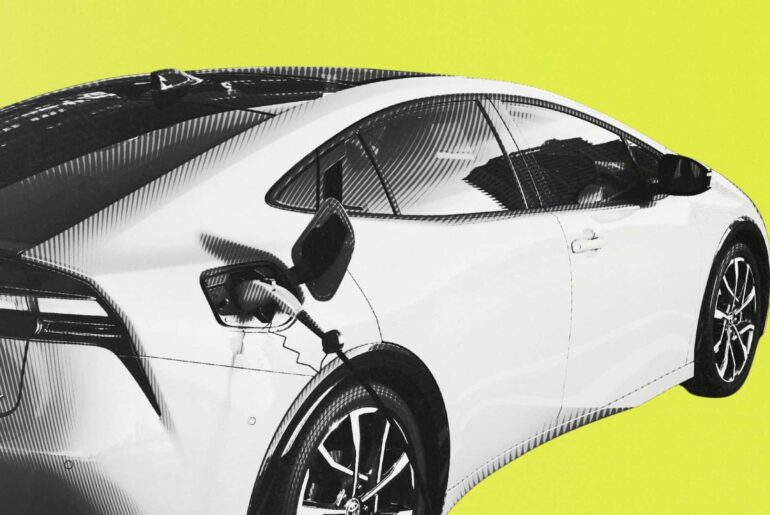
On Toyota’s official site, the latest Prius Plug-in Hybrid is positioned as a coupe?like, low-slung hatch with a bold front end, sleek LED lighting, and a dramatically sloped roofline. In other words, it finally looks as futuristic as its powertrain always was.
Underneath the design, the Prius plug-in hybrid pairs a gasoline engine with an electric motor and a rechargeable battery pack you can plug into at home or at public chargers. In many markets, it offers a meaningful all?electric driving range (commonly enough to cover typical daily commutes), then seamlessly switches to hybrid mode once the battery is depleted. For you, that translates into:
Electric for the boring stuff: School runs, grocery trips, city commuting — all possible in near?silent EV mode when charged.
Gasoline for everything else: Weekend road trips, cross?country drives, or simply the days you forgot to plug in.
No range anxiety: You’re never stuck hunting for a charger just to get home.
Move inside and the changes are just as dramatic. The latest Prius generation swaps the quirky center gauge pod for a more conventional driver-focused cockpit, with a digital instrument cluster behind the steering wheel and a large central touchscreen (size and options can vary by trim and market). Toyota’s current infotainment platform supports modern expectations like smartphone connectivity and connected services in supported regions, making the car feel more in tune with the rest of your digital life.
Crucially, the Prius still leans hard into what made it famous: exceptional efficiency. Official WLTP and EPA numbers vary by market and spec, but across reviews and user reports, the real-world story is consistent: with regular charging, many owners report that gasoline visits drop dramatically, and longer-term fuel economy figures remain among the best in the hybrid world.
At a Glance: The Facts
Exact specs differ by market and trim, but here are the core characteristics of the latest Toyota Prius plug-in hybrid translated into what they actually mean for you:
Feature
User Benefit
Plug-in hybrid powertrain (gas engine + electric motor + rechargeable battery)
Daily electric driving with the safety net of gasoline backup — no range anxiety, drastically fewer fuel stops when you plug in regularly.
All?electric driving capability (EV mode, range dependent on market spec)
Short commutes and city trips can be driven on electricity alone, cutting emissions and fuel spend, while keeping noise and vibration to a minimum.
Low, coupe?like aerodynamic design
Improved efficiency at highway speeds and a surprisingly sporty, modern look that doesn’t scream “eco box” anymore.
Toyota Safety Sense driver assistance suite (availability depending on market and trim)
Added peace of mind with features such as adaptive cruise control, lane support, and pre?collision aids designed to help avoid or mitigate accidents.
Digital instrument cluster and large central touchscreen (size varies by trim)
Clear access to navigation, energy flow, media, and vehicle info, making it easier to understand and maximize your hybrid system.
Hybrid heritage from Toyota Motor Corp.
Backed by decades of hybrid experience and a reputation for durability, which many owners cite as a key reason for low long?term ownership costs.
What Users Are Saying
Browse through Reddit threads and owner forums and a clear pattern emerges around the newest Prius plug?in:
The praise:
Real?world efficiency exceeds expectations. Owners who can charge at home or work frequently mention using almost no gasoline for weeks at a time, especially in urban use.
Design glow?up. Even long?time Prius skeptics admit the new shape looks legitimately attractive, with several comments calling it the “first Prius I would actually want”.
Comfortable, quiet drive. Many users note that EV mode in town feels smooth and calm, with the hybrid system blending in quietly at speed.
Toyota reliability. The brand’s track record with hybrids reassures buyers nervous about battery longevity and complex powertrains.
The criticisms:
Rear headroom and visibility. The sleek roofline and thick rear pillars trade some practicality for style; taller passengers in the back and those used to big glass areas will notice.
Trunk space vs. crossovers. Coming from an SUV? The hatch is useful, but it’s still a low car — some users wish for more vertical storage.
Infotainment quirks. While vastly improved over older Toyotas, a few owners still complain about menu layouts, occasional lag, or regional limitations for connected services.
Price versus non?plug?in hybrids. In some markets, the plug?in variant can cost noticeably more than a standard hybrid, making the math heavily dependent on your charging access and driving pattern.
Overall sentiment across Reddit and enthusiast communities leans clearly positive: the new Prius plug?in is seen as a return to form — and, for many, the most compelling Prius ever built.
It’s worth noting that the car is produced by Toyota Motor Corp., a company listed under ISIN: JP3633400001, whose long-term investment in hybrid technology is a big part of why buyers trust the Prius nameplate in the first place.
Alternatives vs. Toyota Prius
In 2026, the Prius plug?in sits at the crossroads of several hot segments: conventional hybrids, plug?in hybrids, and full EVs. Here’s how it stacks up conceptually against its main rivals:
Versus other plug?in hybrids: Competitors from brands like Hyundai, Kia, and European manufacturers might offer more outright power or SUV bodies. The Prius counters with a laser focus on efficiency, a proven hybrid track record, and often better real?world consumption when driven sensibly.
Versus non?plug?in hybrids (including the standard Prius where available): If you can’t plug in regularly, the ordinary hybrid may make more economic sense. But if you have home or workplace charging, the plug?in’s ability to handle daily driving in EV mode can dramatically reduce fuel usage.
Versus full EVs: EVs are unbeatable for zero?tailpipe?emission driving and can feel even more futuristic. However, they still depend heavily on charging infrastructure and can be pricier up front. The Prius plug?in is the hedge: you get much of the EV experience day?to?day without committing your entire life to chargers and range planning.
Versus compact SUVs: Crossovers may offer a higher seating position and sometimes more cargo room, but at the cost of efficiency. The Prius answers that with lower running costs and a more car?like, planted feel on the road.
If you need maximum space or serious performance, there are better fits. If what you want is to slice your fuel usage, keep your options open on longer trips, and still enjoy something that looks and feels current, the Prius plug?in is hard to beat.
Final Verdict
The new Toyota Prius plug?in hybrid feels like the moment the original Prius was always building toward. It’s no longer just the sensible choice — it’s a smart choice that doesn’t ask you to sacrifice style, comfort, or everyday usability to do the right thing.
You get a car that can glide through your urban routine in electric silence, shrug off long?distance drives without a second thought about chargers, and sip fuel so slowly that you may forget where the gas cap is. You also get the backing of Toyota Motor Corp.’s long hybrid experience, which matters when you’re betting on complex electrified hardware for the long haul.
Is it perfect? No. Rear space and visibility aren’t as generous as they once were, trunk height will disappoint SUV fans, and pricing versus a standard hybrid demands a bit of spreadsheet work. But if your life allows regular charging — even a simple home outlet overnight — the calculus quickly shifts in favor of the plug?in.
If you’ve been waiting for a car that lets you live mostly in an electric future without giving up the security of the present, the latest Toyota Prius plug?in hybrid deserves a spot at the top of your test?drive list. It doesn’t just make efficiency easy; it makes it feel surprisingly exciting.
To explore configurations, regional specs, and current offers, you can dig into Toyota’s official site, including their dedicated Prius plug?in page, and see how this quietly revolutionary hatch might fit into your everyday life.