Buying a car in 2026 can feel like buying a complicated smartphone. Gone are the days in which you set a budget, chose a brand, picked a size—and Bob’s your uncle. Nowadays, you have to answer one very important question: What sort of powertrain would you like? Electric, hybrid, or gas?
Hybrid cars come in a few different flavors, and figuring out which one makes the most sense for you isn’t always as straightforward as it seems. Thankfully, we’re here to help.
In this latest installment of Motor101, we set out demystify the three main types—regular hybrids, plug-in hybrids (PHEVs), and mild hybrids—and explain who each one is actually for in 2026.
What Is A Hybrid Car?

Photo by: Kia
When you hear the word “hybrid,” this is what we’re talking about most of the time. It’s the default sort of hybrid car—think original Toyota Prius—combining a gas engine that still does much of the heavy lifting with electric motors that help it get around at lower speeds. No plugs or manual charging needed.
This lets each propulsion method do what it’s most efficient at. The gas engine kicks in under hard acceleration and at highway speeds, while electricity covers low-speed travel, soft acceleration, and coasting. Some systems, like Honda’s two-motor setup, can even shut the gas engine off briefly during highway cruising to save more fuel.
The battery uses deceleration and the gas engine to recoup energy. The result of all this is mainstream hybrids that can easily go more than 40 or even 50 miles per gallon, per official EPA stats.
It’s the default sort of hybrid car… combining a gas engine that still does much of the heavy lifting with electric motors that help it get around at lower speeds
Regular hybrids also go about their business without asking you to change much of anything in terms of habits. You fill it up with fuel like a normal gas car, and it takes care of the rest. Behind the wheel, modern hybrids have also come a long way from the wheezy, underpowered penalty boxes they once were. Nowadays, they’re often positioned as the more powerful, upmarket option in a model’s hierarchy… if there’s even a choice.
Stuff like the Toyota Camry, Sienna, and RAV4 now come exclusively as hybrids. If there is a gas-only alternative, though, hybrids still carry the downside of consistently being a bit more expensive to buy or lease upfront.
What Is A Plug-In Hybrid (PHEV)?
Mitsubishi Outlander PHEV
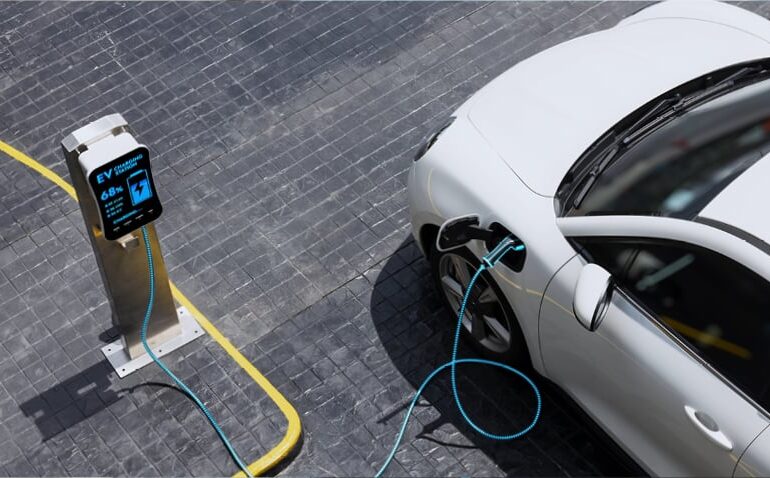
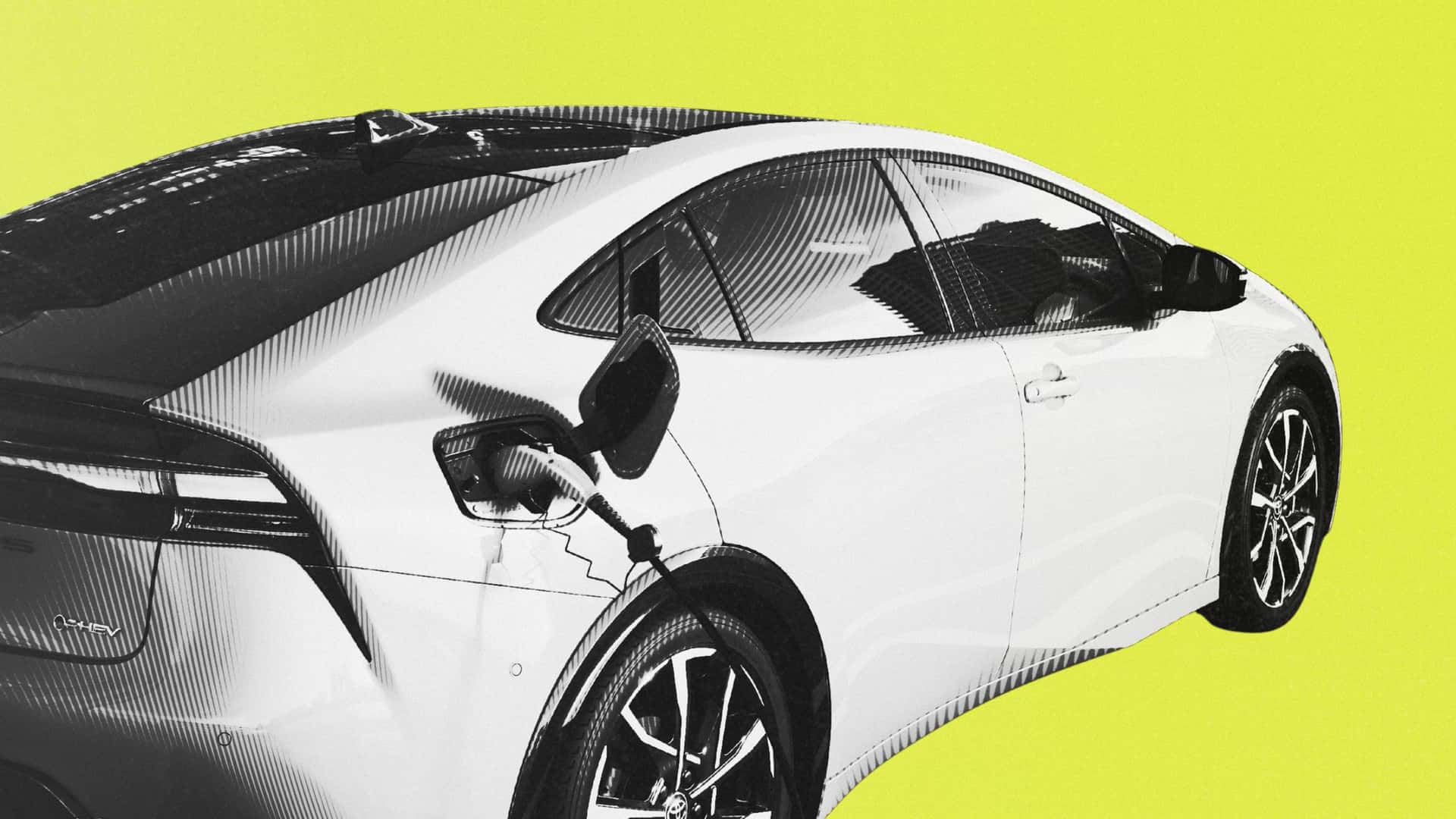
If you have a bit more coin to spend as well as regular access to a charger, a plug-in hybrid is the even more efficient play. Often called PHEVs (plug-in hybrid electric vehicles) or just “plug-ins,” these combine a gas engine and electric motors, but here, the latter does a lot more of the lifting. So much so that, as the name suggests, there’s a charging port that lets you plug it in and juice up the battery independent from the gas engine, much like you would with a fully electric car (for example, a Tesla).
Think of PHEVs like the half-step between a regular hybrid and a full EV, typically able to travel about a commute’s worth on electricity alone. The distance over which they can do this varies by model. The current Prius PHEV, for example, is officially good for 44 electric miles, while this year’s new RAV4 PHEV targets 50 miles on no gas. We should also note that the real-world range varies depending on weather, payload, traffic, and how heavy your right foot is.
[Plug-In hybrids] combine a gas engine and electric motors, but here, the latter does a lot more of the lifting.
Regardless, the ideal use case here is that you’d be able to complete most, if not all, of your daily commute using just electricity, plug it in to charge overnight before doing it all again the next day, and rarely visit a gas station at all. But then, when you need to go for a longer trip, the gas engine is there, and you can treat it just like a regular car.
If your lifestyle supports it, a plug-in hybrid can be a great choice, but (ditto with EVs) I’d really only recommend one if you can plug it in regularly. Compared to regular hybrids, PHEVs usually cost thousands more, and there aren’t as many to choose from.
What Is A Mild Hybrid (MHEV)?
Photo by: BMW
If a plug-in hybrid is like a regular hybrid but “more electric,” a mild hybrid would be, you guessed it, like a regular hybrid but “less electric.” This style of hybrid once again pairs a gas engine with a small electric motor and battery, except the motors and batteries are even smaller than the ones in a regular hybrid, often doubling as the starter motor.
Usually labeled as 48-volt systems in reference to the batteries used, mild-hybrid electric vehicles (or “MHEVs”) use their electric components to essentially smooth out the stop-start system. The gas engine shuts off while you sit at a stoplight, as well as for the few seconds before and after you’re there, with the mild hybrid system filling in the power gap.
If a plug-in hybrid is like a regular hybrid but ‘more electric,’ a mild hybrid would be, you guessed it, like a regular hybrid but ‘less electric.’
Like a regular hybrid, mild hybrids don’t require any modified driving habits or manual charging. You just drive them around as you’ve always done, and the car is simply a bit smoother and more efficient than if it weren’t a mild hybrid.
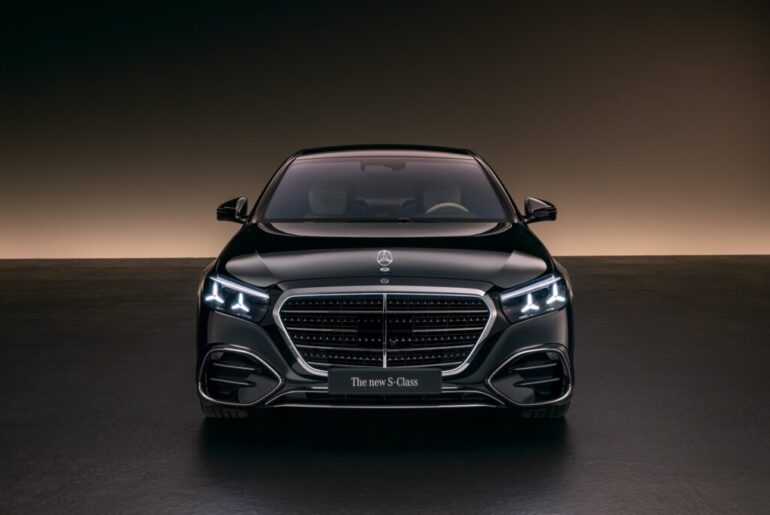
MHEVs don’t really come with a price premium per se since they aren’t typically offered alongside a non-mild hybrid variant. The mild hybrid system is simply integrated into a certain car’s powertrain, or it isn’t. This style of hybrid powertrain is most common in new luxury cars, particularly German ones—Audi, BMW, Mercedes-Benz—but Mazda also offers one in the six-cylinder versions of the CX-90 and CX-70.
Which Type of Hybrid Is Best for You?
Let’s be real: mild hybrids are essentially starter motors on steroids, mostly meant to make auto stop-start systems feel smoother. There are efficiency gains involved, sure, but it’s mainly a luxury feature that makes luxury cars feel more luxurious.
What folks usually mean when they ask “What sort of hybrid should I get?” is a decision between plug-in hybrids and regular hybrids.
Thankfully, the decision is fairly simple. If you have a way to plug it in at home and/or work regularly, rarely drive more than about 30 or 40 miles or so on a given day, and are okay with an upfront price premium, get a plug-in hybrid. For everybody else: a regular hybrid is still one of the easiest, most affordable ways to burn less fuel without reworking your life to revolve around charging stations.
Now you know.
FAQs
We want your opinion!
What would you like to see on Motor1.com?
– The Motor1.com Team