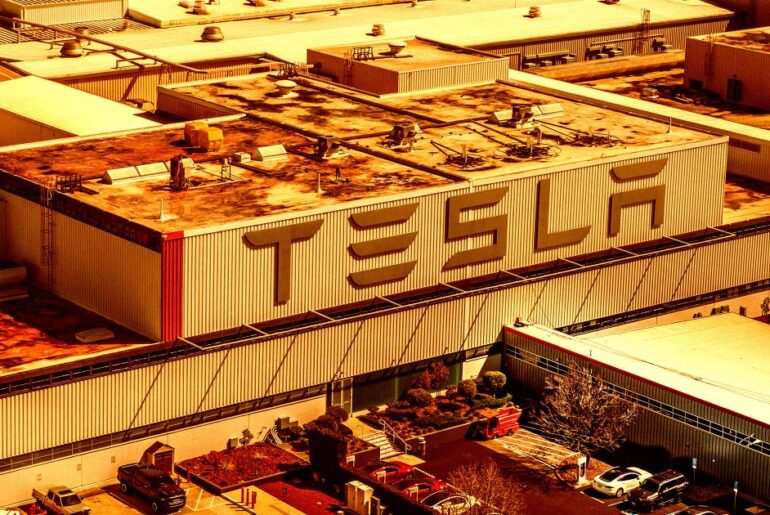
One year ago this month, I predicted that Tesla was cooked. Now the verdict is in, and there is a distinctly charred odor coming from the Austin area. Sales are down, yearly revenue is down for the first time ever, and quarterly profits fell by a whopping 61 percent, to just $840 million. That gives it a price-to-earnings ratio of 297—a ludicrous figure, historically speaking. According to a report from the Institute on Taxation and Economic Policy, the company has paid precisely zero federal taxes on its earnings in both 2025 and 2024, so the company is certainly being helped along by federal forbearance. But things are getting dire.
Alas, there is little sign that will stop Elon Musk’s retail investor cult from throwing more good money after bad. And under the surface, we see indications that Musk is taking advantage of that goodwill by planning to pillage Tesla’s dying husk to prop up his other failing companies.
The most immediate cause of Tesla’s sales problems is Musk’s political activities. He spent more money than anyone in American history to put Republicans in power in 2024, and they promptly repealed the electric-vehicle tax credit, which expired at the end of last September. Tesla and other EV makers got a one-off boost in sales that month as people rushed to take advantage of the credit, followed by a sharp decline—16 percent, in Tesla’s case.
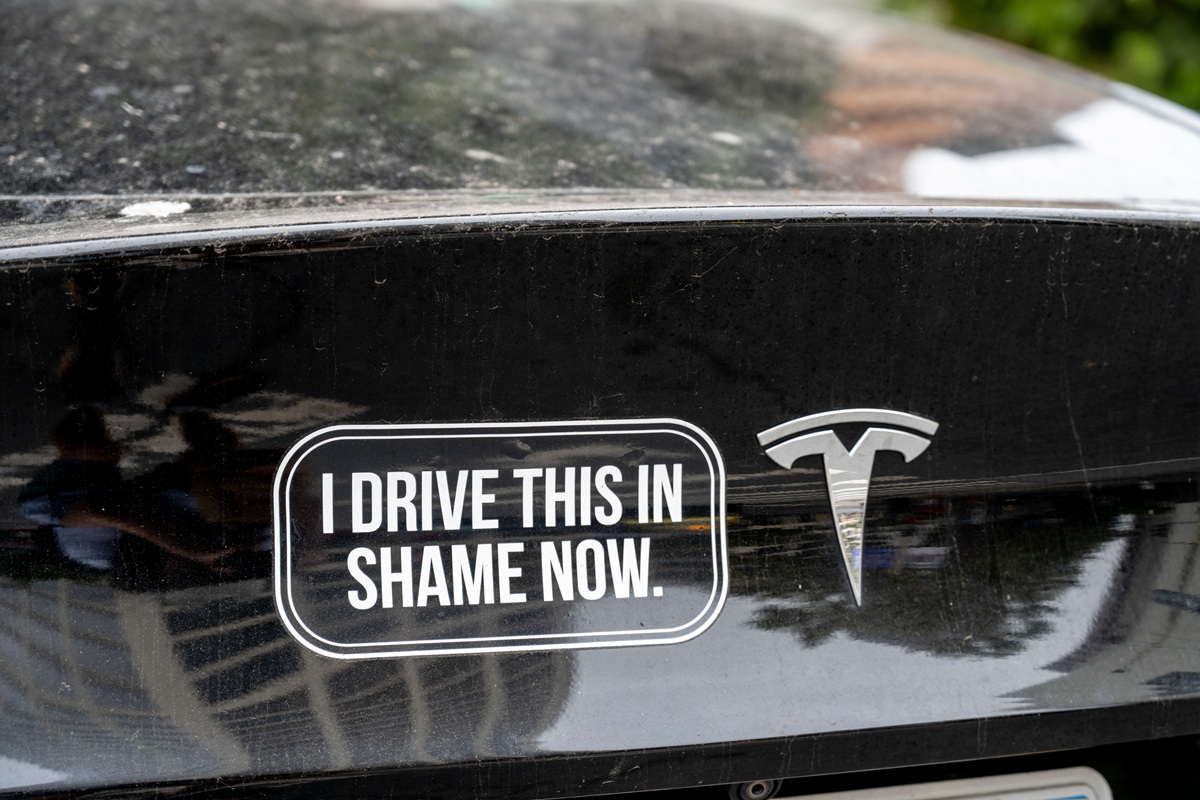
Moreover, Musk’s unmasking as a Nazi salute–throwing fascist has obliterated Tesla’s futuristic green-friendly brand. His previous loyal customer base of environmentalist liberals has been permanently alienated from him and his companies. Ten years ago, I would have at least considered a Tesla; now I would not drive one if you paid me to.
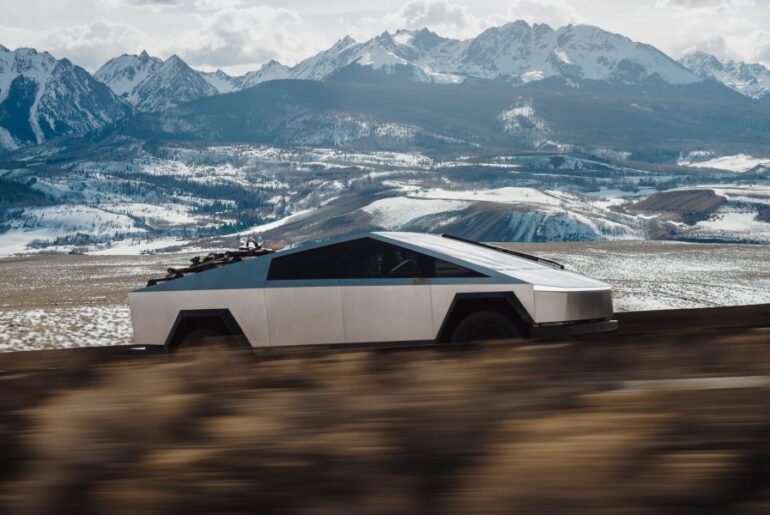
But Tesla’s problems run much deeper than that. For years, customers have been complaining about its aging and very limited lineup of cars, with just five models available: two sedans, two SUVs, and a truck. The latter Cybertruck can now be concluded to be a total flop—one of the worst in the history of American automaking. While Musk boasted of a supposed two million preorders, Tesla sold just 39,000 of these hideous monstrosities in 2024, and a piddling 20,000 in 2025.
Where once Tesla had the EV field in America mostly to itself, there is now increasingly stiff competition.
By way of comparison, the Ford Edsel, a 1950s flop so notorious that it’s taught in business schools to this day, sold almost twice as well as the Cybertruck, in a country with half the population.
Not to worry, Musk has an answer to the limited product lineup: cancel 40 percent of the existing models! The Model S and Model X, two of the oldest models, are going in the trash. To be fair, they were barely selling at all, but this is why a mature car company produces at least a dozen or so models and updates them regularly. Car fashions change quickly, while factory retooling is difficult and expensive. Relying on just two models for the overwhelming majority of your sales is asking for trouble.
Where once Tesla had the EV field in America mostly to itself, there is now increasingly stiff competition. Domestically, you can get EVs from Ford, GM, Hyundai, Lucid, and other companies that aren’t openly fascist, and they’ll probably be both better-quality and able to use Tesla’s charging network (thanks to their adoption of an interoperable charging standard). Internationally, Tesla—and every other legacy automaker—is being whipped like a rented mule by Chinese companies. BYD is now the undisputed king of EVs, outselling everyone by a large and growing margin. Its technology is better, and its prices are much lower.
In sum, Tesla as a going concern is circling the drain. As usual, Musk has a utopian story straight out of science fiction that any day now, Tesla is going to innovate a new genius business strategy, and start making eleventeen squintillion dollars per quarter. The latest preposterous fabrication is robots—both driverless taxis, which Musk has been promising and failing to deliver for a full decade now, and humanoid “Optimus” robots, which will supposedly be produced at the former Model S and X factories, and eventually end up in every household on Earth, making Tesla a $25 trillion company.
Setting aside whether Tesla will actually be able to produce either of these things in a workable form (almost certainly not), even if we grant his claims for the sake of argument, neither remotely justifies Tesla’s meme stock valuation. We already have a functioning driverless taxi company. It’s called Waymo, and while its unit economics are questionable at best, it benefits from the same first-mover advantage that Tesla once had (and squandered). More broadly, you need a great deal of technology and customer support labor to match or exceed the functionality of a taxi driver, who is not paid particularly well. Best-case scenario, we are talking about a high-investment, low-margin business—like airlines, whose credit card reward points operations are worth more than their flight sales.
The same is true of humanoid robots. Unless we are actually talking about a conscious robot butler—something that is not at all on the horizon, and would raise certain ethical considerations about slavery if it were—we already have household robot companies. They’re called appliance manufacturers, and while their products generally work a lot better than the products of those who attempt to replicate human limbs and fingers because they think it looks cool, they also don’t make massive profits. Again, we are talking about a high-investment, low-margin business; just ask iRobot, makers of the Roomba, which is now in bankruptcy.
I am reasonably confident Musk is aware of how ludicrous his promises are getting. I suspect that’s why Tesla is planning to invest $2 billion into another of his companies, xAI.
When Musk bought Twitter, he loaded it with debt, and destroyed its business model. Then he arranged a de facto bailout by merging it with another of his companies, xAI, home of the child pornography and revenge porn AI bot “MechaHitler”—er, I mean, Grok. The business model on that one is even worse than Tesla. They are incinerating money on power and computer chips—losing $1.46 billion a quarter, according to Bloomberg—and unlike Anthropic, using it on image generation that is perhaps the worst legal liability I have ever seen, in dozens of different countries. So it sure seems like Musk is turning to Tesla to strip out whatever cash can be ferreted out of it before it goes bankrupt.
An early draft of this article predicted that Musk would soon staple xAI to SpaceX as another de facto bailout; literally as I was about to file, Reuters reported that is likely to happen.
Until now, as The New York Times points out, Musk has been able to rely on his investor cult of personality to support him no matter what he does or how badly his businesses perform. There’s no sign of this fading yet. That’s why Tesla’s stock price at time of writing was 26 percent higher than Alphabet, Google’s parent company, despite the fact that it makes more than 30 times as much profit. After the disastrous quarterly results were released on Wednesday afternoon, Tesla stock actually went up, though it moderated to about break-even status on Thursday.
But reality can’t be staved off forever. Musk was quite lucky that just as his previous recklessness was about to catch up with him, he stumbled into the AI bubble, and another attendant geyser of gullible investor cash. If and when that bubble pops, a true reckoning may be at hand for the first time in his life.
Related