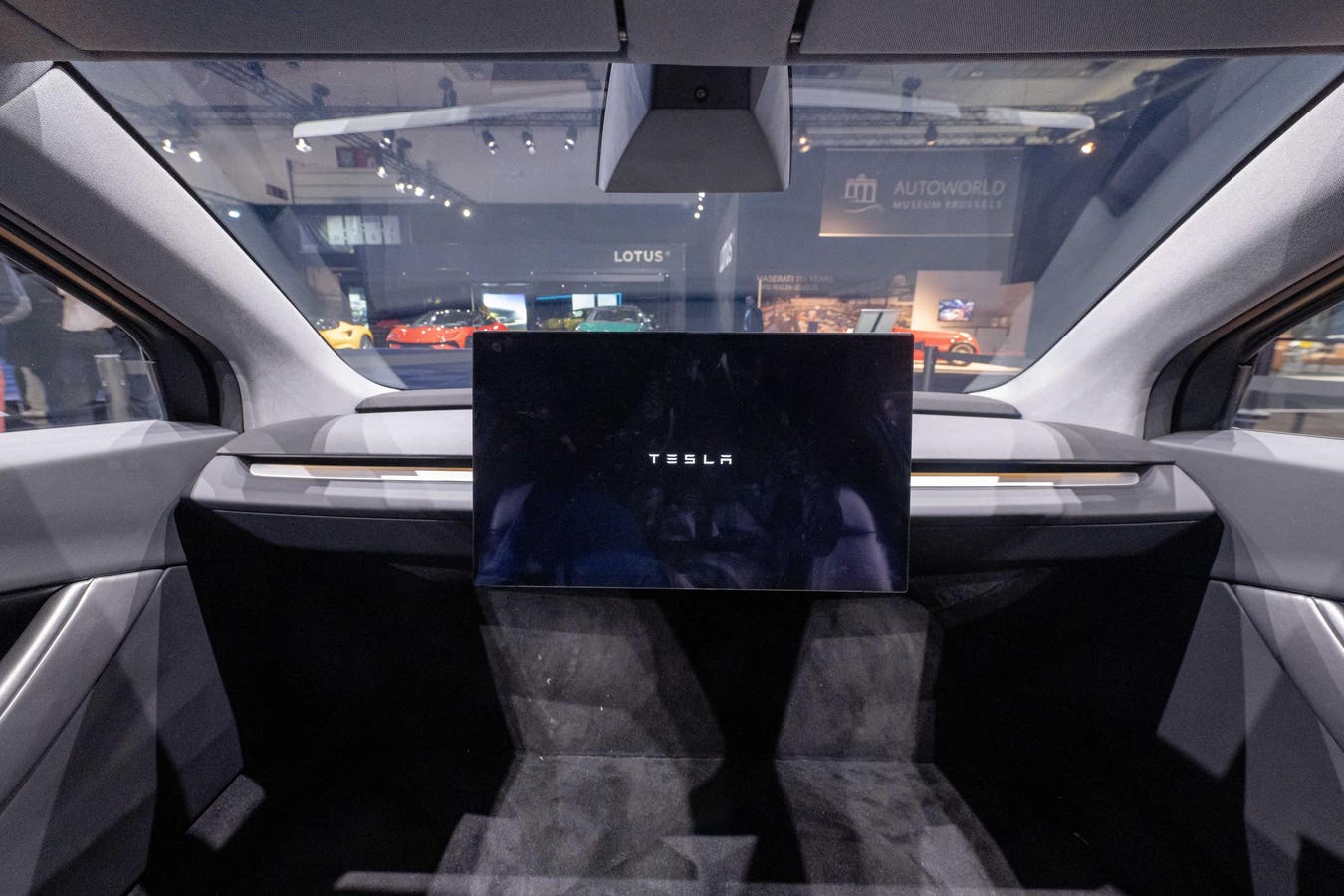
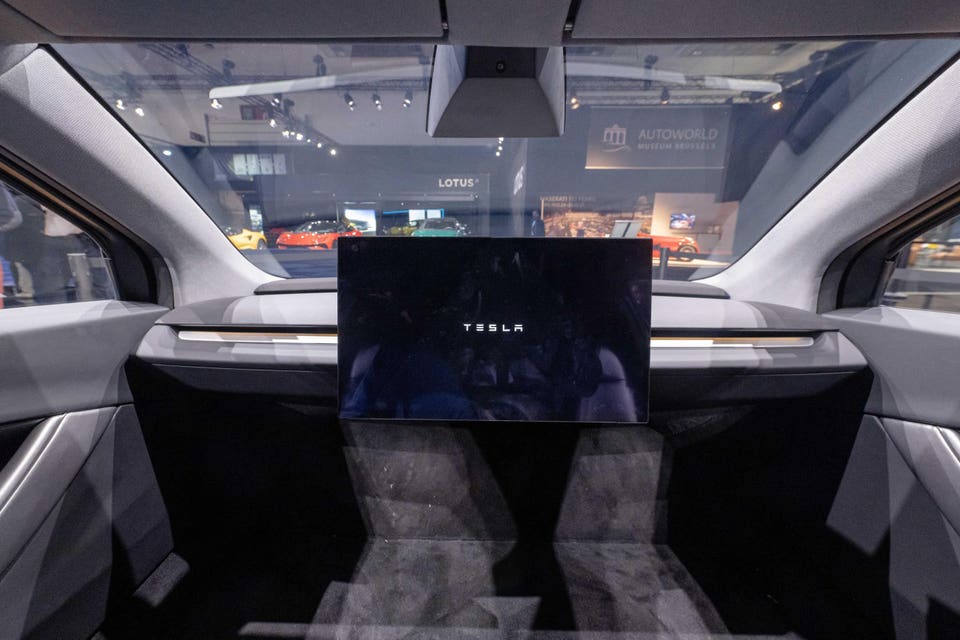
The autonomous Tesla Cybercab taxi is pictured at the press day for the opening of the 101st edition of the Brussels Motor Show, at Brussels Expo, on Friday 10 January 2025, in Brussels. Brussels Motors show is open to public from 10 to 19 January 2025. BELGA PHOTO JONAS ROOSENS (Photo by JONAS ROOSENS / BELGA MAG / Belga via AFP) (Photo by JONAS ROOSENS/BELGA MAG/AFP via Getty Images)
BELGA MAG/AFP via Getty Images
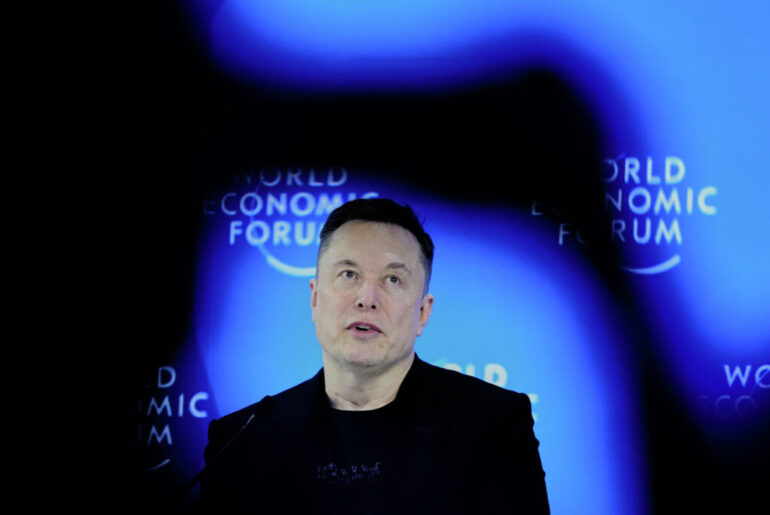
Tesla CEO Elon Musk said Wednesday that the company will discontinue production of its Model S sedan and Model X SUV, reducing the lineup to three vehicles.
Tesla reported revenue of $24.9 billion in the fourth quarter on Wednesday, about 3.1% less than the $25.7 billion reported in the same period last year and coming in just above the roughly $24.7 billion analysts were forecasting. Full-year revenue was $94.8 billion, down from the $97.7 billion recorded in 2024. Quarterly net income fell 61% to $840 million, far below the $2.1 billion recorded a year earlier.
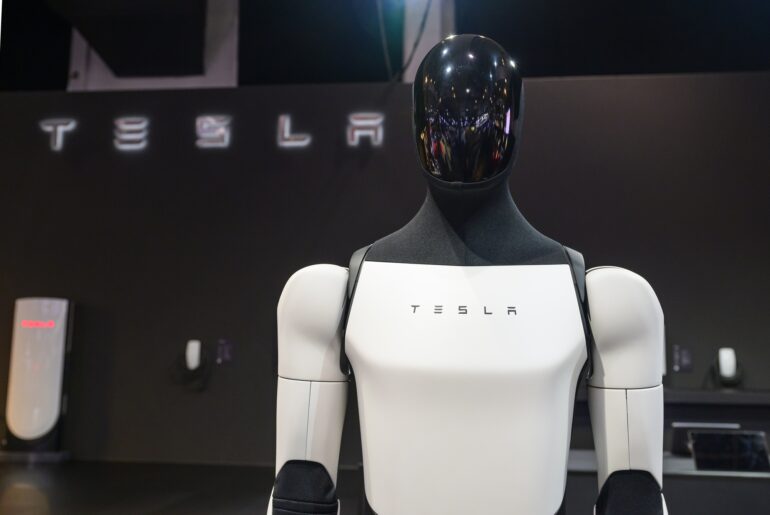
“It’s time to basically bring the Model S and X programs to an end with an honorable discharge,” Musk said during the company’s fourth quarter earnings call on Wednesday. Production lines for the S/X will be converted “into an Optimus [robot] factory,” Musk added. Both of those vehicles – especially the Model S with its launch in 2012 – helped kick start Tesla’s rise to a global leader in the electric vehicle market.
But the S and X are well past their prime. “The Model S and Model X were cutting edge when they were introduced, largely because there was no competition,” said Sam Fiorani, an analyst at AutoForecast Solutions, who added that competition from other EV makers – like Lucid and General Motors respectively – has crowded that space.
Model S, Model X sales crashed in 2025
Sales of both discontinued models fell sharply. Model S sales fell 52.6% YTD in the fourth quarter, from 12,426 units in 2024 to 5,889 units in 2025, according to Cox Automotive. The Model X saw sales sink 34.2% YTD, from 19,855 units in 2024 to 13,066 units in 2025.
That leaves the Model 3, Model Y, and the Cybertruck. Note that the latter is hardly going gangbusters, with Cybertruck sales falling 48% YTD in the fourth quarter compared to last year, according to Cox.
Tesla second-generation Roadster
Credit: Brooke CrothersWhat’s next?
Tesla has two vehicles coming down the pike. The two-passenger Cybercab/Robotaxi and second-generation Roadster. Neither of those will slot in to replace the Model S and Model X, however. And popularity is not guaranteed.
“We expect to start production in April,” Musk said about the Cybercab on Wednesday. “But we would expect over time to make far more Cybercabs than all of our other vehicles combined,” he added, striking a typically very optimistic tone.
That passenger-only vehicle will feature two wide, flat seats designed like lounge chairs and a large 20.5-inch central display. Other possible features include inductive (wireless) charging, Hardware 5/AI 5 autonomous driving, a 300-mile range, and a target price of around $30,000.
And the Second-Generation Roadster? “We’re hoping to debut in April…It’s going to be something out of this world,” Musk said on Wednesday. The high-performance sports car is positioned above the current lineup and is expected to have a price that’s out of this world too. But that vehicle – first mentioned in 2017 – has been plagued by delays and doubts persist about a production version ever seeing the light of day.
And then Optimus robots
The end game for Musk is robots, which means not only Optimus humanoid robots but autonomous vehicles – which are just robots on four wheels. “Tesla expects to wean itself off of consumer vehicles and into what it believes to be more lucrative products such as humanoid robots and autonomous vehicles. Upgrading the aging Model S and Model X would siphon off too much money and energy for products it no longer needs in its lineup,” AutoForecast Solutions’ Fiorani said.