When you buy through links on our articles, Future and its syndication partners may earn a commission.
Credit: Matt Buckley
Electric assistance is no longer confined to mountain bikes and cargo haulers. Over the past few years, road-focused electric bikes have quietly carved out their own niche, offering subtle support rather than brute force, and extending rides rather than replacing effort altogether.
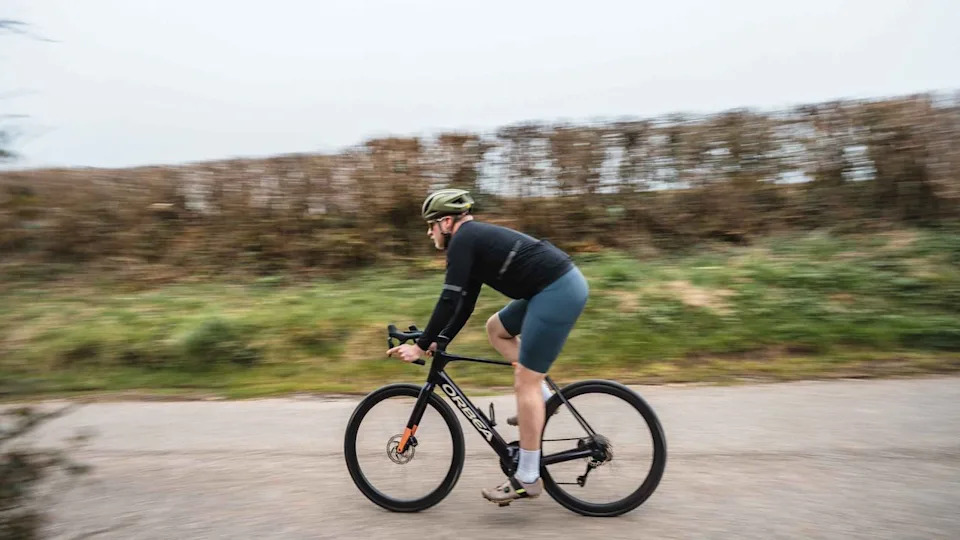
The Orbea Gain M20i sits firmly in that camp, aiming to look, feel and ride like a conventional endurance road bike while adding just enough help to flatten climbs and stretch big days in the saddle.
Spanish brand Orbea has approached electrification with restraint, and the Gain M20i is a good example of that philosophy. At a glance, it’s hard to tell there’s a motor or battery involved at all, with clean tube shapes, a lightweight carbon frame and none of the visual bulk often associated with e-bikes.
To see how well that idea holds up in the real world, I parked my regular road bikes and spent several months riding the Gain M20i exclusively, covering everything from flat spins to long, rolling routes and sustained climbs, to find out where an electric road bike genuinely earns its place.
Orbea Gain M20i reviewPrice and availability
The Orbea Gain M20i is priced at £6,999 in the UK, €7,599 in Europe and $7,599 in the US. It’s available directly from Orbea and its authorised dealer network, with availability across the UK, the wider EU (including Germany), the US, and Australia.
The bike is offered in two standard colourways – purple and orange, or silver and blue – and can also be ordered through Orbea’s MyO customisation programme, which allows riders to tailor colours and finishing kit to their liking.
Design and build quality
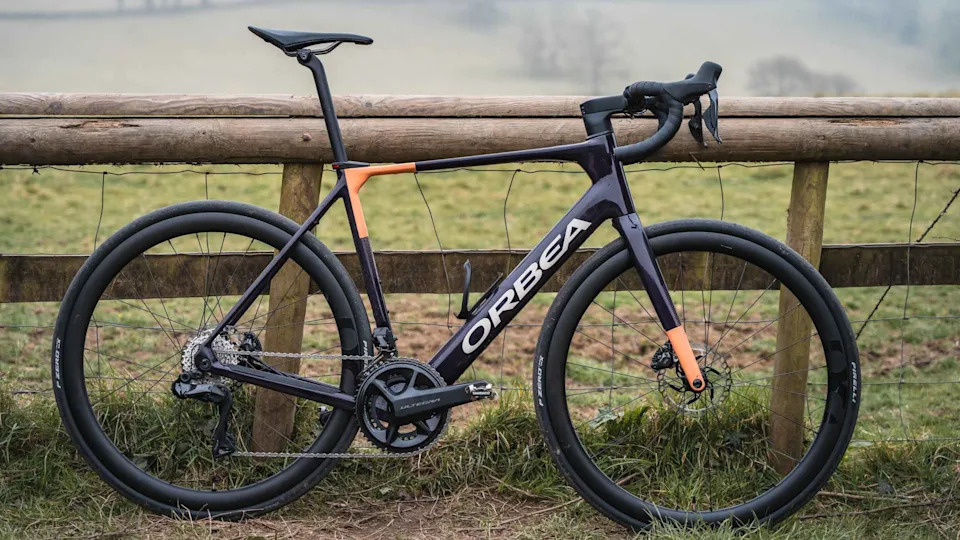
The centrepiece of any bike is the frame, and in the case of the Gain M20I, it’s a full-carbon monocoque that keeps the overall weight down to an impressive 11.5kg, putting it amongst the lightest in its class.
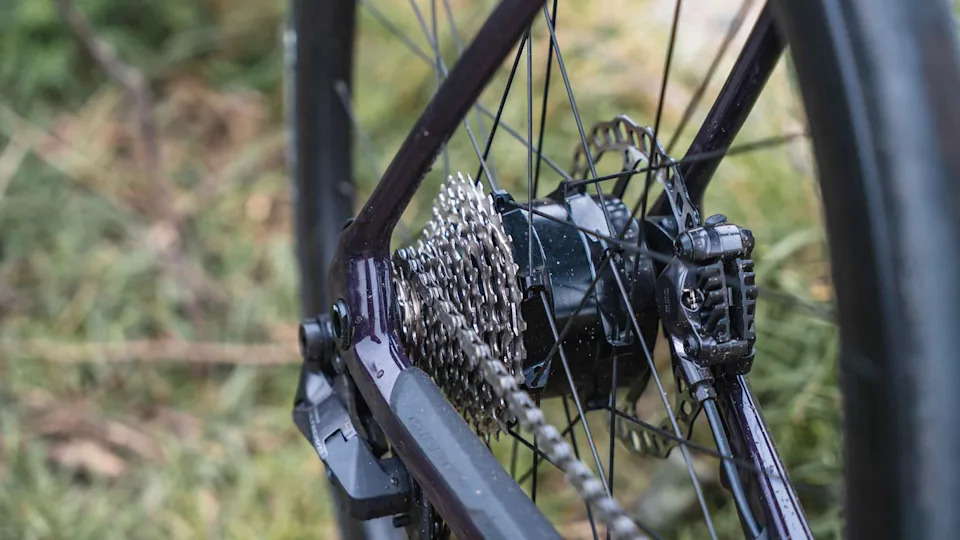
From the side profile, you’d be hard-pressed to tell this bike is packing some serious power. Hidden in the downtube is a 353Wh battery that offers up to 140km of range in the lowest mode. This battery is paired with a Mahle X20 motor that replaces the hub on the rear wheel and delivers about 50 Nm of torque.
Credit: Matt Buckley
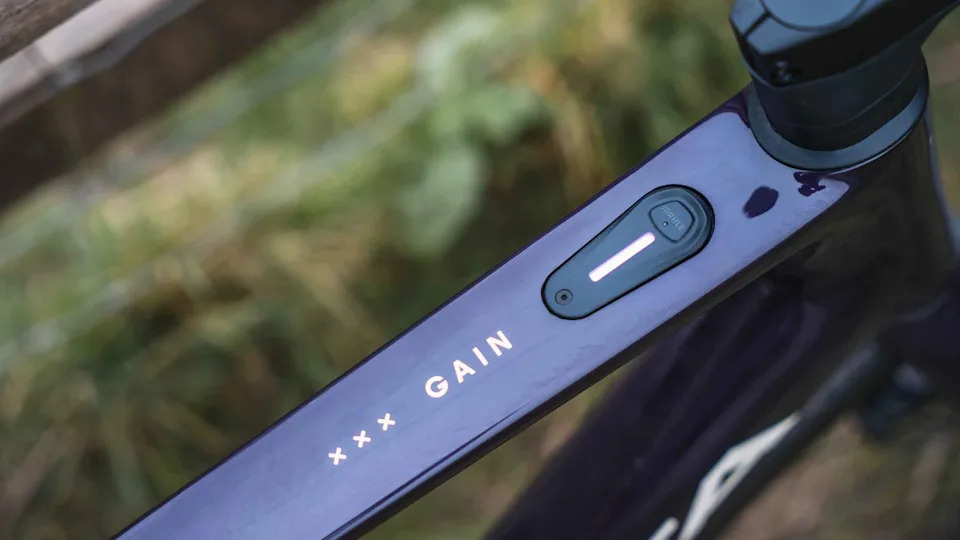
The only indication of the electrical assistance is the small control pad embedded in the top tube. A single press turns the bike on, and a further press cycles through the assistance modes, with a strip of LEDs illuminating to indicate the amount of assistance to be delivered.
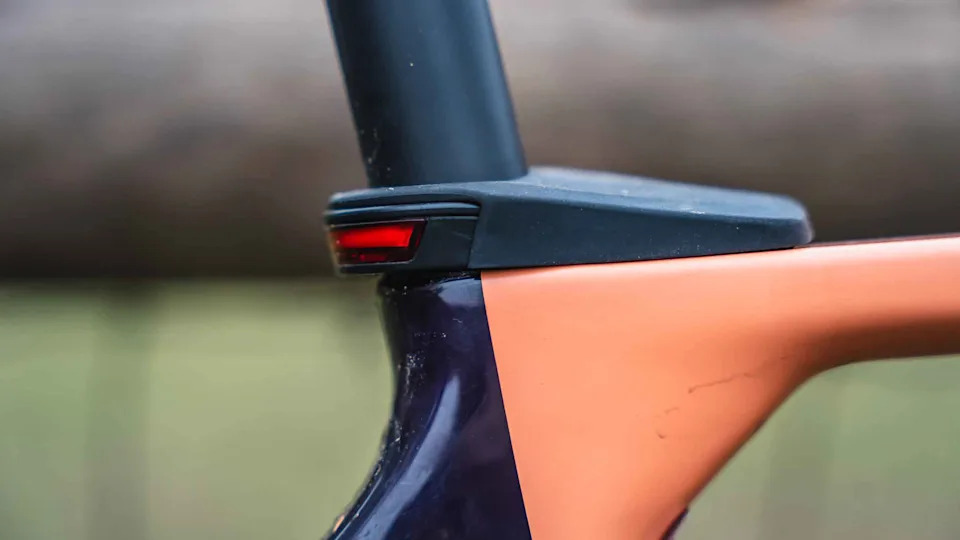
Elsewhere, a set of lights is integrated into the seat collar and the front of the out front computer mount, which means you’ll never forget lights ever again, and even better is that they are powered from the internal battery, so you’ll never have to charge them either.
Credit: Matt Buckley
Regarding charging, the battery took about 4 hours to fully charge from empty and reached about 80% in 2 hours. Orbea claims that a full charge will provide around 4,000 m of ascent assistance.
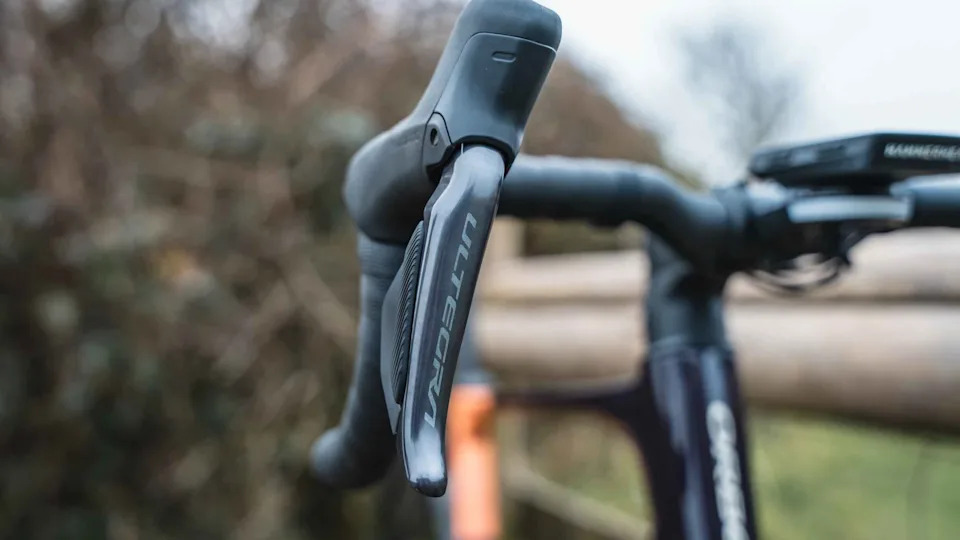
A 12-speed Shimano Ultegra Di2 groupset handles shifting very well. Gear changes are smooth and crisp with no hint of hesitation or inaccuracy, and I did not experience any missed shifts in some 3 months of testing.
Credit: Matt Buckley
Even shifts that would typically trip up even the best groupsets were dispatched with ease; shifting from the large to the small chainring under heavy loads would normally result in a dropped chain, but not here.
The finishing kit of seatpost, saddle and handlebars is all taken care of by Orba’s in-house component brand. The seatpost and handlebars are carbon fibre, so they’re predictably stiff yet absorb a great deal of road vibration.
Performance and ride feel
I’m a relative newcomer to riding electric bikes; my first taste was only last year aboard the excellent Scott Solace eRide gravel bike, which I praised for simply being huge amounts of fun off-road.
The Orbea Gain M20I is a different beast by way of being a road bike with 30mm wide tyres; without any assistance, the additional weight over a ‘normal’ bike is noticeable.
Credit: Matt Buckley
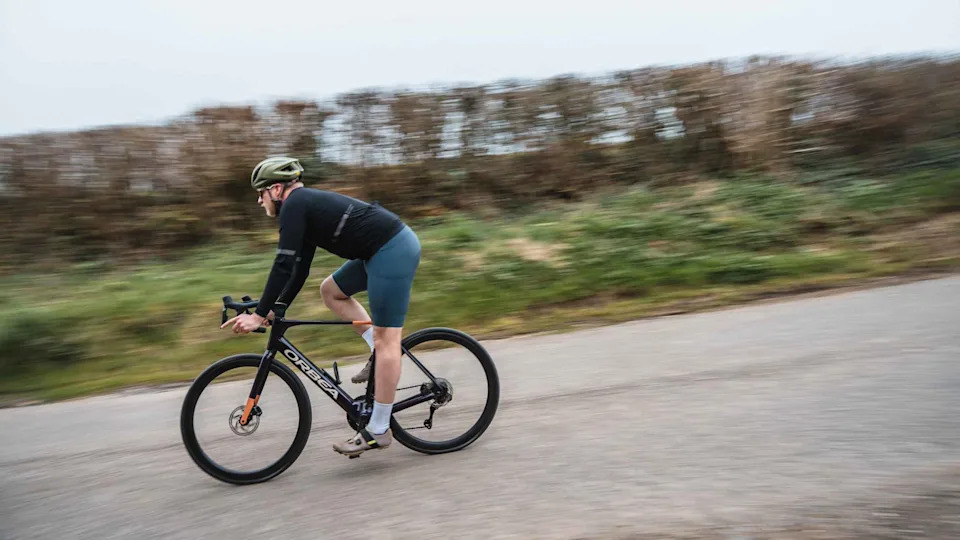
Acceleration is a touch more sluggish, and the overall ride feel is slightly less engaging. Flip the motor on, however, and it becomes sprightly and properly good fun to thrash out of corners… until you reach the cut-off speed of 28km/h as imposed by the EU.
It’s at this point he M20I goes back to feeling a little bit bloated. On flat roads, it’s still possible to hold a good speed, but it’s on rolling terrain that it really struggles.
Credit: Matt Buckley
On the downhills, it picks up speed well, but riding up the other side, the weight becomes very noticeable and makes the bike feel even heavier than it already is. This isn’t so much a criticism of the M20I as an overall observation about the 28km/h speed restriction.
Mahle (which supplies the battery and motor) offers an app that lets the rider tune the motor’s characteristics to their heart’s content. By default, there are three levels of assistance, but within the app, you can adjust the amount and how it’s delivered.
In the lowest assistance mode, it’s more of a gentle push when riding along, and it’s only partially noticeable; riding suddenly feels effortless, and you hardly need to push on the pedals to get a lick on. Move into the highest assistance mode, and the electrification is very noticeable.
Credit: Matt Buckley
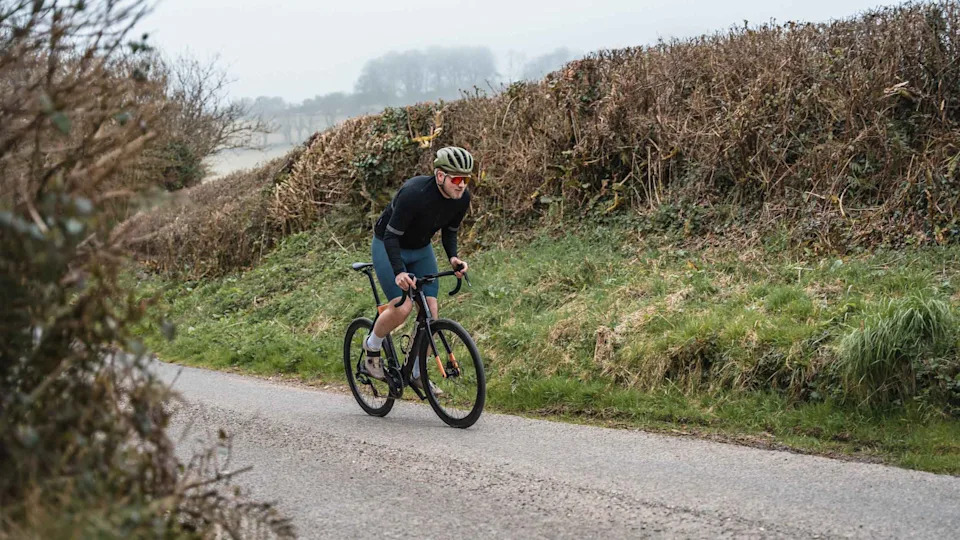
Pulling away from junctions and pedalling out of corners, there’s a definite surge of power that can take you by surprise should you not be paying attention.
It’s sustained climbs where the electric motor really kicks in and shines, offering a helping hand when the gradient kicks in and leaves you feeling much fresher at the top of the climb, or still in sight of your much lighter friends, and I think this is where the M20I and electric road bikes in general start to make sense.
Credit: Matt Buckley
Electrification will keep older or less powerful riders on two wheels and able to ride with a faster group without fear of being left behind on the hills, which is probably the point at which many riders hang up their wheels, so, in that regard, they’re a wonderful piece of technology.
For riders looking to just go faster and think a motor is the shortcut, I’d argue the current crop of high-end road bikes offers a more engaging and rewarding ride, especially when pushed hard.
Verdict
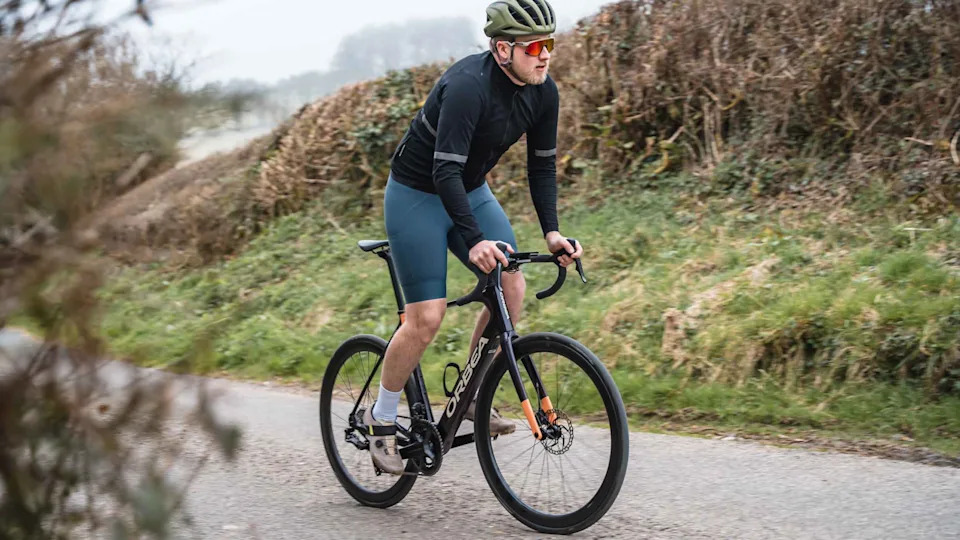
The Orbea M20I is a very well-specced electric road bike, sporting Shimano’s much-lauded second-tier groupset and a smooth motor and battery system from Mahle. In full assistance mode, the motor provides a lot of grunt, making accelerating out of corners a hoot, and on sustained inclines, noticeably less effort is required.
Credit: Matt Buckley
It certainly won’t be the right bike for many cyclists, but for those looking to keep up with their fitter (and maybe younger) riding friends, an e-bike would be a great investment, and the Orbea M20I is one of the best.
Also consider
I was mighty impressed by the Scott Solace eRide that I tested last year, and by all accounts, the Addict eRide is every bit as sprightly. It looks like a road bike but packs the same motor and battery setup as the Orbea, yet manages to shave ½kg off the weight. See the bike at Scott.
For absolute performance, the BMC Roadmachine AMP One is up there. Packing a bottom bracket motor powered by a 360Wh battery, the AMP One utilises a one-by setup and a fleet of integrated lights to flatten every gradient. See the bike at BMC.