It is fair to say Agustin Guilisasti’s journey to electric bike maestro was not always smooth sailing. The softly spoken Chilean swore he would “never come back” to the industry before he co-founded Forest, the London-based e-bike start-up, in 2019.
Guilisasti had been charged with leading the South American expansion of Cabify, a tech company best known for being Spain’s first unicorn, a term used to describe a privately held start-up valued at more than $1 billion, but ran into difficulty as efforts to spin out a micro-mobility division fell through. While growth was exceptionally fast across the continent, Cabify ultimately ended up having to close in Brazil and later withdrew from Mexico and Ecuador: a sign of too much expansion, too quickly.
Guilisasti, now thousands of miles away in London, has since embarked on a different challenge: tackling the “Wild West” of the UK capital’s rental electric bike scene.
He must have wondered if his earlier pessimism was justified, with the pandemic in full swing only months after he founded Forest and the company soon forced to suspend operations when one of its riders was injured due to a faulty e-bike.

Yet fast forward to today and it is averaging more than two million rides per month with a fleet of roughly 20,000 electric bikes, a far cry from the humble beginning of 2019. It is now a competitor for Lime, the San-Francisco based company part-owned by Uber.
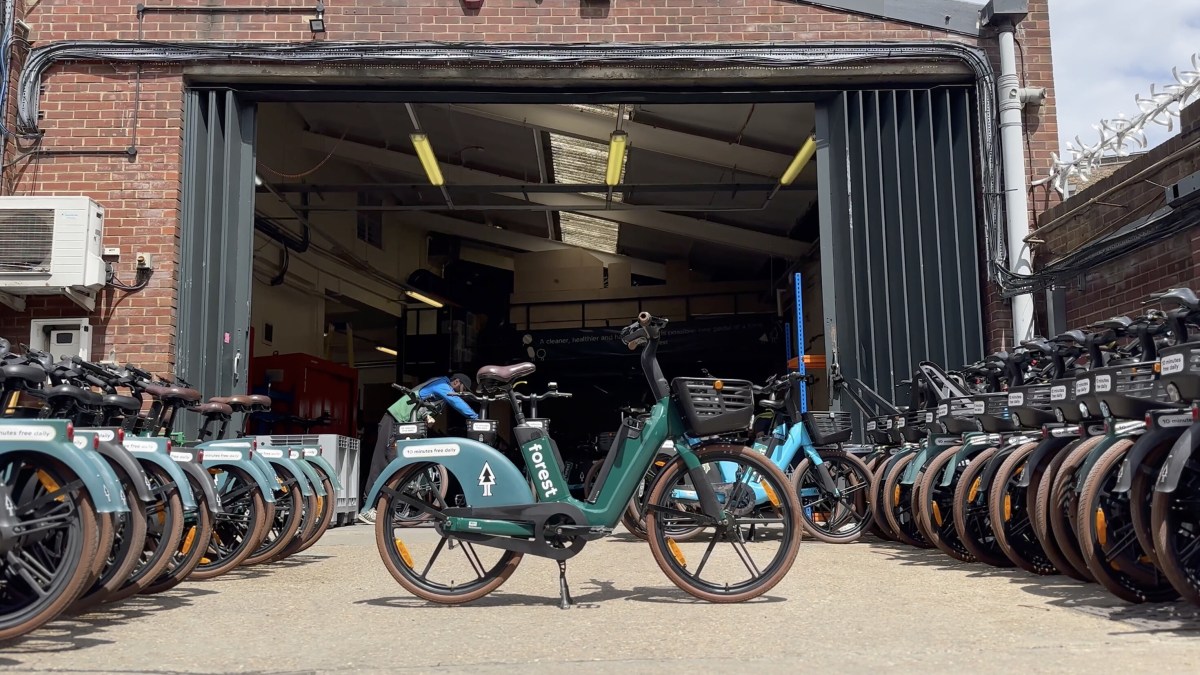
Forest’s warehouse in Southwark is a military-grade operation. Led by Will Jansen, the operations chief and a former British Army officer, technicians work around the clock repairing the stream of broken or faulty electric bikes which are brought in off the streets. Large metal crates containing lithium-ion batteries are stacked to near roof-height, with employees working in repair bays to blaring music, overshadowed only by the sound of drilling. Every bike is tracked and monitored, with most of the parts coming from China.
In the beginning Forest’s staff, from marketing and sales to its finance team, were crammed into one office above the warehouse, but it has since expanded with a new headquarters in Moorgate. “After about 18 months, we got to a scale where we needed more space coming in for the bikes, and we had more mechanics and more drivers and this place just became too congested,” Jansen said.

Its growth mirrors that of the wider industry in recent years, with the likes of Estonia’s Bolt and the Swedish e-bike company Voi all piling into London’s crowded market. Yet with total electric bike trips in the city now averaging upwards of 150,000 each day, there has been fierce scrutiny on operators to clean up their act, address safety issues and stop scores of bikes cluttering up pavements.
Last month Islington council said Lime and Forest were on their “last warning” to improve poor parking and dangerous riding — or else face being stripped of permission to operate in the borough. It echoed similar warnings from Brent in 2024 and further underscored the problems faced by local councils as they grapple with rapidly growing tech firms, most based overseas, scrapping for market share. Last year Transport for London (TfL) began issuing fines to operators, dishing out more than £33,000 worth of penalties in the first five months.
Forest claims to be of a different ilk to Lime, and Guilisasti can’t resist a dig at his competitor. “We need to work together very closely with the authorities. That’s not what Lime has been doing much.
“Some of our investors will say, go faster, I say we need to go step by step. We believe that the long-term strategy is about working together, instead of putting so many bikes out at the same time and then seeing what happens.”

The big topic of conversation has been about the introduction of a pan-London tender, which industry executives say would resolve the capital’s disjointed system. Currently licences are awarded to operators on a borough-by-borough basis, meaning parking and riding policies vary across the capital.
Talks are continuing with TfL but progress has been slow all the way up to Whitehall. “Our assumption is that probably sometime in early 2028 is likely,” Jansen said.
In the meantime he reckons other options could be explored to tackle parking problems, including taking space back from households with multiple cars, particularly in zones 1 and 2. “We’re questioning, could some more pressure be placed on those second car owners to give those cars up?” he said, adding: “It could come from just saying you can’t have it, or it could come from saying we’ll give you an incentive to get rid of it.”
Whatever the solution, the key challenge has always been whether the pace of the industry’s growth is manageable. While those problems have been borne out in parking and safety, many operators have also struggled to turn a profit after the early days of venture capital-backed financing.
Guilisasti says he has learnt from Cabify that such uncontrolled expansion often comes at a cost. “We were growing super fast … Chile, Peru, Colombia, Mexico and Brazil and we ended up closing in Brazil. So our investors, in that sense, I’ve told them our goal is to be sustainable and profitable.”
The signs suggest the e-bike boom will continue. Forest has reached profitability for two years running, while Lime, which is also in a number of UK cities such as Manchester and Nottingham, claimed to be the first micro-mobility firm to reach an annual profit in 2023 and is gearing up for an initial public offering at a valuation of $500 million as early as this year. Whether the industry can be properly regulated, and its bikes kept out of everyone’s way, remains to be seen.