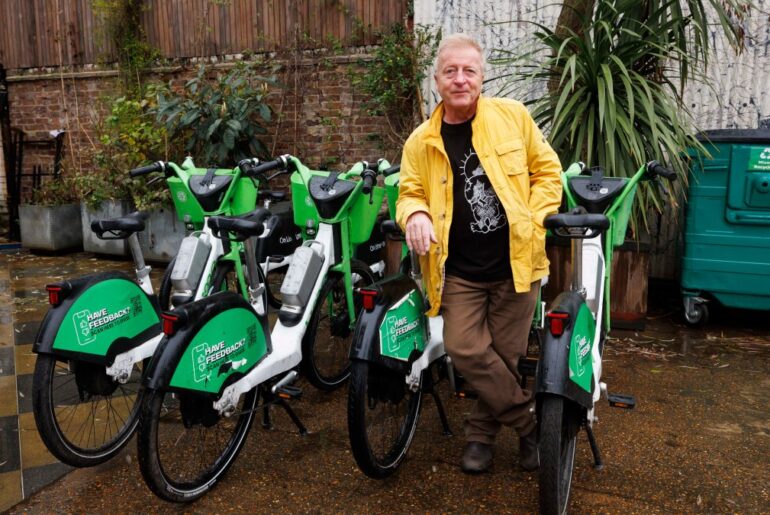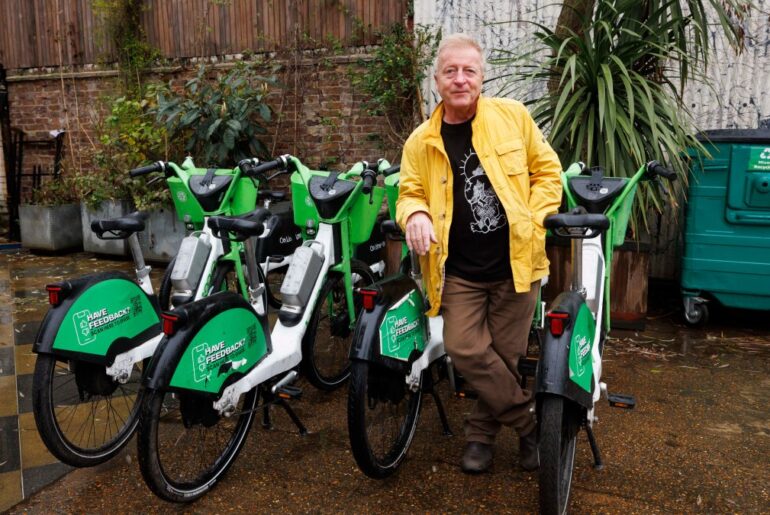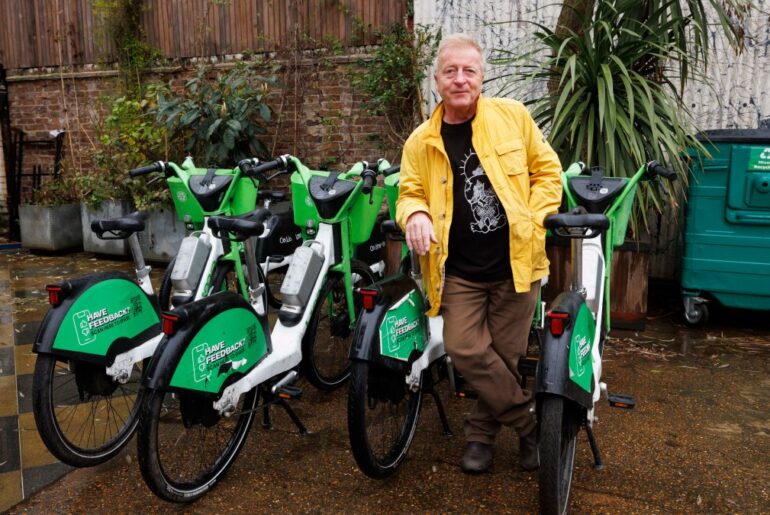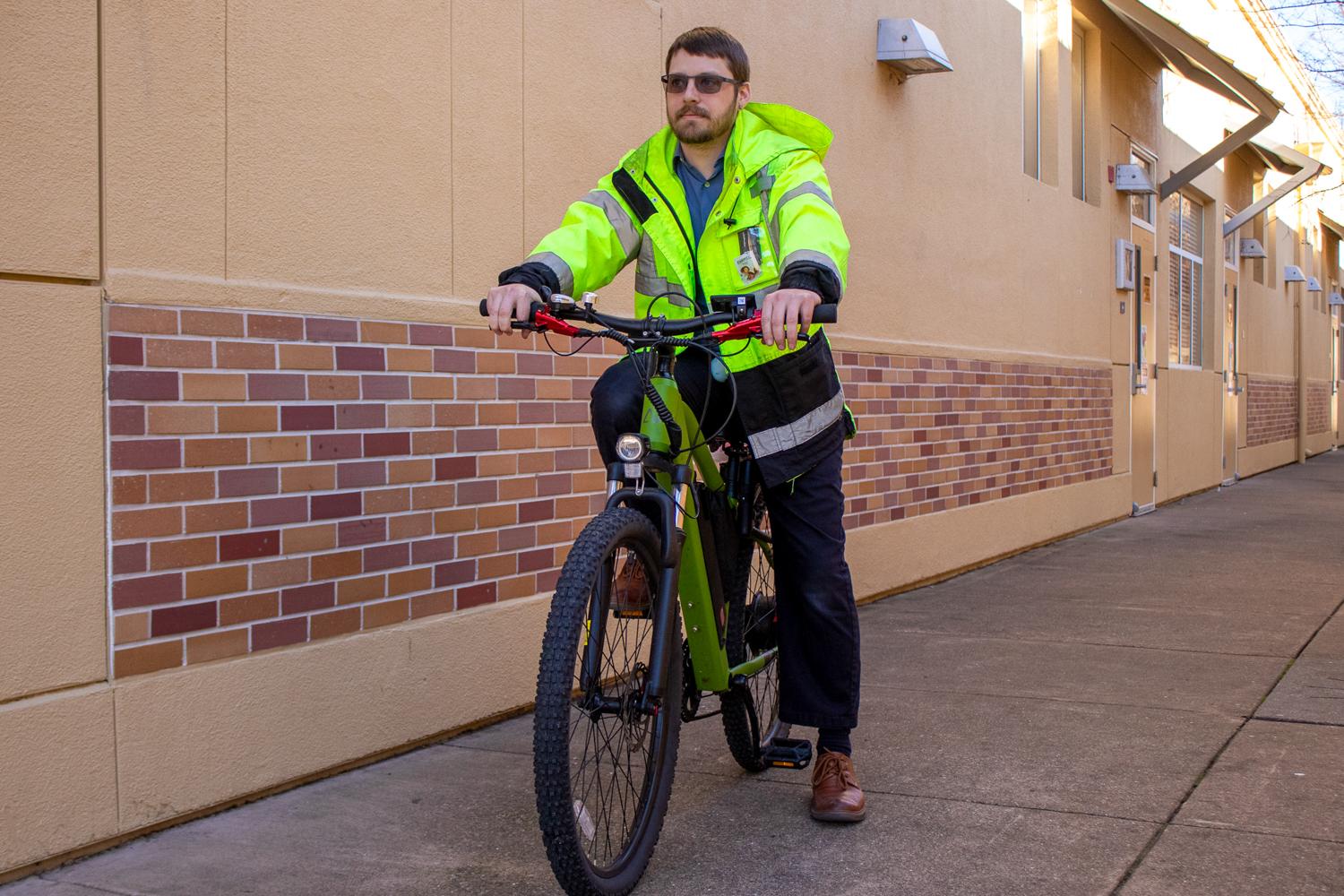
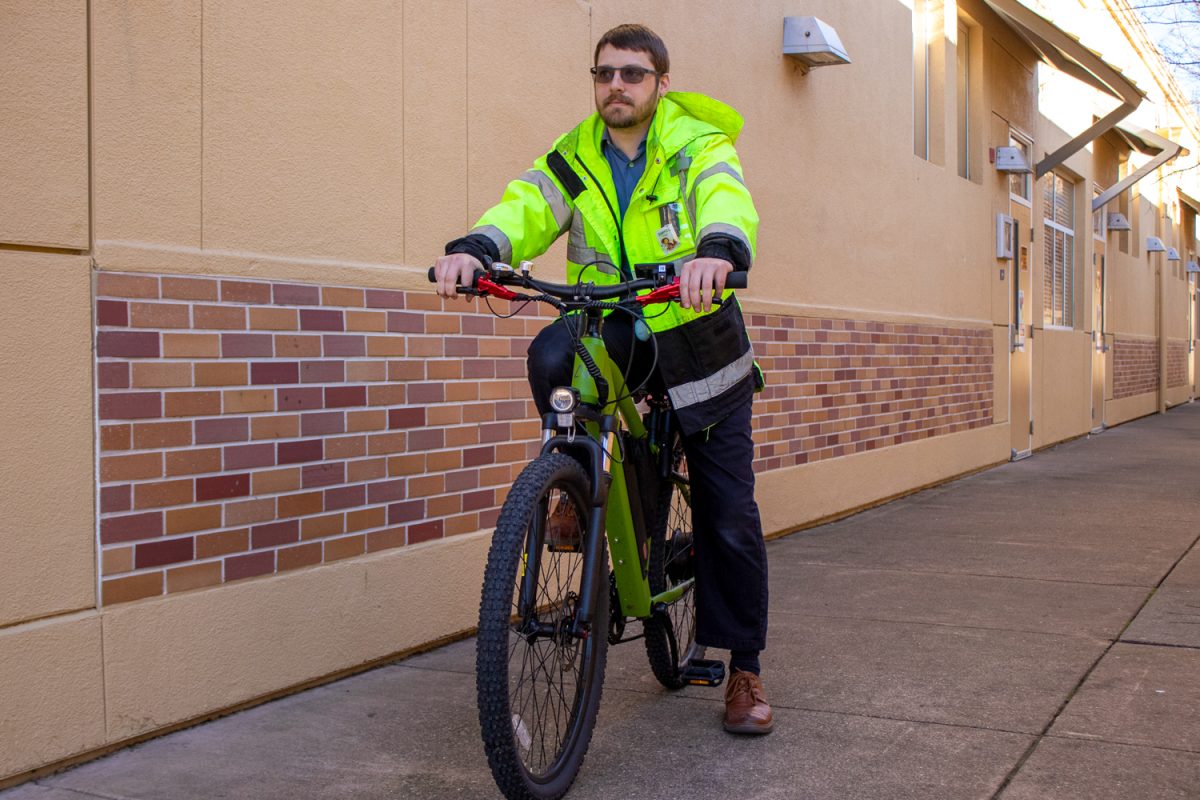
Carlmont teacher Michael O’Neall prepares to ride his electric bike off campus. California’s new 2026 e-bike safety laws affected riders like O’Neall by requiring them to have visible rear lights or reflectors at all times. The legislation also increased battery safety standards after concerns about lithium-ion fires in apartments and shared housing across the Bay Area.
New 2026 e-bike laws are reshaping how Californians travel, from students weaving through traffic to commuters climbing hills with electrical assist.
According to the California Highway Patrol, both Assembly Bill 544 and Senate Bill 1271 went into effect on Jan. 1, 2026.
Assembly Bill 544 mandates that e-bikes have a red reflector or a solid or flashing red light and a reflector that is built in on the rear. These reflectors or lights are required during all hours of use, not just when it is dark, as was the case prior to this bill.
The bill also allows the California Highway Patrol to create and require an online e-bike safety and training program for minors who receive a helmet violation involving an e-bike.
Senate Bill 1271 focuses on improving safety standards for e-bikes powered by lithium-ion batteries. It requires that devices and components like these batteries be tested by labs and meet safety standards before they can be sold or distributed.
It also mandates that products be labeled to indicate compliance with these new regulations, so consumers are informed. Overall, it aims to reduce the risk of fire hazards and electrical malfunctions associated with these components.
Research from Harvard Health found that e-bike injuries in the U.S. increased from 751 cases in 2017 to more than 23,000 in 2022, and this trend continues to rise.
As e-bikes become increasingly popular, sales are expected to continue rising through 2034.
State lawmakers say the new law changes are a response to a rise in serious e-bike injuries.
“The new e-bike laws were driven by a clear and increasingly urgent safety concern. E-bikes are faster, heavier, and more powerful than traditional bicycles. Injuries related to e-bike crashes, especially among young riders, have risen sharply in recent years,” said Assemblymember Diane Papan, who represents California’s 21st District.
Papan also points to an increase in injuries that more closely resemble motorcycle crashes than traditional bicycle accidents.
“Trauma surgeons and emergency physicians throughout the nation are reporting more severe injuries, including head trauma and injuries that resemble motorcycle crashes rather than bicycle accidents,” Papan said.
Visibility, enforcement, and education
In the Bay Area, e-bike use is common among students and commuters, heightening safety risks due to heavy traffic and shared roads.
“In the Bay Area, where e-bike use is especially common among students and commuters, these risks are more visible. Dense traffic, busy intersections, and shared roads mean that visibility, predictable speeds, and safe equipment standards matter even more,” Papan said.
Local law enforcement officials say visibility and rider behavior are among the most common concerns.
“We’re getting a lot of running of stop signs, not coming to a complete stop, performing wheelies or riding on the sidewalk, speeding, failure to maintain the lane, riding in the wrong direction, and lacking proper lighting equipment for the conditions,” said Officer Andrew Peek, public information officer for the San Mateo Police Department.
“
What we’re focused on is safety and education, across the board. We’ve already done a tremendous amount of education over the past several months,
— Andrew Peek
Officers have also been noticing illegal modifications and activity regarding e-bikes.
“We’ve also seen officers have stated they’ve seen kids modifying the bikes to make them go faster, which is illegal,” Peek said.
Under the new laws, police departments are given additional tools to enforce safety while emphasizing education.
“What the law provides is more accountability for riders. The new laws also allow for more education, because one of the conditions for a bike’s release is attending an e-bike safety course. If we tow a bike for a violation, the child or rider has to receive training before it’s returned, which I think is really excellent,” Peek said.
Rather than focusing solely on citations, enforcement decisions depend on the severity of the violation.
“What we’re focused on is safety and education, across the board. We’ve already done a tremendous amount of education over the past several months. Just because someone is stopped doesn’t automatically mean they’ll receive a citation; it depends on the situation, the officer’s discretion, and what they observed,” Peek said.
The San Mateo police department has been focusing on e-bike education since before either of these bills was enacted. They hosted and recorded an informational talk in the summer of 2025 to educate the public on what makes a legal e-bike and the different classes of e-bikes.
Rider experience
For Michael O’Neall, a science teacher at Carlmont High School and daily e-bike commuter, the new laws reinforce safety practices he already follows.
“If you ever see me biking, I have a high-visibility reflective vest as well as lights on the front, back, and helmet. I think everybody biking should do that, just because you need cars to see you,” O’Neall said.
O’Neall has used an e-bike for his commute since 2021 and prefers it to driving, though he acknowledges the risk.
“I have so much safety gear, it’s normally not an issue. I try and avoid downtown areas at night, because even with the reflective gear, I’ve had cars turn right into me before, I’ve gotten nicked in the parking lot before by a car,” O’Neall said.
Some view these new laws as more impactful on education and as targeting manufacturers rather than directed at consumers.
“I think most American companies already lab-test their lithium-ion batteries because that’s pretty standard. This is really about making sure cheaper, poorly made products don’t slip through the cracks. It seems like the laws mainly target manufacturers to close loopholes rather than consumers,” O’Neall said.
Despite the added regulations, lawmakers and riders say the laws are not meant to discourage e-bike use.
“E-bikes are an important part of our climate and transportation future. The goal of any new laws is not to discourage e-bike use but to make sure the technology is used responsibly and safely,” Papan said.