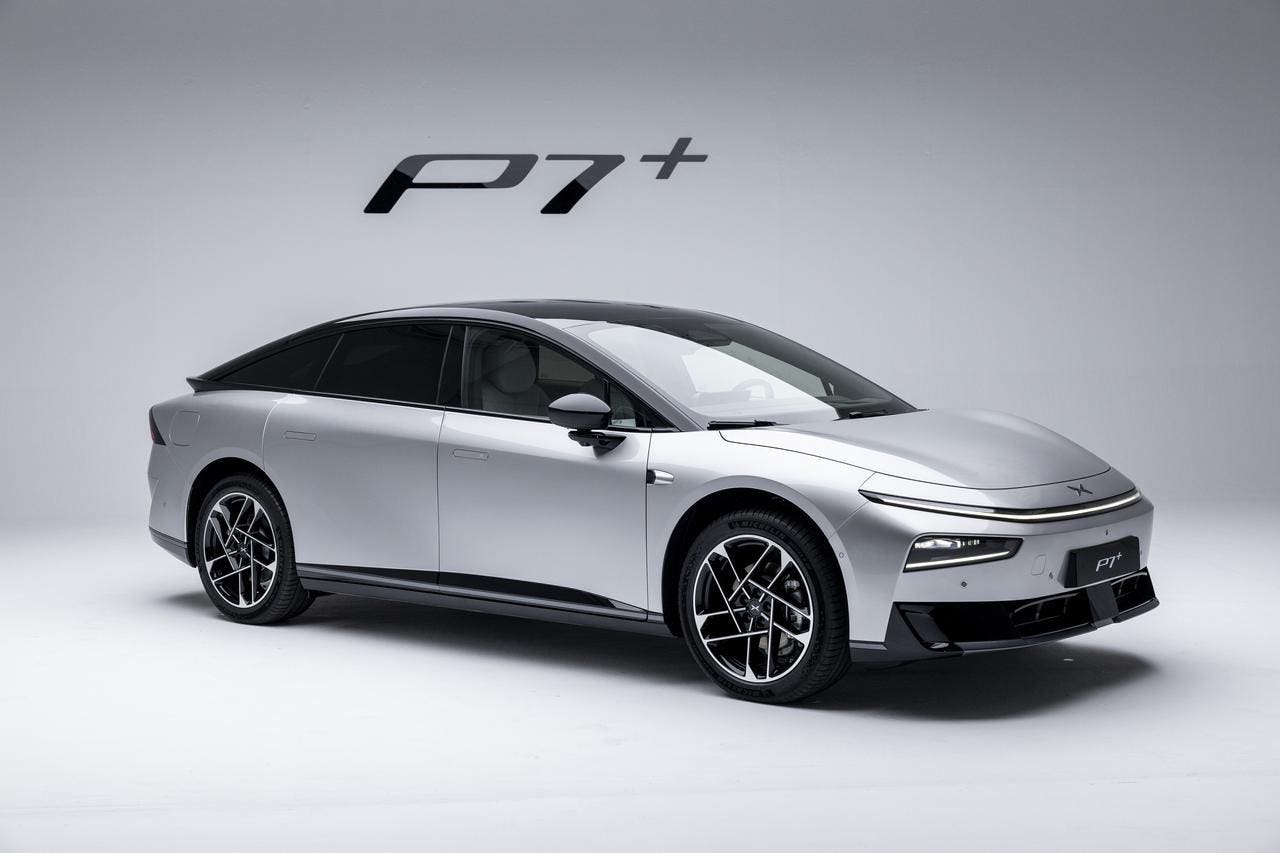
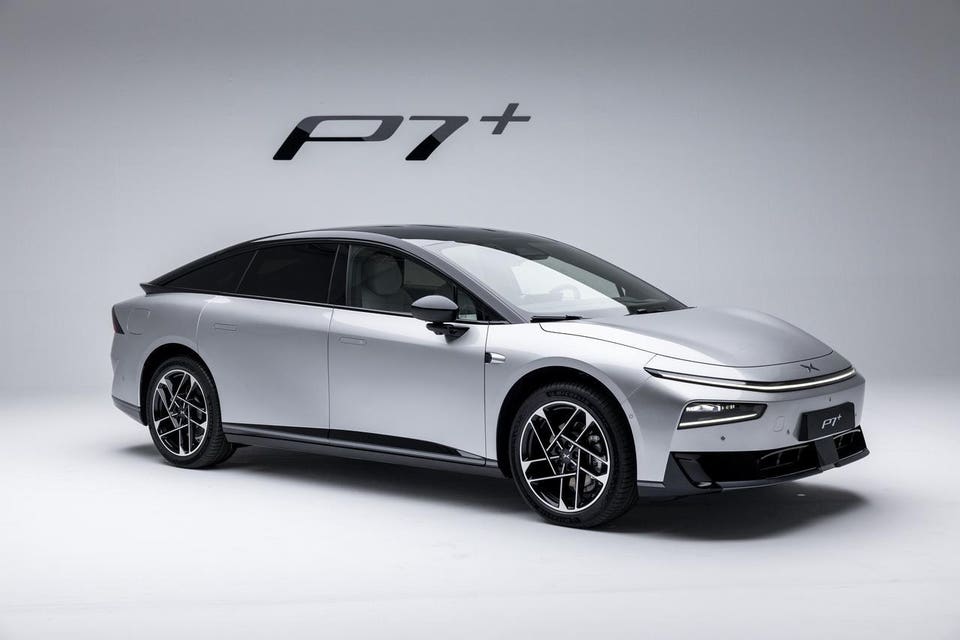
The P7+ is XPENG’s latest technology flagship EV to be launched in Europe.
XPENG
One of the many criticisms frequently targeted at electric vehicles is that their designs are bland. This is even more the case with Chinese cars. Breaking out of these prejudices requires a clear design strategy. At the reinvigorated Brussels Motor Show, XPENG launched its latest EV, the P7+. Design manager Alain Simon explains how the company aims to present a stronger character than other automakers, with the P7+ as its flagship. But can it solve the paradox of making technology emotional?
XPENG’s Quest For Identity
“We are trying to be ourselves,” says Simon. “This is a unique thing for XPENG, compared to other manufacturers, who are just trying to do whatever the consumer is expecting. We are trying to figure out who we are. We keep working on our design DNA. It never stops. We’re trying to expand on what we’ve done previously. The P7 was a great success. It had a very strong identity, and we have expanded on that. Now we are thinking about what’s next. We really want to make sure that the XPENG car as a design, as a vision is clear to consumers. This is where we try to separate ourselves from the crowd.”
XPENG’s CTO Brian Gu has argued that we are moving from software defined vehicles to AI defined vehicles, but the company is also using AI as a key component of its design process. “AI today is an amazing tool, but it’s not a solution,” says Simon. “We don’t want people to get confused when we say designed by AI. We’re using AI as a tool to improve our efficiency and research. We use AI in the exploration phase. Before we make a shape, we need to draw it, we need to build it in 3D, and we need to spend hours using rendering engines to create an image and validate whether it looks good or not. AI allows us to do this process very quickly, hours instead of days or weeks. We can come in with a bunch of different proposals and have way more options to choose from than before.”
XPENG designer Alain Simon talking at the P7+ launch at the Brussels Motor Show.
XPENG
“China Time” is becoming a cliché, but it’s obvious that Chinese automakers are moving forward at a pace no other region’s companies can replicate. But the risk here is that a consistent identity gets lost along the way. The core tenet of XPENG’s design is purity. “We’re trying to have a few accents that speak for XPENG, like the light signature, the volume, which are minimal with a touch of sportiness,” says Simon. “And of course, technology integrated.” The interior and exterior design is meant to represent XPENG’s status as a technology company. “We try to make it disappear. We’re trying to be the minimum, purest expression of technology.”
In a global market, where tastes differ across Europe, the US and China, the question is whether this singular approach can work internationally. “We do not believe that we need to change our design language depending on the region that we go to, because we are who we are, and we are proud of it,” says Simon. “Even though we keep expanding on what it means to be who we are, we still want to have our own identity, and we believe this identity fits the human as a whole. It does not need to be adjusted for Chinese or European customers. We are now designing a fleet of different cars with different sizes and different proportions, and we will just pick whichever car that is more adapted to each market.”
Technology At The Core Of XPENG Design
XPENG is trying to make advanced technology a central part of this minimalist identity. One consistent element is what the company calls the “robot face”, which informs the frontal appearance of its cars. In the P7+, another element of this is a large head-up display, but the company has some more sci-fi products in development. “We’re doing flying cars,” says Simon. “We’re doing robots. We research new tech in other areas, and then we can implement this new tech or new design language into the cars themselves.”
The flying cars and robots might seem gimmicky, but Simon sees them as bets placed on a distant future. “We have a very long vision about future mobility,” he says. “We strongly believe that flying cars have an immense potential market. In 30 years from now, we could be selling way more flying cars than we sell road cars. It’s the same for robots. There’s so much that we could do with those.”
XPENG wants its technology to be intuitive, but it has still kept the buttons to the minimum.
XPENG
One of the problems with new technology is if consumers need to change previous habits to adopt it. Simon argues that XPENG focuses on intuition, particularly with the P7+ interior. “We have this cloud-like design,” he says. “We have soft, comfortable material. We don’t need to educate the consumer about how this product is comfortable.”
However, the drive towards intuition doesn’t extend to maintaining traditional buttons. “In China, buttons are not an issue at all, because they’re used to a full touch UI with their smartphones and tablets,” says Simon. “This could be their first car, so they can adopt this new habit very quickly. In Europe, this is not the case. Drivers have been using physical buttons for so long they need to get used to screens, but we believe this is just a matter of time. We designed the UI in the way that even though we don’t have buttons, it’s still very easy to use. It’s very quick to get used to. We really believe that, given the chance, even the European consumer can get used to this.”
XPENG: Trying To Avoid The Generic
However, having minimal buttons is hardly an original design strategy when so many EVs have followed this route (aping Tesla). It’s no solution to the problem of generic EVs. “We keep improving on our design DNA,” says Simon. “The last few years have been a lot about exploring what does it mean to do technology design, focusing on function following form. We believe today our DNA is strong. Perhaps for the consumer it’s not so obvious. The P7 was the first car that defines what it is to be a technology-defined car with our robot face design, with the light design, with the purity of the forms. We keep expanding on this, but we are still looking for the next step.”
The XPENG P7+ is bigger than the P7 from which it has evolved.
XPENG
The P7+ was that next step – larger, but with a more rounded and organic form. This downplays the robotic look somewhat. “Today our brand DNA is defined to be both emotional and rational,” says Simon. “We mix something emotional, which is human, imperfect, organic, with something that is super rational, which is the tech, which is the quality. This is where we want to differentiate ourselves. We don’t want to be bland, because we want to have this emotional design philosophy with sexy forms and an aggressive stance, but the robotic feel with the high-tech element fully integrated.”
XPENG aims to continue its design development in this direction. “Maybe research on the light signatures,” says Simon. “Maybe some of the volume can differ a little bit, maybe the wheel design. These elements can push the design. We want the consumer to feel this is an emotional car. This is a beautiful car. But we also want the consumer to feel this is extremely high tech, and this is what we are studying today, for the consumer to be able to say, XPENG is emotion and tech.”