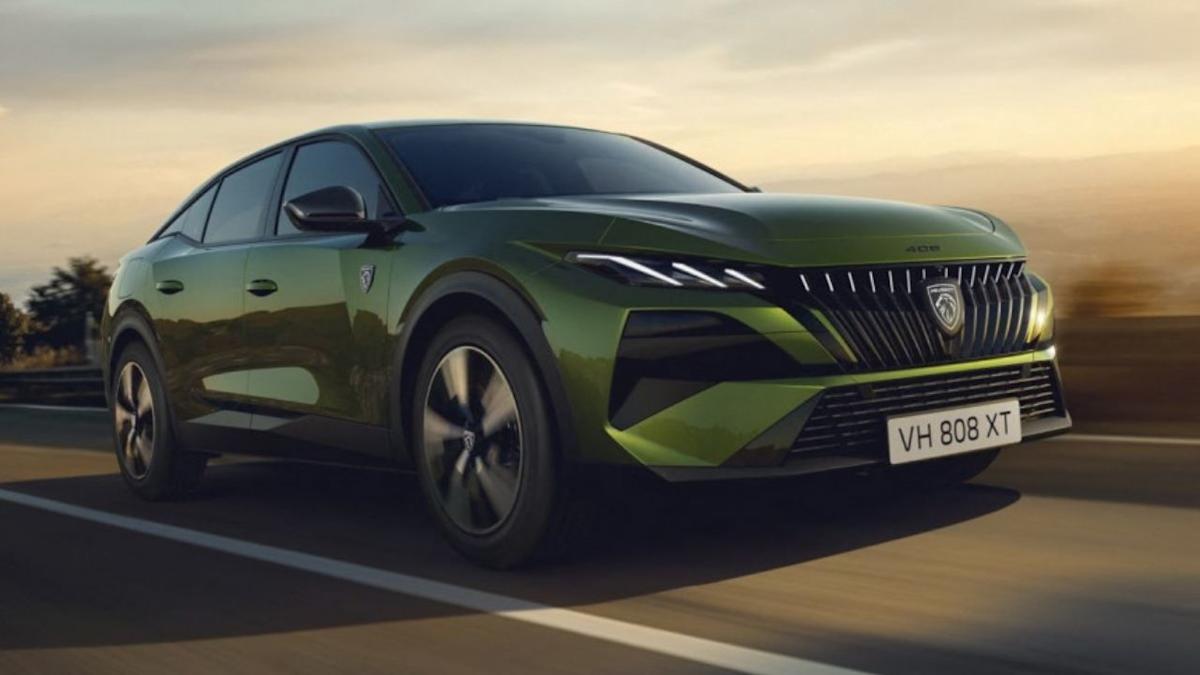
Peugeot has officially unveiled a refreshed version of the 408, a model that was originally introduced in 2022 and developed specifically for the European market. Unlike the globally sold Peugeot 408 sedan, the European version was conceived as a more expressive liftback with crossover-inspired styling, positioned between traditional compact sedans and SUVs. The facelifted model made its public debut at the Brussels Motor Show, marking the brand’s planned mid-cycle update after nearly four years on the market.
While the Peugeot 408 is not currently sold in the United States, it plays an important role in illustrating the French brand’s evolving design language and electrification strategy, both of which are increasingly relevant as Stellantis continues to align its global portfolio.
Exterior Design Updates Focus on Lighting and Branding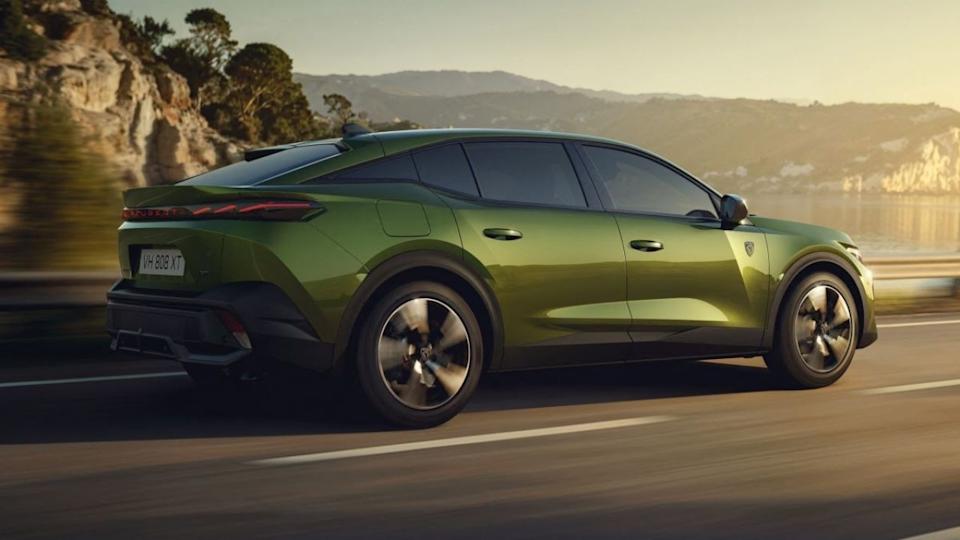
Photo Courtesy: Autorepublika.
Visually, the updated Peugeot 408 introduces a revised front fascia that aligns it more closely with newer Peugeot models. The grille has been redesigned, with its upper sections now featuring integrated LED lighting elements. The front headlights have also been reworked. The previous fang-like daytime running lights, a signature feature on earlier Peugeots, have been removed in favor of a cleaner, two-level lighting structure. A more sculpted front bumper further emphasizes the car’s dynamic character.
At the rear, Peugeot has replaced the former full-width panel with a slimmer light bar that connects the taillights and incorporates a large illuminated PEUGEOT wordmark. This change brings the 408 in line with the brand’s current emphasis on bold rear branding. A new exterior color, Flare Green, has also been added to the palette.
Overall dimensions remain unchanged. The Peugeot 408 measures 4,687 mm in length, with a wheelbase of 2,787 mm. Buyers can choose newly designed wheels ranging from 17 to 20 inches, depending on trim and powertrain.
Interior Largely Unchanged, With Improved Refinement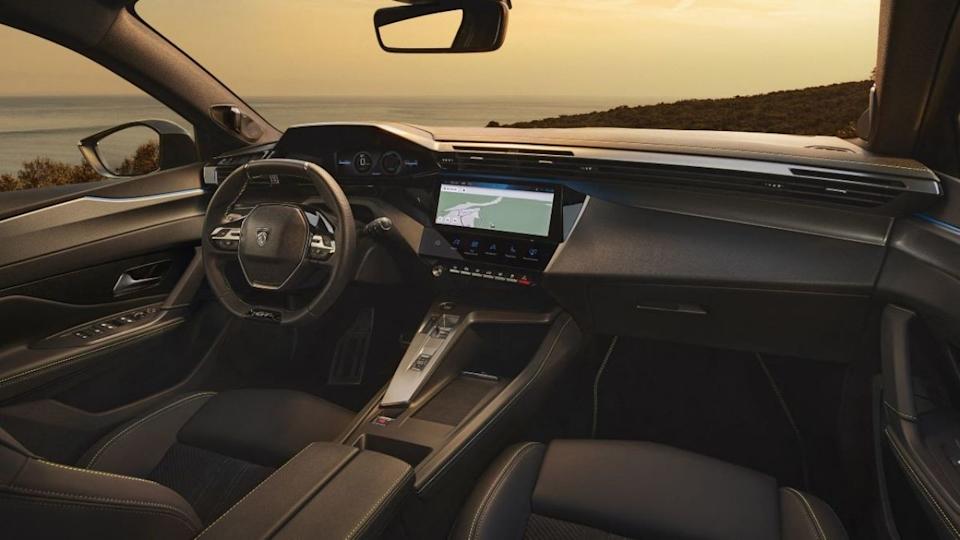
Photo Courtesy: Autorepublika.
Inside, Peugeot has opted for continuity rather than reinvention. The cabin retains the familiar iCockpit layout, featuring two 10-inch displays, one serving as the digital instrument cluster and the other handling infotainment duties. While there are no visible design changes, Peugeot says overall refinement has been improved.
According to the manufacturer, thicker glass and further optimization of underbody aerodynamics have resulted in better sound insulation. For buyers seeking a more premium experience, a new optional audio system rated at 690 watts with ten speakers is now available.
Expanded Hybrid and Electric Powertrain Lineup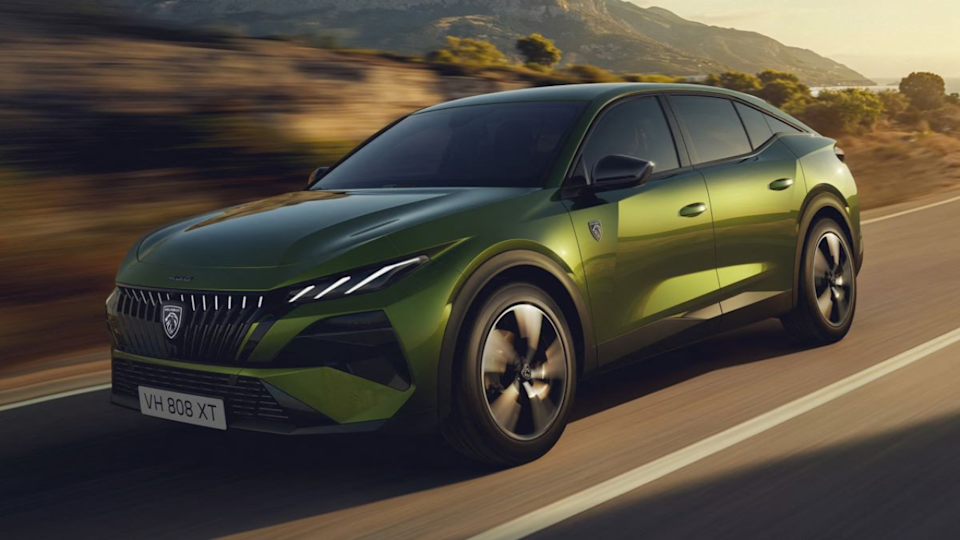
Photo Courtesy: Autorepublika.
Under the hood, the refreshed 408 continues to emphasize electrification. The base hybrid version still uses a 1.2-liter turbocharged three-cylinder engine paired with a six-speed automated transmission that integrates an electric motor. Combined system output remains 145 horsepower.
The plug-in hybrid variant receives more substantial updates. It retains the 1.6-liter turbocharged gasoline engine rated at 180 horsepower, but the previous eight-speed automatic has been replaced by a new seven-speed dual-clutch-style automated transmission. A more powerful electric motor, now producing 125 horsepower instead of 110, increases total system output from 225 to 240 horsepower. Battery capacity grows from 12.4 to 14.6 kWh, extending the electric-only range from 64 km to 85 km under the WLTP test cycle.
The fully electric E 408 carries over its 213-horsepower motor and 58.2 kWh battery. However, software and aerodynamic optimizations increase driving range slightly, from 453 km to 456 km. The electric version also gains vehicle-to-load capability, allowing it to power external devices with up to 3.5 kW.
Market Timing and Pricing Outlook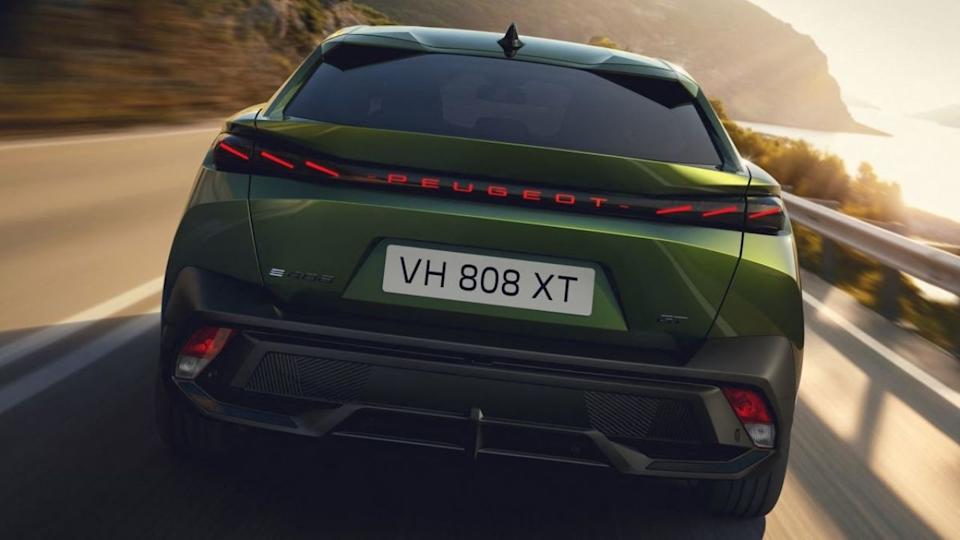
Photo Courtesy: Autorepublika.
Peugeot plans to launch the refreshed 408 across Europe in the first half of the year. Pricing has not yet been announced. For context, the outgoing version currently starts at around 41,000 euros in most European markets, while certain regions have offered a non-electrified 1.6-liter version with 215 horsepower at lower entry prices.
Although the Peugeot 408 is unlikely to reach U.S. showrooms, its update highlights broader industry trends toward electrification, refined design evolution, and incremental efficiency gains, all of which continue to shape global vehicle development.
This article originally appeared on Autorepublika.com and has been republished with permission by Guessing Headlights. AI-assisted translation was used, followed by human editing and review.