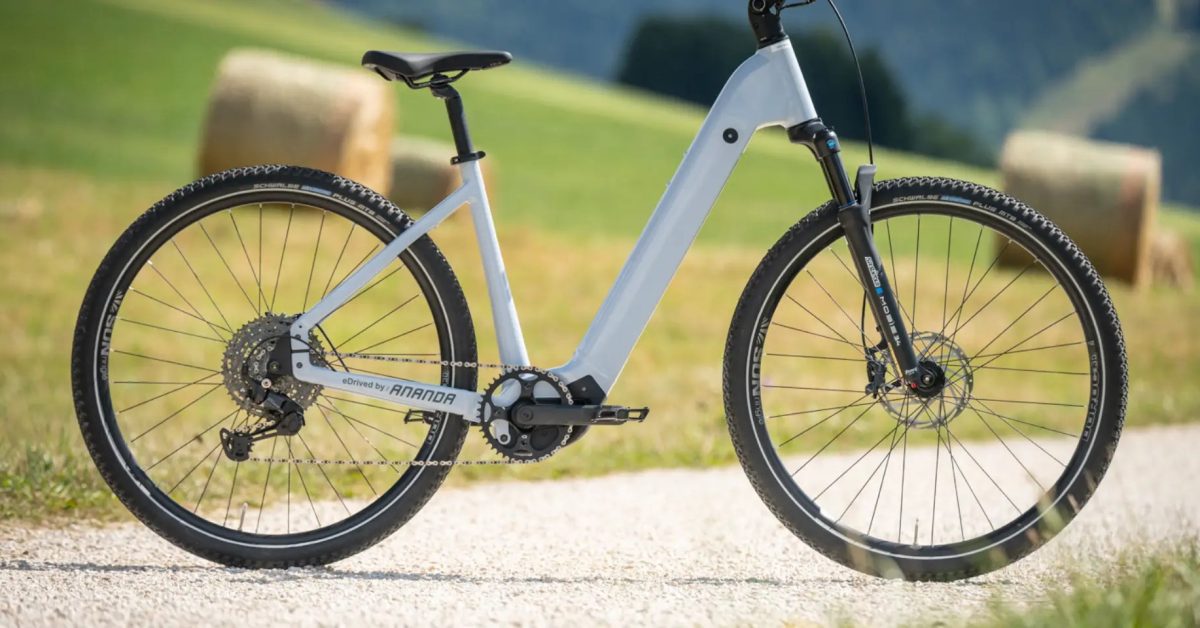
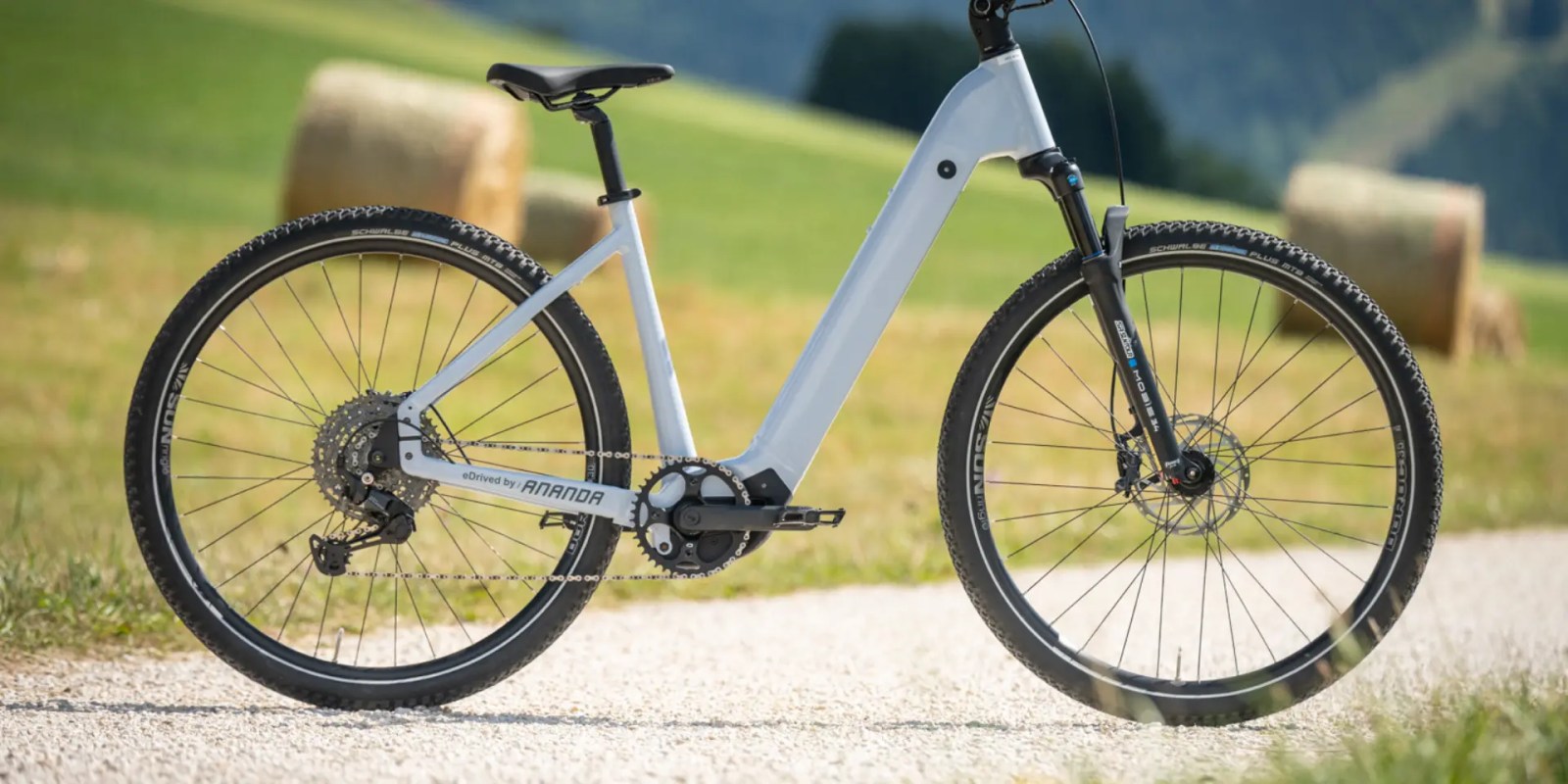
Ananda is taking a notably different approach to e-bike motors with the launch of its new M7000 Series, unveiled this week. Instead of pitching a single standout motor, Ananda is introducing what it calls a scalable mid-drive platform, one designed to underpin entire e-bike lineups across multiple segments, from aggressive eMTBs to everyday urban commuters.
At the heart of the announcement is the idea of “platform over product.” The M7000 Series isn’t a single motor but rather a family built on a shared technological architecture. All versions use the same core electronics, sensors, system logic, mounting standards, and communication protocols. For bike brands, that means the ability to design a wide range of models without reinventing the wheel (sorry!) for each new bike. Different ride characteristics come from tuning and configuration instead of from entirely separate drive systems.
The initial lineup includes three variants. The M7600 sits at the top, aimed squarely at high-performance electric mountain bikes with up to 120 Nm of torque and 850W peak power from a surprisingly low voltage system at just 36V. We typically see these power and torque figures from 48V systems.
Below it is the M7200, tuned for trekking, urban, and all-road applications, delivering up to 100 Nm and 650W peak. Rounding out the range is the M7100, an entry-level option intended for city bikes and high-volume projects, still offering a respectable 85 Nm and 600W peak power. Despite those differences, all three motors share the same integration standards and system backbone.
Advertisement – scroll for more content
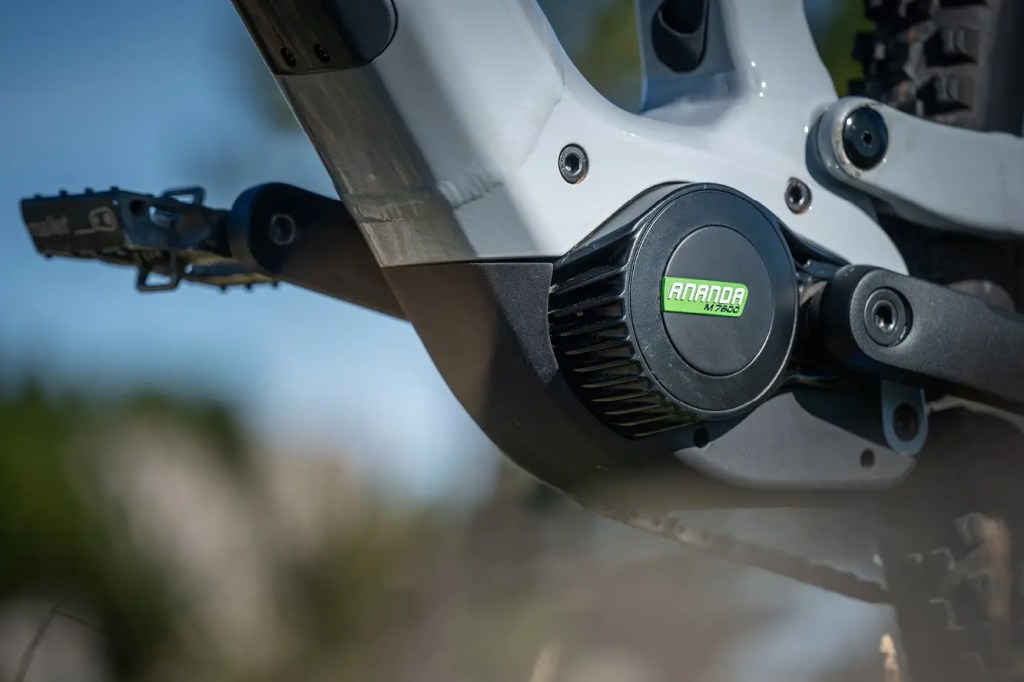
Ananda says performance was a major focus, particularly at low cadence. The M7000 motors are optimized to deliver strong torque from the first pedal stroke, which should translate to confident starts, easier steep climbs, and better control in technical riding. A high-precision sensor suite processes rider input in real time, while a responsive clutch system aims to keep engagement smooth and immediate, avoiding the lag or abruptness that can plague less refined mid-drives.
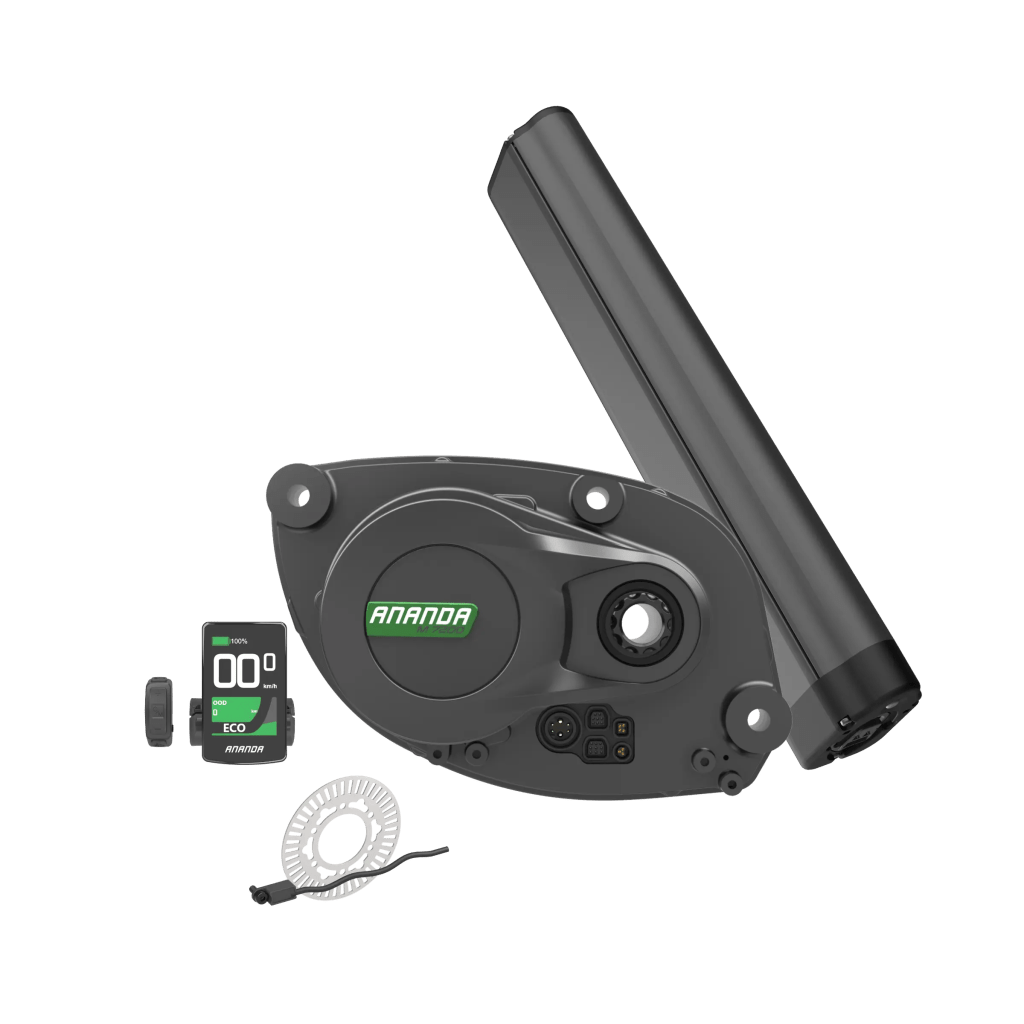
Despite the power figures, the motors remain compact, weighing between 2.7 and 2.9 kg depending on configuration (5.9 to 6.4 lb). That compactness gives frame designers more freedom with geometry and suspension layouts, something especially important for modern eMTBs and cleanly integrated urban bikes. Ananda is also positioning the M7000 as a full ecosystem, not just a motor. Batteries, controllers, displays, sensors, and optional IoT connectivity are all designed to work together, with display options ranging from integrated in-frame TFT screens to minimalist bar-mounted units, all supporting Bluetooth connectivity.
From an OEM perspective, the appeal is pretty clear. A universal mounting standard and unified CANBUS communication system can reduce tooling costs, simplify inventory, and shorten development timelines. Ananda says future M7000 derivatives will remain backward compatible, allowing brands to adapt quickly as market demands shift without starting from scratch with entirely new frame designs.
In a market crowded with motors chasing ever-higher peak numbers, Ananda’s M7000 Series seems more focused on flexibility, scalability, and efficiency for brands aiming to build coherent e-bike families rather than one-off halo models. And having visited Ananda’s headquarters and factory in China personally, and I can vouch for their ability to build the things they show-off in fancy announcements like these.


FTC: We use income earning auto affiliate links. More.