Michael Teo Van Runkle/SlashGear
At Miami Art Basel, swanky soirées and exhibits span the Florida coastline surrounding a massive painting, sculpture, and installation show that dominates the city’s culture for a handful of days each December. Not to mention, of course, more than a few nighttime EDM raves on the beach where attendees swarm in throngs hoping to see and be seen.
Rivian invited me to Miami this year to experience a new vision for the company’s future efforts. But as befitting Art Basel, the cloying reveals focused less on EV engineering or experimental AI features—that came later. Instead, Rivian wanted to show off brainstorming around sensory and aesthetic experience, or how the embodiment of elusive and emotive stimuli can tie into automotive design and development.
 Michael Teo Van Runkle/SlashGear
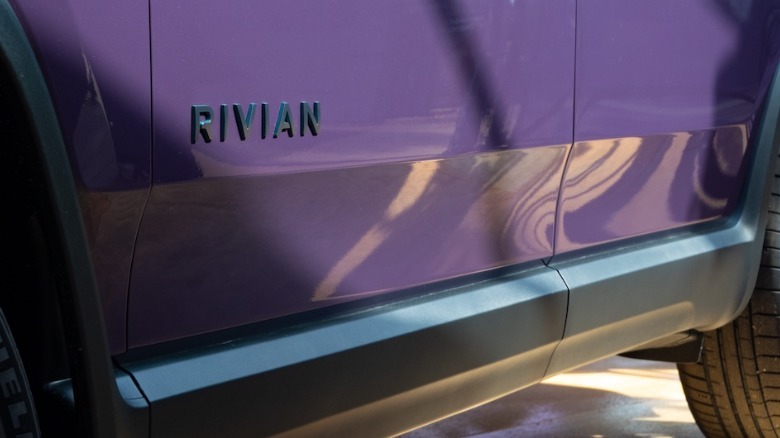
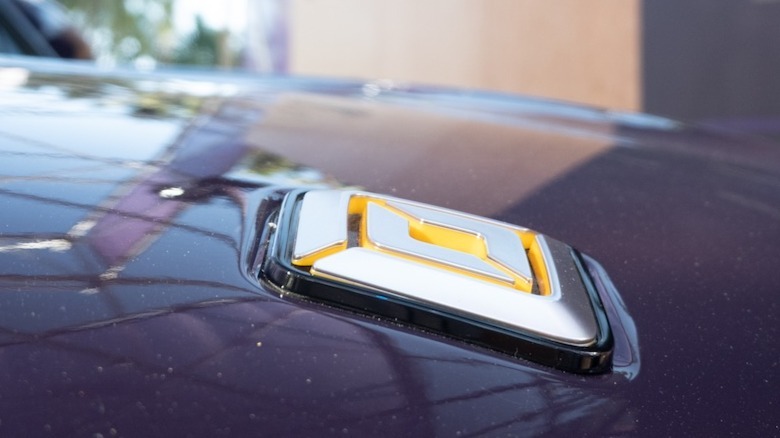
On hand, a new dark purple Borealis paint job absorbed the brilliant Florida sunshine, contrasting against the pastel rows of art deco facades. But the more enticing project revolved around the potential of imbuing Rivian vehicles with new scents. But not, as I expected, in any way reminiscent of Mercedes-Benz’s atomizers. So I wandered around South Beach trying to turn on my right brain and comprehend why a startup in the throes of an EV slump and extensive future model maturation suddenly wanted to allocate time and money to such specious concepts.
Northern lights down south

Michael Teo Van Runkle/SlashGear
Colors definitely play a big part in Rivian’s aspirational adventure lifestyle image. Picture either an R1S and R1T, does a forest green come to mind? Other tones including muted blues and tans also proved popular on the rugged streets of West Los Angeles, or at least more than the black, white, grey, and silver all too common to at least one other ubiquitous EV manufacturer specifically.
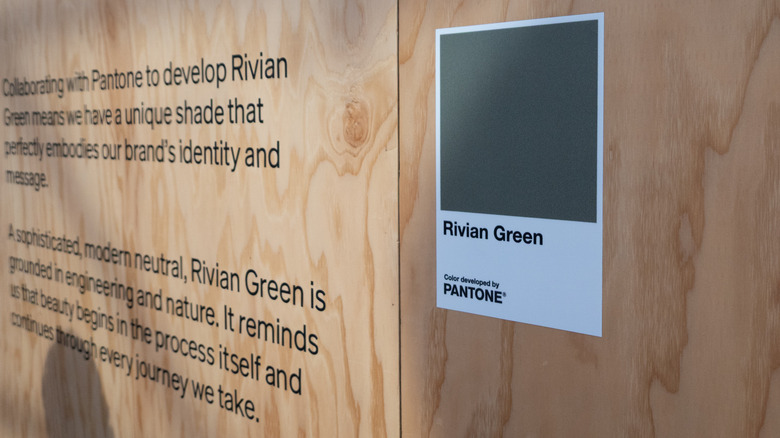
So much so, in fact, that Rivian even worked with Pantone to develop a color swatch specifically named Rivian Green. Seeing the swatch, or sample, painted onto plywood hilariously reminded me of the residential construction projects I grew up around as a kid, as the child of architects and contractors. But Chief Design Officer Jeff Hammoud, who ventured out to Miami from SoCal too, explained that the green actually evolved from the original process of e-coating an early Rivian chassis.
“As a body in white comes down, there’s a big e-coat tank where they just dip the whole vehicle into this vat,” Hammoud told me, “It’s basically a coating that prevents rust. And it’s also kind of the base layer that the paint sticks to, essentially like a primer. So we used it once and it was one of our original vehicles, and it was interesting because the way that it was covered, it doesn’t cover uniformly, so it had a little bit of gray and then shifted to this green in places.”
Color theory for a startup EV company
Michael Teo Van Runkle/SlashGear
Balancing military greys and greens with more inspiration from nature proved challenging, to find the perfect mixture with Pantone that so easily identifies the R1S and T. Borealis builds on that natural inspiration, albeit with a bit of help from an owner who posted pictures on Instagram.
“We post a lot of photos that customers share of their vehicles, in many different areas,” Hammoud admitted. “There was this amazing photo that a customer had put out, where they were literally looking at the Aurora Borealis and they had the vehicle’s nighttime shot. I think it was a black, so it ended up reflecting a lot of the colors onto the vehicle.”
 Michael Teo Van Runkle/SlashGear
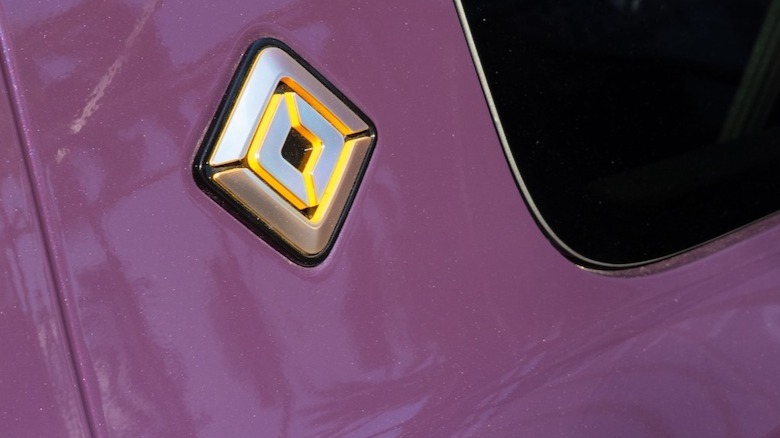
In person, Borealis purple almost transition to a full black in photos or when shaded from the sun. But when light hits right, the paint reveals more sparkle and metallic flake highly reminiscent of the night sky’s stars twinkling faintly amid a display of the Northern Lights. I never expected to see the faint aurora down in Miami, especially with my eyeballs seared from the bright light of dance parties and neon art exhibits all week. But I wondered aloud with Hammoud whether I might one day see a Rivian finished in an entirely unique paint code, as made popular by Porsche’s Paint to Sample program.
Apparently not, due mostly to the sheer logistical challenge of pulling a Rivian off the line. But at Art Basel, a limited run of 10 Miami Edition builds based on the Tri-Motor R1S brought out buyers less gunshy of the $134,990 pricetag than the pastel blue and pink flair. Though not my style, the Miami Editions definitely fit in well on South Beach. I definitely dig the Rivian form when finished in dark purple, though.
Onto the Smell-O-Vision
Michael Teo Van Runkle/SlashGear
A friend once laughingly referred to modern German marques as designed by men who dreamt of nothing more than inventing a new shade of grey. That hilarious, yet depressing, state of affairs hints at how much any car that comes in a new color helps to break up dreary automotive design, as a departure from the bland and boring paint jobs so typical in urban centers. Whether Rivians populate cities as daily commuters or out in the woods in the daydreams of owners, at least the colors play well with Hammoud’s designs.
The concept of scents, on the other hand, raised more of a question mark in my mind. Mercedes-Benz’s atomizers obviously make for the most infamous use of that sensory connection between olfactory accretion and fully encompassed bodily experience. I do appreciate air purification in the name of neutrality—and recently drove a Maybach up the I-5 freeway here in California without catching a whiff of the typical cattle ranch. Impressive, to say the least. But once the actual atomizers start diffusing, friends who get pregnant often finally understand my sensitivity to synthetic odors.
The ambiguous terrain of sensory stimuli
Michael Teo Van Runkle/SlashGear
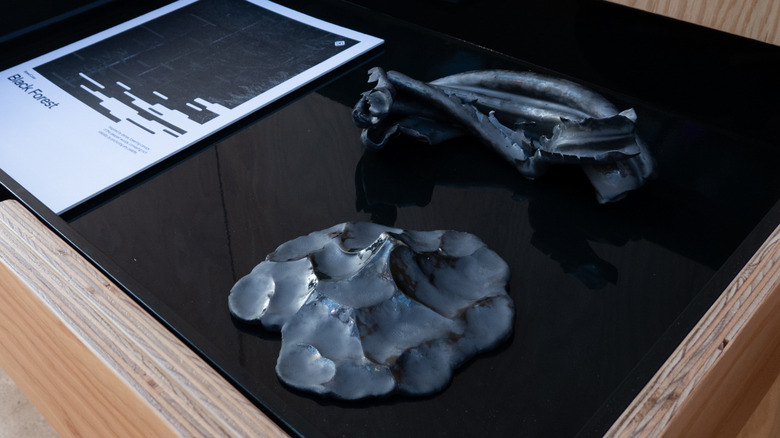
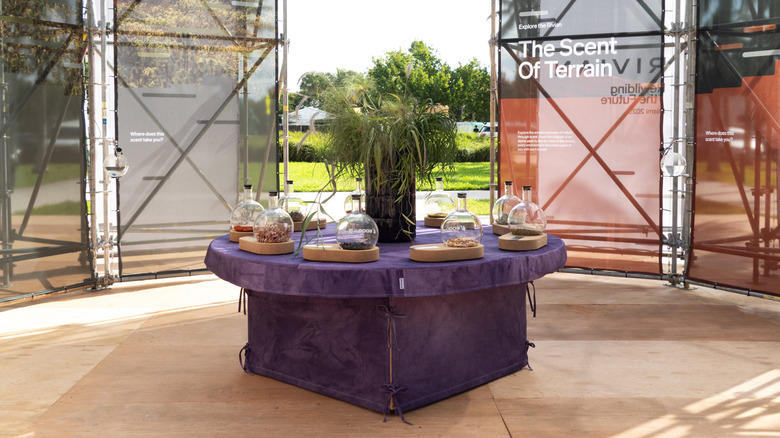
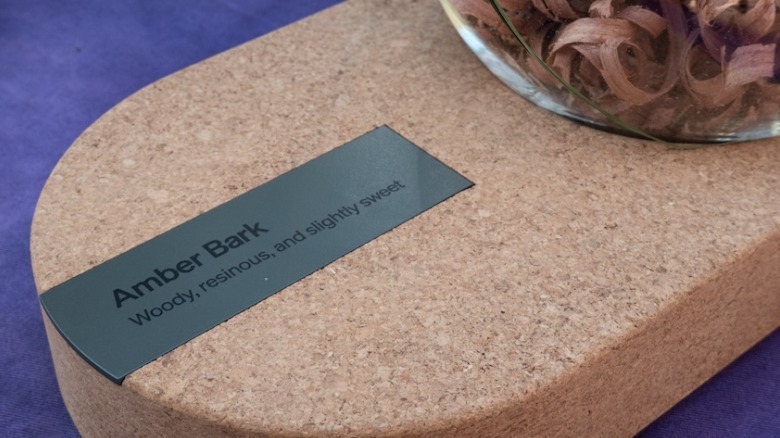
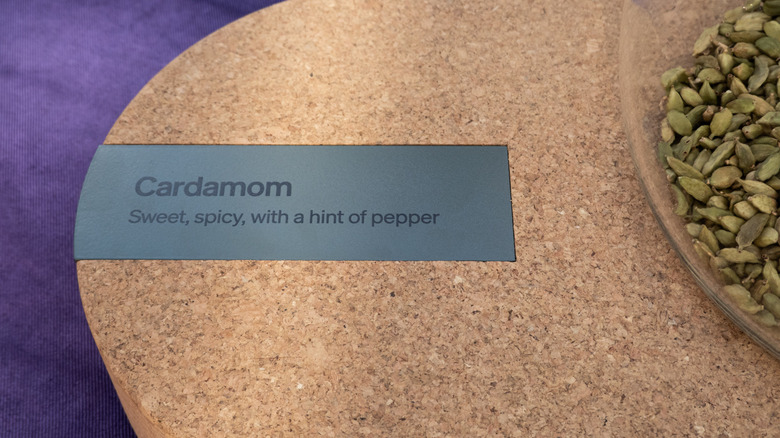
So perhaps Rivian chose the worst journo possible to invite to Art Week—but maybe also the best. At least the cute display in a temporary park booth brought a few boiling flasks full of real nature into the swampy and excessively perfumed and cologned Miami scrum. I dipped my nose in, reminding me of Scotch tasting with a Glencairn glass, as the wafting notes tingled my receptors. I loved the woody earth of cassia bark, the sweet depth of saffron and those cardamom seeds, which I once upon a time used for homemade bitters that worked equally well in teas or, surprisingly, margaritas.
 Michael Teo Van Runkle/SlashGear
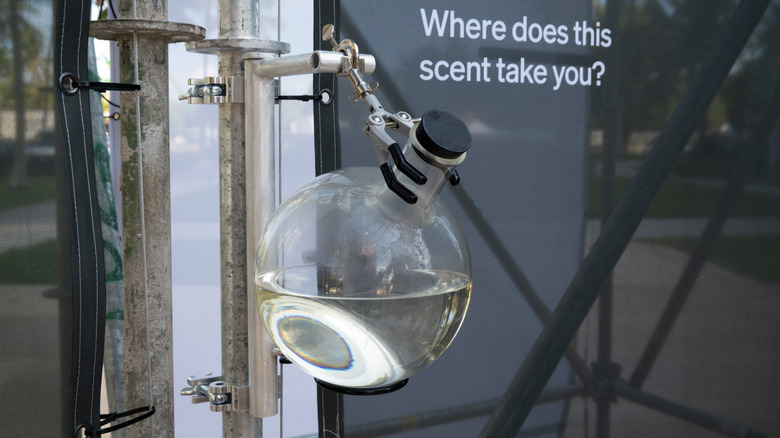
The more exotic samples stood in contrast to more basic citrus and wood bouquets, yet Rivian’s display called out “The scent of terrain” and prompted memory quests as much as discussing actual automobiles: “Where does this scent take you?” For Hammoud, that mix becomes one and the same, in the form of memories that shape our instinctual connection to cars.
Remembrance of things past
Michael Teo Van Runkle/SlashGear
“We think sense is an important part of memory,” he said. “Me, being a car guy, I just know, like especially when my dad would bring cars home, I’d know the smell of them. Just by the smell.”
Trying to engender a similar form of Proustian recall, made of forest trees or fresh rainfall, the first efforts in liquid form surrounding the table probably leaned too hard into the citrus and pine for me. The combo missed the mark, imparting an impression of Pine Sol floor cleaner more than pleasant memories of campfires or starry skies. My mind instead returned to the pediatrician waiting room or a rec center basketball court. In atomizer form, I fear the scent might totally overwhelm the inside of an R1.
But Hammoud explained that, rather than trying to take that Mercedes route, Rivian’s strategy instead aims to replace the kind of familiar 1990s BMW or 2000s Porsche odor that likely arose from the use of similar plastics and adhesives across the model lineup, as well as leather tanning, rather than pumping molecules by the part per million into air. The goal? Nothing less than giving access to memory banks in the next 10, 20, or 30 years for children growing up in a Rivian today.
Imagining future memories in the here and now
Michael Teo Van Runkle/SlashGear
“To that point, of scent being so tied to memory,” Hammoud said, “that’s something in terms of creating a brand that is one of those areas that we really haven’t tapped into yet. That’s the next level of us refining who we are as a company and sort of our longevity as a company, if you have kids that grew up with the smell.”
Talk about bold, to even consider encapsulating the future here and now so soon. But Hammoud admitted how much that particular challenge applies extra to Rivian, due especially to the fact that vegan leather doesn’t get that quintessential “new car smell” from tanning actual animal hides.
“I wouldn’t say we wouldn’t do one of those atomizers that are in vehicles, but I think something that would be, which we definitely looking into is something that is inherent in the actual material,” he revealed. “As an example, the smell of leather isn’t actually what leather smells like. It’s some of the tanning and processing that gets done that makes that leather smell. So with other materials, you can inject scents into them or change what materials are used. Some of the processes that are done can actually affect the color as well. So it’s something we’re really looking into.”
The challenge of resource allocation for Rivian
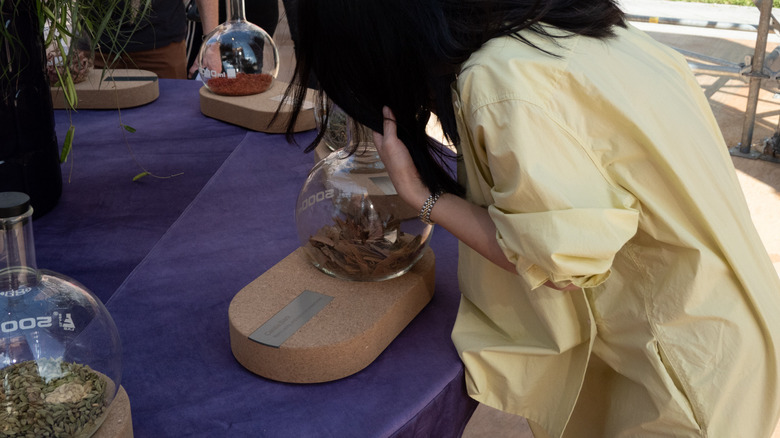
Michael Teo Van Runkle/SlashGear
The effort required to bring that potential project to reality, or the scientific process necessary to experiment with scents that may only coalesce in a Rivian well after baking in the sun months past actually leaving the production line, sure sounds complex. Far moreso than simply mixing fragrances in glass jars, anyhow. But maybe for an EV manufacturer playing off the modern outdoorsy ethos or health and wellness craze, so much work might pay off.
I always wondered whether climate control systems in EVs might get funky, due to the system never heating up and evaporating out unwanted smells without the warmth of an internal-combustion engine nearby. Maybe this work in progress can help to combat that suspicion. Still, I can’t help but think Rivian can better allocate resources toward the R2 and R3 models, which surprisingly made no appearance even in sketch, model, or concept form at Miami. Or maybe focus more on steering and suspension refinement for the R1S and R1T, plus future vehicles, rather than these far more subjective aesthetic and experiential elements of an automobile.
 Michael Teo Van Runkle/SlashGear
Then again, as usual, what do I know? Maybe most buyers simply can’t tell the difference, and notice or care about colors or smells—or both, or all four—much more than driving dynamics and chassis feedback. Then perhaps subconsciously whisking buyers back to the comforting days of olde makes sense, allowing electric cars to do more than transport through traffic but also time travel to an earlier era before the modern malaise of emails and social media and the ubiquitous, impersonal digitalization of a life reduced to visual inputs only. A new sort of aspirational adventure, available with just the touch of a button, or the sniff of freshly freshened air.

![Watch Kia's smallest electric SUV in action for the first time [Video]](https://www.evshift.com/wp-content/uploads/2026/01/1768404341_Kia-smaller-EV-EV2-1-770x515.jpeg "Watch Kia’s smallest electric SUV in action for the first time [Video]")