
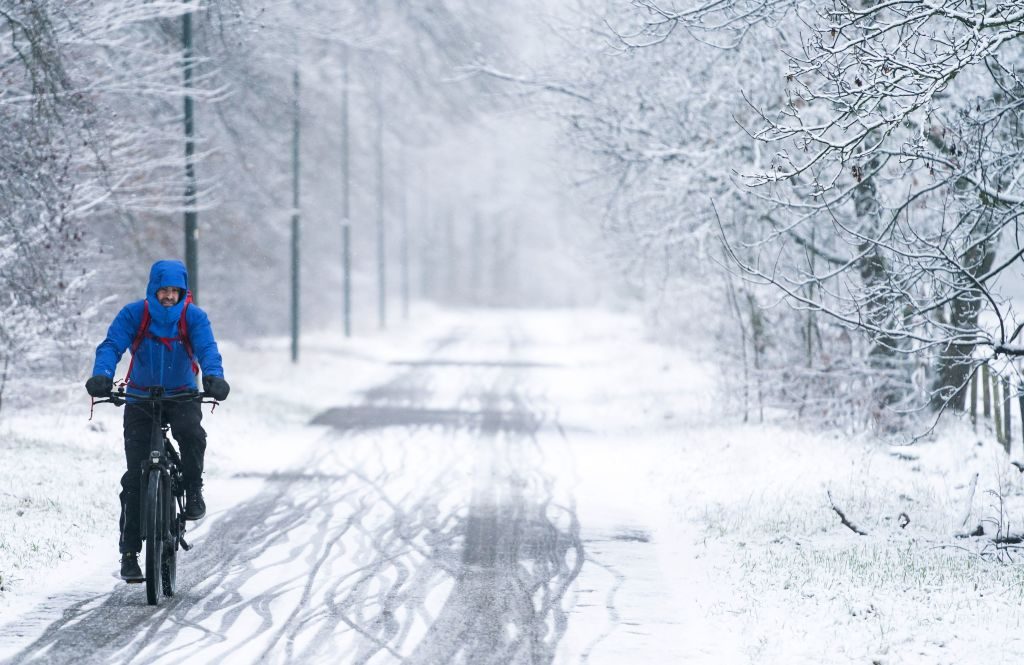
In our Tech Q&A series, we tackle cycling queries – big or small, complex or simple – with insights from the BikeRadar team and trusted industry experts. If it’s a little chilly where you are, spare a thought for our next reader, who’s using his ebike to commute in temperatures way below freezing, and has been left wondering why the range is dropping so much.
I recently bought an Orbea Urrun 10, which is said to have great range thanks to its large battery – and it’s aptly named, since Urrun means far in Basque!
It performs brilliantly in warmer weather. I can easily commute 15km to work and back all week on a single charge. But here in Toronto, where it’s often -17°C through winter, my range drops dramatically – I used half the battery on a 40-minute ride home last night.
It seems ebikes suffer from the same issue as electric cars in the cold – massive range loss.
Chris J Davies
“From the battery brands we work with, we know that they often get support questions from customers when winter approaches due to a perception that the ‘battery isn’t working properly’, when in fact, a decrease in temperature can dramatically reduce battery range,” explains Nick Bailey, founder and lead engineer of battery management system designer, BatteryIQ.
Bailey points to six key reasons why ebike battery range drops at low temperatures.
To start, he explains that ebike batteries are made from lithium-ion cells – either Lithium Metal Cobalt or Graphite. “They have well measured deterioration in performance at lower temperatures, so it definitely isn’t a surprise that capacity reduces,” he explains.
He adds that reference capacities – ie, how much power a battery can store – are measured at 25ºC. That’s obviously a lot warmer than a lot of the places they’re used.
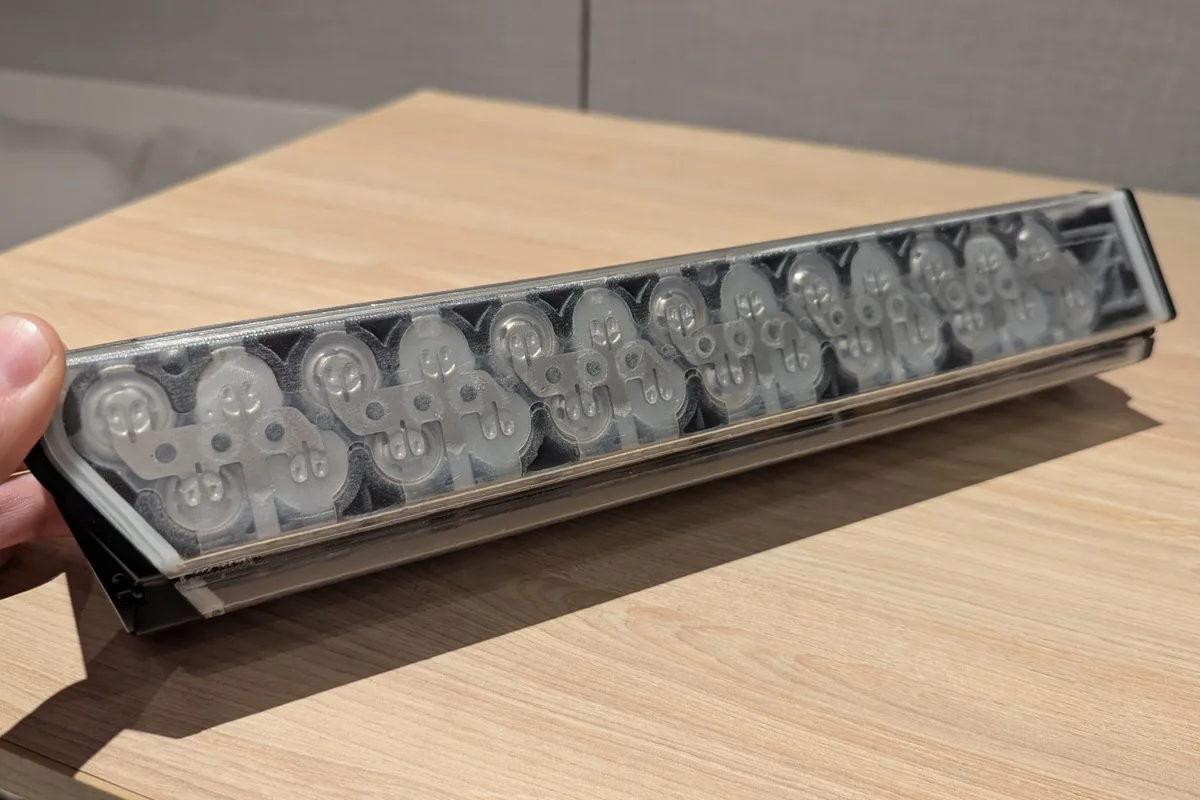 Most ebike manufacturers use cells from familiar names. Tom Marvin / OurMedia
Bailey also explained that “Mainstream manufacturers all generally used the same cylindrical cells from the same manufacturers – Sony, LG, Panasonic, etc”, and that “no bike brand makes its own cells”.
He says this means consumers should be dubious of claims regarding improved cold-weather performance, because they’re unlikely to be true.
Ebike batteries are also worked harder than car batteries for their size, “so they are often pushed into the top 10 per cent and bottom 20 per cent of their capacity by users trying to eke out all the available energy for that last climb home,” explains Bailey.
“Lithium batteries are pretty hopeless in terms of power output in their bottom 20 per cent of usable capacity, and the battery protection systems can also decide the voltage is too low and suddenly switch off the battery – again, making customers feel their battery is defective, when it’s actually trying to protect itself.”
He points to results of experiments that show that at 0°C, a battery will lose at least 20% of its capacity to store energy.
“But also, and more importantly, it will feel rubbish. So even if fully charged it won’t be able to provide the same hill climbing ability. The voltage will ‘sag’ dramatically,” he continues.
“At minus 20°C, your battery has half the storage capacity and will probably feel very unhelpful.”
It’s not only the battery’s capacity that’s affected – there are long-term effects on battery chemistry, too.
“At temperatures below 5°C, chemical reactions (‘plating’ and ‘dendrite formation’) start to occur during charging and discharging. This will eventually cause the cell to permanently fail,” Bailey states.
If you need help predicting range in cold weather, Bosch has a handy range estimation tool for its electric bike motor systems on its site, which could also be useful.
This takes account of the weather, as well as a whole range of other factors – from who’s riding and where to the type of bike and more, to provide an estimate for the range you could expect.
Keep it warm Charge your ebike somewhere warm to avoid longer-term battery damage. Jordan Gibbons
So what can Chris do to keep his Orbea happy, besides locking it away in a warm room for the winter or migrating to Florida?
Bailey has this advice for him:
Always charge your battery somewhere above 10ºC – it’s actually safer long-term to charge indoors than leave it charging in a frozen (and maybe damp) shed, because charging in cold conditions chemically damages the battery
If you must ride in the cold, keep the battery indoors at room temperature until it’s ready to be used. It will retain its temperature for a little while and will probably generate a bit of heat from being used
If you can, remove the battery from your bike at your destination to bring it indoors with you, which will retain more capacity and power when you want to use it again
Don’t leave it on charge once full, and don’t charge when it’s cold – wait for the battery to get to above 10ºC