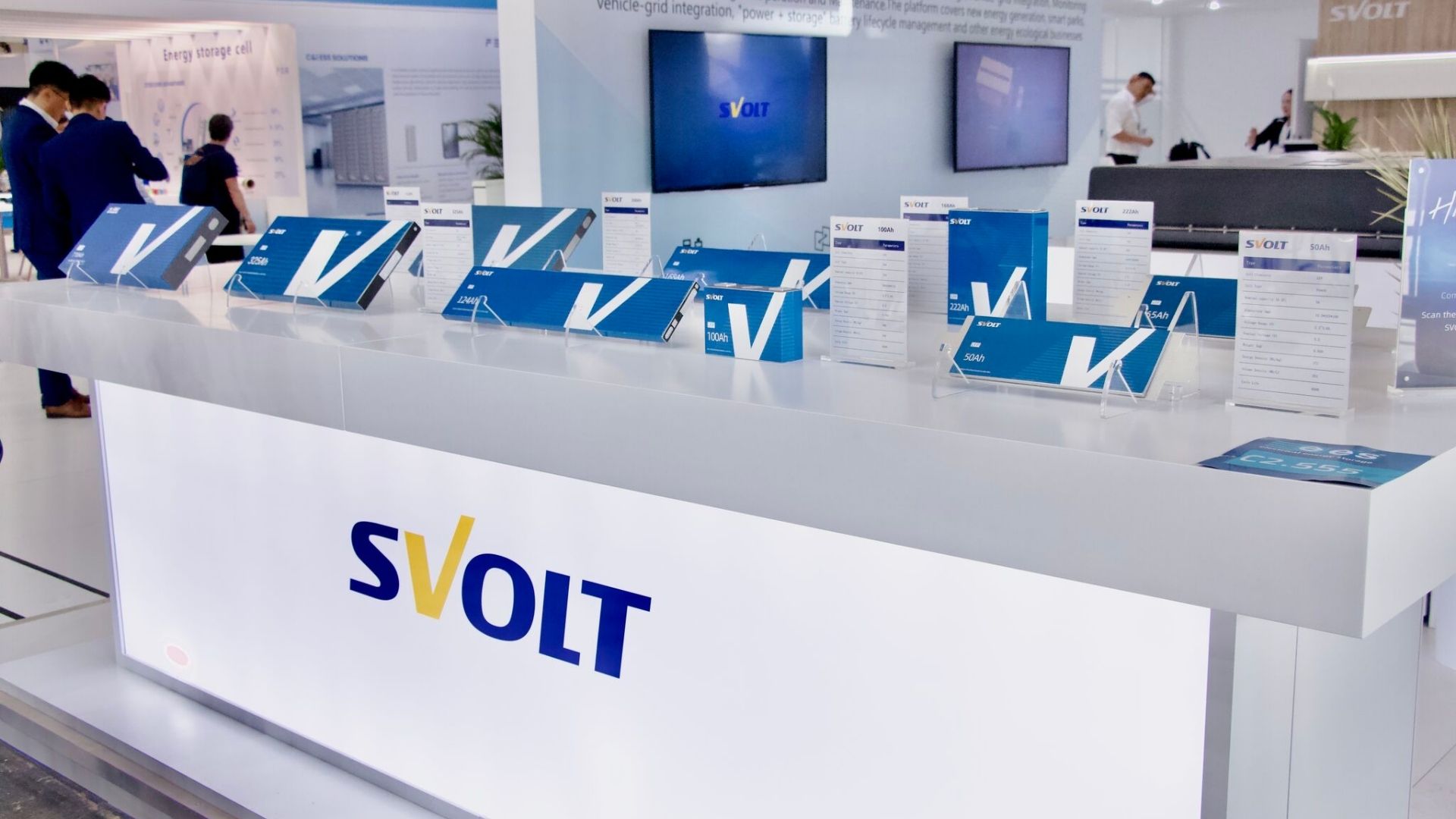
Svolt Energy this week pushed the limits of plug-in hybrid batteries by unveiling an 80 kWh pack that it claims is the world’s largest capacity for this vehicle class.
The announcement was made on Tuesday at the company’s sixth Battery Day event in Changzhou, Jiangsu province, with the new system aimed squarely at large family cars and long electric driving ranges.
The launch comes as automakers look to extend electric-only operation in hybrids without moving fully to battery electric vehicles.
Record capacity pack targets family PHEVs
The newly revealed Fortress 2.0 battery pack is built around an 80 kWh battery, which the developer highlights as giving it the largest capacity currently available for plug-in hybrid electric vehicles. The company said the system uses a highly integrated design that boosts volume utilization and overall system energy density by 6 percent compared to its previous generation.
The manufacturer said the pack is intended for D-segment family vehicles, where buyers increasingly want a long electric-only range for daily driving. The company noted that similar capacity batteries are already appearing in extended-range electric vehicles.
Leapmotor, for example, debuted its D19 SUV on October 16 with an 80.3 kWh battery that delivers up to 310 miles of range. While both EREVs and PHEVs combine an engine with a battery, Svolt noted that an EREV’s engine does not directly drive the wheels.
The Fortress 2.0 cells use ultra-fast charging graphite technology. According to the company, the pack supports peak charging rates of up to 6C, allowing the battery to charge from 10 percent to 80 percent in about 10 minutes under suitable conditions.
Fast charging refined without higher costs
Alongside the large battery pack, Svolt also introduced its so-called 3.5 generation ion oscillation pulse charging technology. The company said this new charging approach reduces total charging time by about 25 percent compared to its second-generation system, without increasing battery or system costs.
The developer emphasized that the update is a change in charging methodology rather than a change in battery chemistry or cell structure. The system relies on intelligent current control combined with brief relaxation phases during charging. This allows lithium ions to oscillate and redistribute more evenly, thereby improving their entry into the anode material.
The company said the technology has completed more than 20,000 cumulative hours of testing focused on performance stability. It is scheduled to be deployed across multiple models based on customers’ new vehicle platforms starting in the third quarter of 2026.
Semi-solid batteries expand beyond cars
At the same event, the battery company shared updates on its semi-solid state battery program. The company announced that its first-generation high-nickel semi-solid battery has entered small-scale production. With an energy density of 270 Wh/kg, it has already been installed in a model from a European passenger vehicle brand.
The manufacturer also confirmed that its second-generation high-nickel semi-solid battery has been fully developed. Designed mainly for low-altitude aircraft, the battery reaches an energy density of 342 Wh per kilogram and has been installed and flight-tested in an electric vertical takeoff and landing aircraft.
In addition, a mid nickel semi-solid battery aimed at broader automotive markets is scheduled to enter mass production in October 2026. With an energy density of 245 Wh/kg, it will be used in mid- to high-end passenger vehicles.
Growth plans and production outlook
The company reported achieving its first quarterly profit in the fourth quarter of 2025 and aims to achieve full-year profitability in 2026. Chairman and CEO Yang Hongxin said the company plans to ship 61 GWh of batteries in 2026, a 50 percent increase from 2025.
Originally formed as Great Wall Motor’s battery division, the supplier began research into power batteries in 2012 before spinning off as an independent company in February 2018. It ranked eighth in China’s power battery installations in November with 2.45 GWh, accounting for a 2.62 percent market share.