They are a menace and have been the cause of serious trauma but e-bikes and e-scooters still proliferate across Birmingham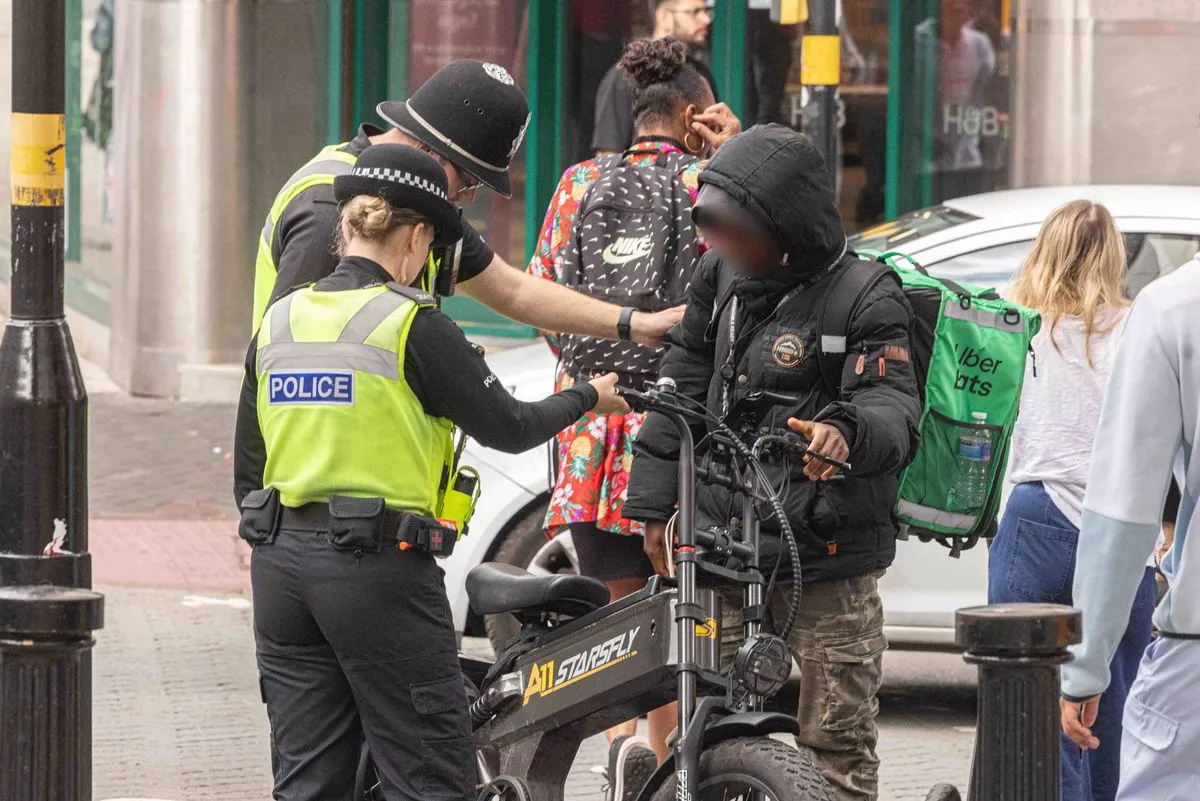
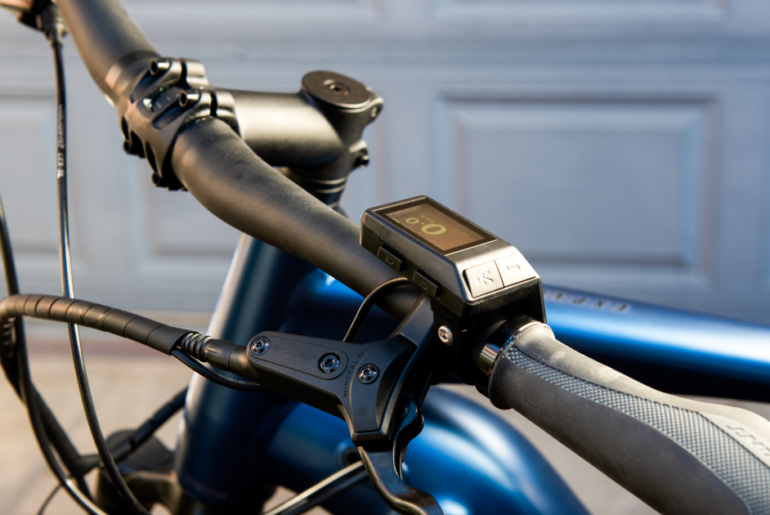
Police seized bikes which could reach speeds over the allowed 15.5mph limit(Image: Nick Wilkinson/Birmingham Live)
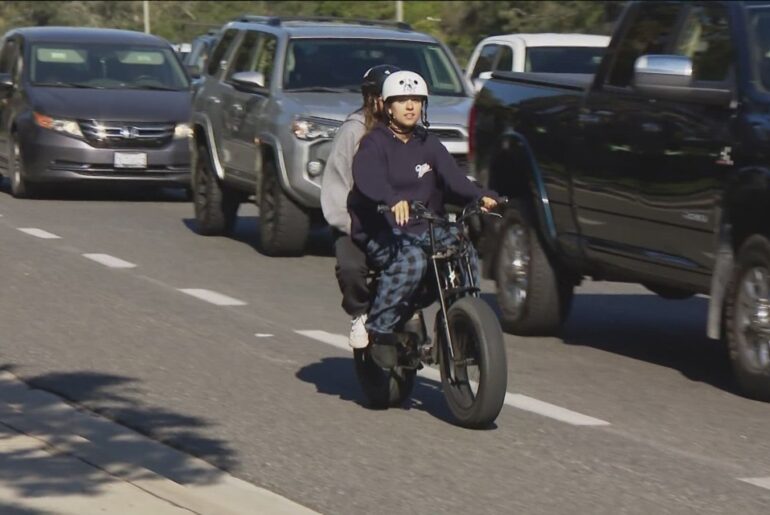
Police in Birmingham are clamping down on ‘souped up’ electric bikes and scooters as medics warn they are seeing at least one ‘serious injury a day’ in local hospitals as a result of crashes.
The menace of illegally chipped electric machines, converted to override speed limits, is causing a major headache at A&Es in the city and putting pedestrians and other road users at risk.
Dr Justine JJ Lee, major trauma specialist at University Hospitals Birmingham, said people were arriving at hospital with ‘very serious injuries and trauma’ after falling off or hitting kerbs, lampposts and other vehicles while navigating the city’s streets.
READ MORE: Birmingham city centre police seize more illegally modified e-bikes in latest op
“They often have multiple issues, with a concerning number of head injuries. Most don’t wear a helmet, and the speeds they reach mean the impact of a fall can be really catastrophic.”
She said it was a very worrying new trend. More used to treating war-injured soldiers and car crash victims, Dr Lee and her team in the UHB major trauma centre say the recent surge in people injured using e-bikes and e-scooters begs stricter enforcement and more safety measures.
Many of those who attend A&Es can be quickly patched up, but some require ongoing support and care as a result, due to brain injuries or other traumatic impact, often through the Trust’s 4Trauma4Patients charitably funded initiative.
West Midlands Police chief constable Craig Guildford said his force recognises the need for action.
He described the illegally doctored bikes and scooters as ‘a menace’ and ‘a blight on pedestrians and other road users’. He said a taskforce to crack down on the problem had drawn national interest, with other police forces coming to the region to see how it was being addressed.
Said Mr Guildford: “We were worried about the number now on our streets that are illegally chipped and converted to override speed limits and go much faster than the manufacturer ever intended. They can go very fast.
“We have responded to that.
“It is important to highlight the difference between legal e-bikes and e-scooters. The bikes for hire and used by most people go relatively slowly, they are cost effective for young people, help them get mobile, and are a great thing for them.
“But that is very different from those who decide to chip a bike and ride it very quickly, often on pavements.
“There is a reason why you are required to have a helmet, L-plates, insurance, and a licence to ride any vehicle going over 15mph – it’s for everyone’s safety. That means we can apply relevant laws if we see anyone riding any vehicle at over 15 mph.”
Using that legislation, police can stop a rider and require their details and prosecute them, and in some cases crush the vehicle they were riding.
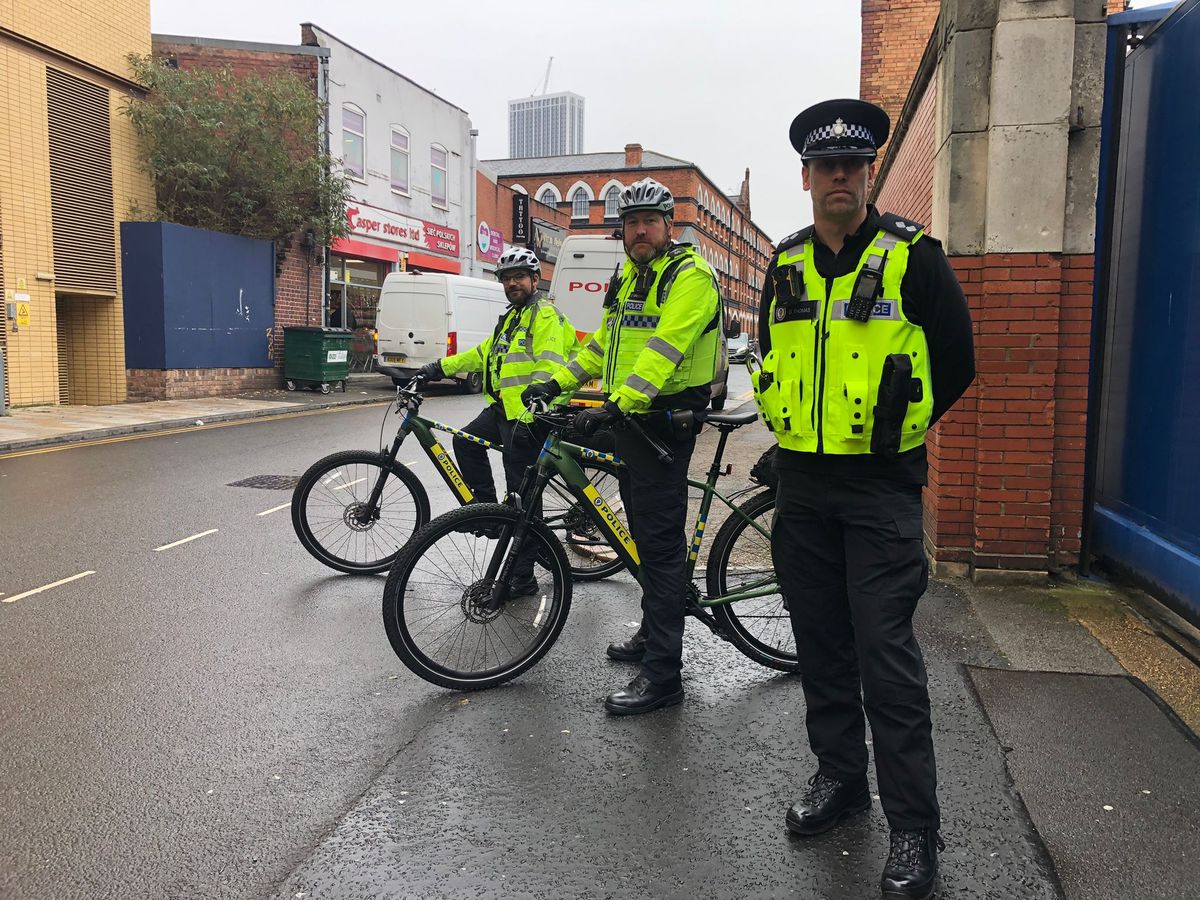
BirminghamLive joined West Midlands Police’s new e-bike patrol officers on October 14. The force has purchased six e-bikes to assist officers. Pictured L to R: Constable Tom Foulds, Sergeant Dave Gregory and Inspector Dan Thomas(Image: Naomi de Souza / BirminghamLive)
The Chief Constable has also been making representations to his Sussex counterpart who leads on road safety initiaitives nationally, pressing for tougher action.
But not all e-bikes are bad news. Among the police’s new initiatives has been to buy a fleet of six of its own e-bikes to carry out patrols in hotspot areas, not solely to focus on fellow riders but also to look out for other criminal activity. In a single month, the team had attended 119 incidents, made 16 arrests and carried out 24 stop and searches.
The problem with souped up electric bikes
Speed: Once illegally modified, e-bikes can barrel along at speeds far exceeding the legal limit of 15.5mph. Police have reported seeing some ridden at up to 60mph. They are not designed with adequate braking systems or structures to be used at such speeds, which puts the user and other road users at high risk
Accident rate: Medics report severe injuries and even fatalities resulting from collisions with cars, lamp-posts, pedestrians and other road users.
Link to crime: Drug dealing, mobile phone snatches and assaults have been linked to e-bikes
Use by delivery riders: Their use in the delivery industry is a huge cause of concern, often given to riders so they can make more deliveries, despite the known risks to them and other road users. Often they are ridden by people with little experience of using the roads, and who don’t have a driving licence, putting them and other users at higher risk.
An All Party Parliamentary Group has highlighted ‘a crisis hiding in plain sight’ which has called for urgent action to stop unsafe products from entering the UK and to protect exploited workers.
Fire risk: Unregulated conversion kits and substandard batteries used in some illegal modifications pose a serious fire risk. West Midlands Fire Service recorded 49 incidents involving e-bikes and e-scooters up to 2024, resulting in 26 injuries and two deaths; in all they also recorded 117 fires involving lithium ION batteries used in e-bikes and e-scooters and also found in other appliances including e-cigarettes. One incident in Billesley in 2020 resulted in a fatality.
Lack of safety equipment: Riding an e-bike or e-scooter below 15mph does not require additional safety gear or a licence. But once modified to allow for speeds in excess of 15mph, they are classed as mopeds and require multiple additional features.
The law on riding a modified e-bike or e-scooter: If the machine is modified to achieve speeds over 15.5mph, it must be:
Registered as a motor vehicle: You must register, tax, and insure the bike as a moped or motorcycle.Obtain a licence: You need the appropriate driving license to ride it, usually a provisional motorbike licence.Wear a helmet: You must wear a motorcycle helmet.Use on public land: You can ride on public land, but they are not permitted on cycle paths, roads, or other areas where a standard bike is allowed.