Your support helps us to tell the story
From reproductive rights to climate change to Big Tech, The Independent is on the ground when the story is developing. Whether it’s investigating the financials of Elon Musk’s pro-Trump PAC or producing our latest documentary, ‘The A Word’, which shines a light on the American women fighting for reproductive rights, we know how important it is to parse out the facts from the messaging.
At such a critical moment in US history, we need reporters on the ground. Your donation allows us to keep sending journalists to speak to both sides of the story.
The Independent is trusted by Americans across the entire political spectrum. And unlike many other quality news outlets, we choose not to lock Americans out of our reporting and analysis with paywalls. We believe quality journalism should be available to everyone, paid for by those who can afford it.
Your support makes all the difference.Read more
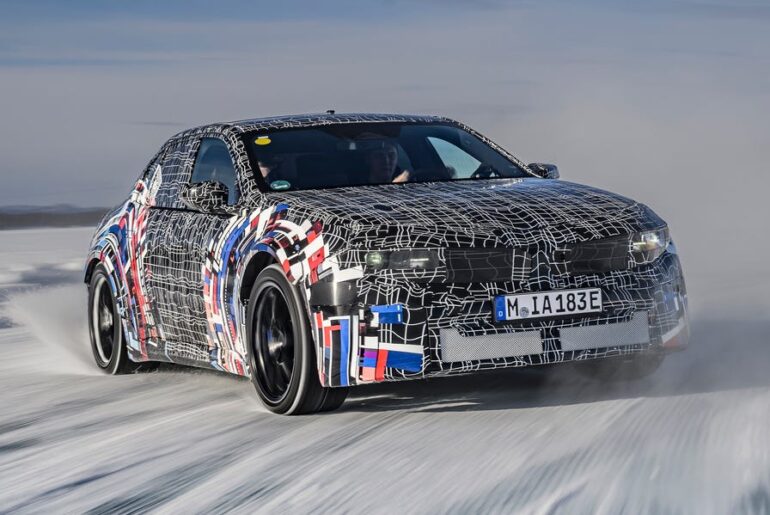
BMW’s famous high-performance M division will enter a new era from 2027, with the launch of fully electric M models based on the brand’s forthcoming Neue Klasse architecture. The move will see the company’s most famous performance badge transition into the electric age, starting with an electric successor to the M3, and marks the first time BMW M’s core philosophy will be delivered exclusively through battery-electric power.
The announcement forms part of BMW’s wider Neue Klasse strategy, which underpins the next generation of electric BMW models later this decade. For BMW M, the shift is positioned as a fundamental reworking of how performance cars are engineered, rather than a simple replacement of combustion engines with electric motors.
According to the company, the first fully electric BMW M models will arrive from 2027, ushering in what it describes as a new era for the high-performance segment. The electric M range will be developed specifically around the Neue Klasse platform, with bespoke hardware, software and battery technology intended to maintain the driving characteristics the brand is known for on both road and racetrack.

open image in gallery
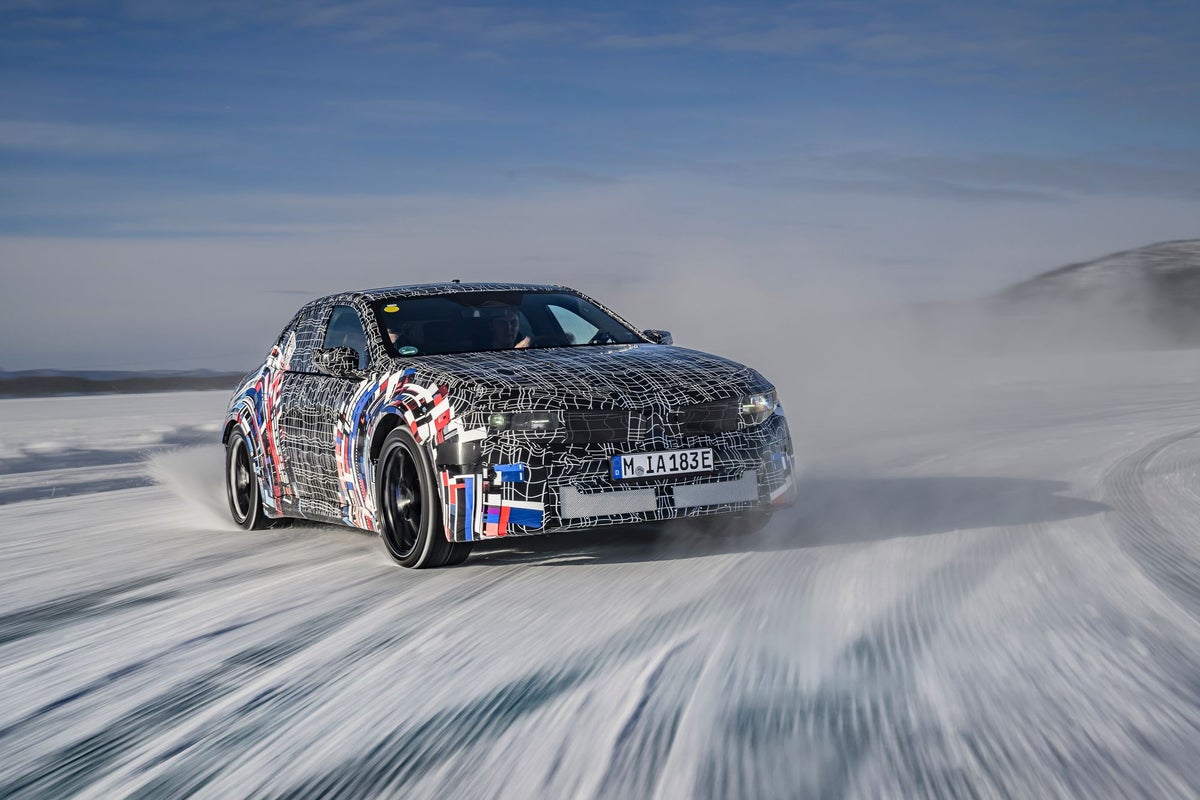
The new BMW M cars are all based around the brand’s new Neue Klasse EV tech, but specifically upgraded for high-performance models (BMW)
“The next generation of models are set to establish a new benchmark in the high-performance vehicle segment,” said Franciscus van Meel, managing director of BMW M GmbH. “With the latest generation of Neue Klasse technology, we are taking the BMW M driving experience to a new level and will inspire our customers with outstanding, racetrack-ready driving dynamics for everyday use.”
Central to BMW M’s electric strategy is a new drivetrain concept known as BMW M eDrive. Unlike current electric BMWs, the M versions will use a four-motor layout, with one electric motor driving each wheel. The system is designed to give engineers extremely precise control over torque delivery, traction and stability, while also allowing the car’s character to be altered depending on driving conditions.
BMW says the four motors are managed by an integrated control system called BMW M Dynamic Performance Control, which works in conjunction with the Neue Klasse’s new electronics architecture. This architecture is built around four high-performance computers, referred to internally as ‘superbrains’, each responsible for a different area of the car’s operation, including driving dynamics, automated driving, infotainment and comfort functions.
One of these computers, nicknamed the ‘heart of joy’, is dedicated entirely to driving dynamics. BMW says this allows faster data processing and more immediate responses to driver inputs, while also enabling future upgrades to be delivered more quickly over the vehicle’s life.
open image in gallery
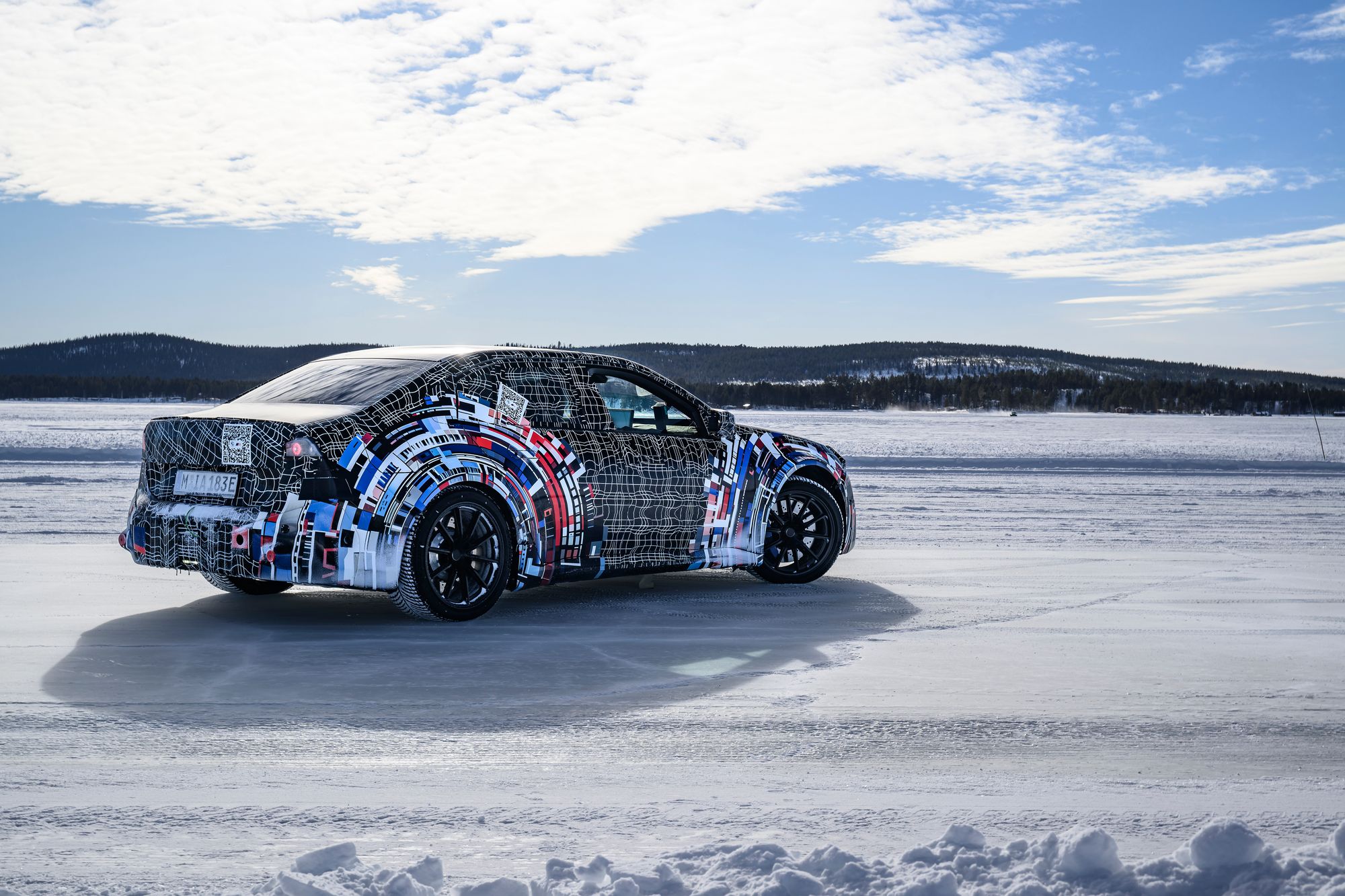
The new BMW M electric models will feature electric motors in each wheel for maximum performance and control (BMW)
The four-motor layout allows BMW M to blend the characteristics of rear-wheel drive and all-wheel drive. Under certain conditions, the front axle can be completely decoupled, effectively delivering rear-wheel drive behaviour to improve efficiency and extend range during long motorway drives. When maximum performance is required, torque can be distributed independently to each wheel, improving traction and stability at the limit.
BMW says this configuration enables maximum energy recuperation and optimal traction right up to the edge of grip, while also allowing a more direct throttle response. The company claims the electric drive units used in BMW M eDrive are the most powerful electric motors the M division has ever deployed.

Get your charger and tariff now.
Save happily EV after.
T&Cs apply
ADVERTISEMENT
Get your charger and tariff now.
Save happily EV after.
T&Cs apply
ADVERTISEMENT
The battery technology underpinning these models has also been developed specifically for high-performance use. The high-voltage battery will offer more than 100 kWh of usable energy and is based on BMW’s sixth-generation battery technology for the Neue Klasse. While BMW has not released range figures, it says the focus is on balancing everyday usability with sustained high-performance driving.
open image in gallery
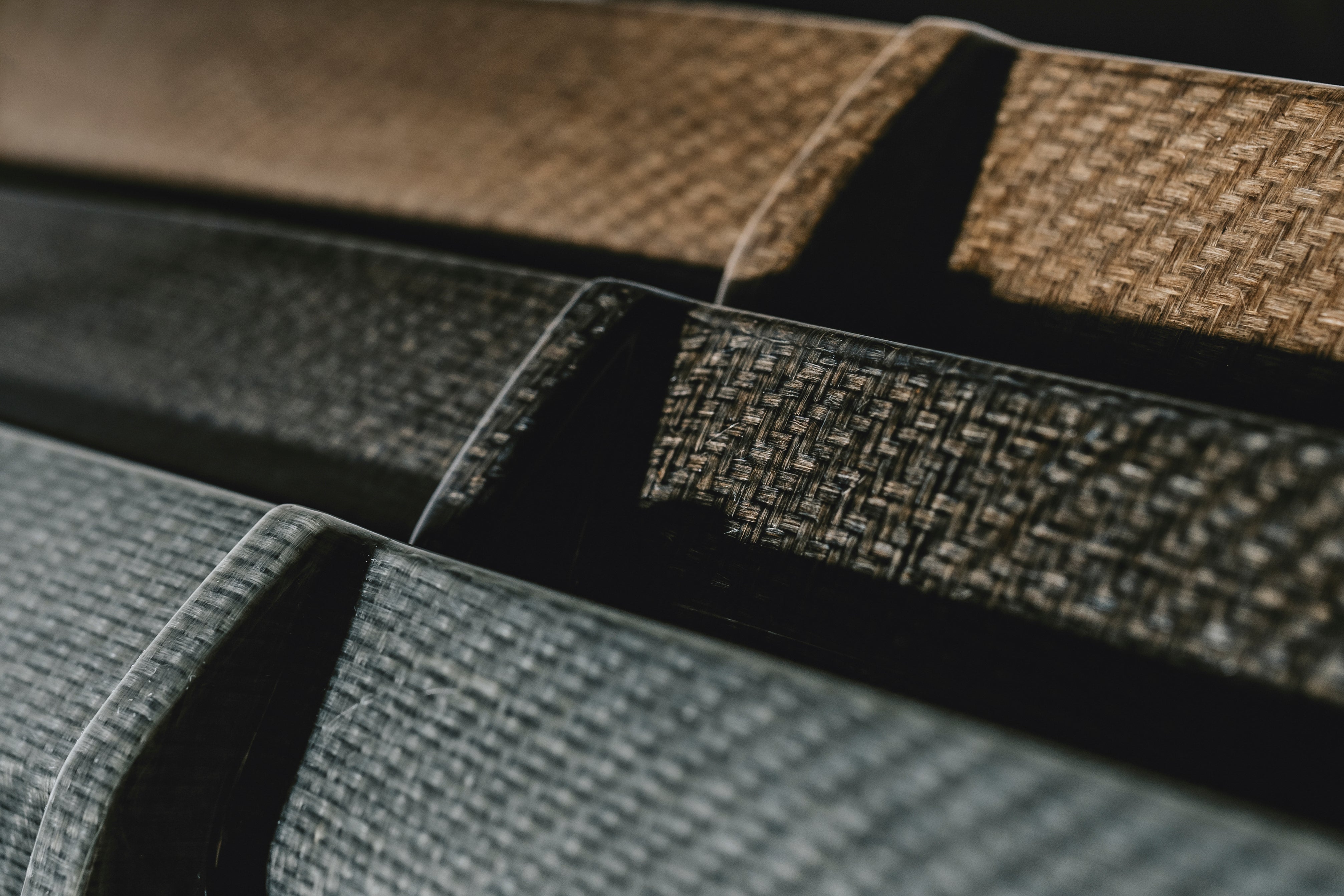
New natural fibre components are used to keep weight down in the new electric BMW M models (BMW)
The battery’s cooling system and its Energy Master control unit have been adapted to support higher peak power outputs and faster charging, while maintaining performance during repeated hard driving on track.
The Neue Klasse platform operates on an 800-volt electrical architecture, which BMW says allows for increased charging capacity and higher recuperation rates. The battery housing also plays a structural role within the vehicle, connecting the front and rear axles and increasing overall body stiffness, which in turn is intended to improve handling and responsiveness.
BMW M is also introducing new materials as part of its electric transformation. Lightweight construction remains a core focus, and for the first time BMW M will use natural fibre components in its production of the high-performance models.
The material, which BMW has been developing in motorsport applications since 2019, offers similar properties to carbon fibre but can be produced with around 40 per cent lower CO2e emissions. BMW says the experience gained through racing has allowed it to validate the durability and production viability of the material for use in road cars.
While BMW has yet to confirm specific performance figures, dimensions or pricing for its first electric M models, the company has made clear that road and racetrack capability remain central to the programme. Features such as predefined driving modes, simulated gear shifts and a newly developed soundscape are also planned, aimed at delivering an emotional driving experience in the absence of a combustion engine.
Further details on the first electric BMW M models, including production versions and specifications, are expected closer to the 2027 launch.