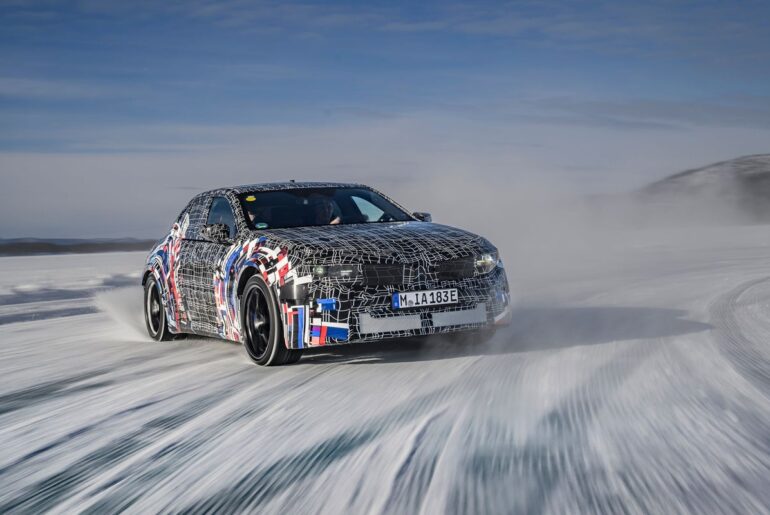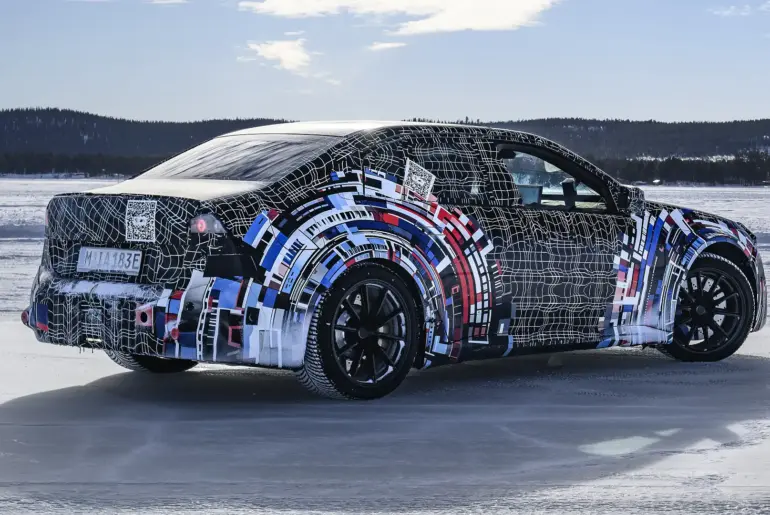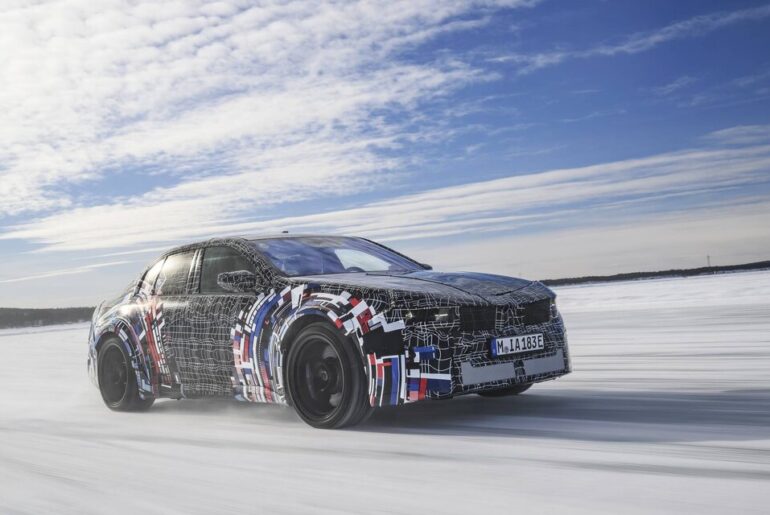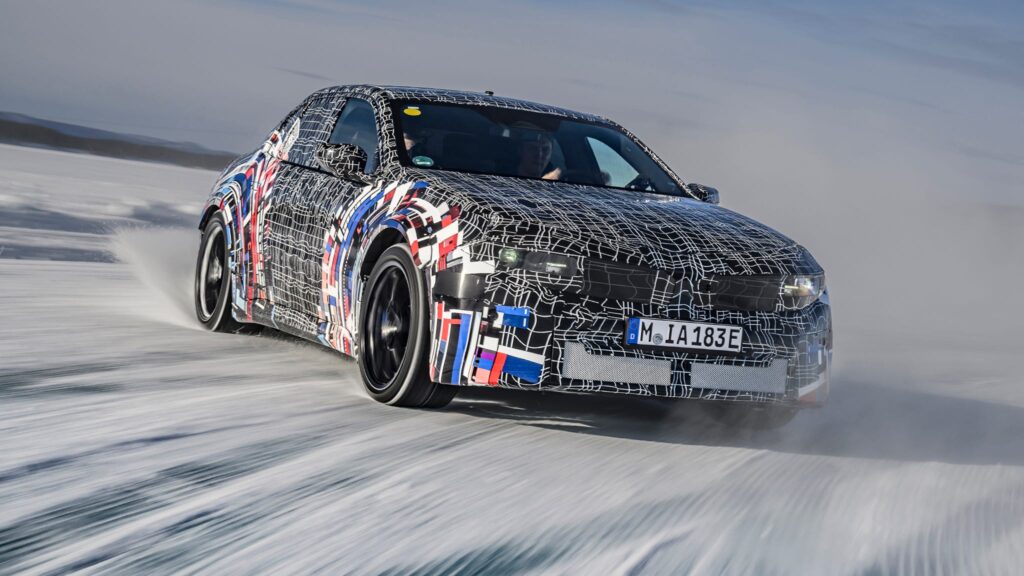
When the F90 BMW M5 adopted xDrive all-wheel traction for 2018, many purists wailed, “Oh, the steering feel! Oh, the understeer!” Can we all agree that the good folks in Garching managed that thorny transition pretty deftly? After hearing BMW M’s pitch on how it plans to endow its fully electric Neue Klasse with a four-motor, four-wheel-drive M eDrive system in the forthcoming i3 sedan and iX3 SUV, we’re inclined to trust them. Here’s their plan, in a nutshell.
Cranking the Heart of Joy Up to 11
What makes the iX3 so great to drive is the Neue Klasse’s all-BMW-designed centralized computing system. It receives all driver inputs directly, then decides how best to execute those requests, sending the appropriate commands straight out to the actuators doing the work, with the signals encountering no intermediary silicon gatekeepers along the way.
As we’ve described it, the electric drive motors effectively become highly precise actuators for acceleration and deceleration. M eDrive will simply upgrade this actuation scenario from two-axle drive to literal all-wheel drive, allowing the Heart of Joy computer to individually micromanage the acceleration and regenerative braking applied to each contact patch.
 What Goes in Will Come Out
Plenty of hot-rod EVs claim to be able to send 1,000 or more horsepower to the wheels, with savvy traction-control algorithms maximizing the available grip. Few, if any, claim to be able to use the same motors to reclaim energy at the same rate, regeneratively braking right up to the antilock braking threshold. BMW is claiming just that, which is a testament to the ability of its inverters and battery pack to absorb energy at a 750-kW or so rate (BMW isn’t talking about power numbers yet, but it hinted at the 1,000-hp level, which equates to 746 kW). It is at least admitting that its maximum DC fast charging rate will exceed the iX3’s 400kW.
Gen 6 Battery on ’Roids
Developed alongside the civilian-grade Neue Klasse’s new 108.0-kWh cylindrical cell-to-pack battery system, the housing and cells look virtually identical and can be assembled on the same equipment. But the M-specific cells utilize a different (as yet undisclosed) chemistry that prioritizes power over energy, to ensure high sustainable peak power output during track lapping. Moving electrons into and out of a battery quickly generates more heat, so M eDrive battery cells are cooled from both sides (in the i3/iX3 it cools from the bottom). This chemistry reduces capacity and EPA range, but we’re assured capacity is at least 100 kWh.
 Gear Emulation Noise
BMW M customers demand an “emotional driving experience”—something silent electric vehicles can struggle to deliver. So, the decision was made to pipe in an M-unique sound profile and to enable a soundtrack that emulates running through manual gears. It wouldn’t be an M product if there weren’t a jillion customizable settings, one of which will allow you to veto the gear noises if you desire.
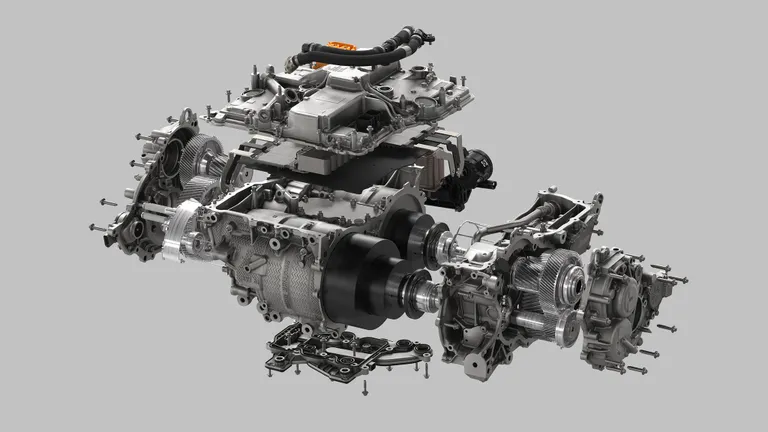
4 Motors, Rear-Biased Torque
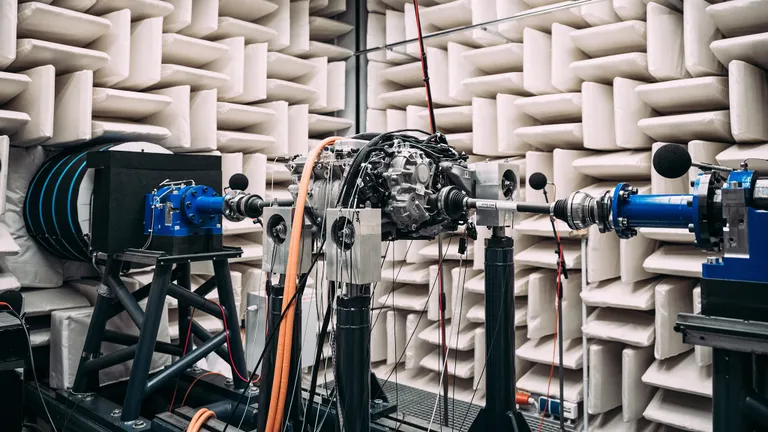
We don’t have specifics yet on the motors themselves, but we hear all four will be BM-designed, externally excited, synchronous-type motors built by Styr. We’re told to expect the feel from behind the wheel to be similar to current M xDrive cars, which seek to “saturate” the rear-wheel traction before apportioning torque to the front axle, preserving the classic rear-biased BMW M feel.
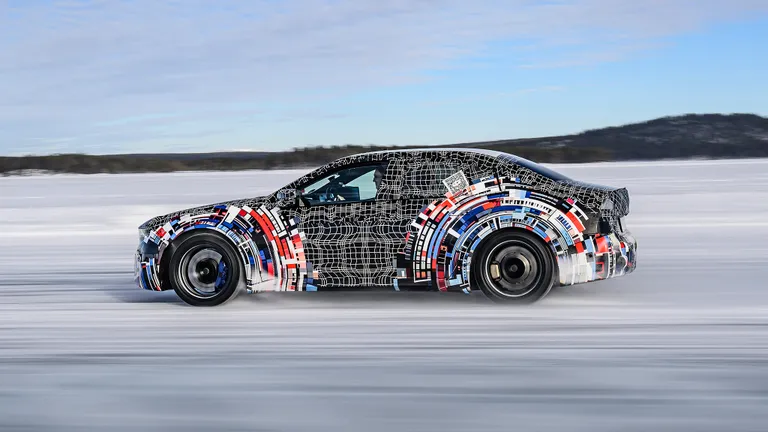
Here again, it bears repeating that the Heart of Joy assesses the grip level at each contact patch on a millisecond basis, apportioning positive or negative torque to each wheel in whatever proportion can best accomplish what the driver is asking of the car. That could well be torque to the outside wheels in a turn with a dab of back-paddling regen on the inside ones, while wasting as few electrons as possible and keeping the brake pads cool for whenever they’re really needed.
 Motors and Suspension Connected to Battery Pack
The battery pack is a highly rigid assembly, and hence M variants will connect the front and rear motors and suspension carriers more directly to the pack than the base cars do. This is to enhance chassis rigidity and improve responsiveness to steering inputs.
Natural Carbon
BMW has done much to lower the carbon footprint of its Neue Klasse models in terms of materials used and manufacturing methods. An extension of this is a move away from carbon fiber (producing the carbon strands can be very energy intensive) for things like the roof panel, in favor of natural carbon materials like those that have been in use on various racing programs including the M4 GT4. Structural properties are reportedly similar, with a 40 percent reduction in CO2 emissions.
 When’s It Coming, and What’ll It Be Called?
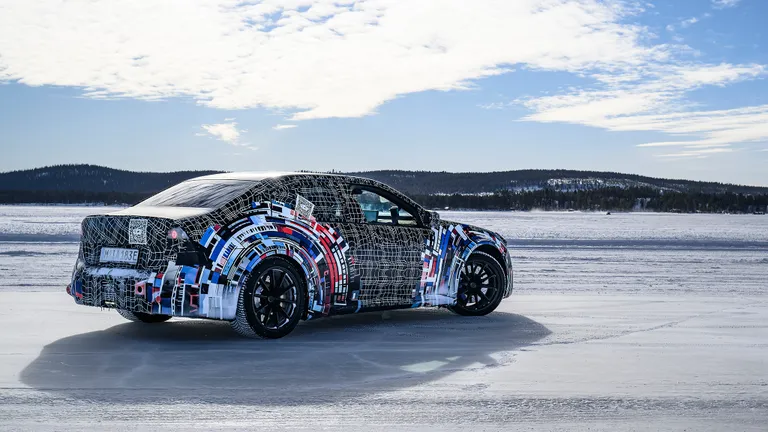
Look for a production launch in 2027, probably starting with the sedan. M prototypes of the iX3 have been spotted on the ’Ring, so that’s probably next, and we’re not giving up hope for the 1-Megawatt (1,341-hp) electric M supercar with the wedgy M1-inspired styling, so maybe that’ll be third?
BMW is remaining tight-lipped on the nomenclature, but our money is on a full-throated iM3 or i3 M/iX3 M. An i will likely remain, as reports are that combustion variants may continue alongside the Neue Klasse models. We don’t expect to see any other numbers so as not to confuse these products with lesser M-tuned offerings like the electric i4 M60 hatchback or iX M70 SUV. And while no pricing guidance has been offered yet, the power and control promised by these models leapfrog the current M3, iX4 M offerings sufficiently for them to command a hefty premium.