Support CleanTechnica’s work through a Substack subscription or on Stripe.
Walking the floor of CES, it is easy to become distracted. Although there was a lot of clean technology, there were also a lot of other cool technologies that were not very relevant. Even though I was on my feet from before the exhibit doors opened until the exhibits closed every day, meeting people and exploring new developments, I couldn’t make it to everything I wanted to see. If I let myself get too distracted, I would have been able to see even less.
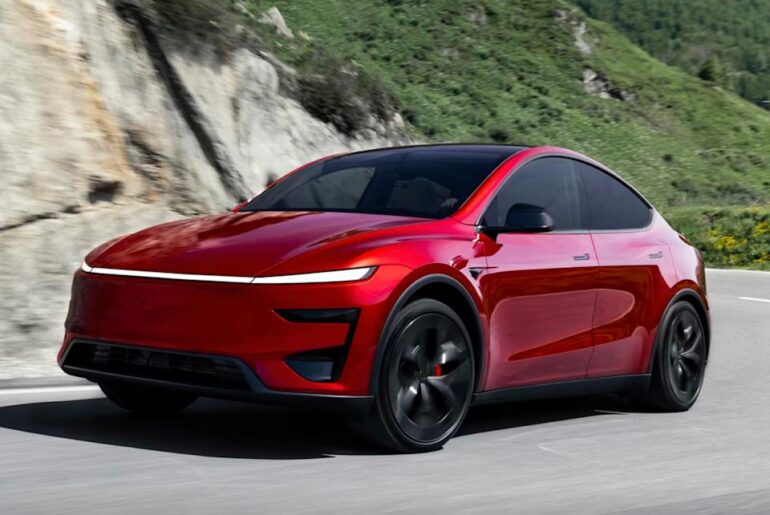
This made me think about perhaps the most easily distracted CEO. From Tesla’s original plan, the company has taken several tangents. Some of these were relevant to cleantech, such as solar panels and home batteries. And then some started to stray from the environmental focus. I will try not to pay too much attention to the tangents, but these technologies also received a lot of attention at the show, which is worth mentioning.
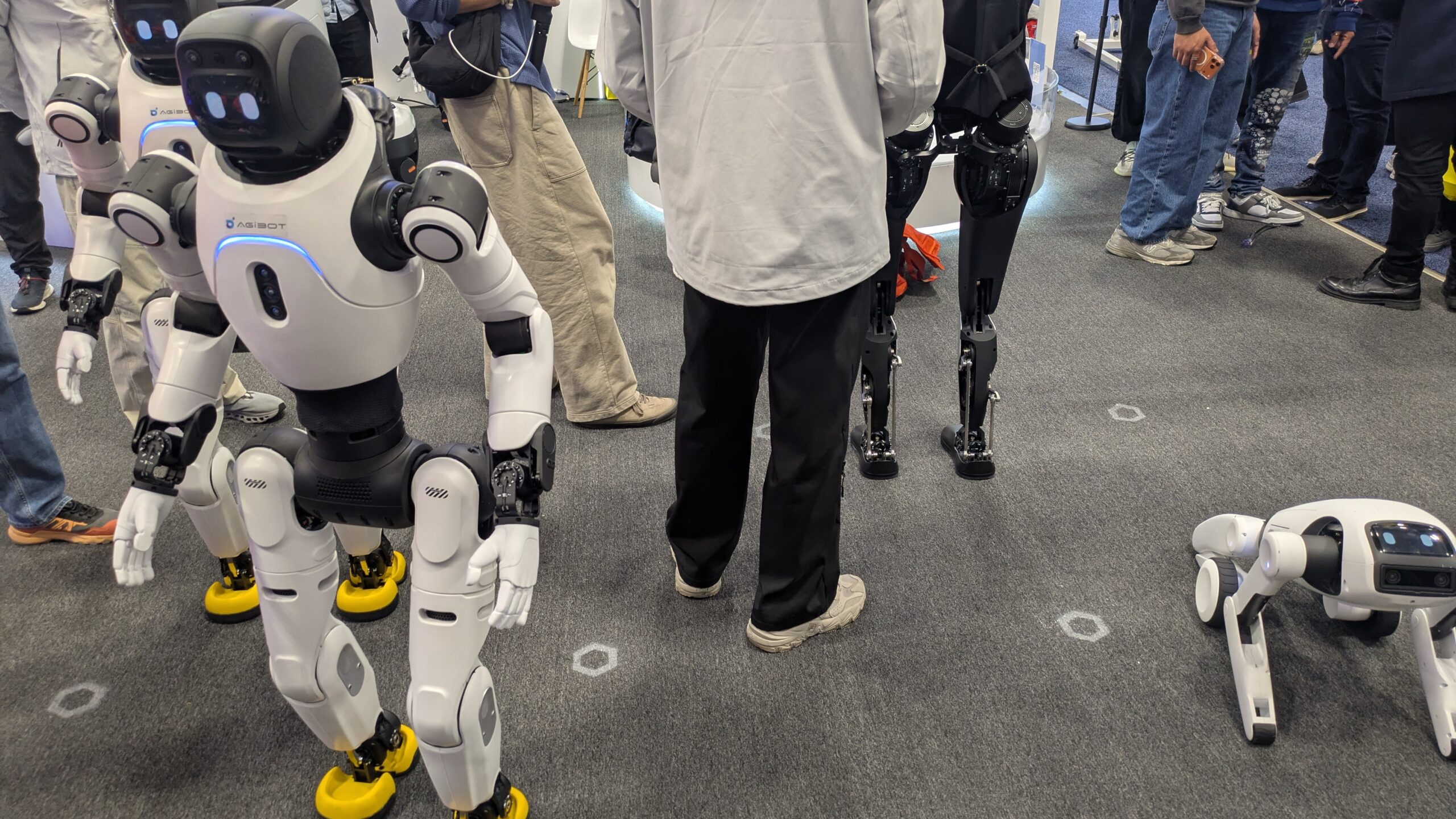 Photo by Larry Evans
Humanoid Robots Strut Their Stuff, with AGIBOT Taking the Sales Lead
Many may not be familiar with AGIBOT, but it leads in humanoid robot sales globally, as recently reported in Bloomberg. The company launched in the US market with the adult-sized A2 at CES, which holds the world record for a 106 km marathon walk from Suzhou to Shanghai, yet offers enough dexterity to play guitar. I spent a little time at their booth, and their approach was interesting. Rather than trying to have one humanoid robot meet every need, they offer models specialized for a range of applications. According to Dr. Yao Maoqing, partner at AGIBOT, “we are able to build an ecosystem of humanoid robots, not for a single task or setting, but for a future where embodied intelligence can serve people across industries, environments, and everyday life.”
In addition to the A2, they launched the child-sized X2, with an approachable soft touch body and a focus on modularity. These biped models are in addition to the G1, which has a humanoid torso on a rolling base, focused on heavy industrial application. While the biped form has its appeal, on a factory floor, the more stable rolling base has advantages. AGIBOT benefits from not being stuck to conceptual fixedness within their focus area. Beyond their own sales, AGIBOT also helps other companies to train the AI for their robots.
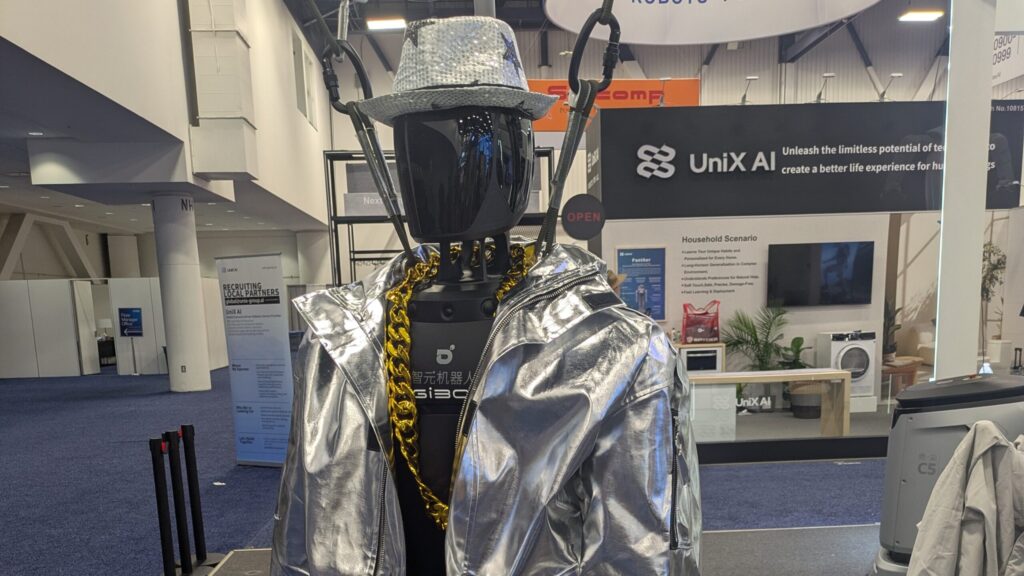
And there were a lot of humanoid robot companies at CES. There were robots dancing, practicing Tai Chi, kickboxing, shaking hands, using facial expressions, folding boxes.… And, due to hour-long lines, I didn’t even have time to explore inside the Hyundai booth, where they showed off the production Boston Dynamics Atlas.
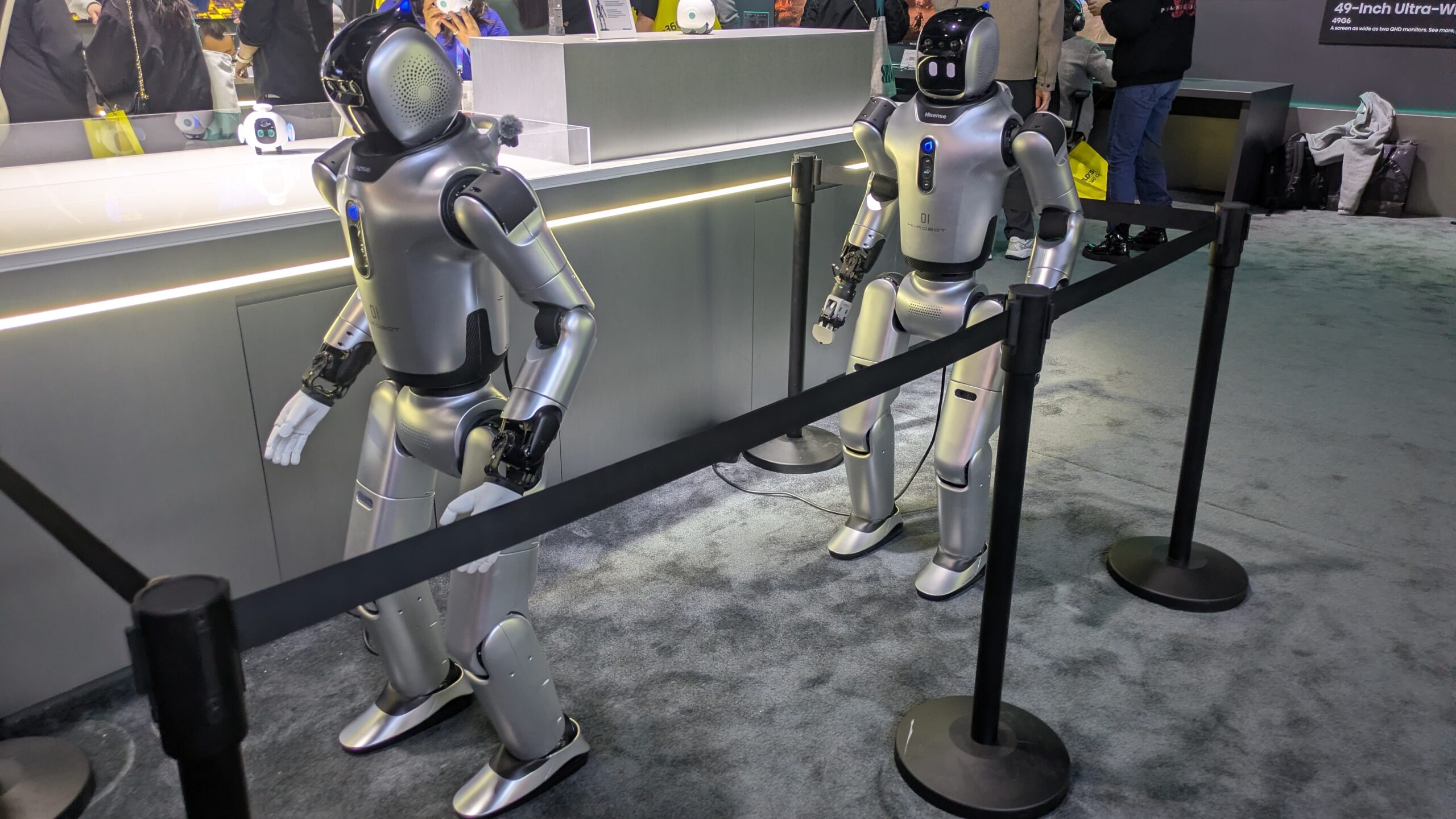 Photo by Larry Evans
While competitors are working toward next-generation robots, Tesla still hasn’t started production. And there are more that didn’t even make it to the show, like XPENG’s Iron. If anyone thought that Tesla was going to be the sole winner in humanoid robots, they are in for a rude awakening. And that isn’t the only tangent where they are falling behind.
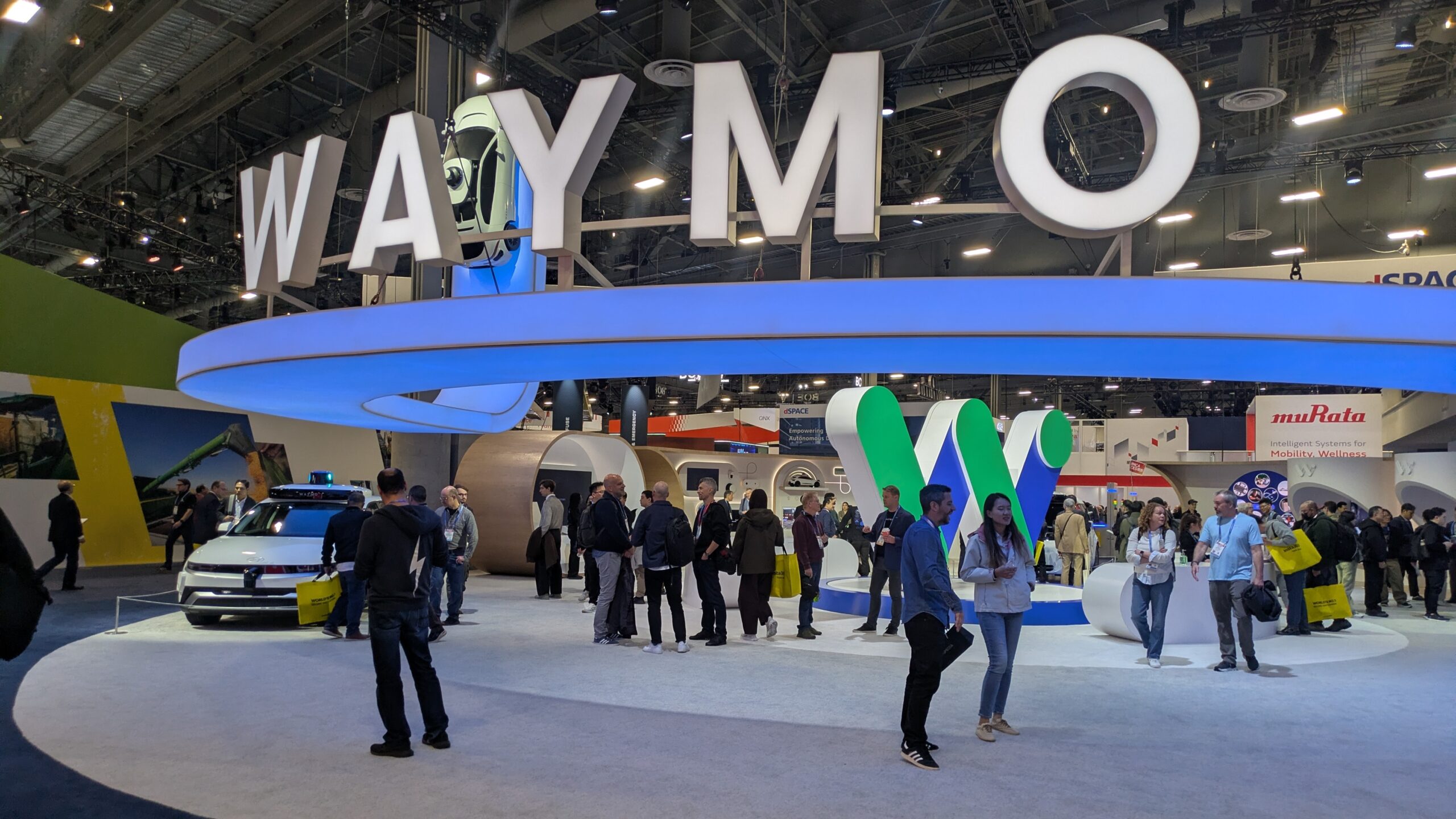 Photo by Larry Evans
Other Tangents Closer to Cleantech
While humanoid robots may have gotten a lot of attention, other tangents get a little closer to being back on the cleantech focus. While ADAS itself arguably does not do too much to reduce emissions, at least it is related to EVs.
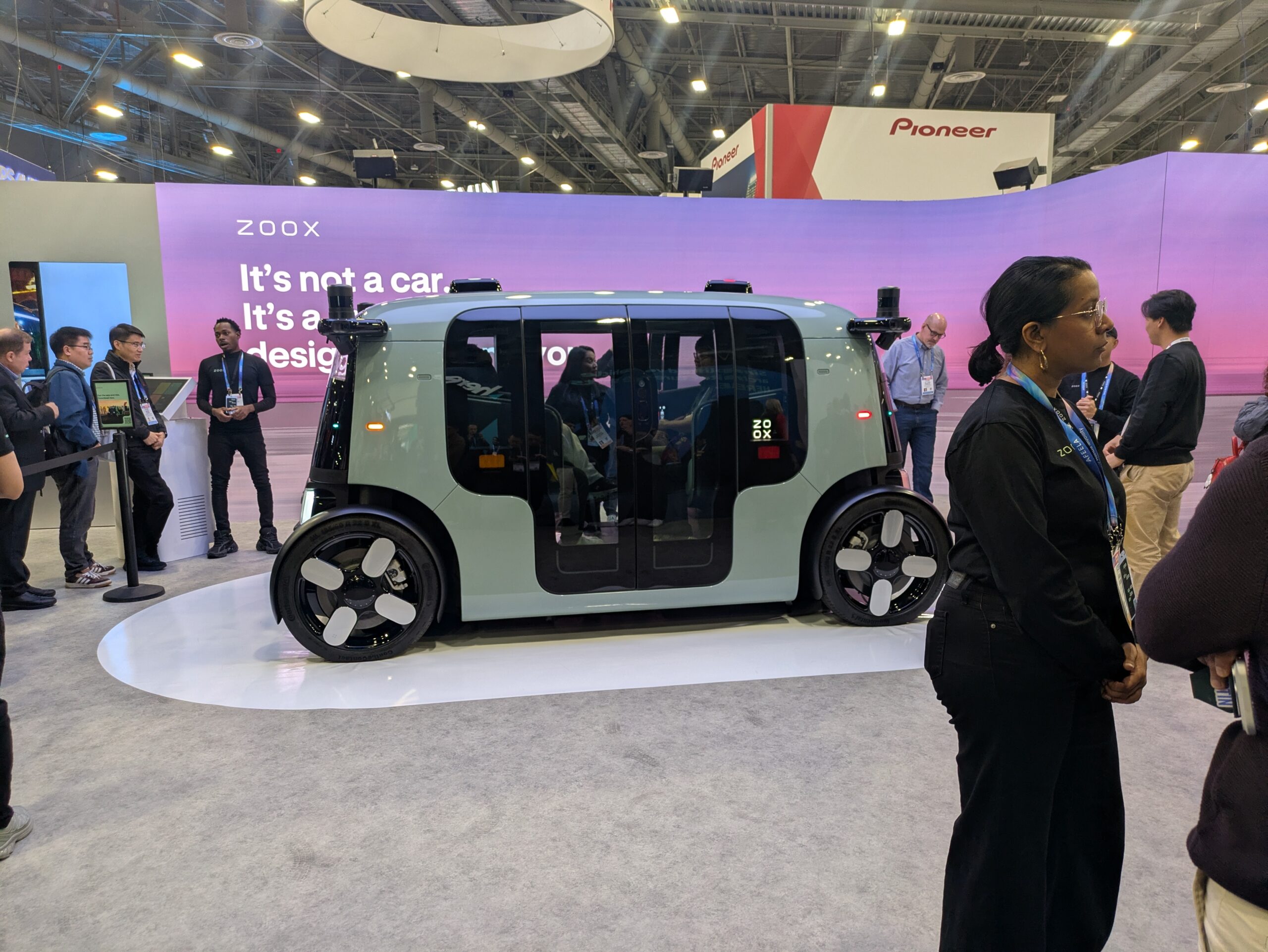 Photo by Larry Evans
And there were multiple companies showing off self-driving and robotaxi solutions. As Steve and Zach mentioned yesterday, Ford announced eyes-off L3 ADAS is planned for 2028. Waymo had a large display, showcasing its Hyundai-based vehicle. Zoox had lines at its display, and Pliyt displayed its prototype.
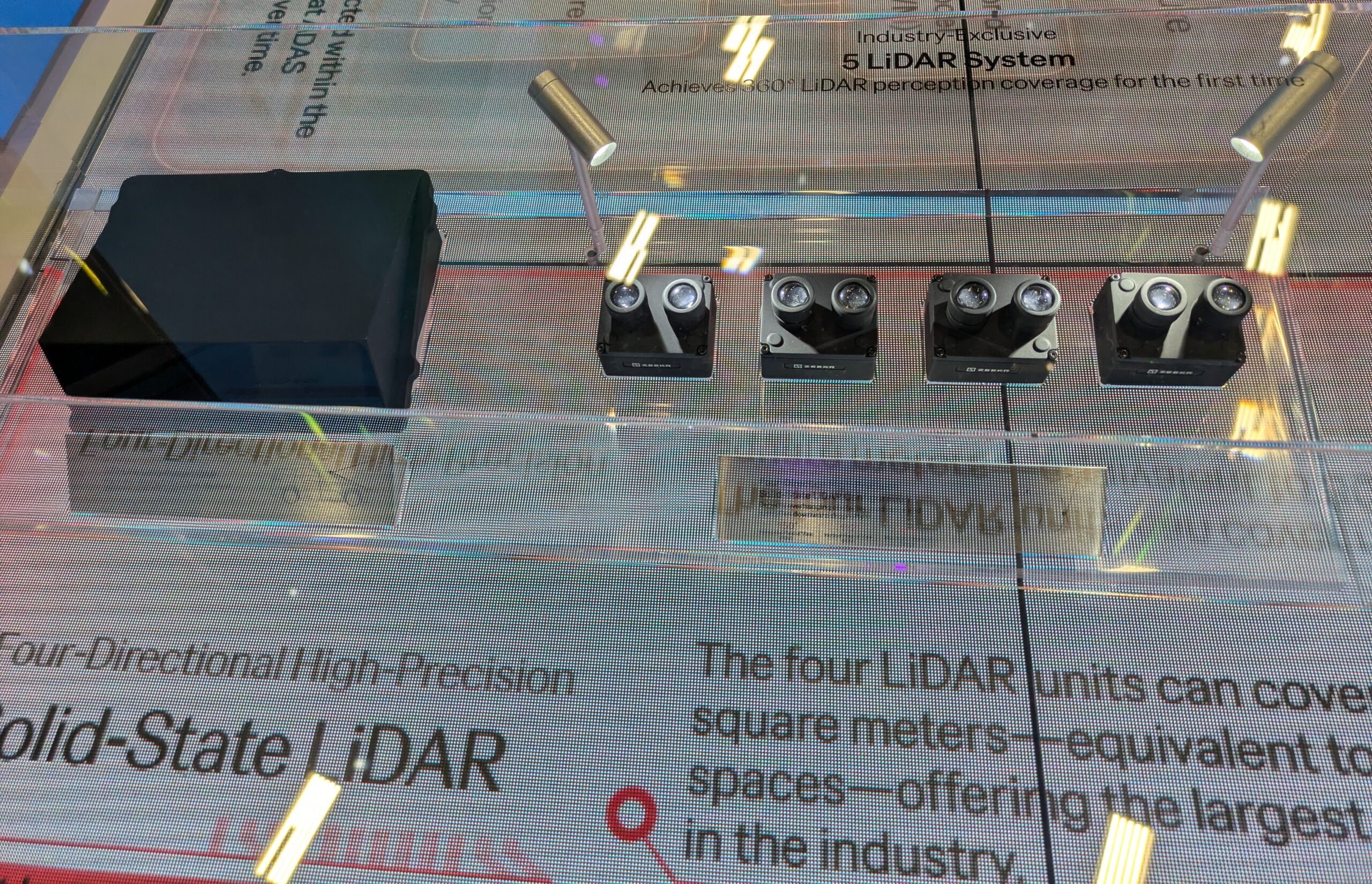 Photo by Larry Evans
Chinese automaker Geely was there showing off not only cars that offer intelligent driving, but also the technologies within them. Even though we might not get many of their vehicles here, there is a chance that we could get the self-driving technology.
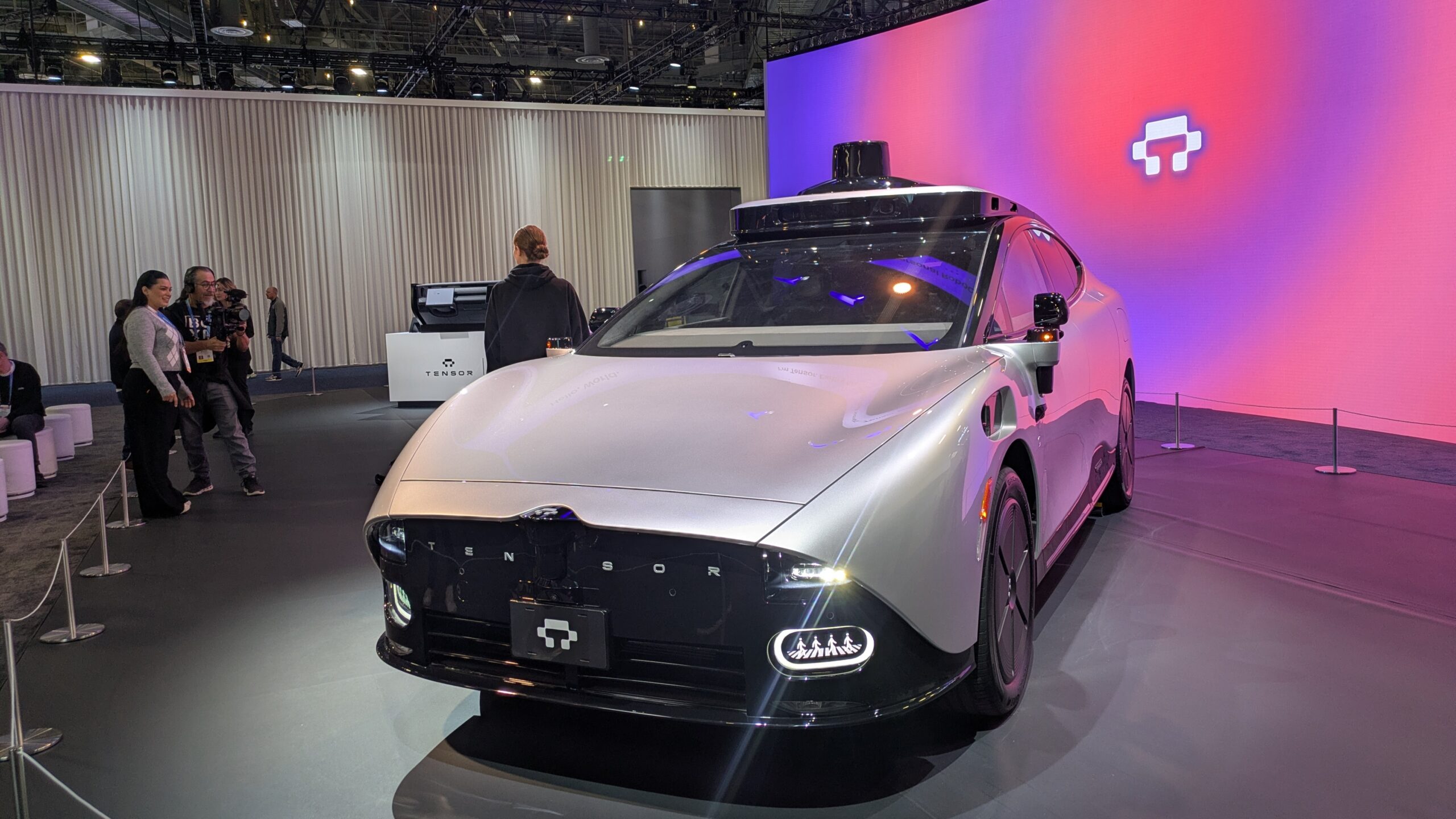 Photo by Larry Evans
And there was an array of companies offering enabling tech for self-driving. Beyond integrated systems, vendors were showing many of the components needed, from sensors and processors to software and AI training. If a company is lacking in one area or another in their development, there were multiple technology suppliers in attendance to catch them up.
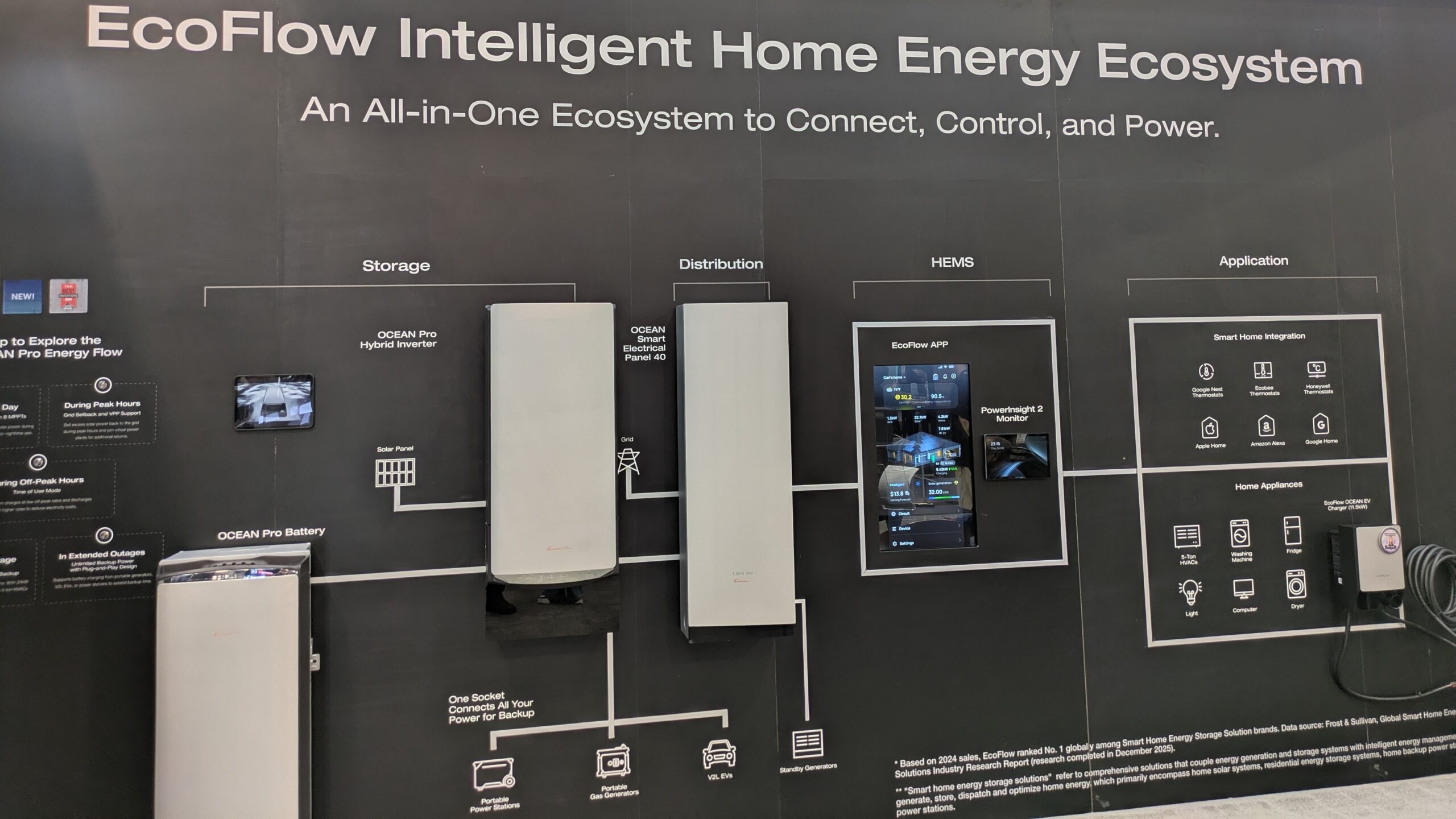 Photo by Larry Evans
The home energy storage tangent is clearly cleantech, which we’ll cover in more detail in other posts. There was also a wide array of scalable and flexible energy storage systems from companies like BLUETTI, EcoFlow, Enphase, ABOK, UDPOWER, Runhood, Powiser, Jackery….
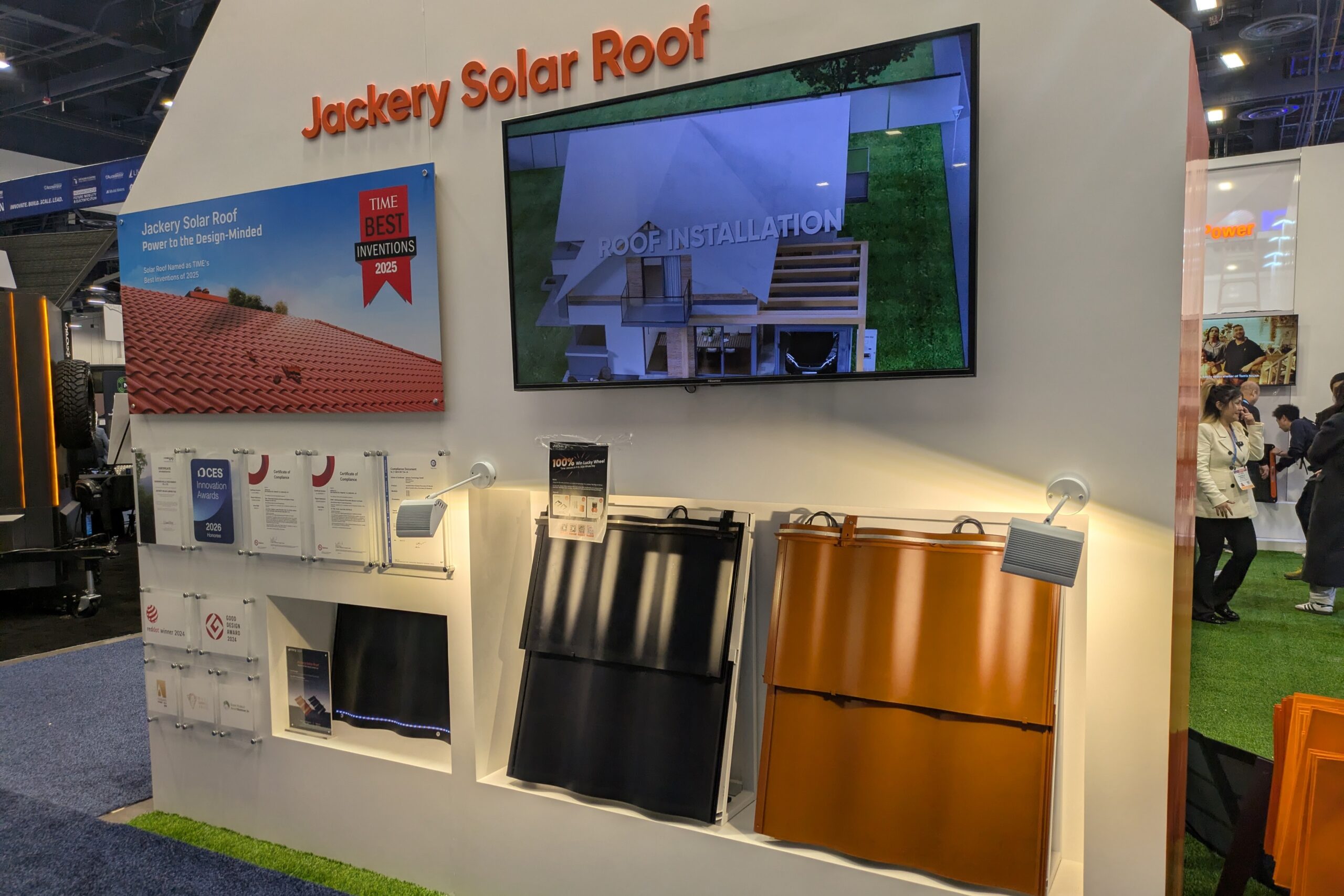 Photo by Larry Evans
Speaking of Jackery (I’ll follow up specifically on them soon), they offer a commercially viable and attractive solar roof. (Remember when Tesla was promoting that?)
This isn’t even touching on “AI,” which was kind of the joke of the show — it is like labeling “digital” on everything a few decades ago. Essentially everyone is promoting their software, product, or service as having AI. There is so much competition in that space that it is highly unlikely that any one company will come out ahead on its own, much less that one company being Tesla.
The Technology Focus Challenge
Some people think Elon went off on technology tangents because he got bored. Some think that he did it to keep investors focused on something other than a rational analysis of the core business. Some people think that Tesla went on technology tangents due to the intensifying competition in the EV market, believing that Tesla could take other markets. However, unlike EVs, Tesla is far from having first-mover advantage in these other areas.
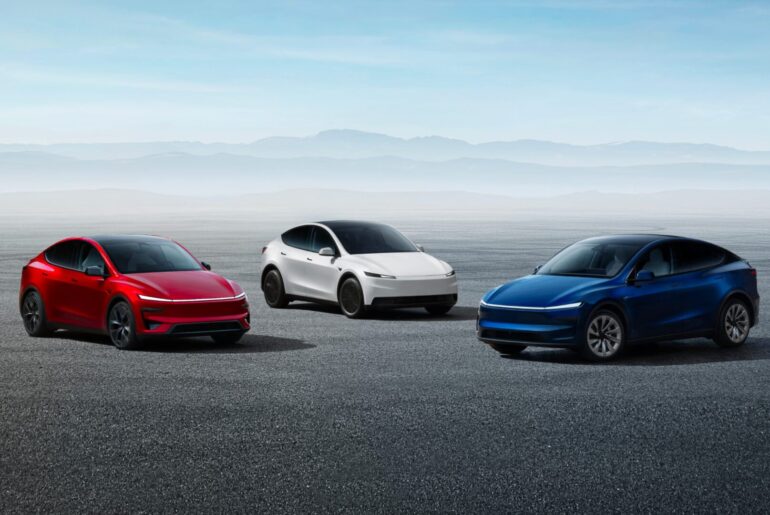
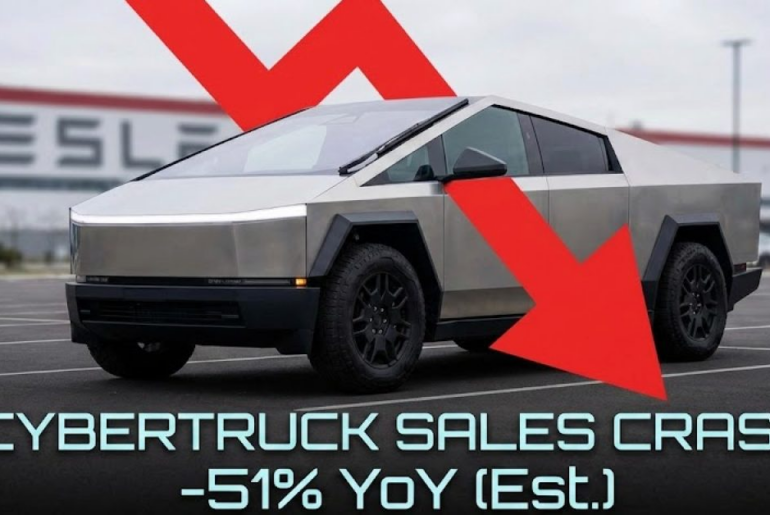
The competition has become very intense. Competitors already have products in market well before Tesla and are iterating quickly. Meanwhile, Tesla’s EVs have become stale. And they are rapidly falling behind the competition, especially in China.
Tesla is valued as if it will be the sole beneficiary of every technology tangent that it touches. Seeing the competition at CES, I have a feeling that the people who put too much faith in Elon will be disappointed.
Which makes you wonder: Where would Tesla be on EVs if the company had just focused on its core product. It didn’t start out as a technology company or a diversified manufacturer. It had to divert resources into these tangents.
But I “get it” more after CES. Surrounded by innovators, it is easy to lose focus. I could have diverted all my time to tangents, but then the focus on cleantech would have been lost.
Sign up for CleanTechnica’s Weekly Substack for Zach and Scott’s in-depth analyses and high level summaries, sign up for our daily newsletter, and follow us on Google News!
Advertisement
Have a tip for CleanTechnica? Want to advertise? Want to suggest a guest for our CleanTech Talk podcast? Contact us here.
Sign up for our daily newsletter for 15 new cleantech stories a day. Or sign up for our weekly one on top stories of the week if daily is too frequent.
CleanTechnica uses affiliate links. See our policy here.
CleanTechnica’s Comment Policy