India’s push to promote electric vehicles (EV) as a climate solution is yielding uneven results, with electric two-wheelers delivering far greater emissions reductions per rupee of public support than electric passenger cars, according to a new study.
The analysis, Financial Support for EVs in India, by the think tank Centre for Social and Economic Progress, assessed the climate impact of government subsidies and tax incentives for EVs and compares them with other publicly supported mitigation options, including rooftop solar, offshore wind and green hydrogen.
The study evaluates purchase subsidies under the Centre’s PM Electric Drive Revolution in Innovative Vehicle Enhancement (PM E-DRIVE) scheme, alongside tax concessions such as lower Goods and Services Tax (GST) and motor vehicle tax for electric cars and two-wheelers. It also benchmarks India’s EV incentives against those in Norway, the United States and China.
Two-wheelers offer better value for money
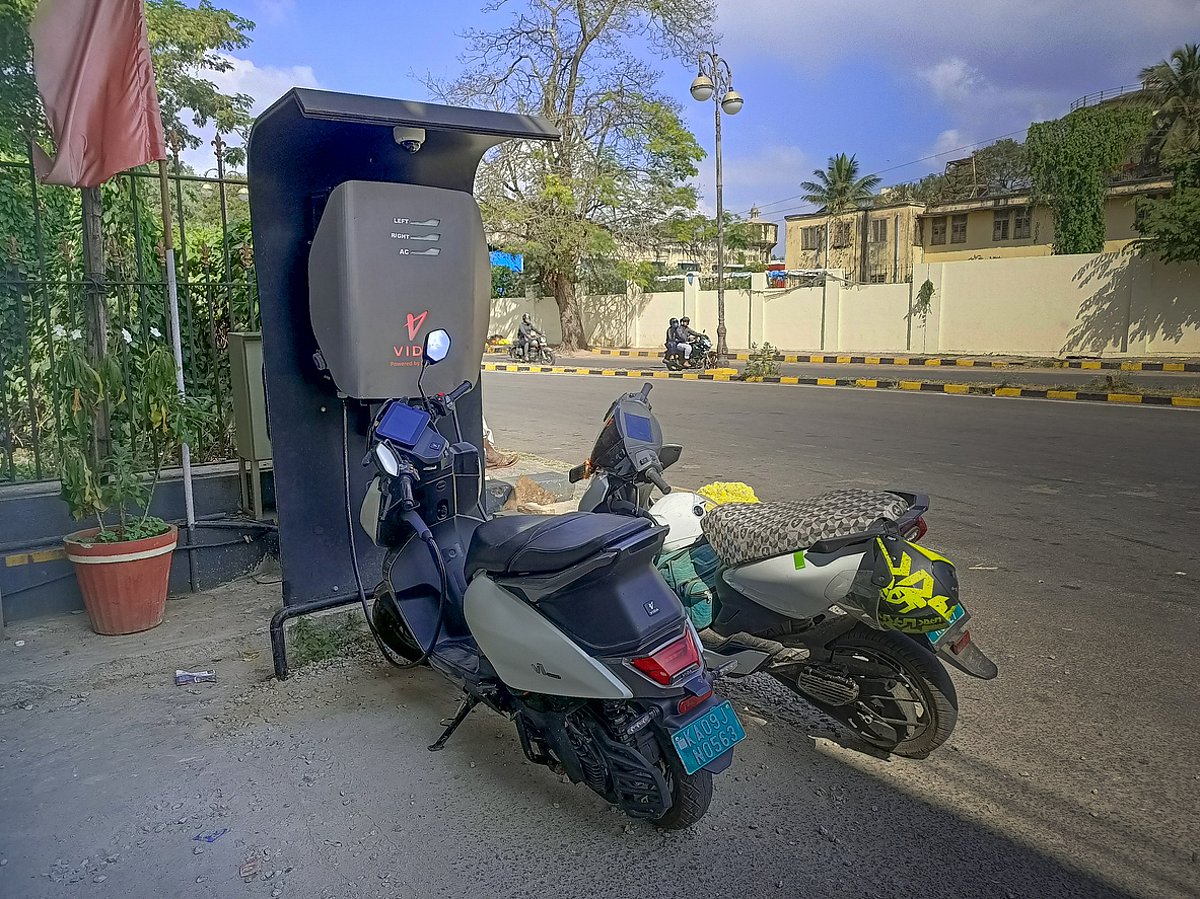
One of the study’s central findings is that electric two-wheelers avoid nearly twice as much carbon dioxide (CO₂) per rupee of government support as electric passenger cars. Researchers attribute this largely to the much higher incentives offered for electric cars, combined with their relatively modest emissions advantage over conventional vehicles. That advantage is constrained by lower energy efficiency and India’s coal-dominated electricity grid.
By contrast, two-wheelers — which already account for a large share of India’s vehicle fleet — require lower subsidies while delivering stronger emissions reductions, making them a more cost-effective climate intervention in current conditions.
Electric cars cost more than other mitigation options
The study finds that cutting a tonne of CO₂ through electric passenger cars costs the government significantly more than doing so through clean power options such as residential rooftop solar or offshore wind. The cost of emissions abatement through EVs is comparable only to green hydrogen used to replace grey hydrogen — another technology that remains at an early stage and depends heavily on public support.
India’s grid emissions further weaken the climate impact of EVs. Fossil fuels account for nearly three-quarters of electricity generation, reducing the emissions savings from electric vehicles while increasing the mitigation value of investments in renewable energy.