CivicScience engages directly with consumers, collecting over one million survey responses daily, to turn real-time insights into high-performing advertising campaigns. See how leading brands use CivicScience to drive campaign performance here.
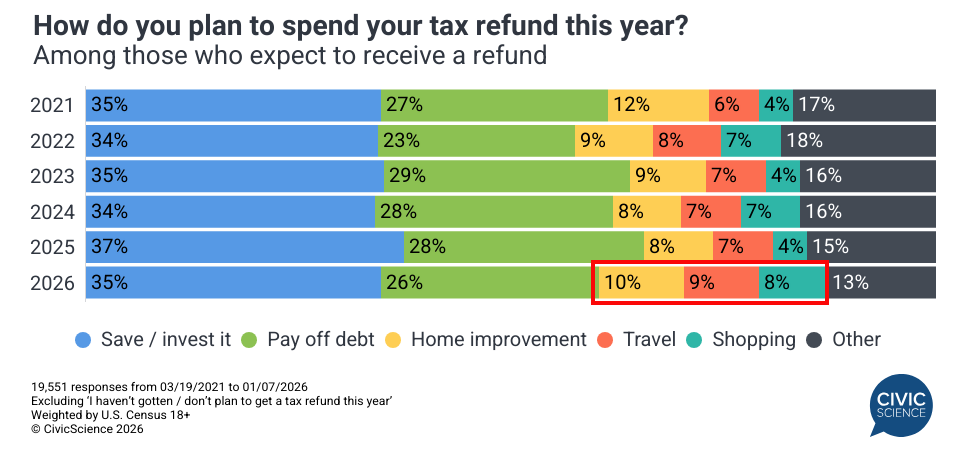
1. Slightly more Americans expect to receive a tax refund this year, as intent to spend those refunds on shopping doubles from last year.
With tax year 2025 now complete, 60% of tax filers tell CivicScience that they expect to receive a refund this year, up slightly from the 58% reported last year. Among those anticipating a refund, there is a clear shift toward discretionary spending compared to the previous tax year. Specifically, more respondents say they are earmarking their funds for home improvement, travel, and shopping, with the latter doubling from last year’s plans. Stay tuned for more tax preparation insights from CivicScience coming next week.
Let Us Know: When do you typically file your taxes?
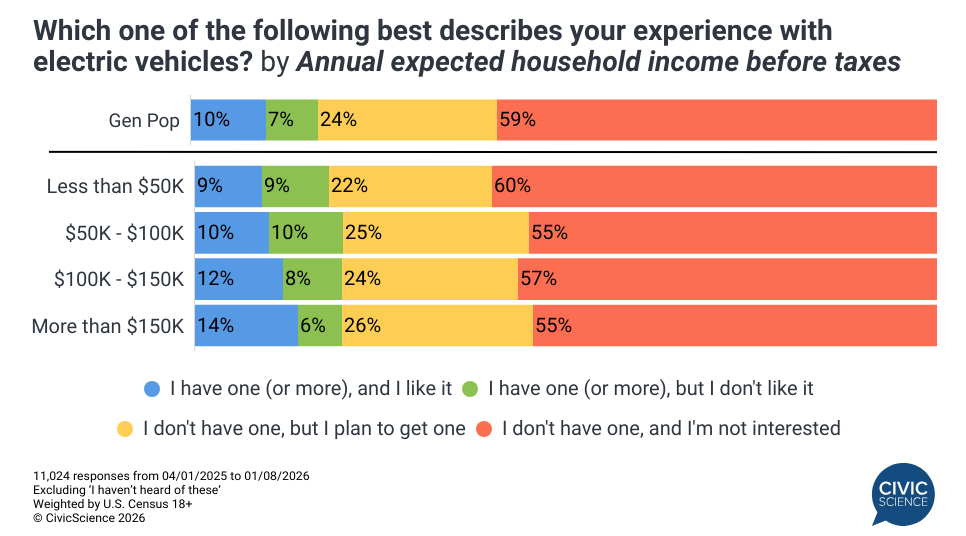
2. EVs continue to face an uphill battle as nearly 6 in 10 U.S. adult respondents remain unwilling to go electric.
Ford’s recent decision to scale back its all-electric vehicle strategy reflects broader challenges facing the EV market, including softer-than-expected demand, high production costs, and shifting regulatory priorities. According to CivicScience survey data, 59% of U.S. adults who are familiar with EVs say they do not own or have any interest in owning one, signaling adoption resistance despite years of market expansion. Unsurprisingly, this resistance is heavily stratified by economic status; adoption remains concentrated in higher-income households, where consumers are not only more likely to purchase these vehicles but also report higher satisfaction levels. Consequently, the transition to electric appears to be stalling as it hits a “luxury ceiling,” making it difficult for manufacturers to reach the broader middle-market demographic.
Weigh In: Would you ever consider purchasing an electric vehicle?
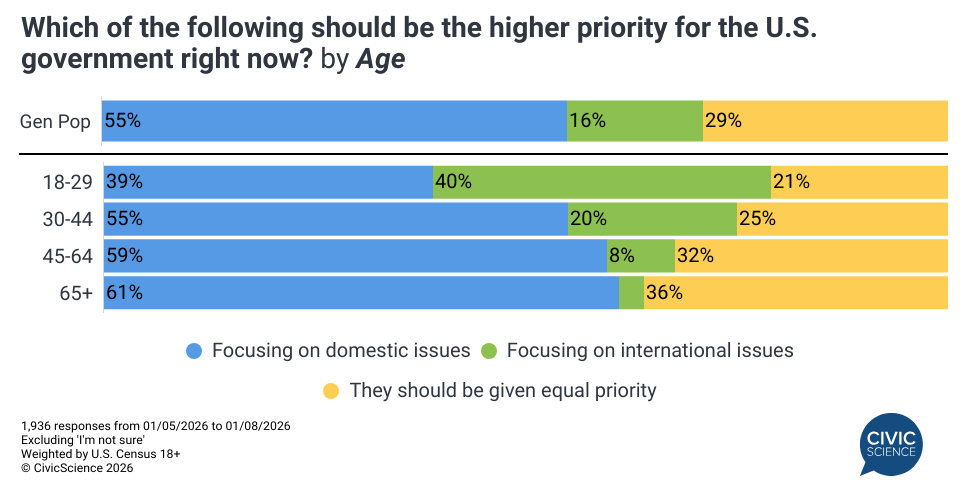
3. The majority of respondents believe domestic issues should be of higher priority than international ones amid several ongoing international efforts by the federal government.
New CivicScience survey data find that 55% of U.S. adult respondents believe the federal government should prioritize domestic challenges—such as healthcare and the economy—over international action to protect national security or regional stability (excluding those who are unsure). This preference for inward-looking policies is most pronounced among Baby Boomers and Democrats, who prioritize addressing high costs of living and infrastructure issues at home. The data also reveal a noteworthy divide among Republicans, with 41% saying domestic and international issues should be given equal priority, and 40% who would prefer challenges at home be the government’s higher priority.
It’s time to harness real-time consumer signals that move at the speed of the market, not the speed of a report.