January 12, 2026
By Karan Singh
For a long time, Tesla’s solar business felt like it was running on an old version of Autopilot. While Tesla Energy has grown leaps and bounds for stationary storage with Megapack V2 and Powerwall V3, solar has remained largely static.
Tesla has finally decided to revive its solar business and has begun deliveries of a completely redesigned residential solar panel that prioritizes curb appeal and shade tolerance. Paired with the recently launched Solar & Powerwall Lease Program, Tesla is finally addressing two of the biggest obstacles in the residential solar world: affordability and design.
The Stealth Upgrade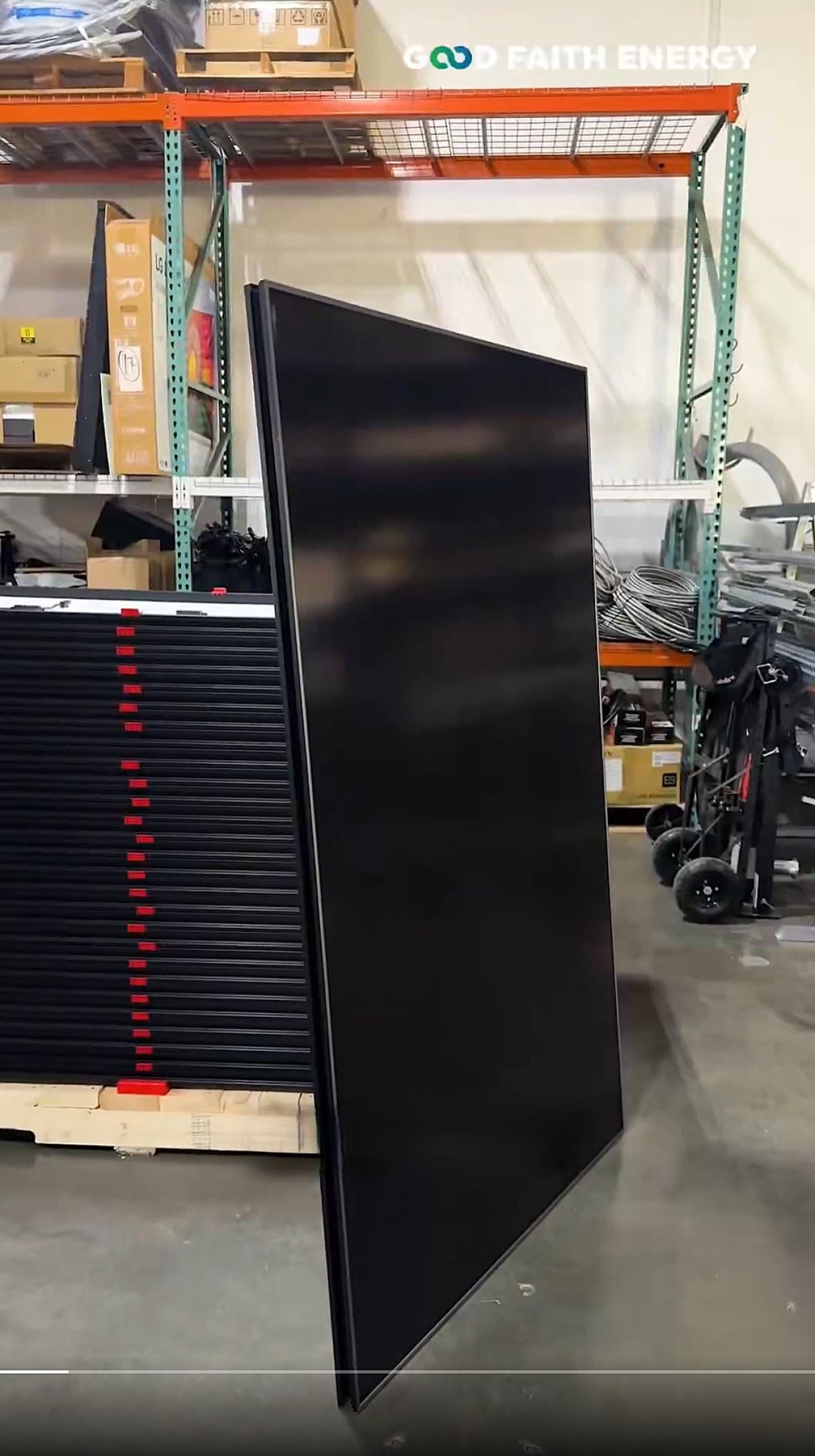
The most immediate change with the new 420-watt panels is their appearance. Solar panels have notoriously suffered from industrial aesthetics – visible aluminum clamps, silver frames, and gaps that expose the roof below. Tesla’s new design specifically attacks this problem.
The new panels feature an all-black finish and a thicker architectural frame, giving them a unified matte-black appearance. In addition, a new hidden mounting system using rail-less hardware means the panels sit just 1.57 inches off the roof, 3 inches lower than older systems.
That means they’ll seamlessly fit on your roof, without ruining your home’s aesthetics. This flush look helps to bridge the gap between traditional rack-mounted solar and ultra-premium options like Tesla’s Solar Roof.
18 Independent Zones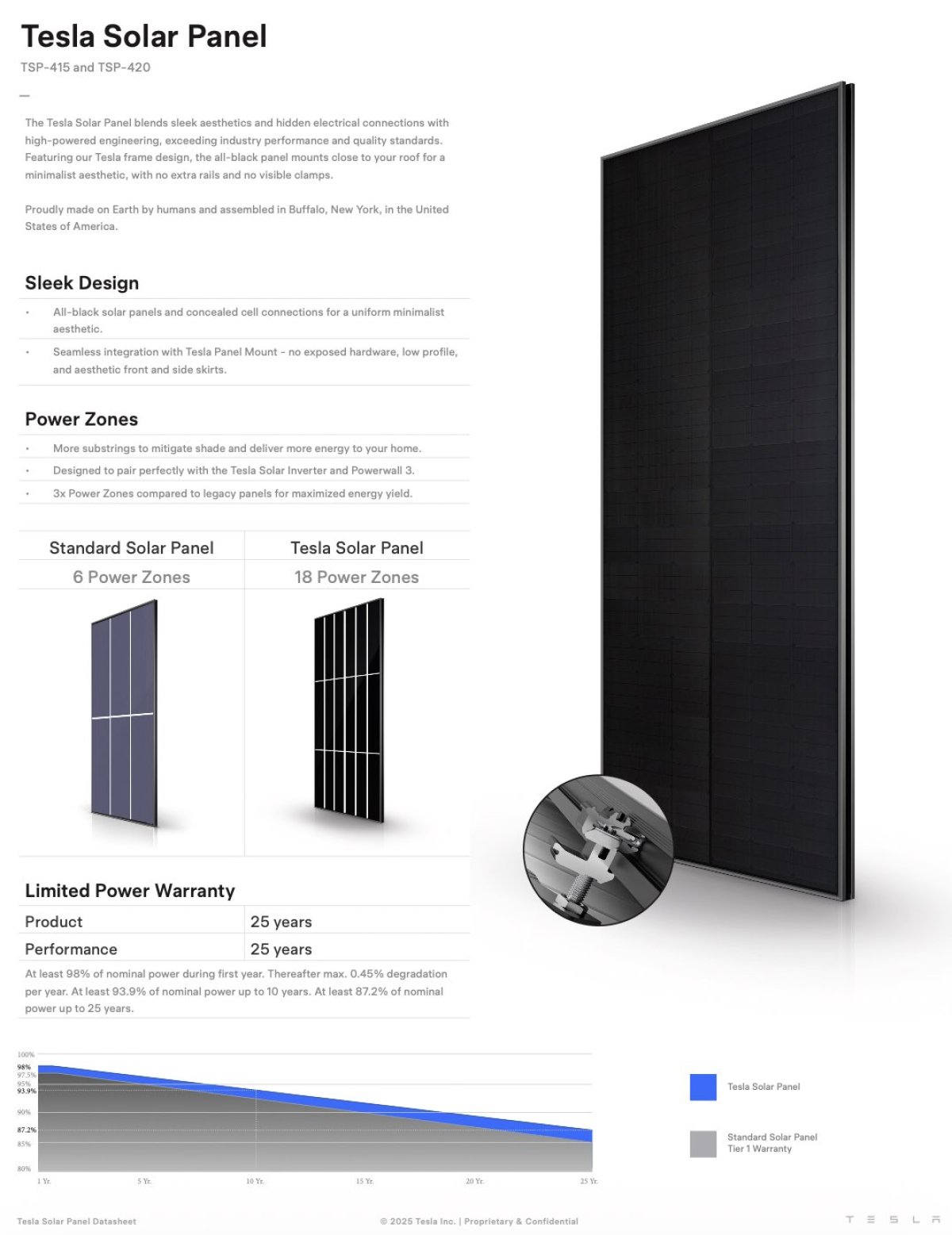
Under the glass, the panel has been entirely re-engineered. The new panels are manufactured at Giga New York and boast a module efficiency of 20.5%.
While the efficiency is a good step forward, that’s not even the standout feature. Traditional solar panels are often crippled by small amounts of shade. If a chimney casts a shadow on just one corner of a standard panel, the output of the entire unit can drop.
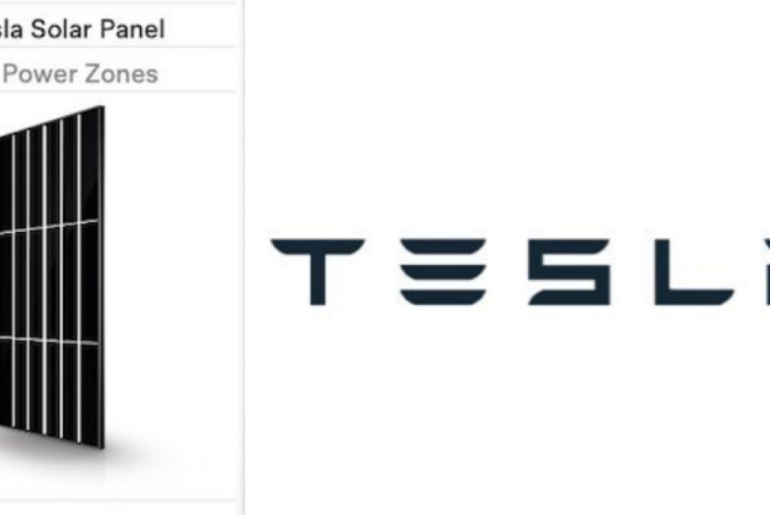
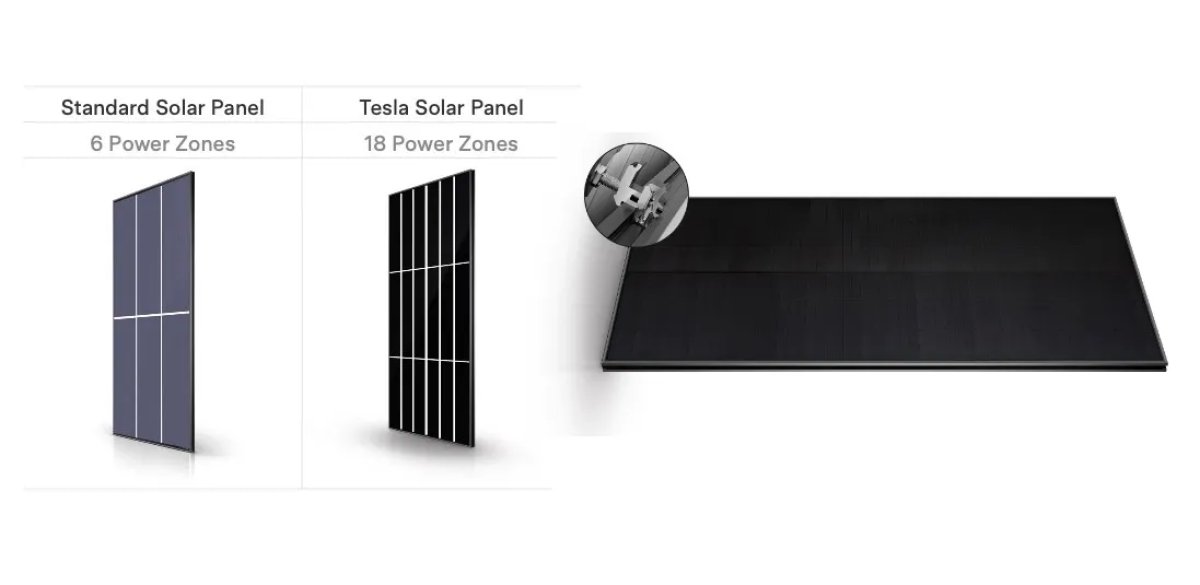
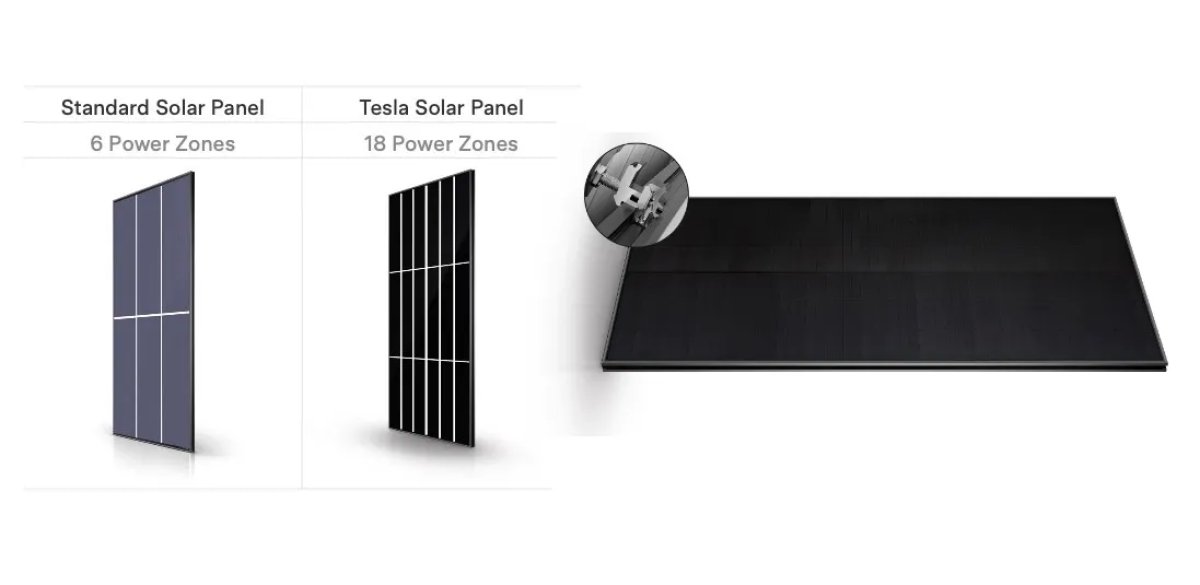
Tesla’s new design divides the 420W panel into 18 independent power zones. If a tree branch shades two or three zones, the remaining 15 can continue to harvest energy at peak efficiency. For real-world homeowners with dormers, vents, and trees, this means the effective daily power generation is significantly higher, even if the peak wattage is only a modest bump from 410W to 420W.
Solving the Real Barrier: Cost
While better aesthetics and improved engineering are nice, the primary obstacle for most homeowners isn’t the look of the panels – it is the price tag. A full solar and storage system can easily run north of $30,000, a massive capital outlay in a high-interest environment.
Tesla’s recently launched Solar & Powerwall Lease Program aims to change that with leasing options that require little to no upfront cost. Instead of a massive loan, customers pay a fixed monthly fee for the solar energy and the backup security of Powerwall.
Is Tesla Solar Back?
This combination – premium, US-made hardware paired with an accessible leasing model is a sign that Tesla is beginning to focus on its residential sector again.
With these new 420W units rolling off the production line at Giga New York and a healthy financing model that helps to remove the barrier to entry, Tesla is finally flexing its muscles on residential solar again.
Ordering a New Tesla?
Use our referral code and get 3 months free of FSD or $1,000 off your new Tesla.
January 12, 2026
By Karan Singh
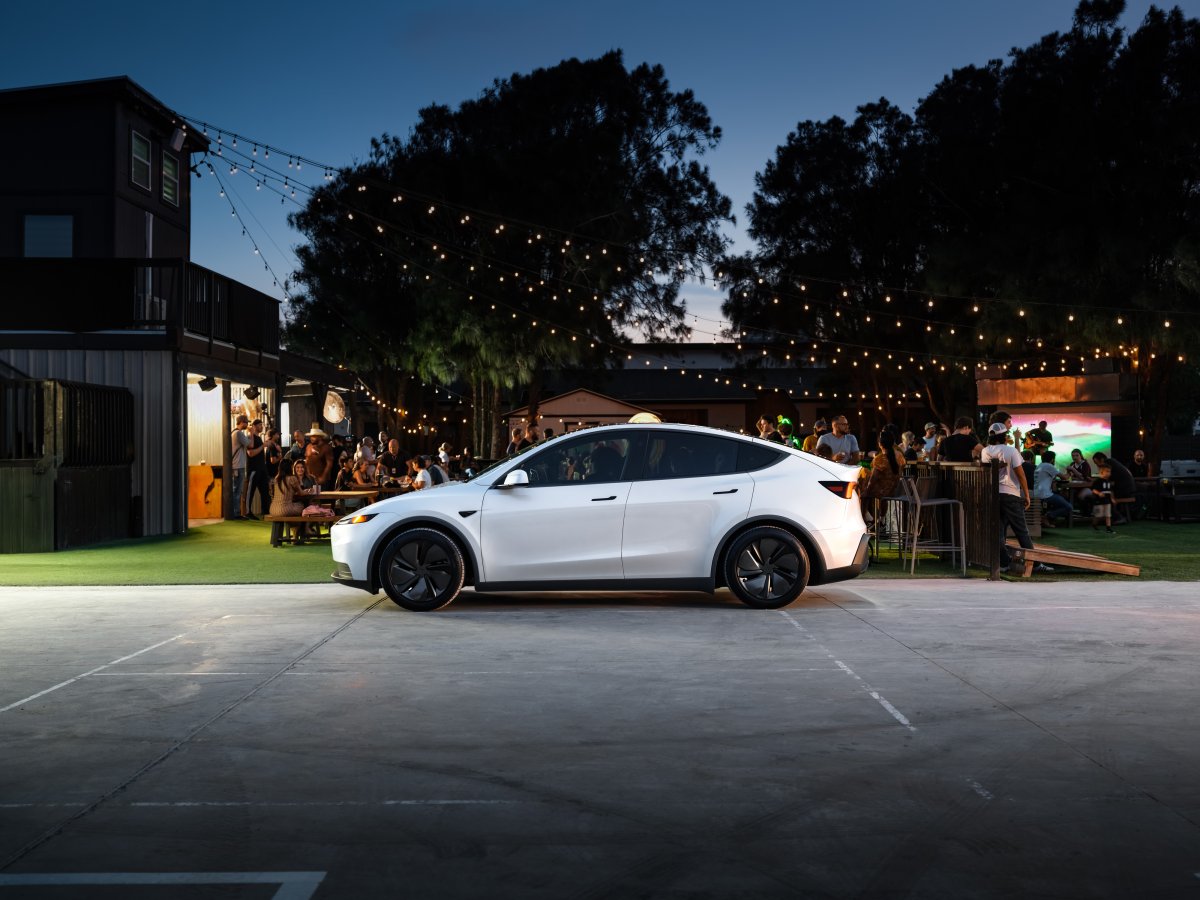
In a dual-continent update for the Model Y last week, Tesla is continuing to expand the budget-friendly Standard variant to more markets. For Canada, that’s a tariff-free vehicle that helps affordability, while in Europe, a range-focused variant for longer trips and commercial use.
The $50K Berlin Special
The most interesting logistical move is happening in Canada. Tesla has officially launched the Model Y Standard with a starting price of just $49,990 CAD, a critical break point for Canadian pricing.
At this price point, it is roughly $15,000 cheaper than the Model Y Premium AWD, slightly undercuts the Ford Mach E by $3,000, and is just a hair above the Kia EV6 by $1,000. These other base-model vehicles lack several features, making the Standard Model Y even more appealing.
To achieve this price point without getting hit by the 100% surcharge on Chinese-made EVs or potential cross-border complications with the US, Tesla is importing the Model Y from Giga Berlin. By sourcing from Germany, Tesla can offer a highly competitive entry point that qualifies for provincial incentives in Canada, effectively making the Model Y Standard a strong competitor.
The Model Y Standard Trim
The Model Y standard is Tesla’s new base model. Unlike the Premium interior and features found on the rest of the lineup, this import has a few critical changes.
Fabric Seats
7-Speaker Audio
Manual Steering Column Adjustment
No Rear Screen, Ambient Lighting, Direct TPMS
No Autopilot (Only TACC)
Simplified Acoustic Glass
You can check out everything that’s changed in the Model Y Standard here. A key point here is that even though this is a European-built vehicle, it does not feature Autopilot, like the European Model Y Standard.
Standard Long Range
Across the Atlantic, Tesla is applying this same Standard interior and feature philosophy to a different problem: maximizing range.
Tesla has launched the Model Y Standard Long Range in Europe. This new trim pairs the Model Y Premium’s much larger battery with the lighter, simplified feature set of the Standard model. The result is a vehicle that has exceptional range. By shedding some of the premium interior components and the front motor, this RWD variant achieves 657 km WLTP (~400mi EPA) of range.
Depending on the European country and the currency you use to purchase, this trim costs between 1% and 10% less than the Premium Long Range RWD. It effectively splits the difference for buyers who want the maximum possible range, but don’t care about ventilated seats or rear screens.
Marine Blue Arrives in North America
Tesla launched Marine Blue in Europe in October 2025, and since all of the Model Ys coming to Canada are being produced at Giga Berlin, that means the paint offerings are changing over to match as well.
Canadian buyers will now find the new Marine Blue option replacing the older Deep Blue Metallic at the same $1,300 CAD price point. This paint option is available only on Premium and Performance trims and is not available on the Model Y Standard.
January 11, 2026
By Karan Singh
For the last few months, sightings of Tesla’s dedicated Robotaxi have been confined to the low-speed grid of downtown Austin and closed tracks at Giga Texas.
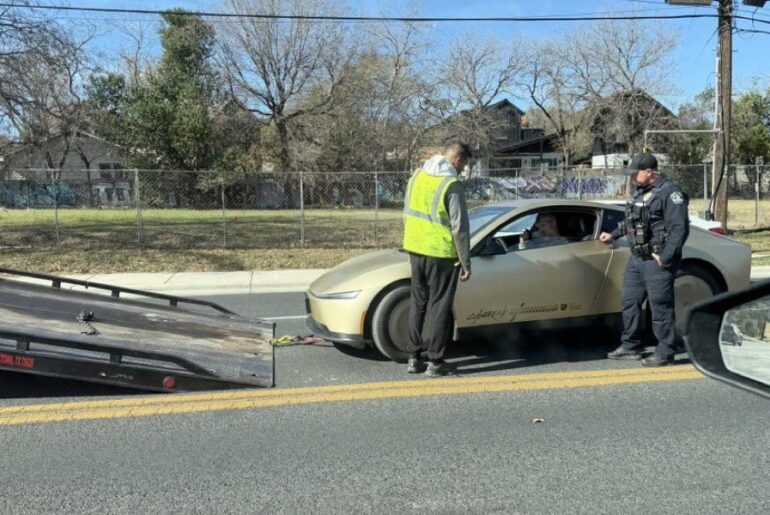
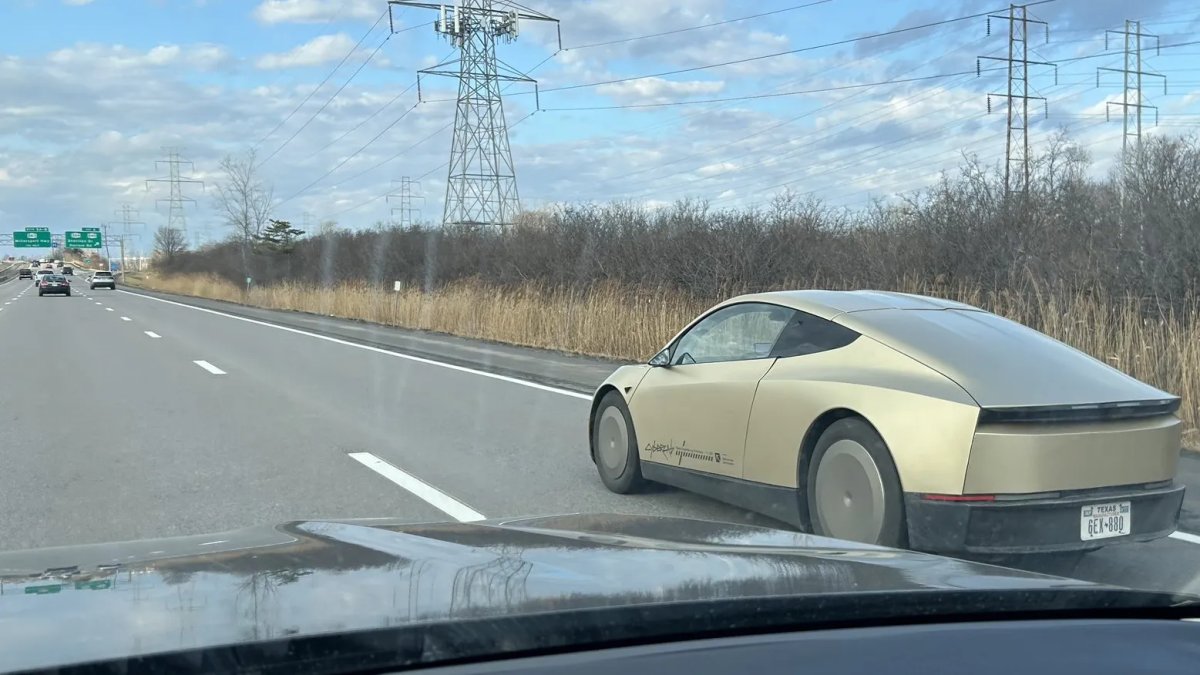
Tesla now appears to be expanding the testing program, as the Cybercab has now been spotted on the MoPac expressway in Austin and, more interestingly, in Buffalo, New York — 1,500 miles from Austin.
The Austin footage is beautiful, as it captures the Cybercab in slow motion on the highway. This was the first time we’ve seen the vehicle moving at high-speeds.
Yesterday, the Cybercab was seen near Buffalo, New York, where Tesla is likely conducting cold-weather testing.
Cybercab on the highway pic.twitter.com/97XD4jVc9a
— Adan Guajardo (@AdanGuajardo) January 7, 2026 Highway Testing
While city driving tests complex decision-making with pedestrians, unprotected left turns, and unpredictable human traffic, it also generally happens at much slower speeds. That means the cabin remains fairly quiet, and the vehicle isn’t impacted by vibration or wind.
However, highway speeds bring wind noise and road vibration to the fore. Engineers need to verify that the Cybercab’s cabin remains quiet and that there aren’t any unexpected resonances or aerodynamic instabilities at high speed.
Winter Testing
To view this video please enable JavaScript.
The sighting in Buffalo, New York (video by Ty Thomson), likely indicates that Tesla is testing the vehicle in cold conditions. Potentially testing vehicle components, charging, efficiency at colder temps, and more. While temperatures in the Northeast have been warming over the past week, they are still in the mid-30s, allowing Tesla to test the vehicle’s performance in less-than-ideal conditions. Buffalo could see some snow in the next few days, so it’ll be interesting to see if Tesla sticks around to test the vehicle in the snow.
Steering Wheel & Charging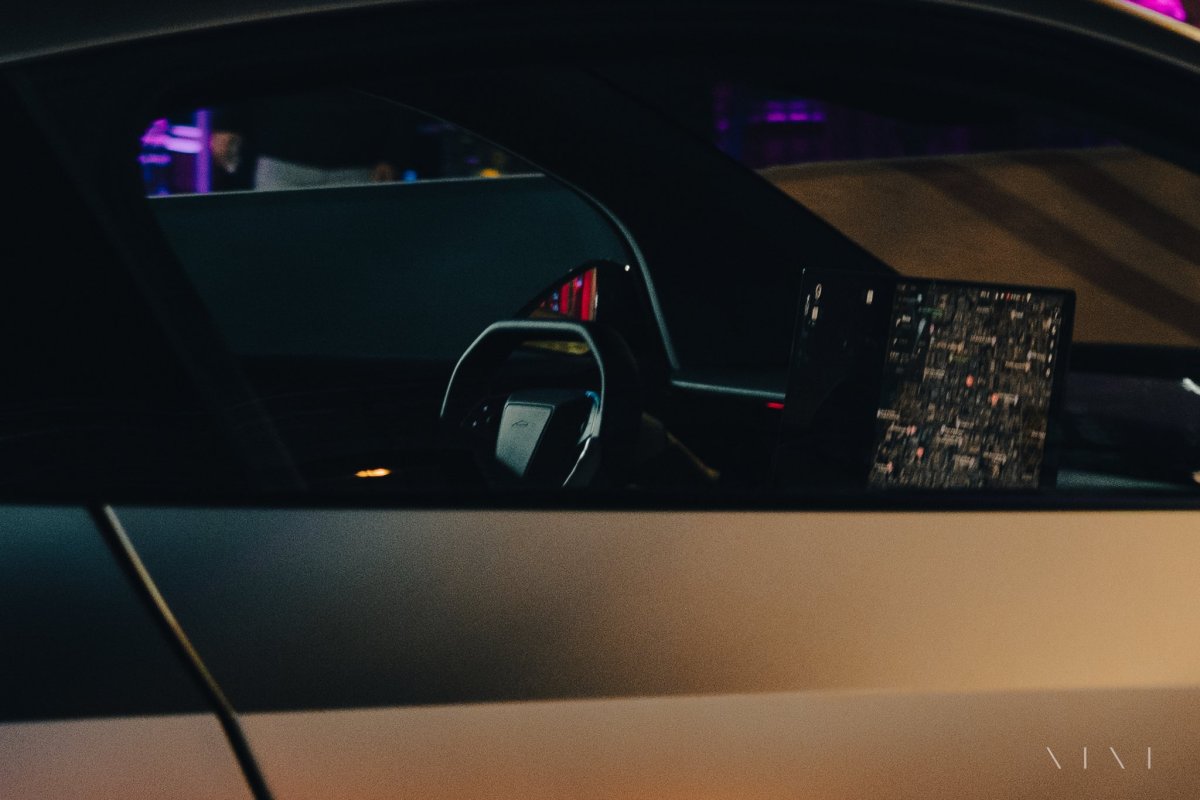
While these latest sightings give us our clearest shot of the Cybercab’s steering wheel, we’re still not sure how Tesla is charging these vehicles.
The steering wheel in the Cybercab seems to be pulled from the Cybertruck. The Cybercab likely has the same steer-by-wire functionality as the Cybertruck.
While the Cybercab is expected to use wireless charging, Tesla may also have a temporary charging port for these vehicles, especially if the vehicle is traveling cross-country, where there isn’t a wireless charging infrastructure.
The Cybercab also features side mirrors, as expected. Current Federal Motor Vehicle Safety Standards (FMVSS) require human controls for test vehicles unless a specific exemption is granted.
Until that legislation changes – potentially as soon as the upcoming hearing next week – Tesla must run its validation and testing fleets with human controls and safety drivers to remain street-legal.
Ramping Up for 2026
This highway and winter sighting line right up with the aggressive timeline that Tesla has emphasized – with production later this year, and Cybercabs on the road by the end of 2026.
The frequency of sightings in Austin has accelerated rapidly – from rare appearances near Giga Texas to tandem drives downtown, and now, high-speed highway test runs at night. This suggests that Tesla is moving quickly from early alpha testing to a more robust validation phase. Tesla says production of the Cybercab will start in April, just a few short months away.
It’s just a matter of time before we begin to see more Cybercabs testing in diverse regions.