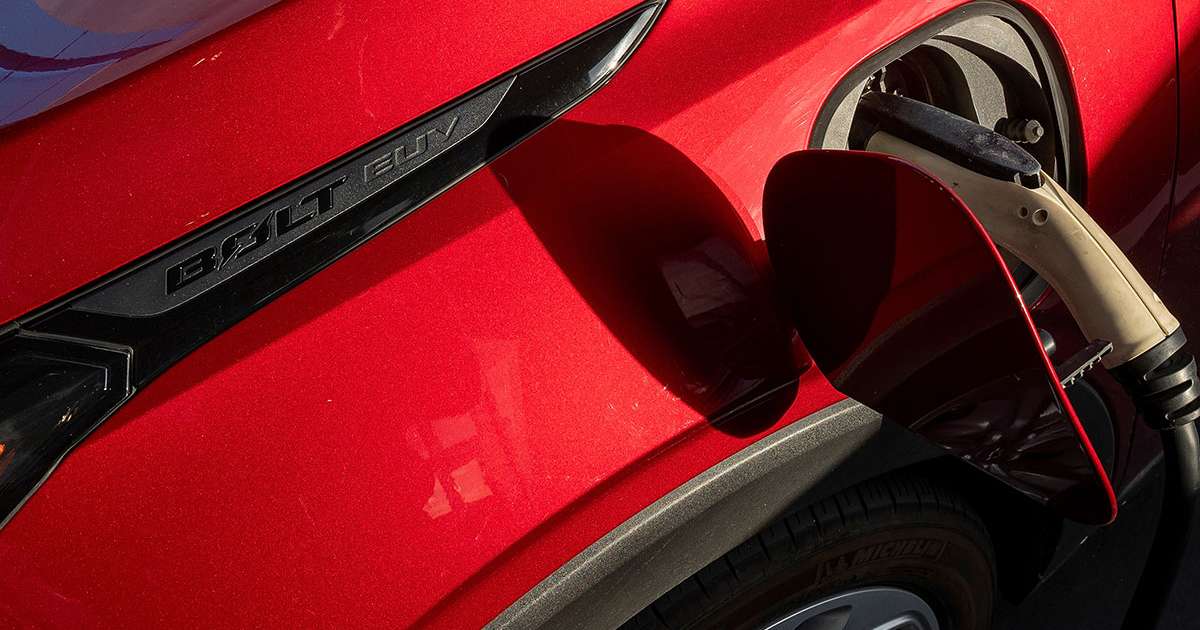
A Chevrolet Bolt electric vehicle at a dealership in Colma, Calif., on Jan. 26, 2024. (David Paul Morris/Bloomberg)
January 8, 2026 5:25 PM, EST
[Stay on top of transportation news: Get TTNews in your inbox.]
General Motors Co. will take another $6 billion in charges tied to production cutbacks in its electric vehicle and battery operations as the financial fallout spreads from the weakening U.S. market for EVs.
The announcement Jan. 8 brings the total write-downs from GM’s huge bet on battery-electric cars to $7.6 billion, following smaller charges revealed in October. While the automaker warned of an additional financial toll this year, the moves are aimed at minimizing the impact on reported profit going forward.
GM will recognize the latest EV charge and a separate $1.1 billion write-down — largely related to the restructuring of its China business — in its fourth-quarter results, according to a regulatory filing.
The disclosure underscores the upheaval sown by President Donald Trump’s moves to eliminate federal support for EVs and Americans’ continued embrace of gasoline-powered vehicles. GM and its rivals have invested billions of dollars in EVs over the past decade to comply with stringent environmental rules and meet their own overwrought view of consumers’ willingness to buy them.
Trump’s signature tax and spending bill scrapped $7,500 federal tax credits for EV buyers, further dampening demand for battery-powered cars that was already faltering. Other moves, including a plan to significantly weaken federal fuel efficiency requirements, also removed key policies pushing the industry toward electrification.
Now, GM and its rivals are cutting back. Ford Motor Co. in December said it would take $19.5 billion in charges to scale back its own EV business, a plan that includes canceling a future electric F-Series truck and repurposing an EV battery plant.
GM’s shares fell 2.4% at 4:08 p.m. in after-hours trading in New York. The stock had gained about 67% in the past 12 months, beating the S&P 500 Index’s 17% advance.
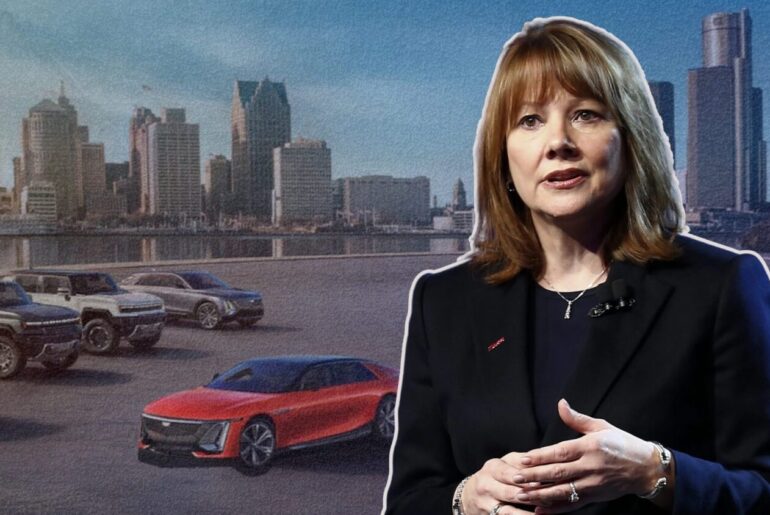
GM had boasted of its $35 billion investment to build an EV business capable of selling a million plug-in cars per year by 2025. CEO Mary Barra even set a goal for the company to go all-electric by 2035.
Instead, it sold about 170,000 EVs last year and is now cutting production and workers. The company has already placed 5,500 workers on at least temporary furlough.
GM’s strategic shift isn’t as dramatic as the one undertaken by rival Ford. Barra has cut production and canceled some future models, but GM still has a dozen models for sale and is still developing new battery technology.
But like Ford, GM is also re-prioritizing profit from its largest, thirstiest vehicles. GM plans to convert a plant in suburban Detroit to make gas-powered pickup trucks and large SUVs instead of electric pickups, which are selling in small numbers.
GM’s latest charges for its EV business include $4.2 billion for contracts with suppliers. That will have a cash impact over the coming quarters. GM said it also expects additional write-downs this year, which should be “significantly less” than those in 2025, it said.

Johan Land of Samsara explores how fleets are adopting AI to revolutionize their safety programs. Tune in above or by going to RoadSigns.ttnews.com.
Barra has insisted that she wants to make EVs work in the U.S. and that they represent the industry’s future despite changes in regulatory policy under Trump. The company is working to lower costs on its electric models and plans to use new battery chemistry and designs to reduce the the still-high price of EVs compared to gasoline-fueled cars.
The $1.1 billion charge is mostly part of restructuring of GM’s China business. That cost is in addition to the $5 billion write-down GM took in late 2024 when the automaker was resizing the business to accommodate lower sales. The new charge will have a $500 million hit to GM’s cash flow in the coming quarters.
Want more news? Listen to today’s daily briefing below or go here for more info:
![Watch Kia's smallest electric SUV in action for the first time [Video]](https://www.evshift.com/wp-content/uploads/2026/01/1768404341_Kia-smaller-EV-EV2-1-770x515.jpeg "Watch Kia’s smallest electric SUV in action for the first time [Video]")