For decades, clean energy innovation has pursued decarbonization and practicality in parallel. Often, one advance comes at the expense of the other. Electric vehicles reduce emissions, but infrastructure requirements and range limitations remain barriers outside of ideal scenarios.
Global transitions are rarely rapid when billions of vehicles and trillions in infrastructure already exist. Fossil fuels are recognized as unsustainable, but remain deeply integrated into logistics, transportation, and systems. energy of emergency.
In this context, a discreet machine installed on a Manhattan rooftop last spring produced gasoline from the open air. Its appearance resembled a sophisticated household appliance, attracting more curiosity than immediate hype.
— ARTICLE CONTINUES BELOW —
See also other features
Workers call it a legend, but Pad 39A, which launched Apollo 11, has become a manned launch base: today, leased to SpaceX, it launches Falcon 9 and Crew Dragon spacecraft, undergoes renovations for Starship, and only appears on official tours, still from a distance.

A woman decides to face tornadoes up close and turns storms into work, documenting phenomena with winds between 60 km/h and 300 km/h in regions known for extreme instability.

With a 200 MP camera, 7.000 mAh battery, 144 Hz AMOLED screen, and 5G support, the realme 16 Pro and 16 Pro+ have been launched and promise to raise the bar for premium mid-range phones.

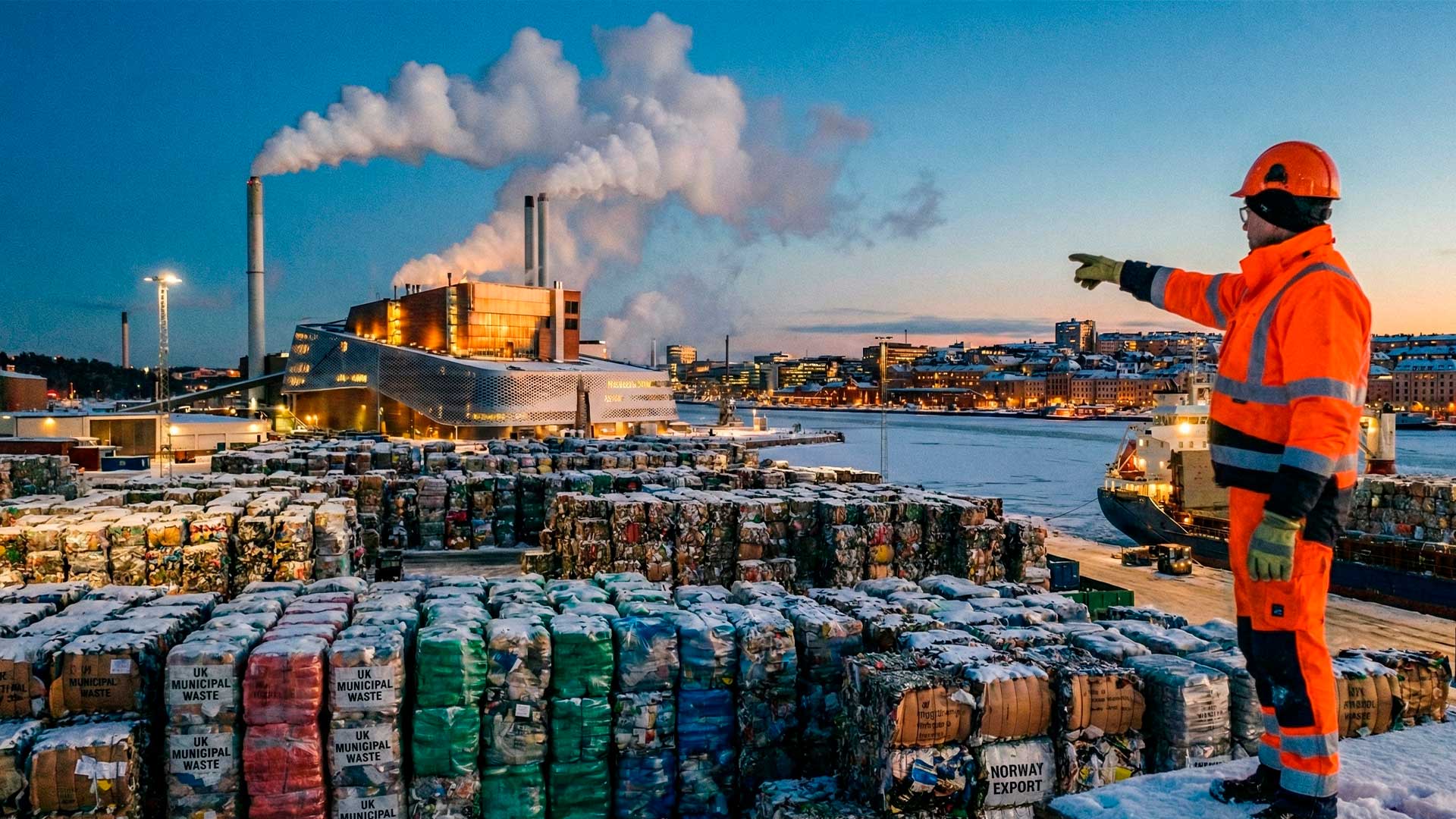
Sweden ran out of waste to burn after transforming it into a source of heat and electricity and has begun importing waste from other countries to fuel the plants that heat the cities.
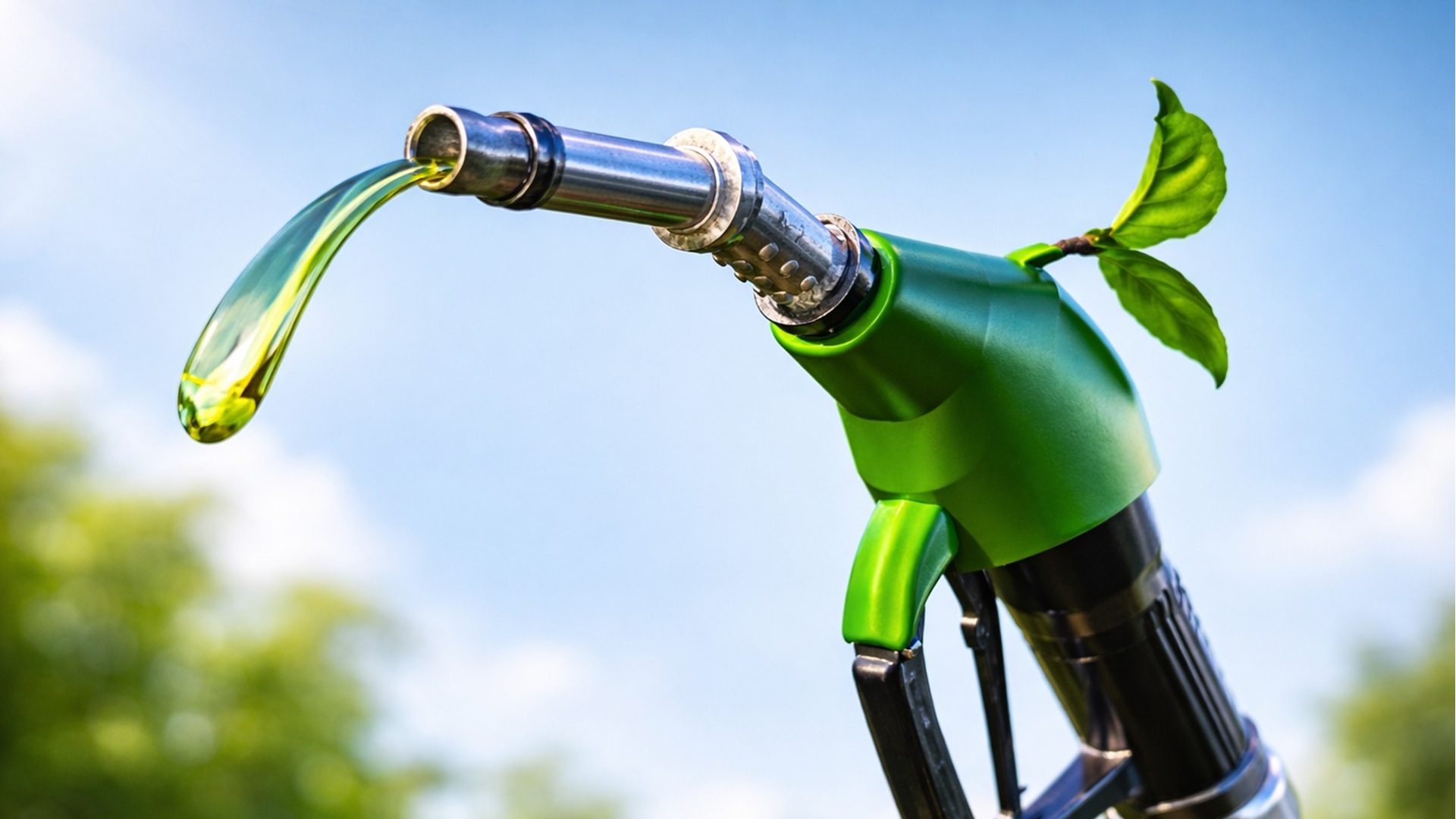
Modular fuel synthesis from air, water and electricity.
The company responsible is Aircela, a startup based in New York and founded in 2019. Its technology integrates direct capture of carbon dioxide from the air and local fuel synthesis, using ambient CO₂, hydrogen extracted from water, and renewable electricity.
In a public demonstration in May 2025, held on a rooftop in the garment district, the device produced usable gasoline in real time. The process combined captured CO₂ with hydrogen through a synthesis similar to Fischer-Tropsch, adapted for a compact format.
The fuel produced contains neither sulfur nor ethanol and requires no engine adjustments or changes to the fuel supply systems. Chemically, it behaves like conventional gasoline, allowing for immediate use in existing combustion engines.
Initial applications are expected to focus on off-grid operations, remote locations, and industrial facilities where transporting fuel is inefficient or carbon-intensive. The company has not disclosed costs or performance figures, describing the model as distributed and modular.
The proposal contrasts with large synthetic fuel plants, which require high capital and centralized production. Aircela seeks to produce clean fuel at the point of consumption, without pipelines, tankers, or refineries, prioritizing proximity and operational flexibility.
Investors, supporters, and public debut
Supporters include climate-focused investors and traditional figures in the energy sector. Maersk Growth, the investment arm of AP Moller-Maersk, sees potential for decarbonizing long-distance shipping.
Other early supporters mentioned include Chris Larsen, co-founder of Ripple Labs, and Jeff Ubben, investor and board member of ExxonMobil, associated with initiatives for the transition to sustainable energy.
“We invested in Aircela because of its innovative approach to producing low-emission fuels based on direct air capture,” said Morten Bo Christiansen of Maersk in a statement released by the company after the first functional prototype.
The launch was attended by New York City Councilor Erik Bottcher and the chairman of the New York State Department of Energy, Richard Kauffman. Aircela says it expects limited commercial deployments before the end of the year.
Interest in synthetic fuels is growing in sectors that are difficult to electrify. Aviation, maritime transport, and heavy industry are seeking alternatives with high energy density and logistical compatibility with existing systems.
Climate policy, Europe and the United States
In Europe, measures are more concrete. The European Union’s “Fit for 55” policy allows synthetic fuels to contribute to aviation emissions targets. In the United States, there is no equivalent framework.
US policies and incentives remain focused on electrification, leaving synthetic fuels in a secondary position in the regulatory debate. This difference affects the speed of adoption and market predictability.
Nevertheless, public demonstrations like Aircela’s increase the visibility of alternative approaches, especially when they promise direct integration with existing assets and logistics chains.
Energy intensity, emissions and uncertainties
The product is advertised as carbon-neutral gasoline, subject to specific factors. If the electricity comes from solar or wind sources and the hydrogen results from green electrolysis, the net emissions of the cycle can approach zero.
If the system relies on electricity grids powered by fossil fuels, the climate impact is reduced. Independent assessments have not yet been published, and the company has not released detailed data on performance, efficiency, or operating costs.
The production of synthetic fuels is energy-intensive. The International Energy Agency estimates 50 to 55 kilowatt-hours per kilogram of hydrogen in electrolysis. With CO₂ capture and synthesis, total consumption increases.
This profile limits viability in regions without abundant and low-cost renewable energy sources. Demonstrations prove technical feasibility, but do not guarantee large-scale economic scalability.
Despite this, decentralized production can increase resilience. In disaster zones, military outposts, or isolated communities, energy independence remains strategic, competing with diesel generators and long-lasting batteries.
Compatibility as an asset in the transition.
Globally, more than 1,4 billion vehicles with internal combustion engines are still on the road, according to the International Energy Agency. Replacing them requires time, financial resources, and uneven political coordination across regions.
By producing fuel compatible with existing fleets, the system avoids common obstacles in electrical infrastructure. It requires no chargers, new parts, or additional training. Refueling occurs in the conventional manner.
This approach is not presented as a definitive solution to dependence on fossil fuels. It functions as a potential bridge, reducing emissions without requiring immediate, large-scale behavioral or industrial changes.
Technologies that preserve compatibility can fill short- and medium-term gaps in national energy strategies, especially where full transition faces economic or structural constraints.
Immediate perspectives and next steps
Aircela says it plans limited commercial deployments before the end of the year, following a successful public demonstration. With no cost or performance data released, the market is watching cautiously.
The absence of independent evaluations maintains uncertainties about efficiency and real impact. Even so, the ability to produce gasoline from air, locally and in real time, broadens the debate about complementary paths to electrification.
As renewable electricity advances, hybrid and compatible solutions with existing systems are gaining ground as transitional alternatives. Practical performance and costs will define the scope of this proposal in the coming energy cycles.