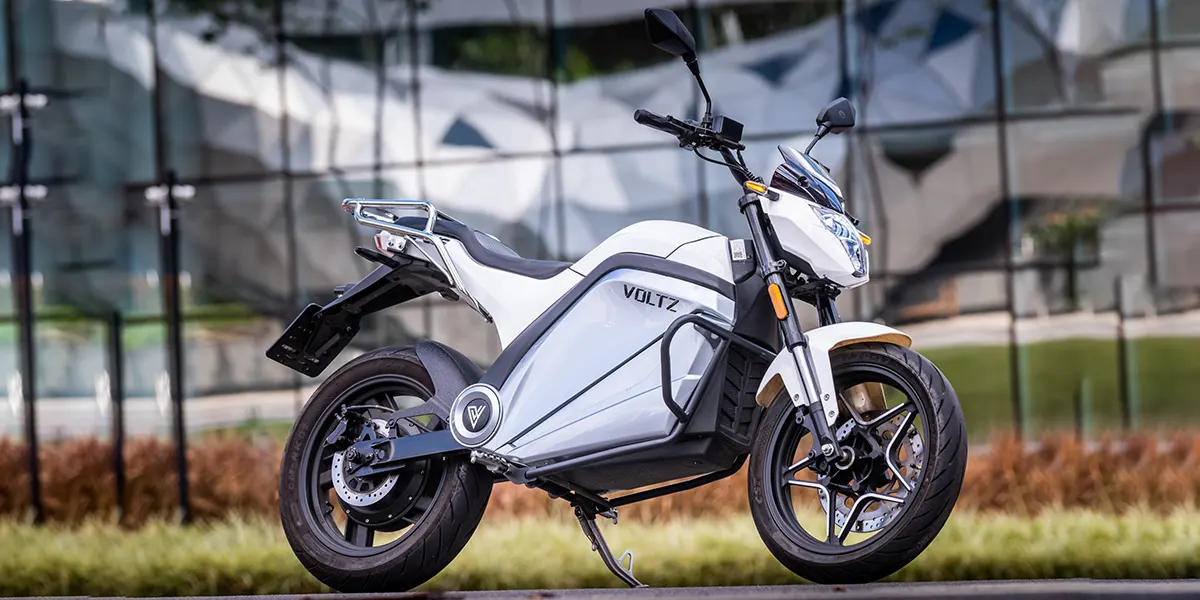
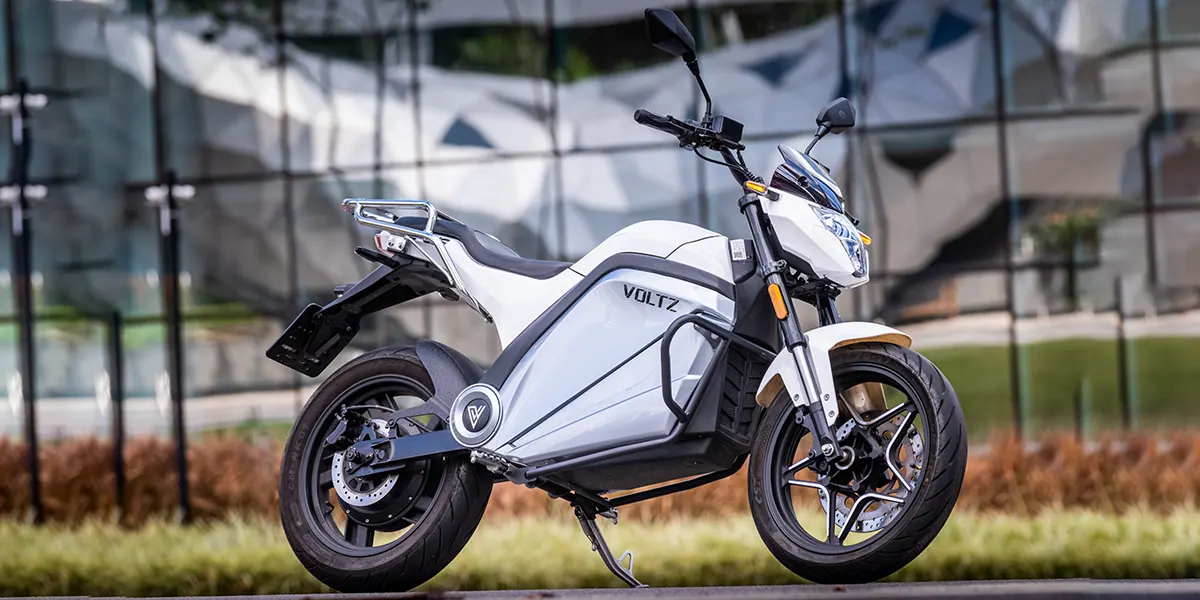
 Voltz-Motors
Brazil’s electric motorcycle market is growing rapidly, but still account for only a small share despite strong year-on-year growth. Government incentives and a largely renewable electricity grid support electrification.
The Brazilian motorcycle market is among the fastest-growing worldwide, ranking within the global top ten, driven by a strong rebound following the Covid-19 crisis.
Historically, two-wheeler powertrain adoption in Brazil has been shaped by the widespread use of bioethanol. However, following the 2024 presidential election, a new green strategy has emerged, positioning electric mobility as a key instrument to reduce environmental impact and cut CO₂ emissions in major metropolitan areas.
Despite total motorcycle sales reaching approximately 2.2 million units in 2025, the adoption of electric motorcycles remains limited. Although recent growth rates suggest increasing momentum toward electrification, the market is still at an early stage and far from mass adoption.
Brazil’s energy mix—around 90% renewable—provides a strong structural advantage for electric mobility. Nevertheless, this potential is constrained by several unresolved barriers. Electric motorcycles continue to face a significant price premium over internal combustion models, limiting their appeal to cost-sensitive consumers who dominate the two-wheeler market.
Range anxiety also remains a critical issue. Many electric motorcycle models currently available in Brazil offer limited real-world range, which is insufficient for longer commuting distances and delivery use cases, both of which are central to urban motorcycle demand.
In addition, charging infrastructure remains underdeveloped and unevenly distributed. Public charging points are still concentrated in a few major urban centres, offering limited coverage in peripheral areas and smaller cities, where two-wheelers are widely used as primary transportation.
In 2025, electric motorcycle sales rose sharply by 145% year on year to just over 22,000 units. While impressive in percentage terms, this figure still represents a marginal share of the overall market, underscoring the gap between policy ambition and on-the-ground adoption.
The federal government’s “Mover” green mobility programme, introduced in 2024, has provided important tax incentives and fiscal support for electric vehicles and charging infrastructure. Several states—including Rio de Janeiro, São Paulo, and Minas Gerais—have complemented these measures with IPVA tax exemptions, preferential electricity tariffs, and urban access and parking benefits.
However, without a sustained reduction in vehicle prices, meaningful improvements in battery performance, and a faster rollout of charging infrastructure, Brazil’s electric motorcycle market risks remaining confined to a niche segment rather than evolving into a scalable solution for mass urban mobility.