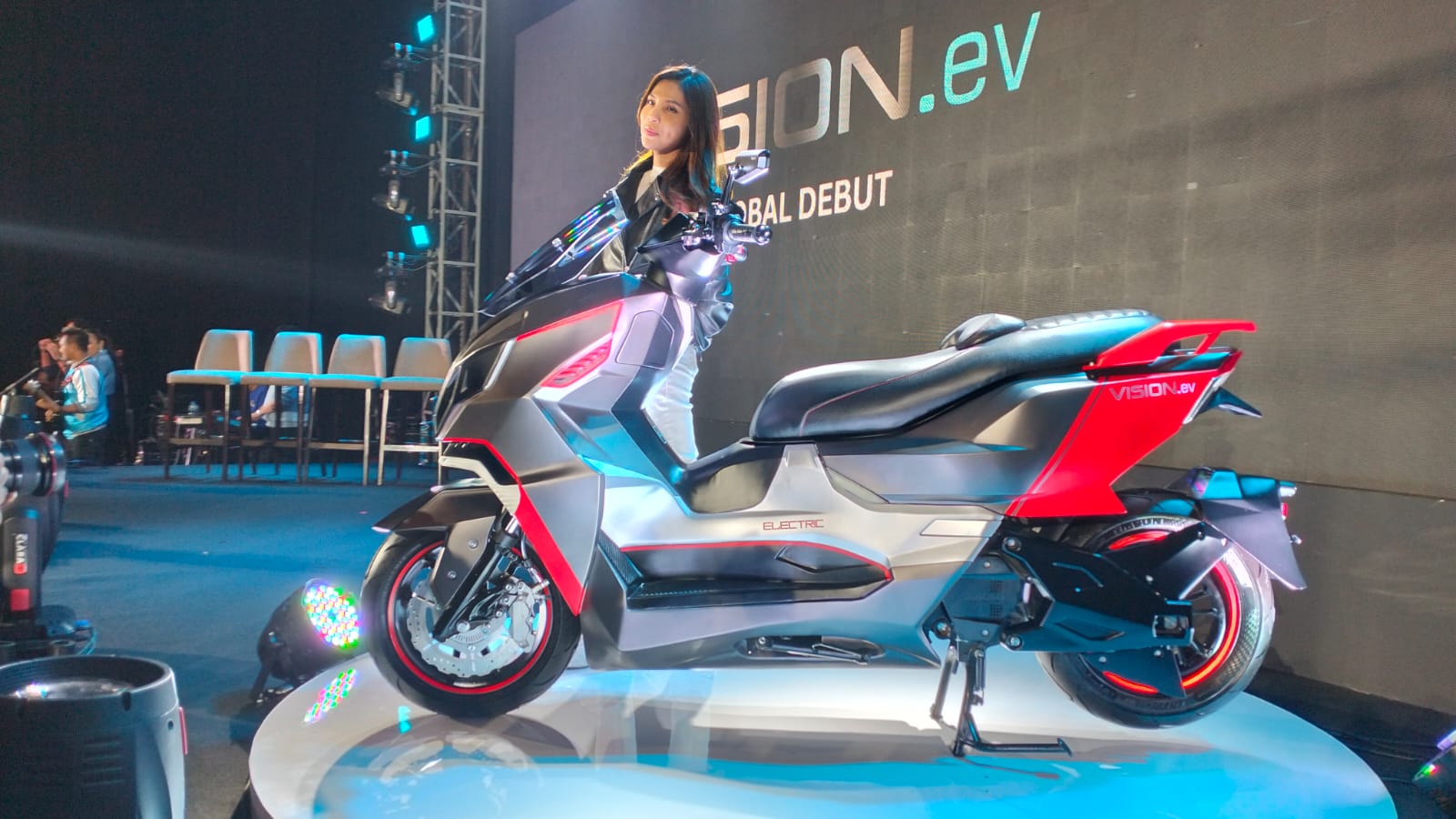
 Vision EV
Indonesia’s Electric Motorcycle Market killed in its infancy by government policy reversals. The abrupt withdrawal and repeated delays of EV incentives in Indonesia have stalled market growth, caused financial losses for manufacturers, and weakened trust in the government’s electrification strategy.
According to the United Nations’ World Urbanisation Prospects 2025 report (released in late 2025), Jakarta is the world’s most populous urban area, with nearly 42 million inhabitants.
Against this backdrop, Indonesia’s position as the world’s third-largest two-wheeler market is unsurprising. In 2025, registrations exceeded 6.5 million units, of which 99.5% were still powered by internal combustion engines. Furthermore, the vast majority of the country’s massive two-wheeler parc is ageing, highly polluting, and associated with elevated CO₂ emissions.
Given the central role of two-wheelers in the daily mobility of more than 281 million Indonesians, coherent and credible policies to curb pollution and address climate change should be a top national priority. The previous government appeared to acknowledge this urgency at the end of 2023 by introducing incentives designed to support manufacturers in achieving economies of scale and to narrow the price gap between electric and ICE motorcycles.
However, the policy reversal that followed the October 2024 elections has severely undermined government credibility. Despite repeated public commitments to extend the incentive scheme, all subsidies were abruptly discontinued in January 2025. Authorities subsequently cited ongoing “studies” to justify a redesign of the programme, postponing its relaunch first to August and then to October 2025. Neither deadline was met, and no replacement scheme has been implemented to date.
The consequences for the industry have been damaging. Manufacturers—particularly EV startups—have incurred substantial losses amid prolonged regulatory uncertainty, while consumers have been left with a clear signal of policy inconsistency. Rather than fostering confidence in the electric two-wheeler transition, the government’s stop-and-go approach has weakened trust in both the sector and the broader electrification agenda.
The discontinued programme had offered a direct subsidy of IDR 7 million for the purchase of one electric motorcycle per Indonesian citizen. The government later announced a shift toward a Government-Borne Value Added Tax (PPN DTP) mechanism, with discounts of 6% or 12% depending on domestic content (TKDN) and battery technology. The stated objective was to move away from import-led incentives and enforce local production commitments to build a domestic EV supply chain.
Yet, in practice, this policy shift has remained confined to announcements. The lack of execution has transformed what was presented as a strategic industrial policy into a credibility issue, raising serious doubts about the government’s ability to deliver a stable and predictable framework for Indonesia’s electric mobility transition.