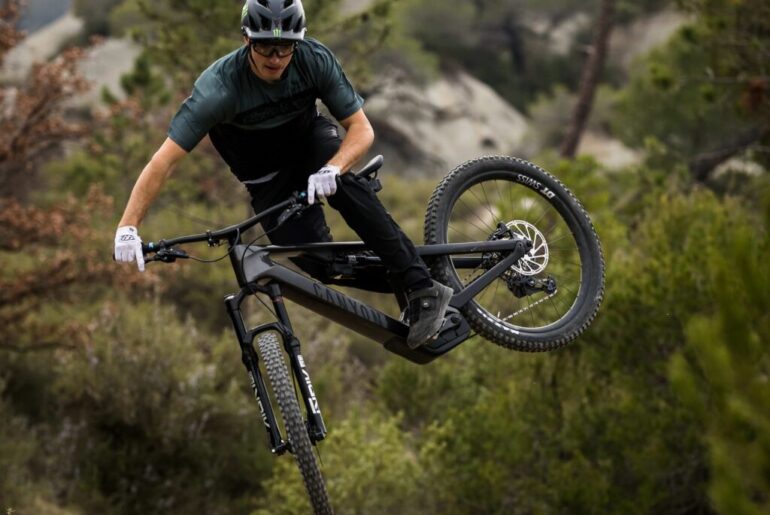
Far too many young people across the country are being seriously injured or killed while operating what they and their parents may believe are “e-bikes.” Most often, these vehicles are not low-speed electric bicycles — they are actually much faster electric motorcycles or electric dirt bikes that are not safe or legal for kids to use on public streets. PeopleForBikes recently highlighted this growing issue in a three-part blog series discussing what we call the “E-Moto Problem.”
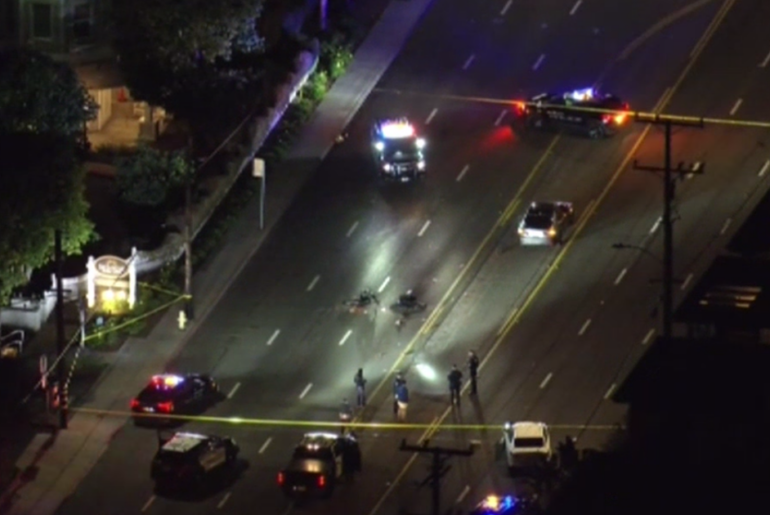
Sadly, New Jersey recently experienced several tragic crashes appearing to involve e-motos that have rightly led to calls for action.
While reported as an “e-bike,” a CBS image shows an electric off-road motorcycle with large dual-crown forks, knobby off-road tires, a bench seat, and a large motor and battery. These vehicles, ostensibly intended for off-road use only, can greatly exceed the 750-watt and 20-mph limits that define an electric bicycle under federal law and current New Jersey law.
Unfortunately, a bill first introduced in the New Jersey legislature on November 6 looks to change state laws regarding electric bicycles. According to an official statement, S4834 and its identical companion bill in the Assembly, A6235, would amend current law to:
Remove all classifications of electric bicycles.Redefine and expand the classification of “motorized bicycle” to include pedal bicycles with fully-operable pedals and an electric motor that can provide assistance when the rider is pedaling or exclusively propel the bicycle through the use of a throttle.
Basically, the bill would totally eliminate electric bicycles as a type of vehicle in New Jersey and instead designate all pedal bicycles with electric motors as motorized bicycles, requiring a person owning or operating one of these bicycles to obtain insurance, a license, and registration.
For more than 20 years, federal law has defined a “low-speed electric bicycle” as “a two- or three-wheeled vehicle with fully operable pedals and an electric motor of less than 750 watts (1 h.p.), whose maximum speed on a paved level surface, when powered solely by such a motor while ridden by an operator who weighs 170 pounds, is less than 20 mph.” [15 U.S.C. §2085(b)]
This law created a uniform national definition to promote the adoption and use of electric bicycles across the country. To specifically prevent differing requirements at the state level that would frustrate their adoption, Congress made the federal definition preemptive of conflicting state laws. Electric bicycles are consumer products with their safety regulated by the U.S. Consumer Product Safety Commission (CPSC), rather than motor vehicles, which are regulated by the National Highway Traffic Safety Administration (NHTSA).
So, there seems to be a high potential for S4834/A6235 to be nullified by federal law if it does pass. That wouldn’t be a bad outcome, because the bill is full of unintended consequences and jagged corners that a deliberative legislative process would remove.
The first hurdle created by the bill is registering your electric bicycle as a motorized bicycle. New Jersey Motor Vehicle Services (MVS) says they will only register approved vehicles as motorized bicycles. There does not appear to be a list of “approved” motorized bicycles, and people who have tried to register their Class 3 electric bicycles (which is already required in New Jersey) have been turned away by MVS.
Next you’ll need insurance. According to insurance companies that offer electric bicycle insurance, this coverage is technically is a motorcycle insurance policy and premiums will depend on the type of vehicle, the state, the coverage, and the age of the rider. On average, motorcycle insurance costs $108/month or $1,296 annually.
Third, you will now need a driver’s license to ride an electric bicycle. If you are one of thousands of New Jersey residents who do not have a driver’s license, then you will need to obtain a motorized bicycle license. New Jersey also requires motorized bicycle users to wear a helmet approved by the Department of Transportation (DOT) rather than a traditional bicycle helmet. After buying your new helmet, you’ll need to check these boxes:
You must be at least 15 years old.Visit a motor vehicle agency to complete an application for a moped permit.Pass the 6 Points of ID requirements.Pay the $5 examination permit fee.Pass the knowledge and vision tests to validate your permit. Study by reading the Driver Manual, Motorcycle Manual, and Moped Manual.Practice with a permit for at least 20 days before being eligible to take the road test.If you pass the road test, take your permit, ride slip and score sheet to a motor vehicle agency to receive your license. The $6 license fee will apply.
There are a lot of people in New Jersey who ride electric bicycles for recreation and rely on them for transportation that will simply be unable to meet these requirements.
Alternatively, for a tourist or visitor who wants to take their electric bicycle on vacation to New Jersey, that e-bike will be an unregistered and uninsured motor vehicle.
Despite all of the hurdles this bill puts in the way of safe and legal e-bike ownership, the bill still doesn’t address the real problem: parents being misled by online sellers into buying electric motorcycles and dirt bikes for their kids. E-motos that are already subject to registration, license, and insurance requirements if used on the street. E-motos whose sellers are already required to be federally registered as motor vehicle importers and licensed as motor vehicle dealers under existing New Jersey law, but are not. E-motos that unlike electric bicycles, do not meet any vehicle safety standards, with batteries that have not been certified to any electrical standard.
This is the biggest reason that New Jersey needs to put the brakes on S4834/A6235. It simply doesn’t address the problem. It won’t stop the sale and use of illegal e-motos, and it won’t keep kids or anyone else safe. All it will do is make life harder and less affordable for every New Jersey resident who owns a safe and legal electric bicycle, or is thinking of owning one.
This bill could be so much better, and a whole range of state and local organizations stand ready to help make it better. Let’s do that instead of rushing this bad bill into a bad law.