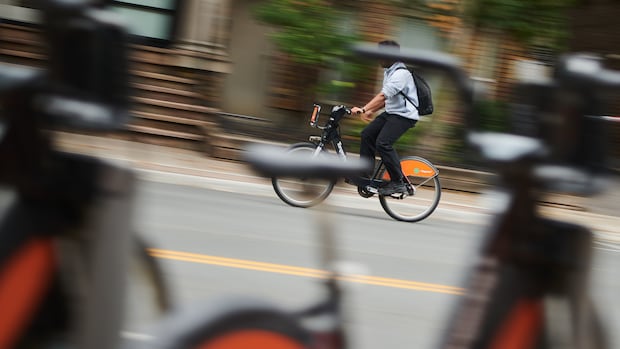

Listen to this article
Estimated 3 minutes
The audio version of this article is generated by AI-based technology. Mispronunciations can occur. We are working with our partners to continually review and improve the results.
As Toronto’s bike share program continues to see record growth, its leadership plans to massively expand its electric bike network by 2030, with the hopes of enticing riders who are hesitant to try out the service.
The extremely popular service is forecast to hit 8.1 million rides in 2025, up from 2.4 million in 2019, the Toronto Parking Authority (TPA) board heard in a presentation Friday. By 2030, the program hopes to nearly double that, with 14 million annual rides.
Presenting Toronto Bike Share’s 2030 growth strategy, Jarett McDonald, TPA’s vice-president of operations, said electric bikes (e-bikes) will be key to growing ridership.
“Over the first development of the program, we’ve had a lot of members that are avid cyclists,” he said. “The next evolution of the program is to start to bring new people into the program and e-bikes do that.”
He said e-bikes, which have motors that are activated when a cyclist starts pedalling, allow those who may worry about their physical capabilities to go farther more easily.
WATCH | Toronto looks to add 20 km of new bike lanes: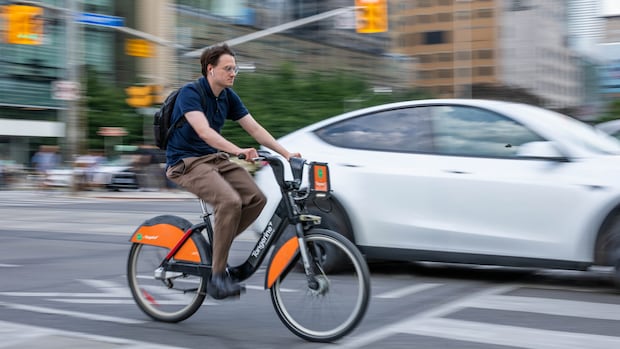
Toronto proposes 20 km of new bike lanes for city’s east end
The city wants to make it easier for Torontonians to bike in the east end. As CBC’s Lane Harrison explains, they’re proposing 20 kilometres of new bike lanes.
“[E-bikes] remove hills, they flatten terrain, they make the journey so much easier to do.”
By 2030, bike share wants to add 2,550 e-bikes, while doubling the number of docks for them. The new e-bikes will be lighter and operate without gears. Bike Share also wants to add 2,600 regular bikes in the same timeframe.
The program has about 2,400 e-bikes in its fleet, but the board heard each one averages about six or seven trips a day, compared to four to six for regular bikes. E-bikes make up about a fifth of the entire bicycle fleet.
Michael Longfield, executive director of Cycle Toronto, a charity that advocates for cyclists and cycling infrastructure in the city, called e-bikes a “gateway drug” when speaking in support of the expansion.
Bike Share to add better docks, expand revenue streams
The 2030 growth strategy would cost about $41 million over the next five years.
It also includes infrastructure additions to solve a common frustration for riders: docks that malfunction when a someone tries to push a bike into them. Bike Share says so-called “mis-docking” happens about 15 per cent of the time, and expects to drop that to two per cent with the new docks.
WATCH | Ontario’s internal documents cast doubt on its bike lane rhetoric: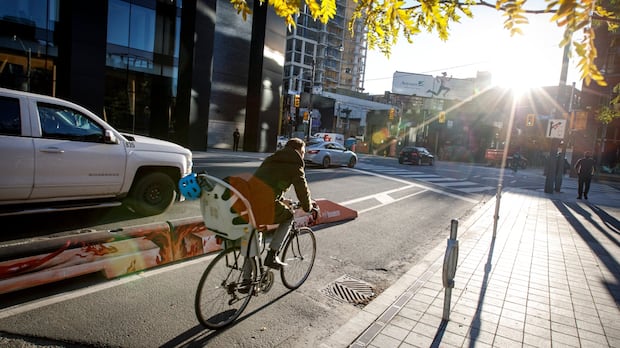
Ontario’s bike lane removal plan may not reduce congestion: internal documents
New internal documents reveal that Ford’s government is aware of many of the risks associated with removing bike lanes in Toronto. As CBC’s Lane Harrison explains, the report shows the move may not have an impact on congestion and could increase collisions for everyone who uses roads.
There will also be a greater density of docks in the coming years, with the goal of having them every 250 to 300 metres in the city’s core and every 400 to 500 metres in the inner suburbs. In total, the expansion will see 6,300 new docks at 335 locations.
Bike Share is also looking to “unlock new revenue streams” by implementing things like digital advertising in its operating system, but little detail about what that could mean was shared at the meeting.