With the next-gen BMW X5 family set to celebrate its world debut next year, we can say that the current, fourth-generation model is still a strong competitor in the midsize luxury segment.
A few weeks ago, we decided to take one final look at the accessorized outgoing model in the plug-in hybrid trim (X5 xDrive50e, Asian-spec) to learn all about areas where it excels and where improvement is needed.
Design
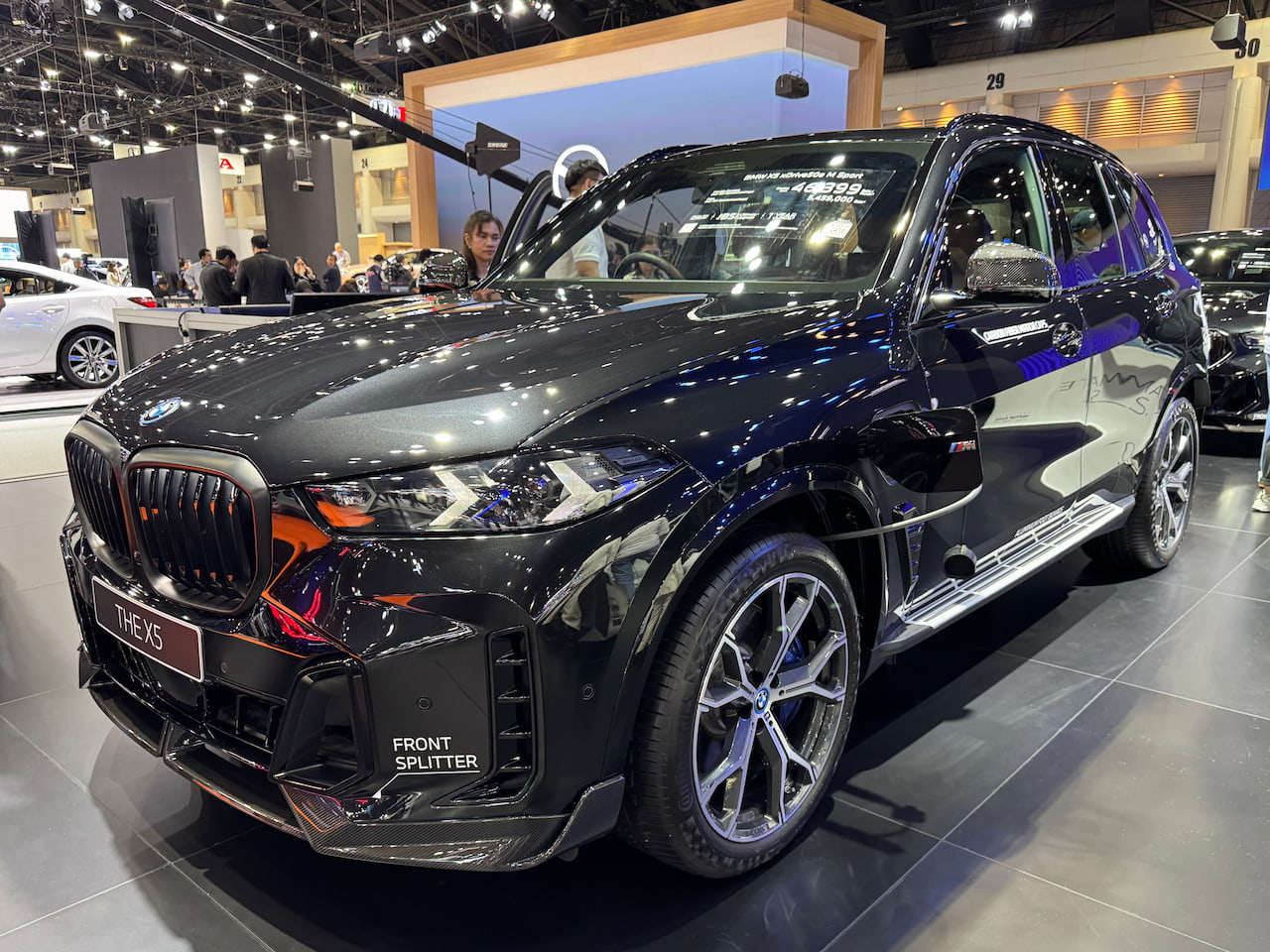
The BMW X5 Plug-in Hybrid has a brawny, traditional SUV stance, thanks to its tall proportions, upright nose, wide track, and strong shoulder line. At the same time, BMW’s current design language gives it sleeker, more contemporary crossover elements, such as the slimmer headlights, sculpted surfaces, and the aerodynamic detailing around the bumpers and air curtains.

 A blue surround on the BMW roundel at the front and rear is the only intentional design change on the X5 Plug-in Hybrid from the regular X5.
BMW keeps the X5 Plug-in Hybrid visually very close to the regular X5, and the differences are deliberately subtle to make the electrified powertrain feel conventional. It adds BMW roundels with blue accents, a charging flap on the front quarter panel, and model-specific badging. Lastly, we also noticed that it has larger disc brakes.
As for next year’s X5, expect a complete overhaul with Neue Klasse influences in the front and rear fascias and a sleeker silhouette.
Interior
The BMW X5 Plug-in Hybrid’s cabin is anchored by the BMW Curved Display, which merges a 12.3-inch instrument panel and a 14.9-inch touchscreen into a single sweeping glass surface.
The dashboard is minimalist, with slim air vents and an ambient light bar that runs across the width. High-quality materials, detailed stitching, and metallic accents dominate the cabin, without overwhelming the space.

 The BMW X5 Plug-in Hybrid features front seats with a massage function.
The center console features a compact gear selector, neatly arranged drive controls, and ample storage. At the back, the wide bench and large windows create an open atmosphere, while split-folding seats and the two-piece tailgate add everyday versatility.
Our experience in the BMW X5 Plug-in Hybrid
Entering the current X5 remains easy, and the seating comfort continues to be its big draw. Even for someone my height (6 feet), the front seats offer excellent back and shoulder support, strong under-thigh support, and extendable cushions that make a noticeable difference for long drives.
The adjustable headrests add to the comfort. These seat characteristics are areas the next-gen model should retain without alteration.


The cabin’s carbon-fiber trim on the dash and center console contributes to the sporty theme. Several elements, though, feel due for modernization. The steering wheel looks dated compared to newer BMW designs and is likely to be replaced with something closer to the iX3’s next-generation wheel.
The center console provides only a USB port and a small storage box, and a wireless charging pad should be standard on the upcoming model. The heated and cooled cupholders stand out as features worth carrying over.
Many physical buttons feel older in layout and finish, indicating that updates similar to BMW’s latest interior architecture would align the X5 with the rest of the lineup. An iDrive X-based system is expected to replace the current interface.


With the front seat set for a six-footer, I hopped into the rear without much effort. Here. the X5 offers acceptable knee room and strong headroom. A pass-through in the center armrest, manual sunblinds, and vents in both the B-pillars and console improve practicality.
The USB ports mounted behind the front seats feel inconveniently placed, and a redesigned console with proper phone storage and optional wireless charging would benefit rear passengers in the next generation.
The seatback angle is comfortable, but the lack of recline may prompt BMW to consider an adjustable function. The non-flat floor limits middle-seat usability, suggesting an area where the BMW G65 could improve packaging.
Specifications
The BMW X5 Plug-in Hybrid employs a 3.0-liter turbocharged six-cylinder gasoline engine, an electric motor integrated into an 8-speed automatic transmission, and a mechanical all-wheel drive system. Packing 483 horsepower and 516 lb.-ft. of torque, it accelerates from 0 to 60 mph in 4.6 seconds and achieves a top speed of 130 mph.

 Spy shots suggest this could be the last generation of the BMW X5 Plug-in Hybrid to feature a split tailgate. The current model offers 17.6 cu. ft. of luggage space, expandable to 60.7 cu. ft. by folding the rear seat.
A 19.2 kWh (net) battery pack powers the electric motor, and it supports only AC charging, at up to 7.4 kW. Fully charging the battery pack takes two hours. In EV-only mode, the X5 Plug-in Hybrid can cover a distance of 38 miles, as per EPA.
Also See: BMW X5 Electric (2026): What we know & expect from this future BEV
Price
The BMW X5 Plug-in Hybrid’s prices in the U.S. start at USD 75,200, excluding a USD 1,175 destination fee.

An automobile engineer by training, I’ve analyzed the global car market since 2005, with a keen focus on EVs since 2008. My journey in online automotive publishing spans 17 years, during which I have reviewed cutting-edge automotive technologies and interviewed leading global CEOs and vehicle developers.