It’s a new dawn in the Deschutes National Forest. After months of analysis and public comment, the Forest Service finalized its approval of Class 1 e-bikes along approximately 160 miles of system trails and paved paths throughout Phil’s Trail Complex, Peterson Ridge Trail, Wanoga and Sunriver locations. These soft-surface or paved trails, of which there are 67, are already habituated to heavy bike use.
Current winter range closures — which bar motorized vehicles in support of mule deer and elk migration between Dec. 1 and March 31 — mean e-bikers will have to wait until April 1 to hit the trails. That includes those at Phil’s Trail Complex, as its lower trails are encapsulated by the Tumalo Winter Range Closure. Higher elevation trails, such as Flagline and North Fork, for example, will remain off-limits to e-bikers.
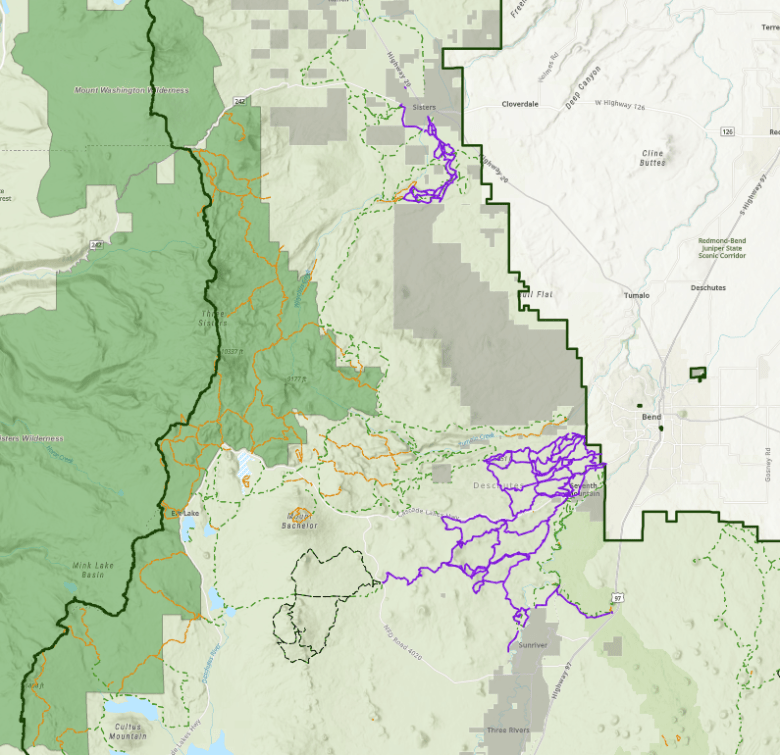 A map detailing the 160 miles of trails in the Deschutes National Forest that will allow Class 1 e-bikes (trails denoted in purple.) Credit: Deschutes National Forest
“Recognizing the growing interest in e-bikes on public lands, the Deschutes National Forest assessed how these bikes fit into existing recreational activities,” the agency wrote in a press release. “The Forest gave thoughtful consideration of the ecological and social impacts of this decision balanced with providing increased access for class 1 e-bike users.”
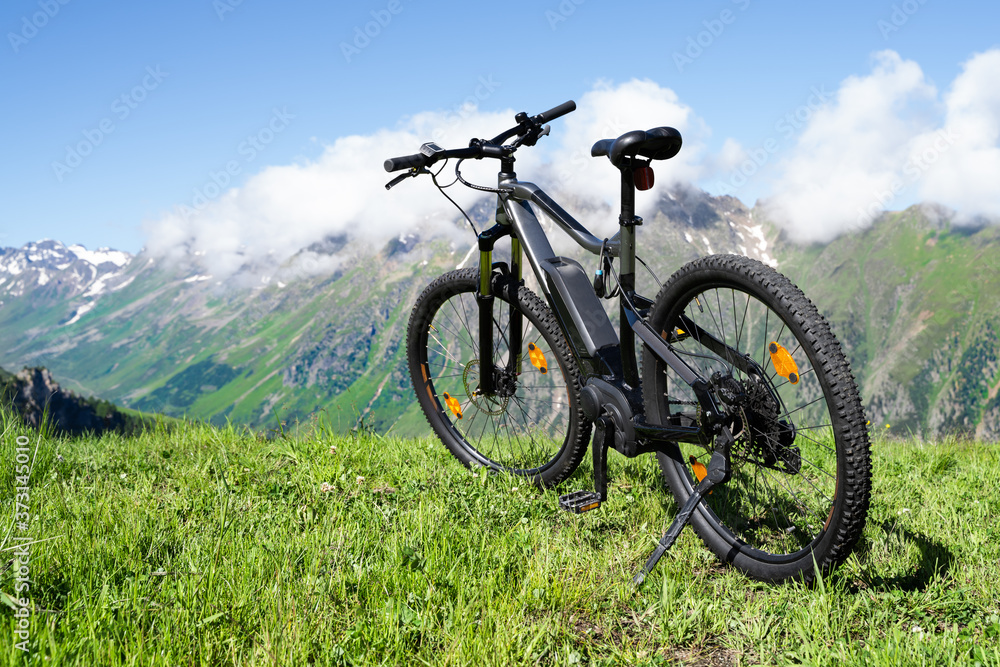
Class I e-bikes are throttle-less, pedal-assist e-bikes that stop assisting at 20 mph. Class II e-bikes involve a throttle and a typical 20-mph speed cap. Class III e-bikes are also pedal-assist, yet they’re more powerful than Class 1, with a top speed typically capped at 28 mph.
The Deschutes National Forest joins the ranks of the Tahoe and Allegheny national forests in their allowance of Class 1 e-bikes on select trails. All told, the DNF boasts 2,000 trail miles which accommodate more than 800,000 trail-focused trips each year, according to the agency.
Trail signage that reflects where e-bikes can and cannot go will be updated by the Central Oregon Trail Alliance, a nonprofit that maintains about 320 miles of trails in the Deschutes National Forest. COTA has been a vocal supporter of allowing Class 1 e-bikes, noting that e-bike use, which is allowed at the Madras East Hills and Redmond Radland Trails — both of which COTA maintains — is comparable to the wear-and-tear seen on trails previously off-limits to Class 1 e-bikes. COTA will also carry out a rider information campaign at local bike shops.
On average, class 1 e-bikes travel 3 mph faster than a typical mountain bike, according to the DNF’s Final Environmental Assessment and Forest Plan Amendment report. Speeds are generally within 2 mph when traveling downhill or on flat sections. The differential in speed is most discernible while riding uphill. There, Class 1 e-bikes range in speed from 8 to 13 mph, compared to conventional bikes, which roll between the 5 to 8 mph range, according to the report.
During the public comment section of the approval process, some folks called for creating new trails, on which Class 1 e-bikes should be relegated. In its response in the final report, the Forest Service wrote that it “cannot accommodate separate trail systems for every conceivable desired use …with other resource management objectives like wildlife. Interdisciplinary analysis in this project suggest that Class 1 e-bikes are functionally similar to regular bikes, and that education and enforcement represent the minimum means to deconflict these two types of bikes.”
Eric Schusterman, a local mountain biker who regularly rides DNF trails, says he’s not thrilled about the new e-bike allowance. He wonders about the ability level of someone setting out on an e-bike. Ultimately, Schusterman views the speed differential, mentioned above, as the source of potential conflict among riders.
“That’s a pretty big difference,” Schusterman said, noting that a 12 mph climb speed is comparable to professional racers ‘. “With the downhill aspect, that kind of takes care of itself, since there’s a flow to every trail — people will overcook corners whether they’re on an e-bike or not.”
Mountain biker Brian Weber, however, thinks the rule change is great. He says he anticipates user conflict “only because so many others seem to complain about it.”
“Honestly, I’m for it! Let’s make the trails more accessible,” Weber wrote in an email, adding that he’ll likely rent an e-bike just to try it out. “I know people who really need e-assist due to knee problems or something similar.”
The DFS approval process for pedal-assist e-bikes began in July 2024. The Forest Service’s Dec. 9 approval comes on the heels of the allowance of Class 1 e-bikes in Oregon State Parks, which began on July 1.
This article appears in the Source December 11, 2025.
Related
MAKE LOCAL JOURNALISM HAPPEN

Trending