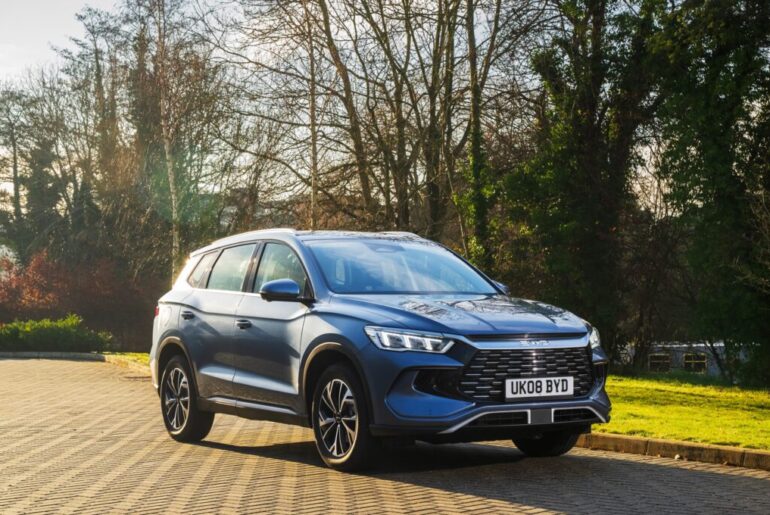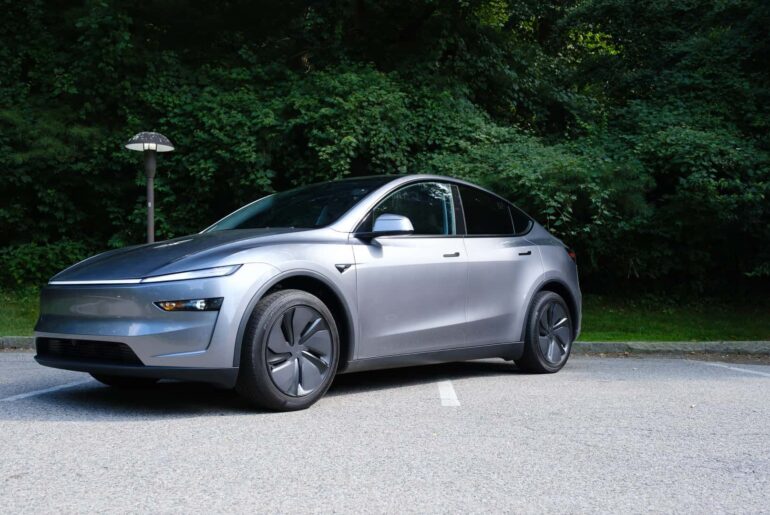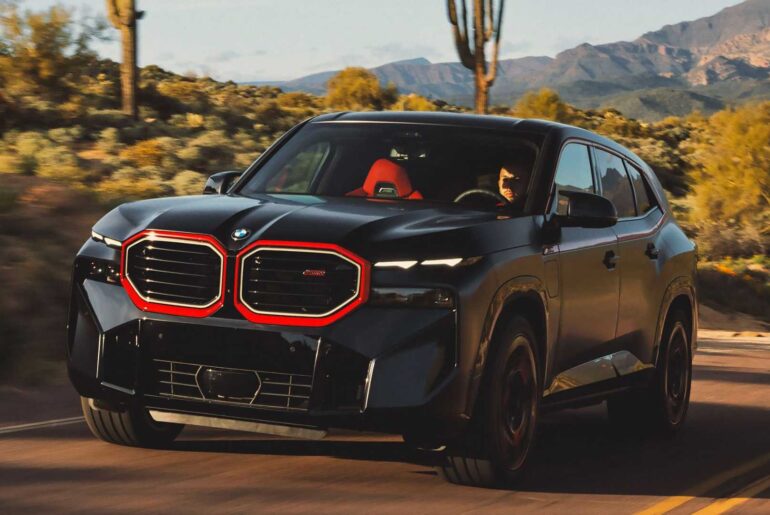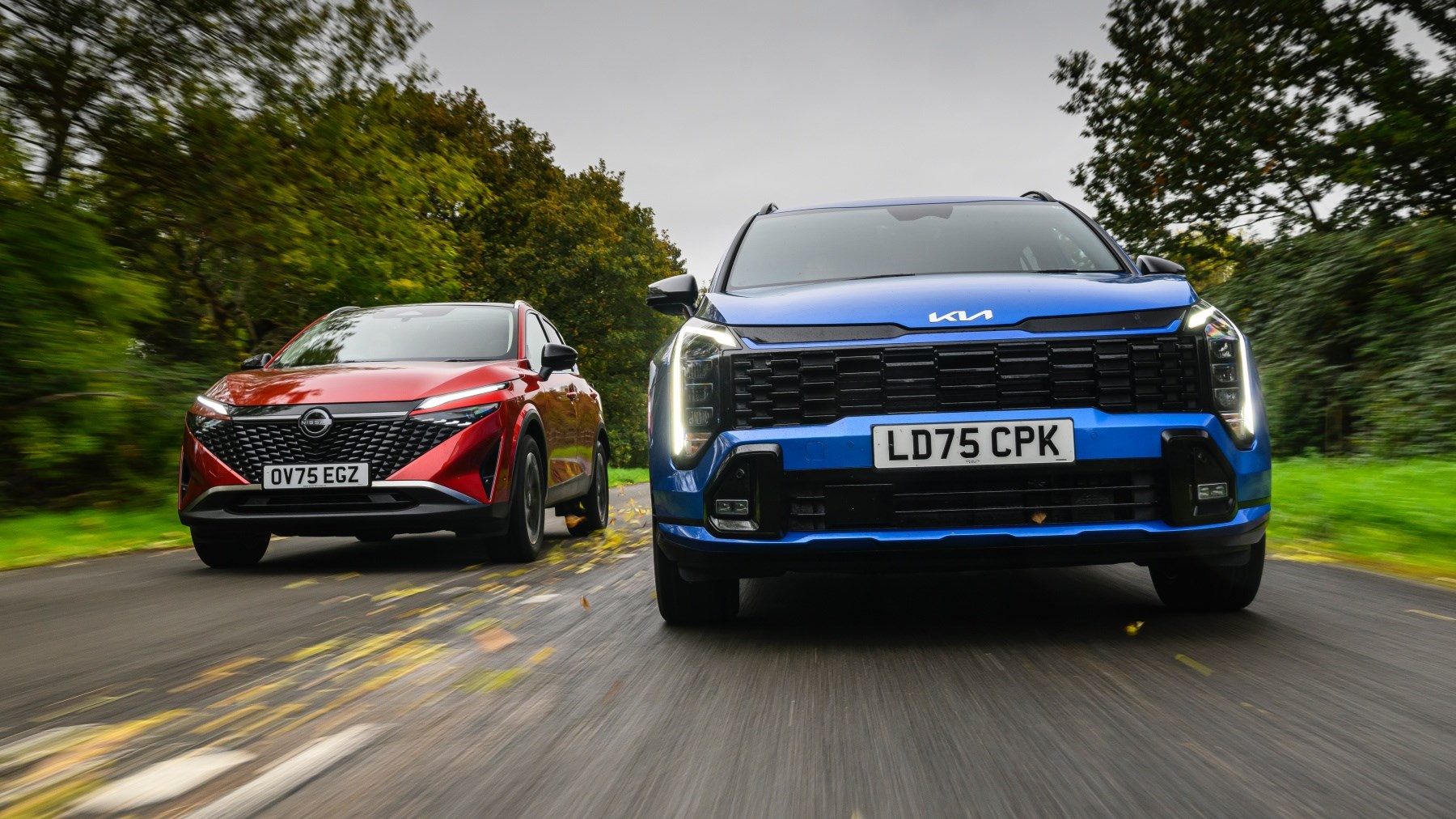
► CAR’s pick of the best self-charging hybrid cars
► You’ll never have to plug them in
► A good compromise?
Didn’t lists of the best hybrid cars use to be so boring? That’s especially true of the best self-charging hybrid cars that did without powerful and luxurious PHEVs. Lots of appliance-grade hatchbacks, estates and SUVs would feature that would certainly save you money, but did little to excite.
Those days are long gone, with even the Porsche 911 making it onto a list that includes cars you can buy with your heart as much as your head. We’re not ignoring more sensible machinery though; even the humble Nissan Qashqai gets applauded for its massively improved hybrid setup.
Why pick a self-charging hybrid over a plug-in hybrid? For a start they’re generally much cheaper on account of their much smaller battery, are lighter so often handle better, and often have more interior space. Besides, if you’ve nowhere to plug in a PHEV, they’re usually less efficient than a regular petrol car.
The best self-charging hybrid cars at a glance:
And as almost all of the latest models switch over to electric power at every opportunity, they run their internal combustion engines a remarkably small percentage of the time. Put all this together, and self-charging hybrids can deliver impressive real-world efficiency over a range of different driving scenarios. Alternatively, the tech can enhance a turbocharged engine to improve response and lift performance, whilst also making it a little cleaner to boot.
Keep reading for our current favourites, and have a look at our how we test page to see how we come to our verdicts.
The best self-charging hybrids
Porsche 911 GTS
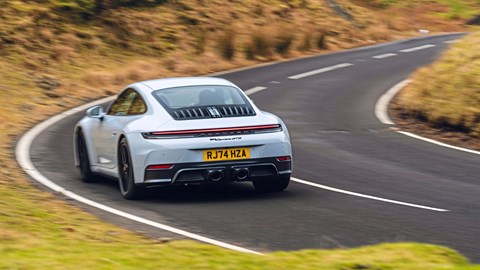
Best for: Those who want NA response from a turbo motor
Pros: Almost GT3-levels of throttle response, hugely fast, still feels like a 911
Cons: The inevitable weight penalty however small that might be, much pricier than a Carrera S
Porsche didn’t just crank up the boost to make the GTS, it created a whole new hybrid system with a 3.6-litre single-turbo flat-six, 1.9kWh battery and a pair of electric motors. One sits in the gearbox and delivers an extra 53bhp and 111Ib ft of torque, with the other sitting on the turbo.
This gets the turbo spooled up and delivering boost far faster, which combined with the gearbox-mounted e-motor’s efforts gives an almost naturally aspirated feel to the engine. Overall power is 534bhp and 0-62mph takes three seconds dead whether you’ve picked rear or all-wheel drive for the mandatory automatic gearbox.
Downsides? While Porsche has done a fine job of keeping weight at bay, it does add around 40kg to the weight of the 911. It’s also worth remembering this is a performance-focussed system that only cuts emissions down to regular 911 Carrera levels, and doesn’t allow any electric-only running.
To find out more read our full Porsche 911 GTS review
Honda Civic
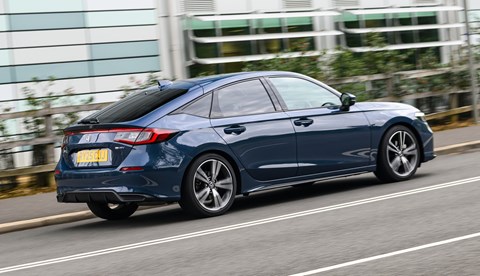
Best for: Being quietly brilliant
Pros: e:HEV hybrid system works like a range extender, delivers great performance
Cons: Almost no one will believe you about how good it is
While the latest Honda Civic may not look big news from the outside even after a 2025 facelift, its clever e:HEV hybrid system uses a bespoke 2.0-litre petrol that spends most of its time simply fuelling the electric motor. Making it refined and efficient yet capable of delivering a convincing 181bhp when required. It even sounds a bit growly and VTEC.
A Toyota Corolla is a bit more efficient if we’re honest, yet the Honda has greater overall appeal. It’ll still top 50mpg pretty easily whilst also delivering the kind of well-controlled, comfortable ride and engaging handling that can only have come from careful honing over many thousands of miles.
It isn’t cheap and the infotainment screen looks tiny and old, but we can forgive it. Cabin quality impresses and there’s still lots of lovely knobs and buttons rather than an over-reliance on a touchscreen. Our favourite hybrid hatch by far.
To find out more read our full Honda Civic review
Nissan Qashqai
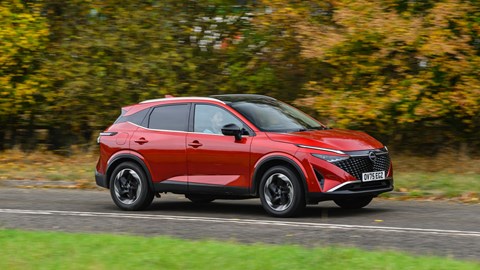
Best for: Smooth and frugal performance in an affordable family SUV
Pros: New e-Power system much smoother and more efficient, practical
Cons: You wouldn’t know from the outside, good but not engaging to drive
Yes, there really is a Nissan Qashqai in this list, and it’s primarily down to the latest generation of e-Power hybrid system. A new engine reduces vibrations, with a bigger turbo giving more power if you select Sport mode than before. It also feeds the generator that tops up the little 2.1kWh battery at lower revs.
The difference in driving isn’t a huge step change from the old car, but the improvements are there and appreciated, especially when you check your economy. In our experience, it’ll do more than 50mpg on a mix of roads, or around 10mpg better than the Kia Sportage Hybrid we were testing at the same time on the same route.
A new Google-based infotainment system finally gets rid of the dated old Nissan one, but apart from a couple of minor aero tweaks, you’d be hard pushed to spot the updated and improved model.
To find out more read our Nissan Qashqai review
Lexus NX 350h
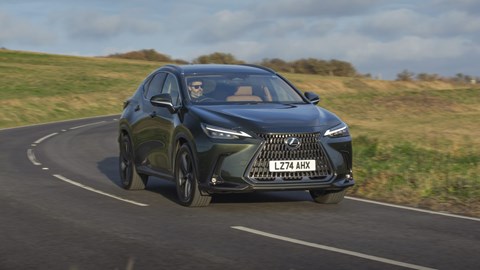
Best for: A classier take on the mid-sized hybrid SUV
Pros: Lexus’s unique brand of luxury, comfortable, beautifully made
Cons: Still some confusing controls inside
Toyota’s premium brand makes a lot of hybrids, but the Lexus NX mid-size SUV is the one we’d pick. It’s just a really well-rounded package – nice enough to drive, compact enough to not be a pain around town, spacious enough for adults, and comfortable enough for lengthy journeys.
It’ll top 40mpg without too much effort, and the current Lexus infotainment system no longer makes you want to murder. Which is a bonus.
To find out more read our Lexus NX review
Citroen C3 Aircross
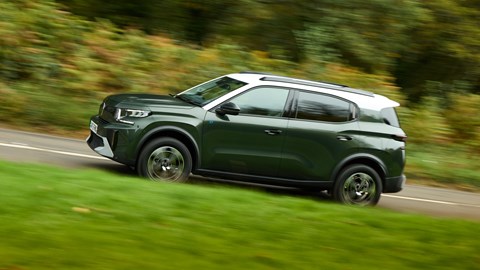
Best for: Families on a tight budget
Pros: Lots of space for the cash, comfy ride, pleasant interior
Cons: VTech infotainment, sluggish acceleration, rivals are more frugal
If we’re being honest, the C3 Aircross is actually a mild hybrid, albeit one that’ll drive short distances on electric alone. Expect a modest increase in economy over the petrol variant and a slight uplift in performance, but then you can’t expect the whizziest hybrid system given its size for the price.
It’s much bigger than the Yaris Cross and thousands cheaper, challenging the more frugal but coarser Dacia Jogger. The Citroen is also available with seven seats, although you’ll have to be small to make use of row three, and can’t entirely hide its supermini roots, either.
A C3 Aircross may have head and legroom to rival a Nissan Qashqai, but you’ll really feel the squeeze if you try and get three in the second row. And while the 460-litre boot is great for the price, it can’t beat the Jogger. So why pick the Citroen? It’s exceptionally comfortable, feels a bit more pleasant inside, and has a much smoother – if not perfect- hybrid system.
To find out more read our Citroen C3 Aircross review
Audi A6
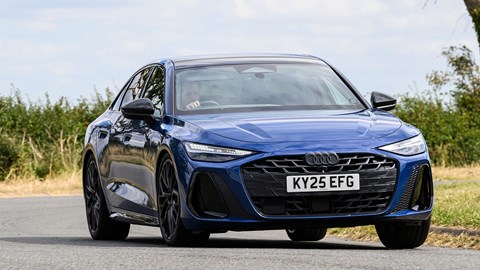
Best for: Execs who don’t want to plug-in.
Pros: Quality interior, agility-boosting four-wheel-steer, smooth hybrid system
Cons: Modest efficiency boost, greater choice would be nice
Diesel A6s get mild hybrid assistance for their 201bhp engine and four-wheel drive, too. Like the C3 Aircross, it’s able to propel the car electrically for short distances and low loads, and allows extended engine off time when you’re stationary in traffic. When it’s time to restart the engine, the tech is able to make this faster and smoother, too.
A 0-62mph time of 7.0 seconds is nippy enough and you’ll hit over 50mpg on a steady motorway run, giving a potential range of over 700 miles from a tankful of diesel. If that wasn’t enough to turn your head away from electric, the ICE A6 has a higher quality interior and a comfier ride than the A6 e-Tron.
Naturally, you can choose from either saloon or Avant versions of the A6, but some of the optional kit may surprise you. Want full air suspension and four-wheel steering with your base diesel? Go right ahead.
To find out more read our full Audi A6 review
Hyundai Santa Fe
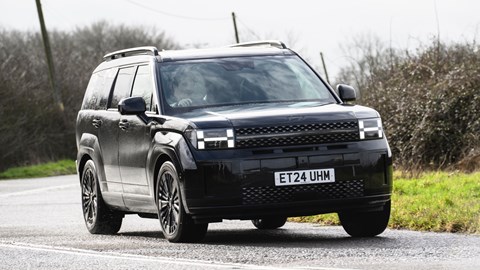
Best for: An eye-catching and spacious seven-seater
Pros: Well equipped, spacious, four-wheel drive available
Cons: Plenty of yawns behind the wheel, could be smoother and more responsive
You can get a Hyundai Santa Fe with a choice of hybrid system as the firm offers not only this self-charging model but also a plug-in hybrid as well. PHEVs are four-wheel drive only, with the regular hybrid front or four-wheel drive.
All come with those eye-catching looks, some clever tech and a handy five-year unlimited mileage warranty. It’s a proper seven-seater too, with more space in the third row than rivals such as the Peugeot 5008. Performance is better than its French opponent, although smoothness and efficiency could be better.
To find out more read our full Hyundai Santa Fe review
Toyota Aygo X
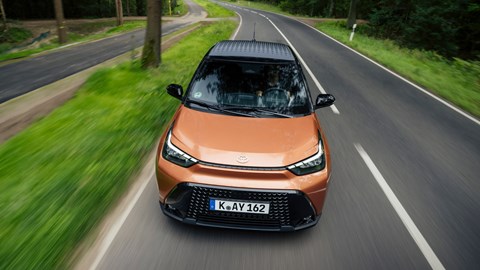
Best for: Unbelievable urban economy
Pros: Smooth hybrid, astonishing efficiency, appealing interior
Cons: Cramped in the back, pricier than before
Toyota’s update of the Aygo X does a lot more than give this city car a new face. Under the bonnet is the Yaris supermini‘s hybrid system that boosts power by around 40bhp over the old car, knocking a whole six seconds off the 0-62mph time. Sure, 9.2 seconds isn’t speedy, but it’s certainly much faster than most versions of the Kia Picanto or Hyundai i10, this car’s natural rivals.
Greatly improved performance is merely a by-product of a huge efficiency boost, with the 85g/km CO2 rating down from the 110g/km of the pre-facelift Aygo X. Official combined economy is a whopping 76mpg and seems easily achievable in the real world if our early impressions are anything to go by. Expect even more if you drive gently around town.
Some may point out that it’s both smaller and more expensive than the MG3 hybrid, but we’d expect 50mpg at best from the MG. Toyota’s hybrid systems really are in a different league of efficiency, and when’s the last time you heard about an unreliable one?
To find out more read our full Toyota Aygo X review
Peugeot 408
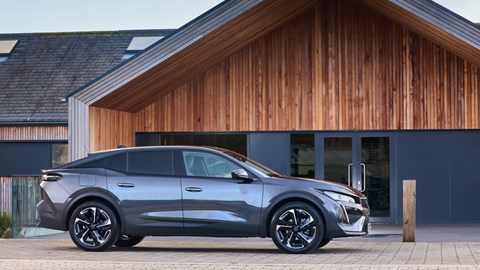
Best for: Something a bit different
Blurring the boundaries between coupe, hatchback and SUV, the 408 is a likeable family car that seems to have received more polish than some of its Stellantis platform buddies. Those taken by the striking looks will find it’s just as distinctive inside, and it’s better for rear passengers than the pricier 3008 SUV.
A Cupra Formentor makes a better plug-in hybrid coupe-SUV, although the 408 makes more sense if you don’t want to mess about with cables. The regular hybrid system is shared with the C3 Aircross but is a lot more muted here, giving adequate performance and good economy.
To find out more read our full Peugeot 408 review
Ford Kuga
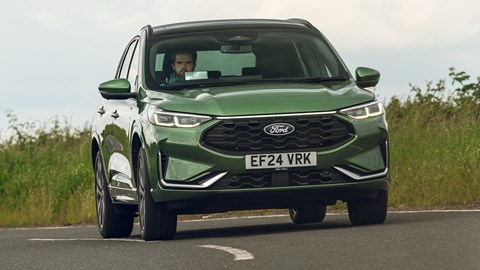
Best for: Sharp handling with impressive economy
Although the Ford Focus is now officially out of production after over a quarter of a century, you can feel that car’s DNA in the Kuga, even with a hybrid powertrain under the bonnet. ST-Lines feel especially agile thanks to their stiffer suspension, resisting lean well and feeling keen to change direction.
A 9.1 second 0-62mph time puts it ahead of a few cars on this list and it’s a smooth system with no conventional gearbox. That does mean it’ll hold revs whilst accelerating at times, but you can’t argue with 50mpg.
Self-charging hybrids to avoid
Subaru is yet to show us a self-charging hybrid we could love and the Suzuki Vitara hybrid is hilariously jerky – which is a shame as the Vitara is otherwise quite a likeable machine. MG’s system in the ZS and 3 is cheap and has lots of power, but is clunky, inconsistently fast and not all that efficient.
FAQs
How do self-charging hybrids work?+
Unlike plug-in hybrid cars, self-charging hybrids use more compact batteries, and can’t be topped up from an external source.
Instead, they recycle energy usually lost in braking and coasting. This energy then assists the ICE under acceleration, with an uptick efficiency and fuel economy. It’s also used in low-speed, stop-start traffic to either augment the engine or run the car on electricity alone.
Are self-charging hybrids any good?+
Plenty of people object to the term self-charging hybrid, and many others complain that these cars don’t take a big enough step towards the goal of full electrification. Compared with plug-in hybrids they have no big on-paper electric-only driving range figures to point to.
However, they can still deliver hugely impressive fuel economy without the need to be plugged into an electric car charger, which makes them a very fuss-free way to reduce your running costs. Especially as they cost less than plug-in hybrid tech at the equivalent level.
We’ve more in-depth information about the difference between hybrid car types, if you need it.
Which manufacturers make self-charging cars?+
Self-charging hybrids are offered by several brands. Toyota and Lexus are probably the best known proponents of self-charging models, but Hyundai, Kia, Honda, Mazda, Suzuki, Renault and Ford sell them, too. Late entrants to the full hybrid party include Mercedes and Volkswagen.