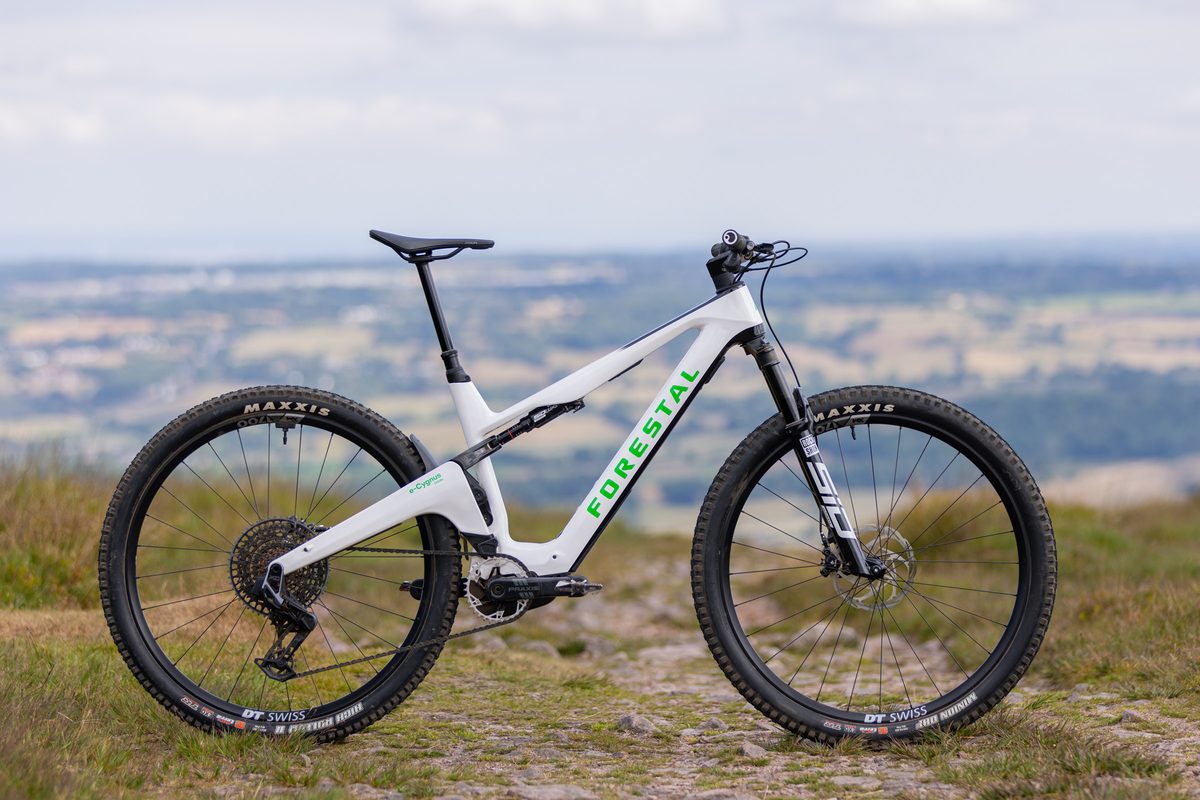
The Forestal e-Cygnus Diōde is the brand’s downcountry electric mountain bike. It offers 120mm of front and rear travel, a Bosch Performance SX motor, a 400Wh battery and 29in wheels – all for a svelte 17.59kg.
In testing, the bike impressed and frustrated me in equal measure.
The Diōde’s niche character means it will suit some sections of trails and riders exceptionally well. However, its short travel and two-piston brakes feel like a speed restricter on other sections of the trails.
Forestal e-Cygnus Diōde frame, suspension and motor The e-Cygnus frame is sleek, despite the motor and battery. Scott Windsor / Our Media
Built from Forestal’s ‘Alpha Box’ carbon frame construction, this is a monocoque carbon fibre frame designed to balance strength and weight. This trail speedster rolls on 29in wheels and dishes out 120mm of rear-wheel travel.
Frame details include headset cable routing that features a knockblock to limit turning in order to prevent frame or cable damage. There is also a water bottle mount and integrated mudguard to help protect the linkage and shock.
Suspension duties are handled by Forestal’s Twin Levity suspension platform. This is a linkage-driven single-pivot platform that enables Forestal to tweak the kinematics to suit the frame’s needs.
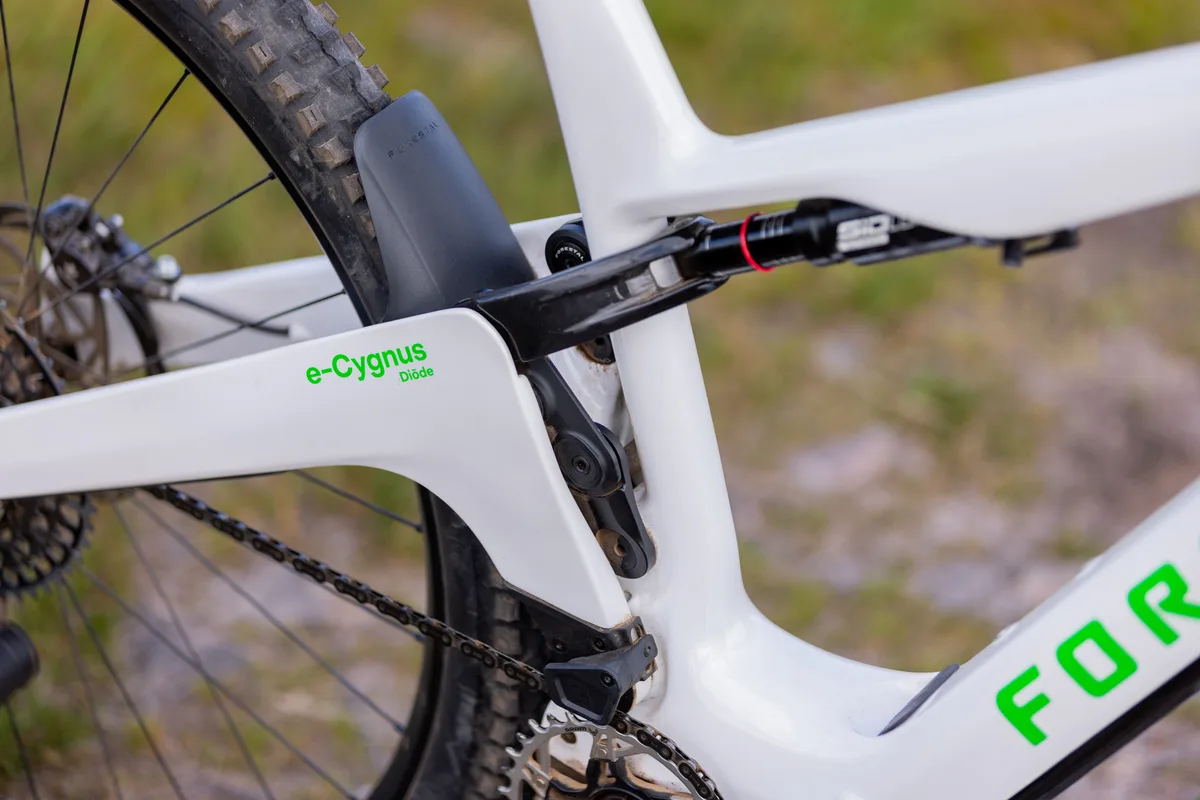 It’s a linkage-driven single-pivot design. Scott Windsor / Our Media
Each frame size of the e-Cygnus has custom kinematics and a shock tune to make sure every rider receives the same frame-weight distribution and riding experience, regardless of size.
The frame is designed to fit new electronic suspension systems, such as RockShox’s Flight Attendant products.
At its core is the Bosch Performance Line SX drive unit, delivering 250W and 55Nm of torque in a compact package.
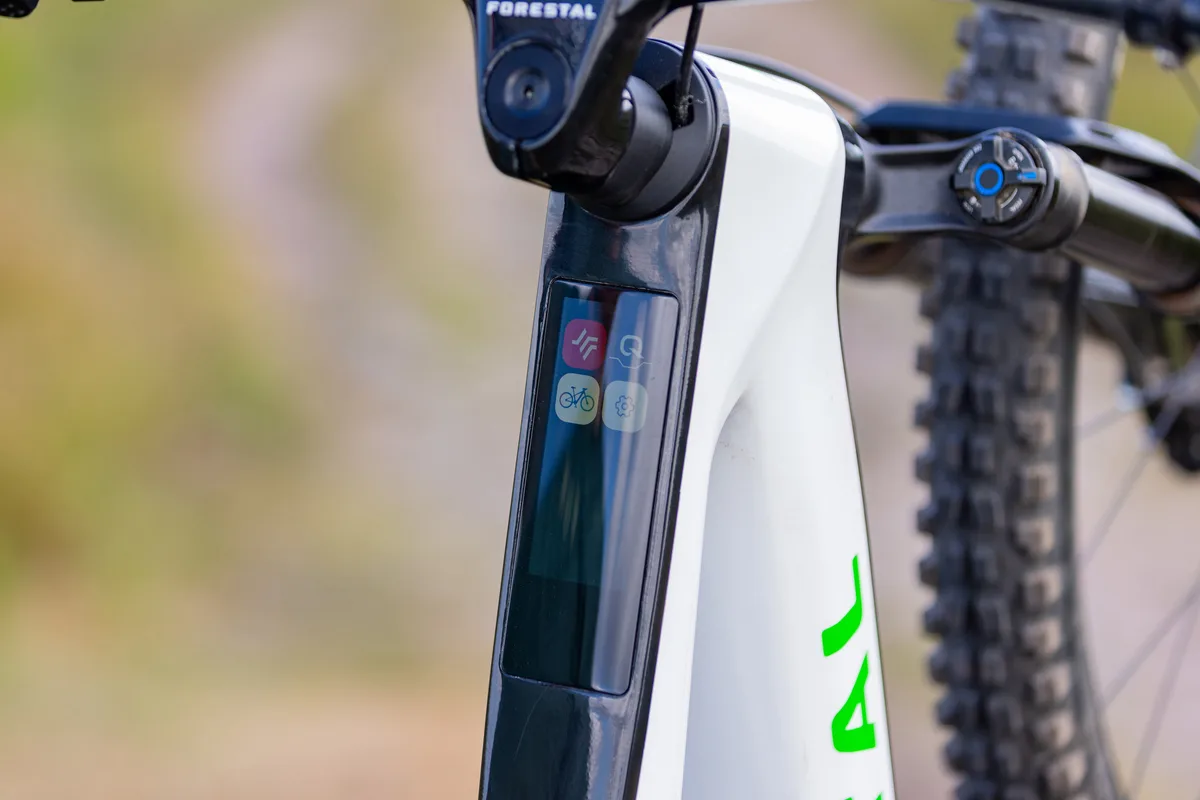 It runs the Android 12 operating system on a Snapdragon chip. Scott Windsor / Our Media
This is powered by a fully integrated (non-removable) 400Wh Bosch CompactTube battery. Riders can extend the range further with the optional 250Wh PowerMore extender.
What sets this bike apart is Forestal’s Smart Dashboard 2.0 – an integrated 3.99in colour touchscreen display powered by Android 12 and Snapdragon hardware.
Waterproof, glove-friendly, and GPS and GSM-enabled, it replaces the need for third-party devices such as a Garmin bike computer.
It offers full ride data, navigation, connectivity and more – right from the top tube. Connected to Bosch’s app, Strava and Komoot, you can plan, navigate and see the ride data you need from the top tube.
Forestal e-Cygnus Diōde geometry Its geometry balances agility and efficiency. Scott Windsor / Our Media
The Forestal e-Cygnus Diode is built with geometry intended to balance agility and efficiency. My large test bike features a 67-degree head tube angle, striking a good middle ground: slack enough for confidence on technical descents, yet sharp enough for precise steering on tight singletrack.
The 76-degree seat tube angle should keep riders centred on climbs and flowing trails. The 470mm reach provides stability without sacrificing responsiveness, especially with the low 611mm stack height.
Lengthy 448 mm chainstays are needed for the Bosch motor, and should help traction and composure under power. Combined with a low 334 mm bottom bracket, the result should be a poised and fast-handling eMTB.
Seat tubes are modest at 455mm, but there should be enough space for long dropper posts to help with manoeuvrability on the descents.
Forestal e-Cygnus Diōde specifications The SID fork is capable and light. Scott Windsor / Our Media
Suspension duties are covered by a 120mm RockShox SID Ultimate fork and a RockShox SIDLuxe Ultimate shock. The drivetrain features SRAM X0 T-Type AXS 12-speed shifting. A Praxis eCrank Carbon crankset with 165mm arms and a SRAM XX T-Type chainring complete the drivetrain.
The Formula Cura2 brakes have 180mm rotors front and rear. The DT Swiss XM 1700 Alloy wheels are fitted with Maxxis Minion DHF 3C MaxxTerra EXO 29×2.35in (front) and Maxxis High Roller II 3C MaxxTerra EXO 29×2.35 (rear) tyres.
 SRAM’s X0 Transmission features. Scott Windsor / Our Media
The cockpit features the Forestal Oxydon C integrated 780mm carbon handlebar, Ergon GA20 grips and Acros ZS headset. Finishing touches include a OneUp V3 dropper post (150–180mm travel depending on size), a BikeYoke Triggy X remote and a Fizik Terra Ridon saddle.
All of that tips the scales at a light 17.59kg for my size-large test bike, without pedals.
Forestal e-Cygnus Diōde ride impressions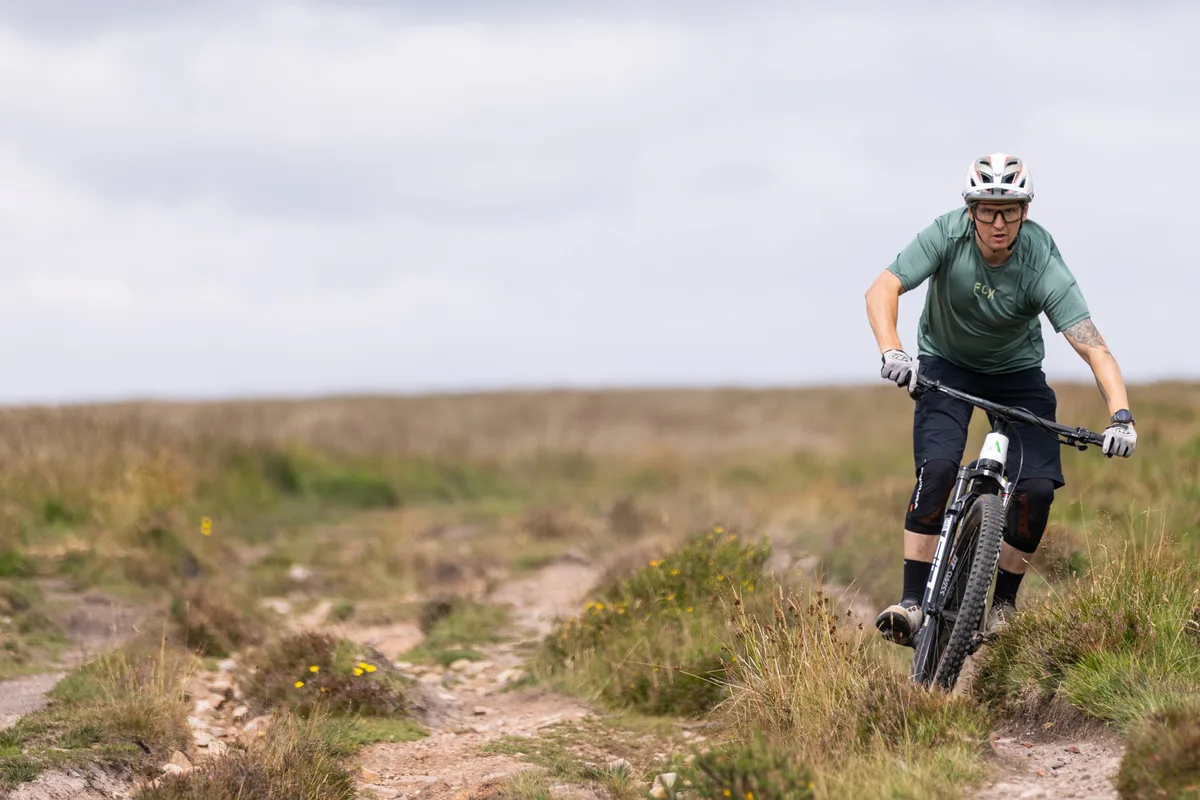 The e-Cygnus is a speedy bike thanks to its low weight and fast-rolling tyres. Scott Windsor / Our Media
So how does the e-Cygnus bring everything together on the trail? Let’s start with the positives. This is the lightest and most nimble ebike I’ve ridden.
It feels just as manoeuvrable as a non-assisted enduro bike. Even at 18kg (with pedals and a water bottle), the sharp head tube angle and low bottom bracket provide real agility through corners. At the same time, the enduro-level weight in the chassis adds a reassuring sense of stability.
I didn’t find myself getting knocked off line on more technical trails, and the bike’s composure encourages you to ride faster and push harder.
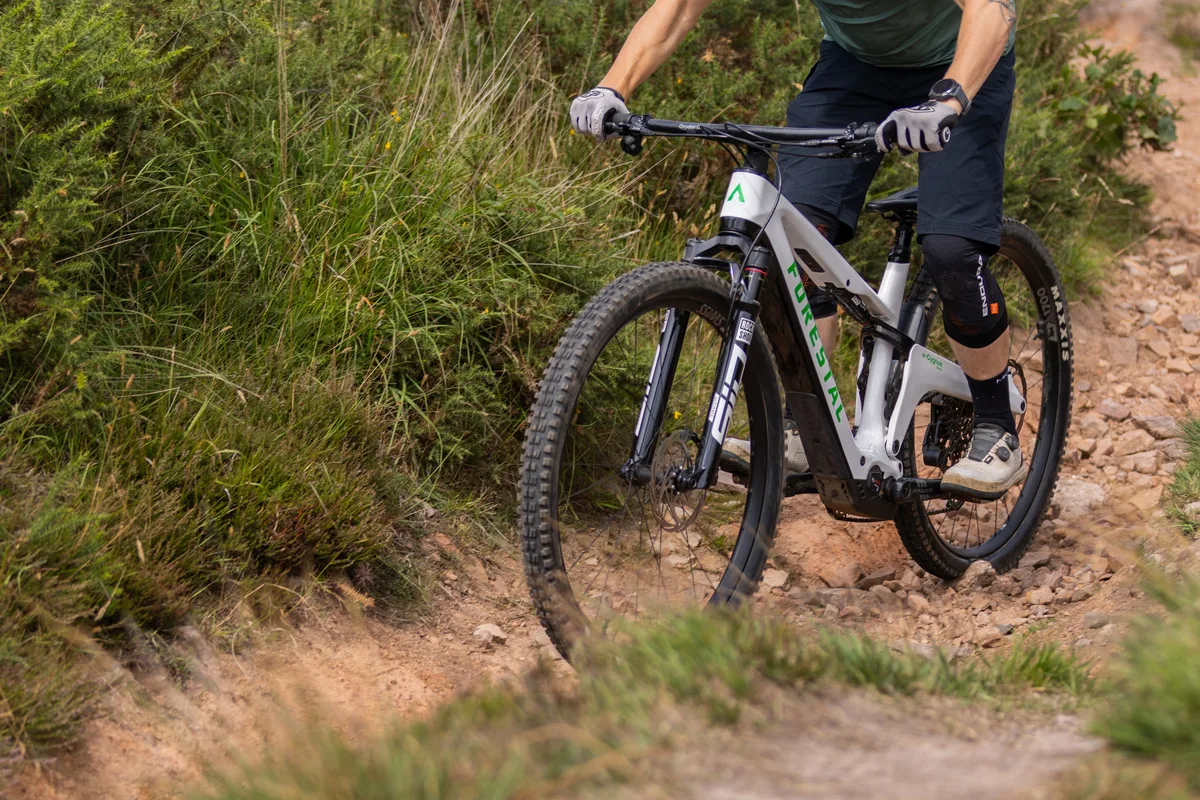 The dampers are impressive, given they’re used more widely on even lighter XC race bikes. Scott Windsor / Our Media
Pedalling up steep climbs, the motor does a respectable job of winching you to the top without too much fuss. That said, switch it into Boost mode and it’ll drain the battery quickly. By balancing your effort and using Eco mode strategically, you can extend your ride time significantly.
Even though the e-Cygnus is several kilos lighter than most full-power ebikes, the steeper the gradient, the harder it becomes for the Bosch Performance Line SX motor to keep up.
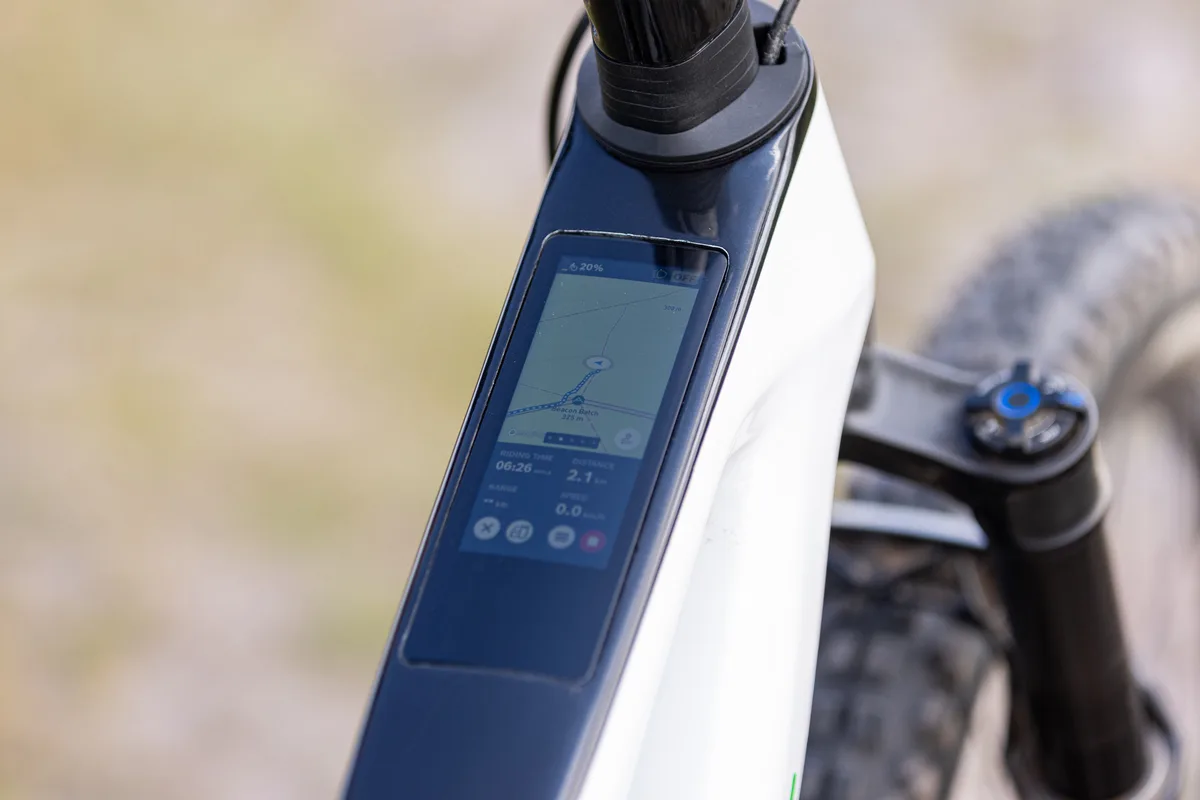 The in-built top tube display sets the Forestal apart from many of its rivals. Scott Windsor / Our Media
However, the Forestal shines on mellower climbs. Its lighter EXO-casing and MaxxTerra-compound tyres reduce rolling resistance compared to most eMTBs. Thanks to the bike’s pace and efficiency, it takes little effort to keep your speed in double digits and hovering near the motor’s cut-off point.
I found this incredibly fun on gentle, winding singletrack climbs – where, rather than being a chore, pedalling with assistance becomes a game of momentum.
Jinking through corners and charging the trail felt playful and rewarding. I imagine this is what pro XC racers experience, and it’s likely the closest I’ll ever get to matching their uphill pace.
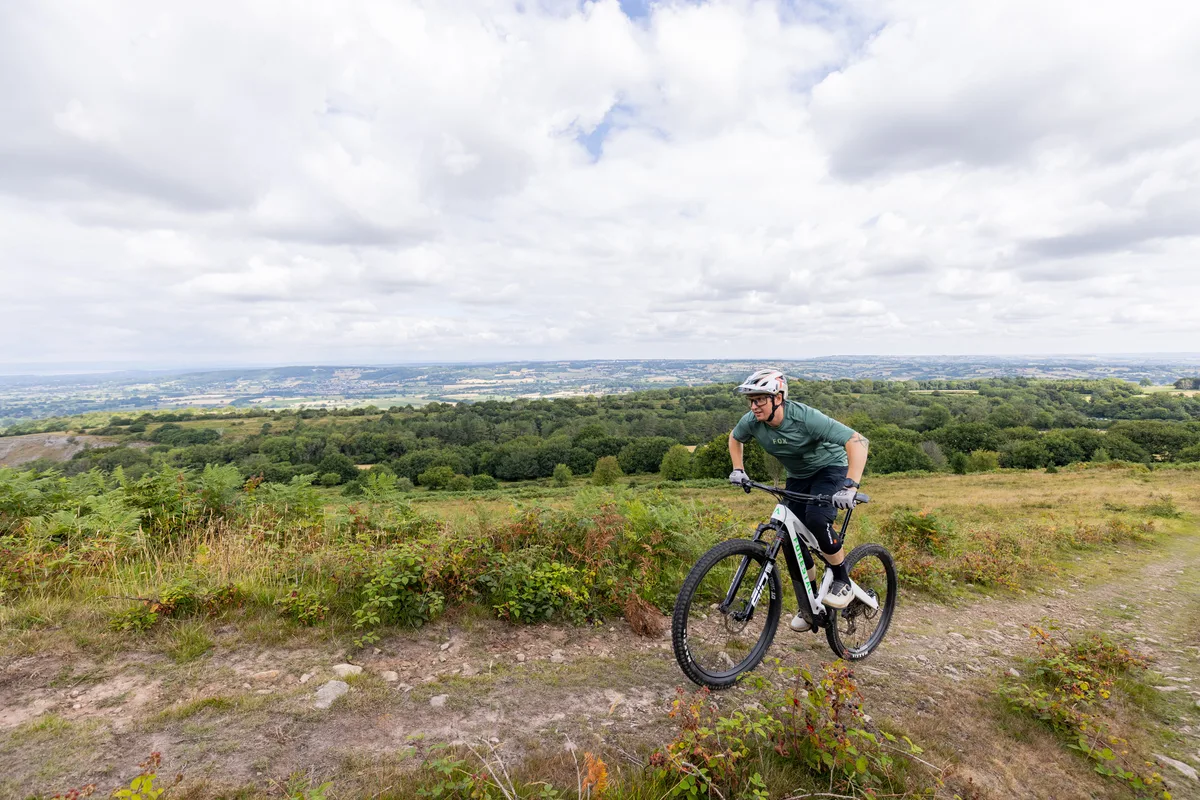 Use the motor’s power wisely and its battery can go for miles. Scott Windsor / Our Media
In terms of positioning on the bike, the geometry felt comfortable enough for long rides, yet still leaned towards the racy side.
There was ample traction from the rear tyre while climbing, and the 611 mm stack height helped keep my weight over the front wheel. As a result, uphill corners never felt vague or as though the front end was wandering. I’d describe it as direct and responsive.
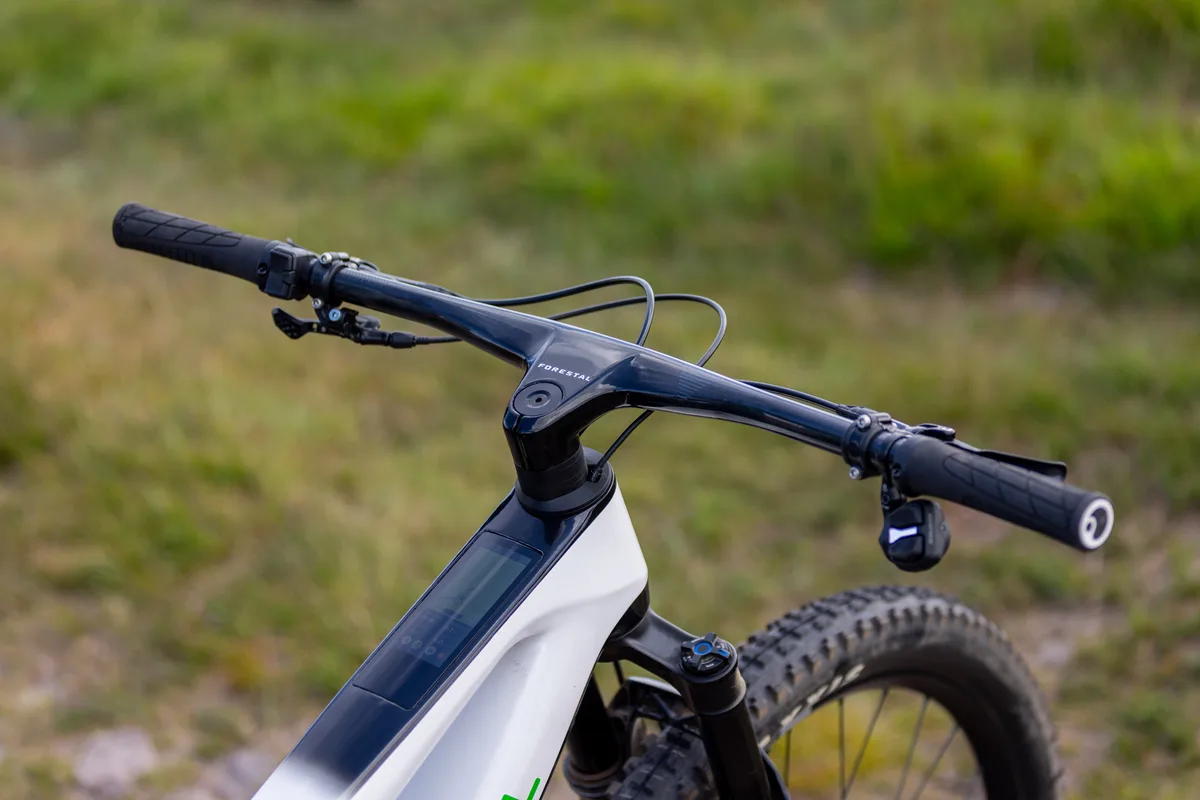 The one-piece bar and stem will be loved and hated in equal measure. Scott Windsor / Our Media
On the descents, it makes the most of its modest 120mm of travel. The suspension feels firm, as you’d expect, but it still tracks the ground surprisingly well and doesn’t exhibit any harsh spikes or abrupt ramp-up through the stroke.
On smooth, mellow trails ridden at speed, the bike keeps up effortlessly and actively encourages you to push on. It’s an impressive piece of kit.
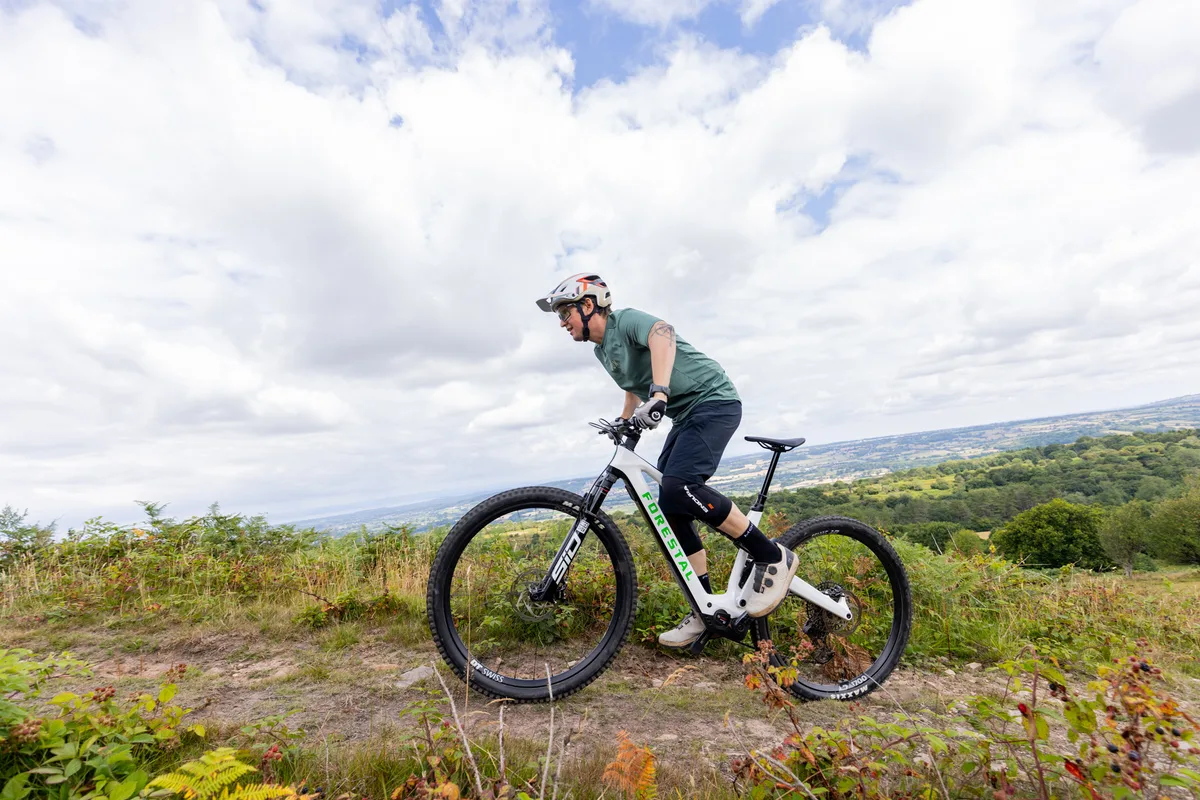 Once you get over the motor assistance speed limit, it’s still an 18kg ebike, which is harder to pedal than lighter bikes. Scott Windsor / Our Media
So, what are its downfalls? Well, being such a fast and efficient bike, it quickly reaches the 25km/h (15.5mph) motor cut-off on modestly graded trails.
At that point, you’re left pedalling an 18kg bike with perceivable motor drag, even though it’s less than most full-power systems.
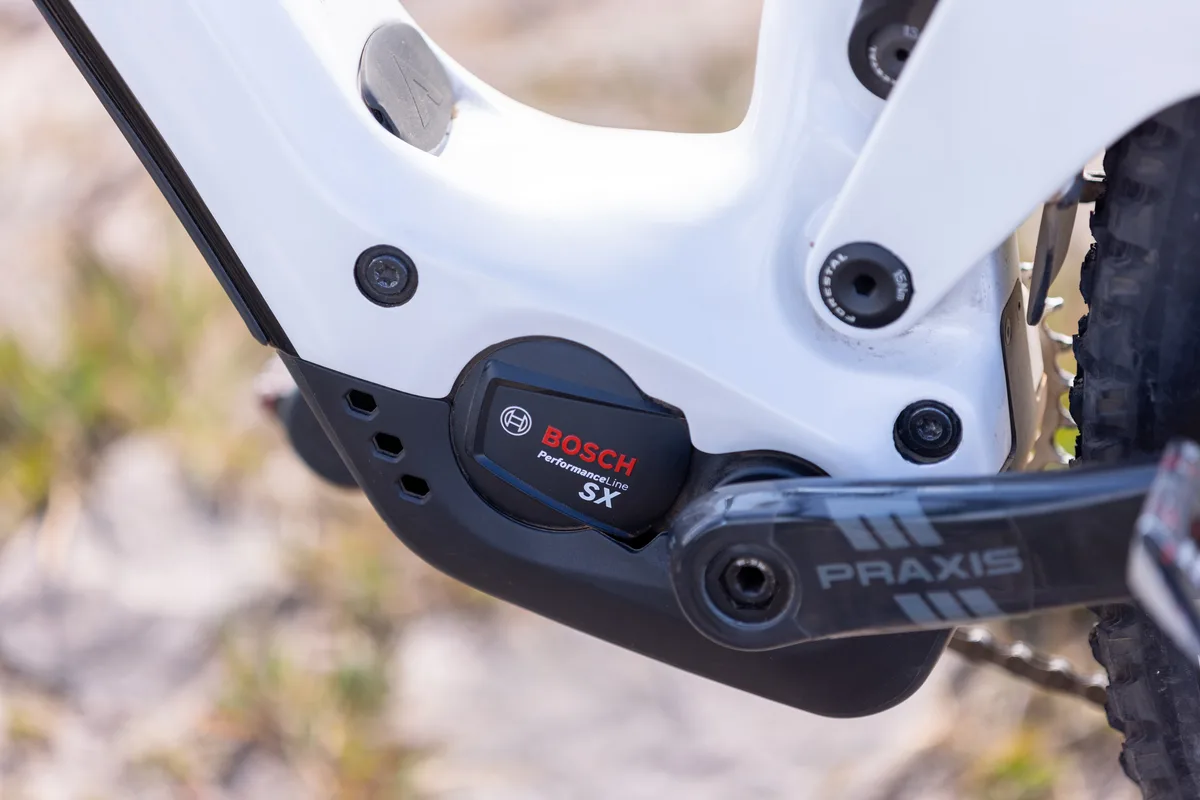 The SX motor now has 60Nm of torque thanks to an update, which is more than when the bike was tested. Scott Windsor / Our Media
For example, if you were riding with fitter friends on non-assisted downcountry bikes, you’d likely keep pace on the climbs, but on rolling, undulating trails, the energy advantage fades quickly. You’ll need to work much harder to keep up once speeds climb beyond that assistance limit – something that happens easily on flowing XC terrain.
Additionally, the 18kg weight delivers excellent stability – the bike clearly wants to go faster. However, that 120mm of travel effectively becomes a speed limiter. Where light XC or downcountry bikes might feel twitchy and nervous at speed, the e-Cygnus doesn’t – so it tempts you to push harder.
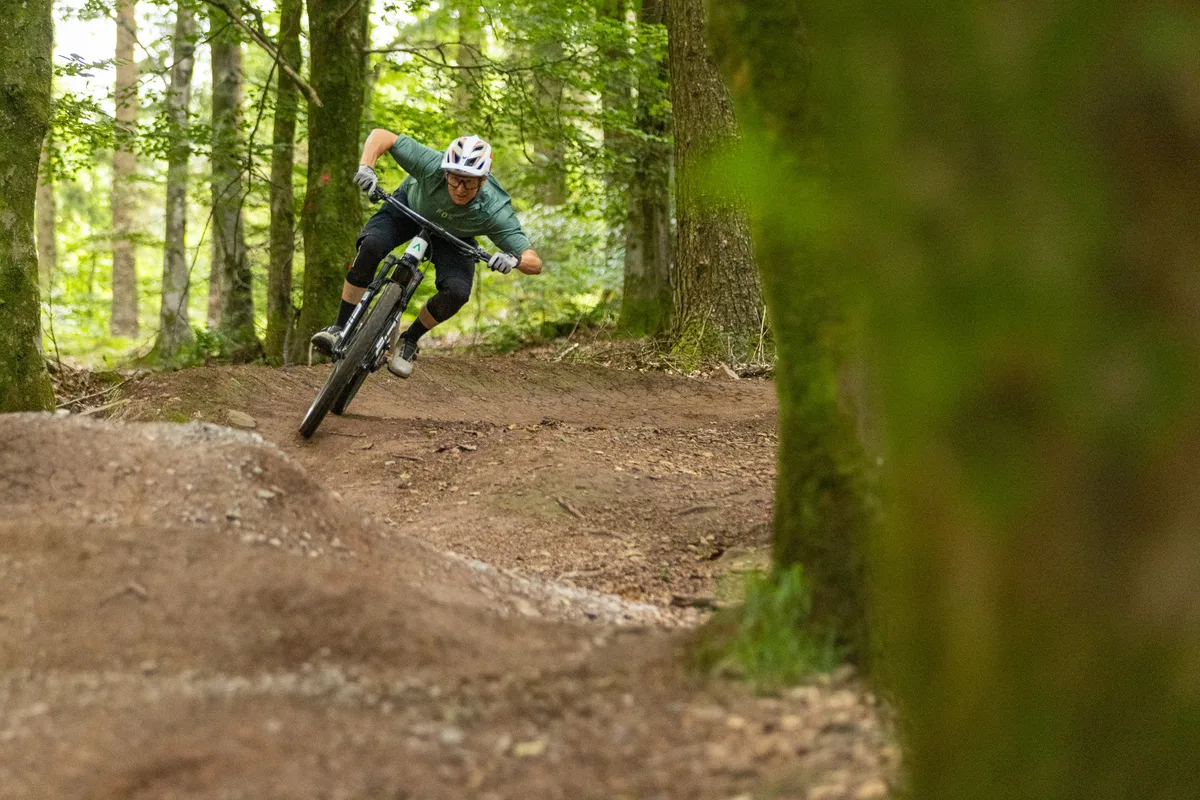 The enduro-weight chassis adds stability. Scott Windsor / Our Media
Otherwise, I was impressed by the suspension in its efforts to keep up. The travel is smooth and the support impressive. I needed to run around 20psi in the fork above the recommended setting for my 75kg to get the support I was after.
But, eventually, the suspension starts to get out of its depth. The same can be said for the brakes.
Formula’s two-piston calipers, with 180mm rotors, simply aren’t enough for an 18kg bike at pace. The e-Cygnus Halō comes with a 130mm-travel fork and four-piston brakes – that would be my recommendation.
 It’s going to suit riders who want to get places quickly, but its limits are easy to expose. Scott Windsor / Our Media
SRAM’s X0 T-Type drivetrain proved faultless, even under load and awkward gear shifts coming out of fast-entry, slow-exit corners.
However, the internal headset routing looks to be chewing through the dropper post housing.
Forestal’s Smart Dashboard 2.0 is an impressive piece of tech, showing all the data I would ever need. Some will love it, but some will find it completely unnecessary.
Forestal e-Cygnus Diōde bottom line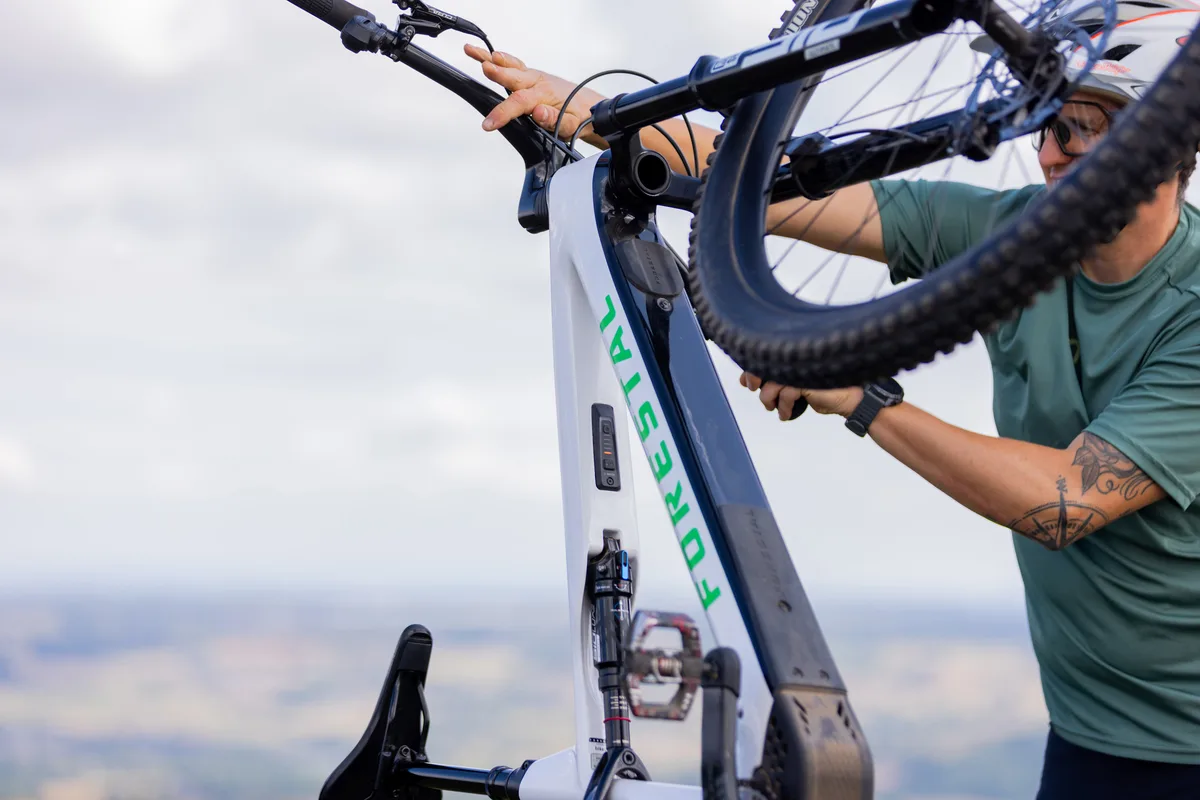 The Bosch ebike controller is under the top tube. Scott Windsor / Our Media
As an uphill enjoyment machine, the Forestal e-Cygnus Diōde is a tough bike to beat – especially on flowing singletrack. However, stick to smoother trails and you’ll quickly exceed the motor’s speed cut-off, leaving you to pedal an 18kg ebike unassisted.
Take advantage of its stability on more aggressive terrain and you’ll soon find the limits of the suspension and brakes. It’s a tough dilemma.
This bike will suit riders who want to get places quickly, but not necessarily as fast as possible –particularly once they’ve reached the top of the hill.
Enjoy its stability, take your time on the descents, and you’ll have a brilliant ride on the e-Cygnus. That said, it’s an incredibly expensive piece of kit for casual riding.
Product
Brand
Forestal
Price
€9350.00
br_whatWeTested
Forestal e-Cygnus Diōde
Weight
17.95kg
Features
Fork
RockShox SID Ultimate Charger Race Day 2
Stem
Integrated
Chain
SRAM X0 Transmission
Motor
Bosch Performance Line SX
Tyres
Maxxis Minion DHF 3C MaxxTerra EXO 29x.2.35in (front), Maxxis High Roller II 3C MaxxTerra EXO 29x.2.35in
Brakes
Formula Cura 2
Cranks
Praxis e-Crank carbon
Saddle
Fizik Terra Aidon
Wheels
DT Swiss XM 1700
Headset
Acros integrated
Shifter
SRAM AXS Pod Ultimate Controller
Cassette
SRAM X0 Transmission
Seatpost
OneUp V3 Dropper
Grips/tape
Ergon GA20
Handlebar
Forestal Oxydon C
Rear shock
RockShox SIDLuxe Ultimate
Bottom bracket
Bosch
Available sizes
Small/medium, large, extra-large
Rear derailleur
SRAM X0 Transmission