Tesla’s year-long European slump continues, with Norway representing the sole bright spot. By Stewart Burnett
Tesla recorded a 12.3% year-on-year decline across Europe in November, with registrations falling to approximately 17,000 units from 19,400 vehicles in the same period in 2024. Excluding Norway—where temporary tax factors positively affected demand across the board—the automaker experienced a 36.3% slump across the continent’s remaining territories.
Major volume markets delivered particularly severe results: French registrations plummeted 57.8% to 1,593 units, while Swedish deliveries dropped 59.3% to just 588 vehicles. The Netherlands declined 43.5% to 1,627 units and Germany fell 20.2% to 1,763 vehicles. Spain recorded an 8.7% decrease to 1,523 units, while Belgium, Denmark, Portugal, Switzerland and Finland all posted double-digit percentage declines ranging from 20% to 55%.
Norway represented the sole bright spot with registrations surging 175% to 6,215 units as buyers accelerated purchases ahead of 2026 tax changes eliminating benefits for premium electric vehicles (EVs). Despite its comparatively small market, the country accounted for over 35% of Tesla’s total European volumes, with the automaker achieving 31.2% market share and exceeding its 2023 annual record of 26,641 vehicles with 28,606 deliveries through November.
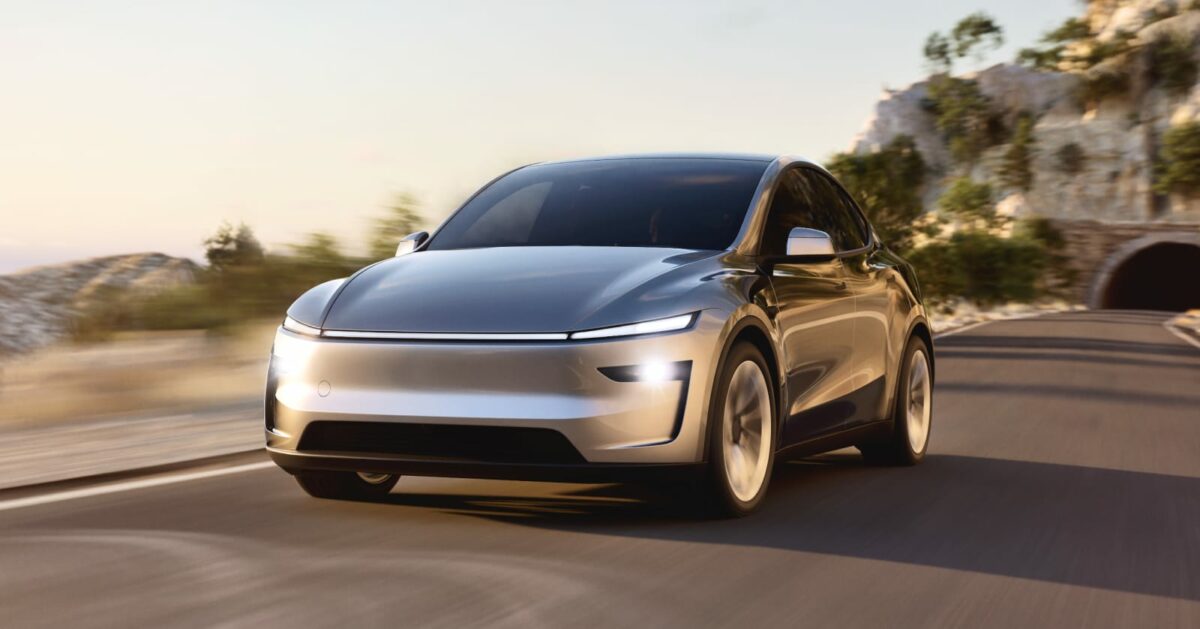 Tesla began delivering the Model Y Juniper in Europe in March 2025
Meanwhile, UK registrations fell 19% to 3,784 units from 4,680 vehicles in November 2024. Total new registrations in the UK declined 6.3% to 146,786 units during the month after a strong year overall; battery-electric models dropped 1.1% while plug-in hybrid registrations increased 3.8%. This could be due in part to the recently-proposed pay-per-mile levies for UK EV drivers. Leaked documents have estimated the levies could cost the UK more than 440,000 EV sales.
Chinese automakers gained ground as Tesla struggled, with BYD increasing UK deliveries 229% to 3,217 units and offering more than 150 electrified models to British consumers. Competition from newer Chinese entrants and legacy manufacturers introducing more affordable options has steadily eroded Tesla’s dominance, although customer revulsion towards Chief Executive Elon Musk’s political forays appears to be the determining factor pushing European drivers away from the brand.
The automaker experienced particular struggles in Germany, where November deliveries of 1,763 units represented a 64.2% collapse from the 4,923 vehicles registered in November 2023. The highly-anticipated Model Y refresh has failed to reverse the decline, with industry observers citing an ageing product lineup alongside brand toxicity as the reasons for German market weakness.