8 WORST Electric Car Brands That Will Go Bankrupt by 2026 (AVOID)
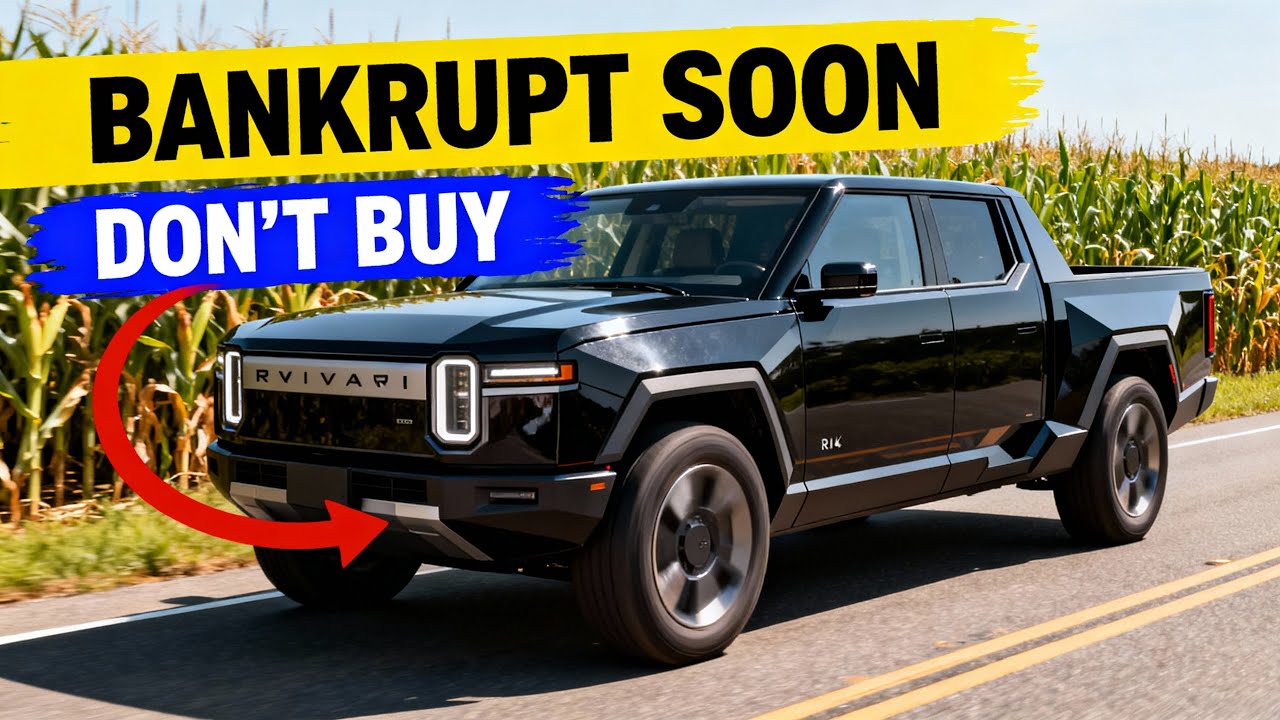
We are counting down the eight electric car brands most likely to drain your wallet or leave you stranded by 2026. From luxury models that lose half their value overnight to mainstream names facing dangerous recalls and systemic reliability nightmares. Each spot is based on hard data from consumer reports, owner complaints, and NHTSA investigations. Which brand faces the sharpest financial risk? And which one tops the chart for sheer unreliability? Let us start the countdown with number eight. MercedesBenz once promised its EQ series would redefine electric luxury, but the numbers tell a different story. The EQE SUV received a rare avoid label from Consumer Reports in 2024 and 2025, citing persistent reliability problems that fall far below the brand’s reputation. For many owners, the first shock comes not from the battery, but from the balance sheet. The EQS sedan has lost nearly 50% of its value in just 2 to 3 years, turning a $100,000 car into a $50,000 gamble. Complaints about the braking system pile up in owner forums with drivers describing a mushy, inconsistent feel that undermines confidence behind the wheel. When luxury comes with uncertain reliability and catastrophic depreciation, even the three-pointed star cannot protect your wallet. Audi’s Q8 Ron stands out not for its performance, but for the warning signs it is flashing to anyone thinking about buying. In recent Consumer Reports surveys, the Q8 Ron posted the lowest customer satisfaction score among luxury electric vehicles. Owners report a steady stream of software glitches, infotainment failures, and persistent electrical problems. These are not isolated complaints. Reliability tables show worst possible ratings for both the powertrain and the electronics categories. Industry news in 2025 confirmed what many suspected. Audi is retiring the Q8 Ron name plate after this model year. For buyers, that means the car is being left behind by its own maker. Depreciation risk skyrockets when a manufacturer abandons a model and service support often dries up as parts and dealer expertise shift to newer platforms. Historically, discontinued luxury electric vehicles can lose 40 to 50% of their value within 3 years. For anyone considering a Q8 Ron, the numbers point to a future of steep losses and uncertain support. Porsche’s taken has become a cautionary tale for anyone who thinks a six-figure price tag guarantees peace of mind. In late 2024, the National Highway Traffic Safety Administration flagged all taken models from 2020 to 2024 for a critical battery defect. The root of the problem was battery modules prone to internal short circuits, which can trigger sudden fires with no warning. Porsche’s official response was to tell every owner to cap charging at 80%. Shrinking the car’s usable range by a fifth while they scrambled for a permanent fix. For months, many owners have lived with this restriction, waiting for diagnostic software updates or full battery replacements. Some have faced service delays stretching well into 2025 with dealer parts backlogs and no clear timeline for resolution. When a $120,000 electric car gets pulled from used car lots and owners are told not to park it near their homes, it is clear the stakes go far beyond inconvenience. The tan’s fire risk and monthsl long uncertainty have left even Porsche loyalists questioning what their money is really buying. Tesla’s reputation for innovation hasn’t shielded its flagship models from some of the most glaring reliability problems in the electric car world. The Model X, once a symbol of cuttingedge design, landed near the bottom of Consumer Reports 2025 reliability rankings for midsize luxury SUVs. Owners have filed hundreds of complaints about the Falcon Wing doors, which are supposed to wow, but often leave drivers stranded with doors stuck open or refusing to latch. Actuator failures and sensor glitches are so frequent that many Model X owners report weeks of downtime waiting for parts and repairs. The story doesn’t improve with the Cybert truck. Barely a year after its highly publicized launch, Tesla was forced into a sweeping recall in April 2024. The accelerator pedal pad could slip and get stuck, raising the risk of unintended acceleration. At the same time, owners faced windshield wiper failures that compromised visibility, especially in bad weather. These are not just teething pains. They are expensive, time-consuming problems that hit where it hurts. Safety, convenience, and your wallet. High price tags and brand prestige don’t buy reliability here. For buyers, the risk is not just about what is under the hood. It is about whether your $100,000 electric vehicle will even make it out of the driveway. Polestar set out to challenge Tesla in the premium electric vehicle space, but a single point of failure has left many owners regretting the gamble. The Telmatics and connectivity antenna module known as TCAM controls everything from GPS navigation to remote unlock. When it fails, drivers lose access to the app, navigation, and sometimes even the ability to get into their own car. Owner forums are filled with stories of being stranded, waiting 8 to 12 weeks for a replacement module to arrive from overseas. Meanwhile, the car sits useless, racking up insurance costs and payments with no end in sight. In 2024 and 2025, the National Highway Traffic Safety Administration began probing reports of Polestar 2’s suddenly losing propulsion while driving, raising new concerns about deeper electrical issues. Reliability surveys now place Polestar near the bottom of the rankings with electronics complexity turning what should be a luxury experience into a waiting game. For buyers, the risk is not just inconvenience. It is being locked out of a car that was supposed to make life easier. Hyundai and Kia’s EGMP platform, once praised for its design and driving range, is now at the center of one of the most alarming electric vehicle recalls in recent memory. In November 2024, nearly 200,000 vehicles, including the Hyundai Ionic 5, Ionic 6, Kia EV6, and Genesis GV60, were swept up in a recall over a single deeply flawed part, the integrated charging control unit, ICU. This module is supposed to keep the 12volt battery charged, powering essentials like steering assist, brakes, and dashboard electronics. When the ICU fails, the 12vt system dies without warning. Owners describe a chilling sequence. Dashboard lights flicker. Power steering vanishes. Brake assist disappears. and the car either limps along in so-called zombie mode or shuts down completely, sometimes in the middle of the highway. NHTSA documents and owner testimonies paint a picture of drivers stranded in traffic, unable to move their cars, or even shift into neutral. Service backlogs have left some waiting weeks for repairs. For a brand that built its reputation on reliability, a cascading failure that can knock out steering and brakes across almost 200,000 vehicles is more than a technical glitch. It is a platformwide crisis that puts lives and wallets at risk. Volkswagen’s ID4 was supposed to be the people’s electric car, but in September 2024, a recall hit nearly 100,000 owners with a warning no one expected. Water slipping past the door handle seals could trigger electrical faults that let doors unlatch while the car is moving. The recall covers exactly 98,86 ID foray built from 2021 to 2024. For some, the first sign is a clicking noise. For others, it is the sudden swing of a door at highway speed. Owner complaints in NHTSA. Filings describe doors unexpectedly opening on the road, leaving only a seat belt between the driver and disaster. The problems do not end there. Around 80,000 ID4s have also been recalled for infotainment screens that go black without warning. When this happens, drivers lose the digital speedometer and the backup camera, critical features for safe driving. The roll out of both fixes has been slow, keeping thousands of cars on the road with unresolved safety threats. For a brand built on mainstream trust, these failures strike at the core of what drivers expect, doors that stay closed, and dashboards that work when you need them most. Rivian’s R1T and R1S have become the cautionary tale of the electric vehicle boom. In 2025, Consumer Reports ranked Rivian at the absolute bottom for predicted reliability, assigning a score of just 18 out of 100. This is not a story of early hiccups or growing pains. It is a pattern of basic failures that simply should not happen in a $70,000 truck. Bottom line, buyers need to pay attention. In February 2025, NHTS a recall notices landed in the inboxes of over 17,000 Rivian owners for headlight wiring defects that could knock out nighttime visibility. That same month, another 28,000 vehicles were recalled for turn signal failures. A fundamental safety issue that puts drivers at risk every time they take the wheel. Recalls have been relentless. The trouble goes deeper than headlines. Owners have documented glaring assembly problems, panel gaps wide enough to fit a finger, hoods that do not line up, and body panels that look unfinished. The so-called vampire drain is another persistent headache. Many R1T and R1S vehicles lose 10 to 15% of their battery charge overnight, even when parked. For some owners, that means waking up to a dead truck and an 8-week wait for warranty service. Vampire drain is costing people time and money. Behind the scenes, Rivian’s financials are under growing stress. Warranty reserves have ballooned as the company struggles to keep up with recall costs and service claims. Venture capital is running thin and every new round of fundraising dilutes existing shareholders. The combination of bottom rank reliability, relentless recalls, and mounting cash burn puts Rivian at the top of the risk list for 2025. For buyers, this is not just a rough ownership experience. It is a real possibility that the brand may not survive to honor its promises. Across all eight brands, one pattern stands out. In the electric vehicle world, rapid innovation often outpaces reliability. Software glitches, recall waves, and plunging resale values aren’t outliers. They are the warning signs for buyers. The future isn’t just electric, it’s uncertain. Choose carefully and protect your investment.
While the transition to electric mobility is accelerating, not every manufacturer has mastered the reliability required for daily driving. This deep dive identifies the 8 worst electric car brands of 2025, backing every claim with recent Consumer Reports data and NHTSA recall statistics to help you avoid a financial pitfall. We look beyond the glossy marketing to expose the specific engineering faults and software failures plaguing some of the most popular EVs on the market.
Viewers will gain a clear understanding of the systemic issues affecting these models, from Rivian’s struggle with basic build quality to the widespread “Zombie Mode” power loss affecting nearly 200,000 Hyundai and Kia vehicles. The discussion highlights why these vehicles are consistently landing at the bottom of reliability rankings and what specific components are failing. Key insights include an examination of the “ghost door” crisis forcing major recalls for Volkswagen ID.4 owners, the persistent connectivity failures in Polestar vehicles, and the surprising depreciation gaps found in luxury options from Mercedes-Benz and Audi.
This channel provides data-driven automotive analysis and consumer advice to help car buyers make informed decisions in a rapidly changing market.