12 Most Uselessly Fast Electric Bikes Ever Made!
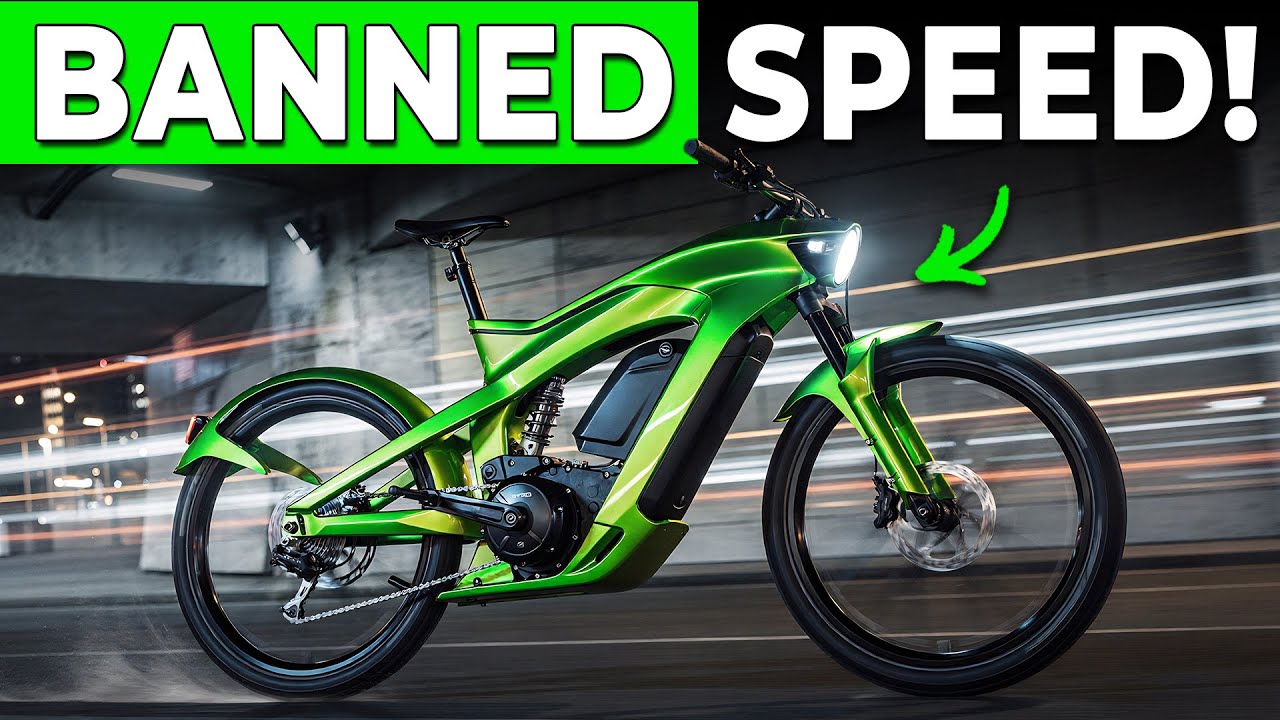
60% of electric bike buyers who purchase these high-speed models end up with thousands in fines within the first year. But what if I told you that the fastest electric bikes on the market are actually the most useless machines you could possibly buy? These aren’t enhanced bicycles. They’re unregistered motorcycles disguised as ebikes waiting to get you cited, fined, and your vehicle confiscated by law enforcement. In this video, we’re counting down the 12 most uselessly fast electric bikes ever made. Machines that exceed 28 mph and instantly transform from convenient transportation into legal nightmares. And trust me, some of these results will shock you. From bikes hitting 90 mph to models packing 21 kW of power, these machines shatter every legal limit that separates an ebike from a motorcycle. And here’s the kicker. The top bike on our list generates so much power that it’s literally 28 times over the legal motor limit, guaranteeing you can’t legally ride it anywhere except private property. Stay until the end because this isn’t just entertainment. It’s critical information that could save you from financial disaster and vehicle seizure. Skip this and you might drop $6,000 on a machine that law enforcement will impound the first time you ride it on public roads. Number 12, Ryan Apex and Thrust Hyper Scooters. Starting our countdown at number 12, we have to include the most absurd velocity machines in microobility, the Ryan Apex and Thrust. While technically scooters rather than bikes, these devices occupy the same legal gray zone with even more extreme performance numbers. These hyper scooters utilize dual ventilated motors generating over 30,000 watts of combined power. That’s 30 kW, roughly 40 times the legal limit for an electric bike. This massive power output launches these scooters to top speeds between 80 and 90 mph, making them faster than most vehicles on residential streets. Marketed as the Ferrari of scooters, these machines command retail prices between $8,000 and $410,000. At that price point, you’re paying premium money for a device that’s definitionally useless for regulated transportation. You can’t legally operate it on bike paths, bike lanes, or even most public roads without proper motorcycle registration and licensing. Number 11, Ride OneUp 700 series. At number 11, we have something different, the Ride OneUp 700 series. This bike doesn’t belong here because it’s uselessly fast. It’s included as the critical benchmark showing where useful speed ends and useless speed begins. The 700 series is engineered to the precise legal boundary of class 3 ebike classification. It features 750 watts of sustained motor power and delivers a maximum assisted speed of exactly 28 mph using pedal assist. This represents the absolute ceiling of legal ebike performance in the United States. This bike proves you can achieve maximum performance without crossing into the regulatory nightmare zone. At speeds up to 28 mph, the 700 series maintains full access to bike lanes and most shared use paths. You won’t face fines, vehicle seizure, or insurance complications because it operates within the threeclass system that governs ebike classification nationwide. The retail price ranges from $1,500 to $1,800, making it significantly more affordable than the Hypers Speed models we’ll discuss. More importantly, you can actually insure this bike through specialized ebike coverage providers, protecting yourself from liability if accidents occur. Number 10, RAR Mantis X. Moving to number 10, the RAR Mantis X enters our countdown as a significant threat because of its accessibility. This bike represents a newer and more affordable entry point into the light electric dirt bike market, making a legal speed available to a much wider consumer base. The Mantis X delivers claimed top speeds around 45 mph, powered by approximately 4 kW of motor output. That’s more than five times the legal limit for ebike motors, immediately classifying it as an unregistered motor vehicle under US law. The 45 mph capability guarantees it cannot legally access bike paths or most shared roadways without proper motorcycle licensing. What makes this bike particularly problematic is its retail price of approximately $3,000. This lower price point compared to premium models removes a major barrier to entry. More consumers can afford to purchase what they believe is a high-performance ebike, only to discover they’ve actually bought an illegal motor vehicle after their first encounter with law enforcement. The affordability factor significantly increases the population of non-compliant vehicles operating in public spaces. When more riders purchase these machines without understanding the regulatory consequences, it creates greater enforcement pressure and public safety concerns that ultimately result in stricter regulations affecting all ebike users. Number nine, Taria Sting MX3 and MX4. At number nine, the Taria Sting MX3 and MX4 represent earlier iterations in the Sting series that still pack enough power to guarantee regulatory non-compliance. These models use the same gear drive system that defines Tallaria’s engineering approach, prioritizing durability for sustained high torque operation. Both variants achieve top speeds well above 45 mph, powered by approximately 6 kW of motor output. The gear drive transmission reliably handles the massive torque necessary for motorcycle class riding, which explicitly distances these vehicles from bicycle design standards. The retail pricing ranges from $3,450 to $4,100, positioning them as mid-range options in the hypers speed market. While slightly less potent than the higher ranked Sting R variant, these models remain firmly in the category of unregistered motor vehicles intended exclusively for nimble off-road use. The engineering choice to use gear drive instead of belt drive reveals the manufacturer’s true design intent. Gear systems handle continuous high stress loads better than belts, which is necessary for genuine motorcycle performance, but completely unnecessary for legal ebike operation. This design specification confirms these machines were never intended to function as compliant electric bicycles. Number eight, QS Motor enduro ebikes in generic clones. At number eight, we encounter the most dangerous category in the entire countdown, the QS motor enduro ebikes in generic clones. This grouping encompasses the wide variety of unregulated, often generic, high- power kits and pre-built frames imported from overseas, frequently leveraging QS motor components for propulsion. These products advertise extreme power outputs that sometimes reach 20,000 watts. That’s 20 kW of motor power, or roughly 27 times the legal limit for ebikes. These machines achieve speeds ranging from 60 to 75 mph, placing them in legitimate motorcycle performance territory. The generic clones represent the most dangerous synthesis of useless speed and maximum regulatory risk. They often lack necessary safety certifications, utilize untested components, and pose the highest danger of catastrophic battery failure. When manufacturers focus exclusively on maximizing power output while minimizing production costs, critical safety standards get bypassed entirely. This intense focus on power density over safety compliance directly links the useless speed to heightened physical risk. Highcapacity lithium ion battery packs without proper certification or thermal management systems can experience thermal runaway leading to fires that are extremely difficult to extinguish. Consumer Reports has publicly endorsed congressional legislation specifically aimed at protecting consumers from this fire risk tied to unregulated micromobility devices. The retail prices vary wildly, ranging from $2,000 to $5,000 depending on configuration and component quality. This price variability makes it difficult for consumers to assess actual value, often resulting in purchases of mechanically unreliable machines. Number seven, HPC Revolution from High Power Cycles. Landing at number seven, the HPC Revolution represents the pinnacle of specialized US-based custom builders focusing on creating extreme electric machines marketed as bicycles. High Power Cycles has built a reputation around pushing engineering boundaries and the revolution exemplifies this philosophy. These bespoke machines routinely feature motors capable of 10 to 12 kows of peak power, achieving top speeds consistently between 60 and 65 mph. That’s more than double the highway speed limits in many residential areas. Delivered through a machine that superficially resembles a bicycle frame. The Revolution utilizes professional-grade highperformance frame designs and premium components throughout, justifying retail prices upwards of $10,000 to $15,000. At this price point, you’re paying more than many quality motorcycles cost. Yet, you’re receiving a vehicle with no legal pathway for street operation. These hyperbikes exist solely as engineering showcases, far removed from any practical or legal commuting application. The craftsmanship is undeniably impressive. Precision welds, custom fabrication, top tier suspension components. But all of that engineering excellence serves only recreational purposes on private property. Before we continue revealing the most uselessly fast electric bikes, make sure you subscribe to this channel and turn on notifications. We’re constantly researching electric vehicles to help you avoid costly mistakes and make informed decisions about ebikes, e- scooters, and everything in the electric micromobility space. Don’t miss out on critical information that could save you thousands in fines and legal problems. Hit that subscribe button now. Number six, Sirron Light BX modified. At number six, the Sirron Light BX deserves special attention as perhaps the most iconic electric dirt bike globally and the most common mod platform for consumers chasing illegal speed. While the stock configuration comes factory limited to speeds around 45 mph, the Light BX gained its reputation through widespread aftermarket modification. The overwhelming consumer activity involves upgrading controllers and installing high voltage battery systems to push tested speeds closer to 55 mph. This modification culture has created an entire ecosystem of aftermarket part suppliers specifically targeting light BX owners seeking maximum velocity. Here’s where this bike perfectly illustrates the legal and financial liability trap. The intentional act of boosting performance for recreational speed voids the manufacturer warranty completely. You’re now operating a modified vehicle with zero manufacturer support if mechanical failures occur. More critically, the modifications ensure absolute legal non-compliance, transforming what might have been marginally defensible as an off-road vehicle into an explicitly illegal unregistered motor vehicle. The stock retail price ranges from $4,300 to $4,600, but owners typically spend an additional $500 to $1,500 on performance upgrades. That’s $6,000 invested in a machine that law enforcement can confiscate on site when operated on public roads. For US consumers, modifying the light BX to achieve useless speed represents an explicit act of creating regulatory problems. Every additional mile per hour above the already illegal 45 mph stock speed increases your liability exposure and provides zero additional utility for legal transportation. Number five, Delast Top 3.0i. Moving into our top five at number five, the Delast Top 3.0i takes a different engineering approach by focusing primarily on range rather than raw speed. However, this range focused design still results in uselessly fast velocity that guarantees regulatory problems. The top 3.0 I boasts a claimed range of up to 200 m on a single charge. That’s a Guinness World Record achievement for electric bicycle range. However, this unprecedented distance capability is coupled with a high top speed exceeding 50 mph, immediately classifying it as a non-compliant motor vehicle. The record- setting 200- mile range mandates an extremely large and heavy battery pack, typically weighing over 60 lb by itself. This massive battery combined with the high power motor configuration necessary to move that weight at 50 plus mph creates a vehicle that’s physically and legally incompatible with lightweight cycling infrastructure. The retail price typically exceeds $6,000 in the US market, reflecting the premium battery technology and robust motor components necessary to achieve these performance metrics. At this price point, you’re paying more than many quality used motorcycles, yet receiving a vehicle with no legal street operation pathway. Here’s the core paradox of the Delas Top 3.0i. The engineering achievement is genuinely impressive, but the resulting machine sacrifices every practical advantage that makes ebikes useful. The 200 mile range could theoretically enable all day touring and extended commuting, but the 50 mph top speed ensures you can’t legally access the bike paths and protected lanes that make ebike commuting safe and efficient. Number four, – Pros SS. Breaking into our top four at number four, the – SS emerged in 2024 as an aggressive new competitor in the market segment. Often dubbed the surin killer category, this bike demonstrates that manufacturers continue pushing velocity boundaries despite obvious regulatory barriers. The Pro SS markets itself with impressive performance figures, including a top speed of 60 mph and a high peak power output of 12 kW. That’s 16 times the legal motor power limit, guaranteeing immediate classification as an unregistered motor vehicle under any interpretation of US eBike law. What makes this bike particularly dangerous is its acceleration profile. The E-Ride Pro SS can accelerate from 0 to 30 mph in just 2.36 seconds. This sub 2.4 second sprint time is exceptionally hazardous for a vehicle that visually resembles a bicycle frame and highlights the high-risisk nature of its performance. Think about that acceleration in practical terms. You could launch from a stoplight and hit 30 mph before most cars in the adjacent lane have fully engaged their transmissions. This explosive acceleration capability is fundamentally unsafe for novice riders and creates extreme danger in shared spaces where pedestrians or slower cyclists might be present. The competitive retail price point, typically ranging from $4,500 to $5,500, positions the Pro SS as an aggressive value offering. However, this apparent value evaporates the moment you consider the regulatory reality. You’re buying a motorcycle that can’t be registered, can’t be insured through standard ebike policies, and will be confiscated if police observe you operating it on public roads. Number three, Taria Sting RMX4. Breaking into our top three at number three, the Tallaria Sting RMX4 stands out as a highly regarded direct competitor to Sor Ron. Frequently praised by enthusiasts for its refined engineering and build quality, this bike represents what happens when manufacturers prioritize durability and sustain performance over regulatory compliance. The Sting RMX4 typically achieves top speeds in excess of 45 to 50 plus mph, though some configurations push beyond 55 mph depending on rider weight and terrain. The bike is designed with a lightweight 66 kg frame which translates to approximately 145 lb. Significantly heavier than legal ebikes but relatively light for motorcycle class machines. The propulsion system uses a robust 60v 45 aour battery pack providing substantial energy capacity for extended high performance operation. This battery configuration delivers enough power to sustain maximum velocity for considerable distances, which is critical for serious off-road riding, but irrelevant for legal street transportation. The US retail price generally falls between $3,499 and $4,200, positioning the Sting RMX4 as competitively priced within the hypers speed market. This pricing makes it accessible to consumers seeking Sirron level performance with potentially better component durability. Here’s the critical engineering distinction that cements this bike’s motorcycle classification. The Sting RMX4 uses a gear drive system, contrasting sharply with the belt drive systems traditionally used by Sir Ron and many competitors. This engineering choice isn’t arbitrary. gear systems reliably handle continuous high stress torque loads that would rapidly degrade belt drives. Number two, Stealth Bomber B-52R. At number two, the Stealth Bomber B-52R represents a venerable name in the high-end heavyduty segment of electric motorbikes. This machine has maintained its reputation for years as the ultimate expression of uncompromising power in a bicycle style frame. The B-52R is engineered for maximum performance, boasting a peak power output of 8.5 kW and an immense peak torque figure of 230 new m. To put that torque in perspective, many small gasoline motorcycles produce less rotational force at the rear wheel. This combination of power and torque allows the B-52R to achieve a top speed of 59 mph. The 59 mph capability places it among the fastest machines in our entire countdown. Though, it’s the torque figure that truly defines this bike’s character. That 230 Newton meters of peak torque delivers brutal acceleration that can easily overwhelm inexperienced riders and creates extreme danger in any scenario involving pedestrians or slower traffic. The B-52R exemplifies useless extravagance in electric bike engineering. While its velocity is similar to several competitors, its high retail price, often exceeding $9,000, makes it one of the most expensive options in the category. You’re paying premium money for guaranteed regulatory non-compliance that limits utility to high-cost recreational off-road use. At $9,000, the B-52R costs more than many quality used motorcycles that can be legally registered, insured, and operated on any public road. The price premium buys exceptional build quality and impressive component specifications, but provides no pathway to legal street operation. Every dollar above a legitimate motorcycle price is wasted money that buys nothing but additional liability risk. Number one, Sir Ron Ultrab. And at number one, the most uselessly fast electric bike ever made is the Sir Ron Ultrab. This machine represents the absolute pinnacle of regulatory non-compliance, combining extreme velocity with power output so far beyond legal limits that it becomes almost comical. The UltraB, commonly associated with the 2024 through 2025 model years, features a permanent magnet synchronous motor with a standard peak power rating of 12.5 kW. However, certain configurations enable turbo modes that push peak power output to an astonishing 21 kW. That’s 28 times the legal 750 W limit for ebike motors. A power level that definitively classifies this as a motorcycle, not an enhanced bicycle. This extreme power output propels the Ultra B to top speeds of 56 mph in standard configuration. With some setups claiming velocities approaching 59 mph, the standard peak power of 12.5 kW translates to approximately 16.7 horsepower. Genuine motorcycle grade power delivered through what appears to be a dirt bike frame. The propulsion system draws energy from a robust 74v 55 aour lithium ion battery pack. This massive battery provides the energy capacity necessary for sustained high performance operation, but it also introduces significant fire risk if the cells aren’t properly managed through sophisticated battery management systems. Highcapacity battery packs from manufacturers prioritizing performance over safety certification present serious physical danger to riders and property. The US retail price ranges from $5,200 to $6,499, positioning the UltraB as a premium purchase in the Hypers Speed market. At $6,500, you’re paying serious money for a machine that cannot be legally operated on any public street, bike path, or shared use trail in the United States. Here’s why the Ultrabe claims the number one position. It represents the complete destruction of the ebike utility proposition. The 21 kowatt turbo mode and 59 mph capability don’t just exceed legal limits. They obliterate them by such massive margins that no reasonable person could mistake this machine for an electric bicycle. The power output guarantees classification as an unregistered motor vehicle, exposing owners to immediate legal consequences. If you’re serious about actually using an electric bike for transportation instead of collecting fines, check out our video on the 17 most reliable electric bikes that last over 5 years. These are machines you can legally ride, properly ensure, and count on for thousands of miles without mechanical failures or regulatory problems.
Sixty percent of electric bike buyers who purchase these high-speed models end up with thousands in fines within the first year. But what if I told you that the fastest electric bikes on the market are actually the most useless machines you could possibly buy?
These aren’t enhanced bicycles. They’re unregistered motorcycles disguised as e-bikes, waiting to get you cited, fined, and your vehicle confiscated by law enforcement.
▶️ Watch more videos from Tech Charge: 🔋
_____________________________________________
The UGLY Truth About Electric Cars…
_____________________________________________
When Will Electric Cars Become Affordable
_____________________________________________
The INSANE History of Electric Cars
_____________________________________________
This Tiny EV is a HUGE SUCCESS
_____________________________________________
First EV to Reach 1000 MILES Range
_____________________________________________
The First EV to Reach 1,000 km Range
_____________________________________________
🔔 Subscribe: https://bit.ly/30vR5eV