Menlo Park’s school district will soon begin enforcing a sweeping ban on ultra-fast e-bikes, citing recent crashes and concerns that a more serious collision is inevitable, the latest move by authorities across California to address what they view as a growing safety hazard.
Starting this week, the Menlo Park City School District will ban students under 16 from bringing e-bikes capable of exceeding 20 miles per hour or operating without pedaling onto campus. The ban includes two classes of legal e-bikes as well as those that have been illegally modified to go faster.
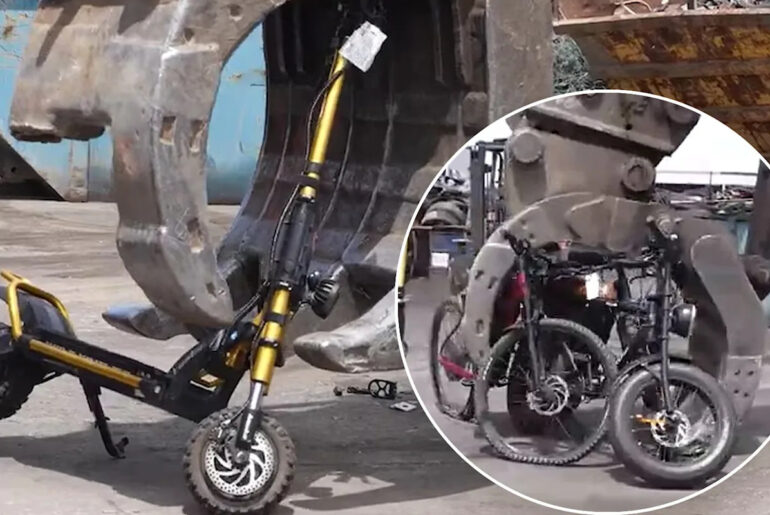
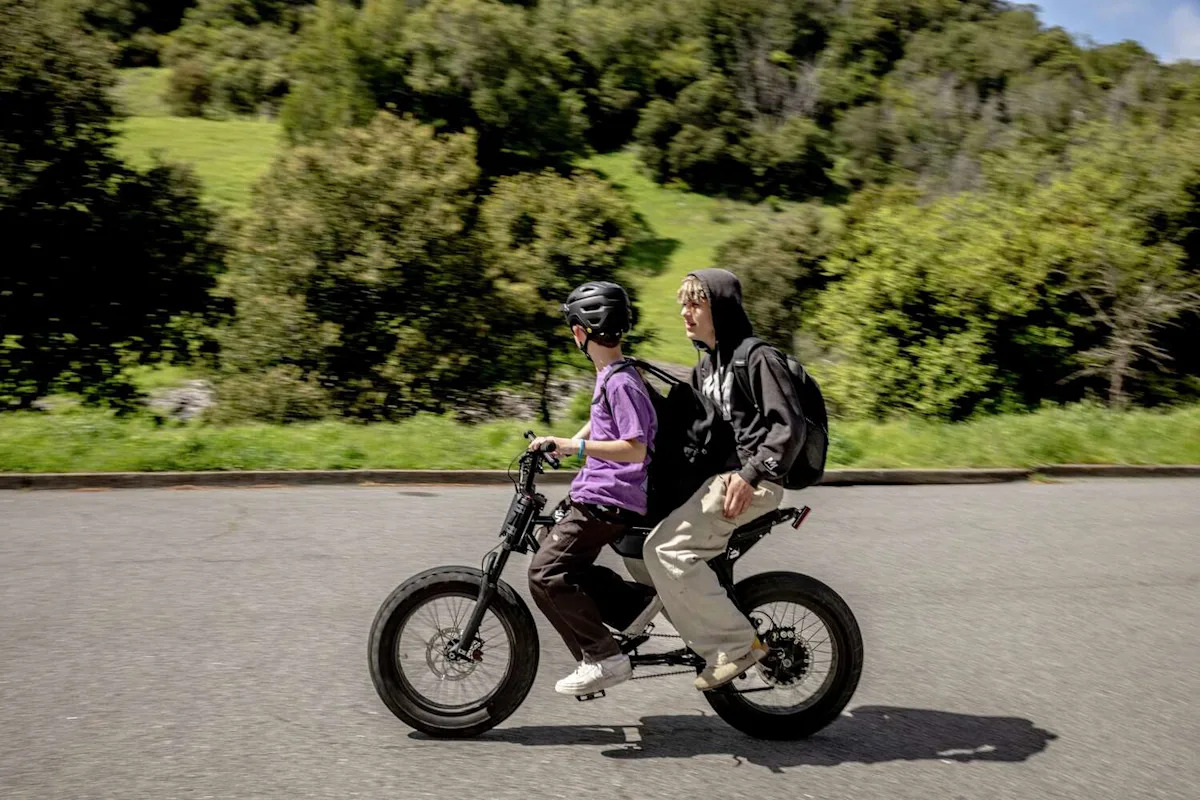
Many law enforcement authorities say these modified electric motorcycles are masquerading as e-bikes, and are capable of blasting past the speed limit rating they were sold under.
“These kids are taking these bikes and hacking them,” Atherton police school resource officer Dimitri Andruha told the school board on Oct.9. “They get rid of rev limiters, get rid of speed limiters. These kids are doing 50, 60 miles an hour.”
With five schools serving roughly 2,700 students through eighth grade, Menlo Park is likely the first district in the South Bay to enact such a ban after the measure unanimously cleared its school board earlier this month. The Portola Valley School District enacted a similar ban this month.
Jed Scolnick, the school board’s vice president, expressed hope that in addition to Menlo Park, “Atherton, Los Alamitos and Portola Valley and all the schools will look at this policy.”
At Hillview – the district’s only middle school – officials said there have already been a “handful” of collisions involving e-bikes, cars and pedestrians during arrival and dismissal times. One September crash sent a Menlo-Atherton High School teen to the hospital with moderate injuries. Across Menlo Park and Atherton, police have recorded 10 crashes involving e-bikes in the past year. It wasn’t disclosed how many of these involved legal e-bikes vs. modified ones.
“Accidents already happen, but it’s just a matter of time till a really bad one happens,” school board member Scott Saywell said. “And then everyone’s gonna be like, why did we not do something about it?”
The district’s action follows new e-bike restrictions in Marin and San Diego counties. Across Marin County cities, towns and unincorporated areas, children under the age of 16 cannot ride class 2 e-bikes, which are throttle-assisted electric bicycles that do not require the user to pedal. Jurisdictions in San Diego County can ban kids under the age of 12 from riding class 1 e-bikes, which provide peddle-assisted power capped at 20 mph, as well as restrict class 2 models. At least four San Diego cities have implemented such bans.
The state already requires riders to be over the age of 16 to operate the third category, class 3, which has pedal assist, throttle, and a top speed of up to 28 mph – the top speed before a bike is considered a motor vehicle.
State laws passed in 2024 authorized the restrictions in Marin and San Diego counties on a pilot basis. Because the state has jurisdiction over vehicles on roadways, authorization must come from the state level. (Menlo Park’s school district can act without state authorization because it is only a ban on the vehicles on campus, not on public roads.)
Marin County law enforcement can cite minors for riding class 2 e-bikes only if they’re already writing another ticket, a restriction some critics say limits the rule’s effectiveness but proponents say encourage education first.
Local leaders across a growing number of California communities are concerned about the dangers of e-bikes, including the modified e-motos. Bob Mittelstaedt, an e-bike advocate based in Marin County, said greater resources should be poured into cracking down on the modified electric motorcycles kids are whipping through neighborhoods on.
“For most of these, no hacking is required,” he said. “It’s simply taking the bike as you find it, and using the app that is provided by the manufacturer.”
CalBike and 30 other bicycle and active transportation groups are also campaigning for a distinction between e-bikes and e-motorcycles.
“Most public concern about e-bikes is actually concern about electric motorcycles that are not e-bikes,” the organizations said in a letter. “Many local ‘e-bike’ laws appear to be in response to an increase in the use of unlicensed motorcycles that can operate above 28 mph.”
Operating an electric motorcycle requires a license from the state.
In an October survey of four Menlo Park and San Mateo area schools, Mittelstaedt said he saw 70 so-called e-bikes – but believes that 62 of them did not meet the legal definition. Instead, he said, they functioned as electric motorcycles because they lacked class labels, exceeded the 750-watt power limit or could surpass 20 mph on throttle alone, he told the school board.
This article originally published at Kids on super-fast e-bikes are alarming California. One Bay Area school district is cracking down.